Go-to-Market Strategy: Build a Spending Plan Before Launch


It’s no secret that spending on an unproven offer is how a launch budget vanishes before you see a qualified buyer. This is exactly why your go-to-market strategy should follow a spending rule… ESPECIALLY if the offer is still unproven.
For example, I offer an AI visibility report as a lead magnet. I leave part of the report grayed out until a prospect enters their email address. This gives the inquirer a quick sneak peak, but leaves them wanting more.
But the same question comes up again and again: How far does someone get with the free asset, and where might they ask for help?
Ultimately, deciding how much to spend promoting this go-to-market strategy requires evidence from the sales conversation afterward.
If you lead marketing for a service business, this is the budget decision worth settling before launch. Choose the buyer, define the entry offer, and write down what would justify another round of spending. Keep reading to see real examples from my agency and tactics I use to decide what to launch.
TL;DR
- Choose a buyer you can recognize. Use actual deal evidence to define who qualifies for the launch.
- Give the offer a visible job. A report or template should help the buyer handle a problem connected to your service.
- Write the budget gate before the test. Agree on acceptable acquisition cost and the evidence needed for further spending.
- Follow interest through to sales. A download becomes useful launch evidence when you can connect it to a qualified buyer and a commercial next step.
TABLE OF CONTENTS:
- What Is a Go-to-Market Strategy?
- Pick a Buyer You Can Check Against Real Deals
- Build an Entry Offer With a Paid Next Step
- Connect Distribution to the Service You Sell
- Set Budget Gates Before the Test Starts
- What to Put in Your Go-to-Market Plan Document
- When to Revise a Launch Test
- Bring Evidence to the Launch Budget Review
What Is a Go-to-Market Strategy?
So what is a go-to-market strategy, exactly? Simply put, it’s your plan for bringing an offer to the people most likely to buy it:
- Who you’re selling to
- What you’re offering them
- Where they’ll find it
- How you’ll know it’s working
For a service launch, I want the plan to carry one more piece: a spending decision followed all the way from the first interaction to the eventual sale.
This is where the hard part shows up. You have a new or unproven offer, and someone has to decide how much money goes into promoting it.
Why Is Launch Spending So Risky?
You’re being asked to spend before you have buyer evidence from real sales conversations, so every dollar rides on assumptions nobody has tested yet. Spend too little and the offer never gets a fair shot; spend too much and the budget is gone before you know who’s buying.
Early numbers can muddy the picture, too.
Even when a campaign produces plenty of report requests, whoever approves the next round of spending still needs to know whether suitable buyers requested them.
How I Mitigate Launch Spending Risk
This is why I write down, before launch, who approves more spend, which buyer definition they’re using, which offer they’re reviewing, and the rule for accepting the result.
A spreadsheet works well here, since it gives you somewhere to pin the buyer evidence and the approval rule before results start arriving. I put the buyer, entry offer, paid service, and next decision in the same document, along with the person checking the evidence and the maximum spend they can approve. Once everyone agrees on what each field means, your CRM can hold the records behind it.
So where do you find buyer evidence before launch? The deals you already have are the best place to start. Their notes will tell you more about buyer fit than another round of audience guesses.
Pick a Buyer You Can Check Against Real Deals
What if I told you that your past deals already hold most of the answer?
Before you choose a launch audience, it pays to read through these records and look for the problem each buyer brought into the conversation, plus the conditions around the purchase. Your ideal customer profile should let a reviewer explain why an inquiry qualifies, using evidence someone else can check.
Company size alone leaves a lot unanswered, though. What you really want is the buyer’s stated reason for seeking help, the person who approved the purchase, and the obstacle recorded on lost deals. When a note doesn’t answer one of these questions, leave the field empty. An honest gap is useful when you decide what to ask next.
Turn Deal Notes Into Admission Rules
Once you’ve pulled a handful of deals, the notes need somewhere to live. I like a simple worksheet with columns for the source deal, buyer role, stated problem, purchase trigger, and qualification decision. Copy the buyer’s own language into the problem field and link back to the record, so the reviewer can open the source during a budget discussion.
Exclusion rules belong right beside the admission rules. Some prospects have the right problem and still need work outside your offer. When the notes don’t support a decision either way, let the reviewer mark the record uncertain, then save deeper research for the records worth checking.
Screen Fit Before Paying for Research
Deeper research costs money, which is why I screen for fit first. In my ICP screening example, I described a prompt for GrokBot asking it to connect to the Single Brain gateway. The prompt called for Apollo to find people who fit the sales audience, and I included a request for the cost right in the prompt.
From there, I described using Jev to screen fit before spending expensive research credits. This sequence put the eligibility check ahead of deeper research.
Your own launch deserves the same caution. Before you rely on a screening rule, review the rejected and uncertain records yourself and check whether the rule excludes buyers you meant to reach. Once you can recognize a suitable buyer, the next question is what useful work the entry offer will do for them.
Build an Entry Offer With a Paid Next Step
Here’s a simple test for any free offer: would a suitable buyer have a reason to use it?
A report should reveal an issue they care enough to investigate, and a template should help them finish a task connected to your paid service. If you can’t explain the connection, pause before buying traffic.
Positioning earns its keep here. Your offer page should say who it’s for and what the buyer can do after using it. It also helps to compare the promise with your service page and your positioning statements and taglines, since a buyer should recognize the same work when the conversation reaches the paid service.
How My AI Visibility Report Works as a Lead Magnet
My own AI visibility report shows this connection in action. When someone opens it, part of the report is grayed out, so they get a preview before providing an email address. Once they enter an email, the full version opens up, which is why I treat it as a lead magnet.
This gives a buyer a clear path from a quick preview to the full report my team at Single Grain built.

Still, a preview and an unlocked report won’t tell you a conversion rate or revenue result on their own. For your launch, record preview visits, report requests, and qualified follow-up conversations in separate fields. Check these later events before you claim the report can acquire customers at an acceptable cost.
What a requested report does give you is a reason for the follow-up owner to reach out. From there, distribution has to put it in front of buyers who could need the service behind it.
Connect Distribution to the Service You Sell
Distribution gets much easier to judge when the free asset and the paid service clearly point at each other. In a Marketing School discussion, I talked about giving away templates and bots connected to the Single Brain gateway. My goal was for people to connect to the gateway through these assets, with the possibility of some users eventually asking someone to manage the work for them.
It’s worth following the chain in this example. Someone receives a template or bot, connects to the gateway, and has a route toward continued use. The potential service conversation starts when they want help managing the work, and each step gives you a different event to record.
I’d leave any assumed conversion rate out of your forecast until you have evidence for it. For now, take a hard look at your own free offer and name the work a buyer could hire you to perform afterward.
Choose a Channel You Can Trace Through Sales
With the offer and the service connected, the channel question gets simpler. For a launch test, the best channel is one whose inquiries you can follow through sales, with each inquiry’s source recorded and preserved through the conversation. Before adding paid traffic, I’d pin the landing-page promise and assign a follow-up owner. You’ll need both the moment requests arrive and someone has to respond.
Got another paid channel in mind? The ChatGPT ads product launch playbook covers how to plan the audience, message, and test for a separate channel. Whichever channel you pick, keep the initial test small enough to trace its result back to the offer and source.
Then there’s the money question. It’s much easier to set a spending limit before a promising request lands in the queue.
Set Budget Gates Before the Test Starts
Budget gates are where the spending rule from the intro finally gets teeth. I like to freeze the approval rule before the test starts, with the spend cap, the buyer qualification rule, and the evidence required for additional funding all written down. The cap tells the approver how much money is at risk. Meanwhile, the qualification rule tells the reviewer which inquiries belong in the result.
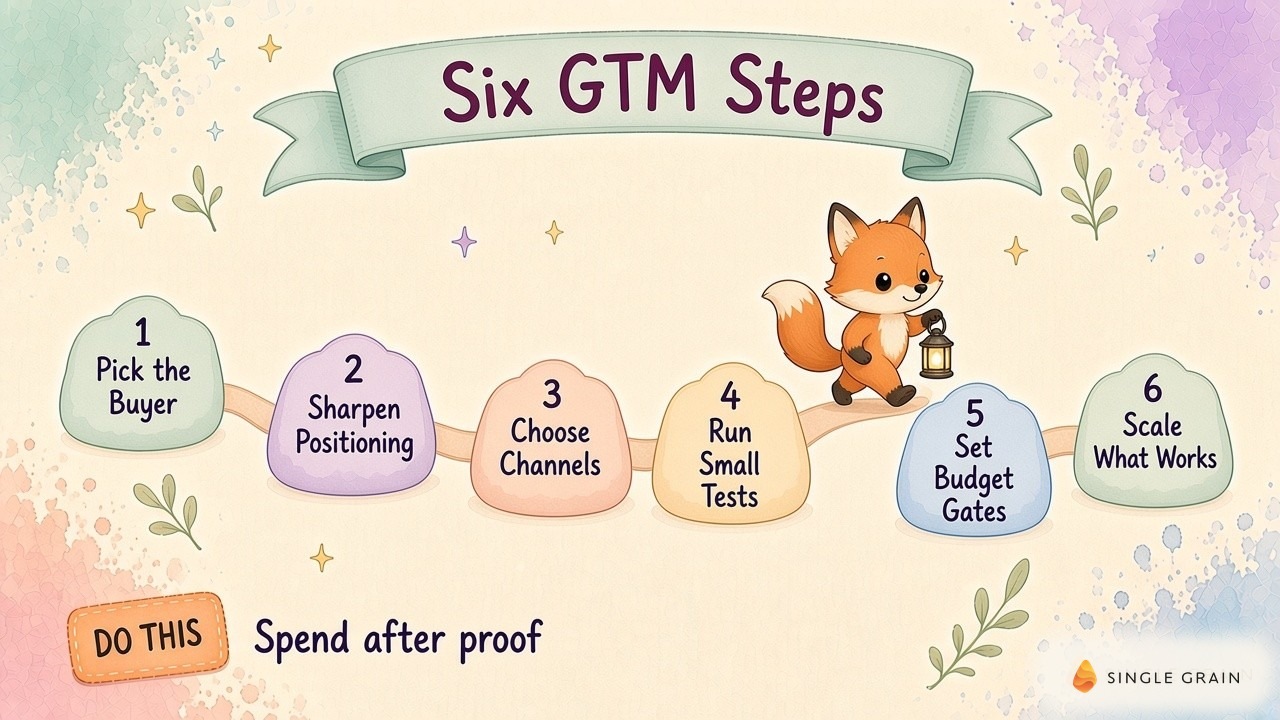
How do you pick the cap? You can work backward from your delivery economics to set an allowable acquisition cost. Start with the gross profit available from a customer over the period finance accepts, then deduct sales effort and the cost of producing the entry offer to see how much room remains for paid acquisition. Keep these assumptions beside the cap so the approver can challenge them.
Separate Interest From Sales Evidence
Once the cap is set, the next risk is reading too much into early interest. How much does a report request actually prove? It shows someone wanted the report. Qualified conversations give you evidence about buyer fit and need, while only a paid agreement shows willingness to buy at the offered price.
Each event gets its own worksheet field for exactly this reason. To calculate cost per qualified conversation, divide the test’s defined acquisition costs by qualified conversations from the same cohort. If none qualifies, record no qualifying outcome, so the reviewer can see exactly where the test stopped producing evidence.
Timing matters here, too. Sales cycles can outlast the traffic window, so agree on a follow-up observation period before launch and tag cohorts still awaiting a commercial result. Finance can then check whether a result is pending or whether the completed test produced no sales.
| Pro-Tip |
|---|
| Save the original approval rule beside the result. If new evidence leads you to revise it, date the revision and write the reason. Keep the earlier version available for the next review. |
The same discipline pays off when you compare channels. Before deciding on a budget reallocation between SEO and PPC, line up outcomes and observation periods side by side. Reconcile the definitions first, or a channel comparison can mix pending sales with completed outcomes. Your worksheet should make this mismatch visible before anyone reallocates money.
It also helps to keep the source records within reach of whoever approves spend. Budget meetings move faster when nobody has to hunt for the basis of a recommendation.
What to Put in Your Go-to-Market Plan Document
All of this evidence needs a home, and the simplest one is a single decision sheet you can open during the review. It should link to the buyer definition, the offer people saw, and the test result. Include the paid service and its price or scope assumptions too, since the approver needs this context to judge whether acquisition costs leave room to deliver the work.
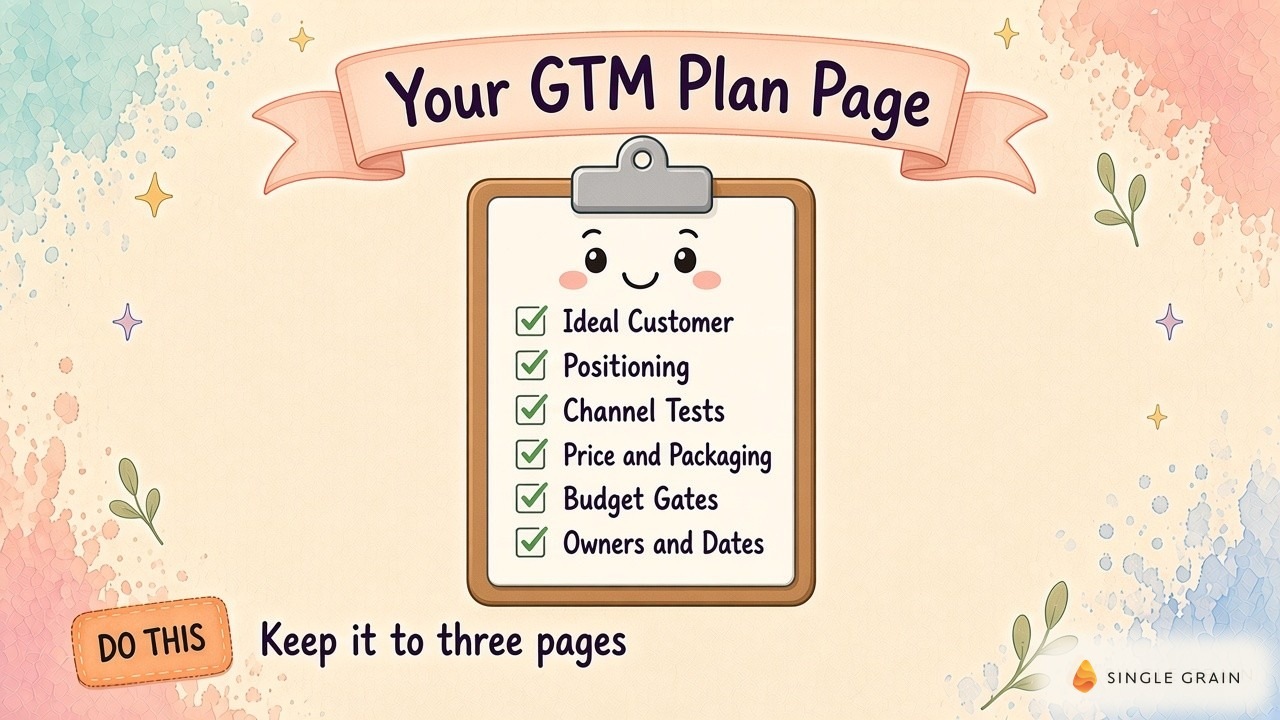
From there, each channel test gets its own row. Record its audience, message version, spend cap, observation period, and owner, then add the source link for results. You’ll also want the name of the person authorized to approve more spending, with the analyst’s recommendation and the approval decision kept in separate columns.
Assign Follow-Up and Review AI Summaries
Follow-up responsibility belongs in the same row, and it’s easy to overlook. Even a useful report can sit unanswered when nobody owns the response. The marketing project launch checklist helps you confirm who receives the inquiry and who handles the next conversation, so the handoff is settled before traffic reaches the offer.
AI can help organize source notes, as long as you hold it to a standard. If you go this route, require a source record for each buyer claim and flag missing information for human review. Apply the same check to drafted message variants before you approve them, since even a confident summary needs someone to validate its claims against the notes.
Your sheet earns its keep a second time when a test disappoints. You can simply open the row and find the stage where progress stopped.
When to Revise a Launch Test
Disappointing results still tell you plenty, as long as you read them in order. Your failed stage points to where to look before you touch the campaign. Visits without requests send you back to the promise, page, or audience, while requests without qualified conversations call for checking buyer fit and follow-up. The worksheet helps you isolate which evidence you have and which event is missing.
Sometimes qualified conversations happen and still produce no sales. When this happens, the objections recorded during these conversations are your best clue, so check scope, price, and the buyer’s reason for delaying. Read these notes before reducing the price, because a cheaper offer can leave the purchasing obstacle unresolved.
Whatever you change, keep it to one main variable and save the earlier version in the worksheet. I’d also write down why you expect the revision to address the observed failure. Replacing the audience, promise, and price together makes the next result harder to explain, so keep enough of the test stable to judge the revision.
Check Delivery Capacity Before Expanding
Now suppose the test works. Before approving expansion, it’s worth checking who can actually perform the promised work. Some tests meet their acquisition rule while the service still needs delivery capacity, so bring this constraint into the approval conversation alongside the sales evidence. More demand needs someone available to handle it.
Either way, the proposed revision and its supporting records belong in the budget review. With both in hand, the approver can fund a specific test with a reason attached.
Bring Evidence to the Launch Budget Review
All of this comes together in one meeting. I want the launch review to end with an approved next test and a reason for funding it. Bring the buyer records, the offer people saw, and the commercial outcomes you can verify, and keep uncertain results marked as uncertain. Then use the next test to close the gap you can actually name.
If you need help planning and testing your launch, explore Single Grain’s go-to-market strategy services or contact Single Grain to discuss your goals.
Frequently Asked Questions About Go-to-Market Strategy
-
What is a go-to-market strategy?
A go-to-market strategy is the plan for how a product reaches its buyers: who you sell to, what you say, which channels you use, how you price, and how you’ll measure whether it’s working.
-
What are the five pillars of a go-to-market strategy?
A common way to frame it is target customer, positioning and messaging, channels, pricing, and success metrics. Some teams add sales enablement or customer success as their own pillar.
-
What's the difference between a go-to-market strategy and a marketing plan?
A go-to-market strategy covers a specific launch or market entry, from product fit to sales motion. Marketing plans usually cover ongoing activity over a set period.
-
How long does it take to build a go-to-market plan?
For most launches, a working first version takes a few weeks. The bigger time cost is the channel tests, which need enough time to produce a clear signal before you scale budget.
-
When should you hire a go-to-market agency?
Consider outside help when you’re entering a new market, your team lacks channel experience, or you need tests running faster than you can hire for them.