How to Choose a Marketing Agency: 10 Questions to Ask Before Hiring


Are you wondering how to choose a marketing agency that is actually going to fulfill your needs? I get it, finding the right marketing agency becomes a heck of a lot harder after you’ve been burned once. Maybe the last agency promised growth, sent pretty monthly decks, and left you wondering where on earth all your budget went. Now leadership wants results, and you’re the one picking the next partner.
Hiring the wrong agency costs more than its fee. You lose months, momentum, and credibility with your own leadership team.
The good news? A short list of sharp questions exposes most bad fits before you sign anything.
This guide covers what to define before you shop, the top ten questions to ask a marketing agency, the KPIs to agree on, and a simple process for making the final call.
TL;DR
- Define your goal before you shop. Agencies can only be compared against a clear target, budget, and timeline.
- Ask every agency the same questions. A consistent set of ten questions makes answers easy to compare side by side.
- Agree on KPIs tied to revenue. Traffic and clicks support the story, but pipeline and acquisition cost tell it.
- Watch for red flags. Guarantees, vague scopes, and locked-down data access usually signal trouble.
What to Define Before You Talk to Agencies
Most bad agency matches start with a fuzzy brief. Before your first call, write down what success looks like.
Your Goal and Timeline
Pick one primary goal, such as more qualified pipeline, lower acquisition cost, or entry into a new channel. Add a realistic timeline. SEO usually takes longer than paid media to show results.
Your Budget and Internal Capacity
Separate the agency fee from your media or production budget. Also be honest about internal time. Agencies need fast feedback, approvals, and access to data.
Agency vs In-House Work
Some work is better kept inside. This 10-factor matrix for in-house vs agency SEO helps you decide which functions to outsource.
A clear brief turns every sales call into a real evaluation.
Top 10 Questions to Ask a Marketing Agency
Ask each agency the same questions, in the same order, and take notes. Patterns appear quickly.
1. What Results Have You Driven for Companies Like Ours?
Look for specific outcomes in your industry or business model. Ask for case studies with numbers and timelines, plus the starting point for each result. Growth from a tiny base means less than steady gains for a company your size. Single Grain’s case studies show the level of detail worth expecting.
2. Who Will Actually Work on Our Account?
Senior people often run the pitch. Ask to meet the strategist and specialists who’ll handle your account day to day, and ask how many other clients they support. A strategist juggling fifteen accounts can’t give yours the same attention as one handling five.
3. How Do You Define Success for Us?
A strong agency ties success to your business goal. A weak one talks only about impressions, followers, or rankings. Listen for whether the agency asks about your sales cycle, margins, and customer lifetime value before it proposes targets.
4. What Does Onboarding Look Like?
Ask for a rough plan covering audits, quick wins, and longer bets. A clear onboarding plan shows the agency has done this before. Expect the first weeks to focus on access, tracking checks, and a baseline, so every later result has a starting point.
5. How Do You Report Progress?
Ask for a sample report. Check whether it connects activity to pipeline or revenue and whether it explains what changed and why.
6. Who Owns Our Accounts and Data?
You should own your ad accounts, analytics, and creative assets. Confirm you’ll keep full access if the relationship ends. Put ownership language in the contract, rather than relying on a verbal promise.
7. What Do You Need From Our Team?
Good agencies set expectations for approvals, data access, and meeting cadence. Vague answers here often lead to delays later. Ask how many hours per week your team should plan to spend on the account.
8. How Does Your Pricing Work?
Ask whether pricing is a retainer, project fee, percentage of spend, or performance-based. Request a clear list of what’s included and what costs extra. If the agency charges a percentage of ad spend, ask how it avoids recommending higher budgets simply to raise its fee.
9. How Do You Handle Underperformance?
Every campaign hits a rough patch. Ask how the agency spots problems, how fast it reacts, and how it communicates bad news. A good answer includes a specific example from a past client and what changed afterward.
10. What Are the Contract Terms and Exit Options?
Check the minimum term, notice period, and what happens to work in progress if you leave. Fair terms signal an agency confident in its ability to keep you through results.
| Pro-Tip |
|---|
| Score every answer on a simple one-to-five scale right after each call. Fresh notes beat memory when you compare three or four agencies a week later. |
A scorecard keeps the decision about evidence instead of charm.

With answers in hand, check whether the agency’s success metrics match yours.
Marketing Agency KPIs to Agree On Up Front
Misaligned KPIs cause more agency breakups than bad creative. Agree on metrics before kickoff.
Business Outcome KPIs
Lead with metrics leadership cares about, such as qualified pipeline, customer acquisition cost, revenue, and return on ad spend. These B2B marketing KPIs are a useful reference.
Channel KPIs
Traffic, click-through rate, conversion rate, and cost per lead show whether the work is moving in the right direction. Treat them as supporting signals.
Attribution and Data Joins
Agree on how results will be measured across tools. A revenue attribution join between GA4 and your CRM prevents arguments about which numbers count.
| KPI type | Examples | Who cares most |
|---|---|---|
| Business outcomes | Pipeline, revenue, CAC, ROAS | Leadership and finance |
| Channel performance | Traffic, CTR, conversion rate, cost per lead | Marketing team |
| Activity | Content published, tests launched, pages fixed | Project managers |
Use all three layers, but judge the agency on the first, since business outcomes are what your leadership team will ask about.
How to Hire a Marketing Agency, Step by Step
A simple process keeps the decision fair and fast.
Shortlist Three to Five Agencies
Look for agencies with relevant results and the channels you need. Platform directories like Google Partners and the HubSpot Solutions Directory can help you confirm platform credentials and certifications.
Run the Same Evaluation for Each
Send the same brief, ask the same ten questions, and score answers on the same scale. Ask for two references and actually call them.
On reference calls, skip the generic praise. Ask what the agency did when results dipped, how quickly it responded to requests, and whether the team on the account stayed the same. Finally, find out whether they’d hire the agency again for the same work.
Start With a Defined Scope
If you’re unsure, begin with an audit or a defined project before a long retainer. A PPC audit or SEO audit is a low-risk way to see how an agency thinks.
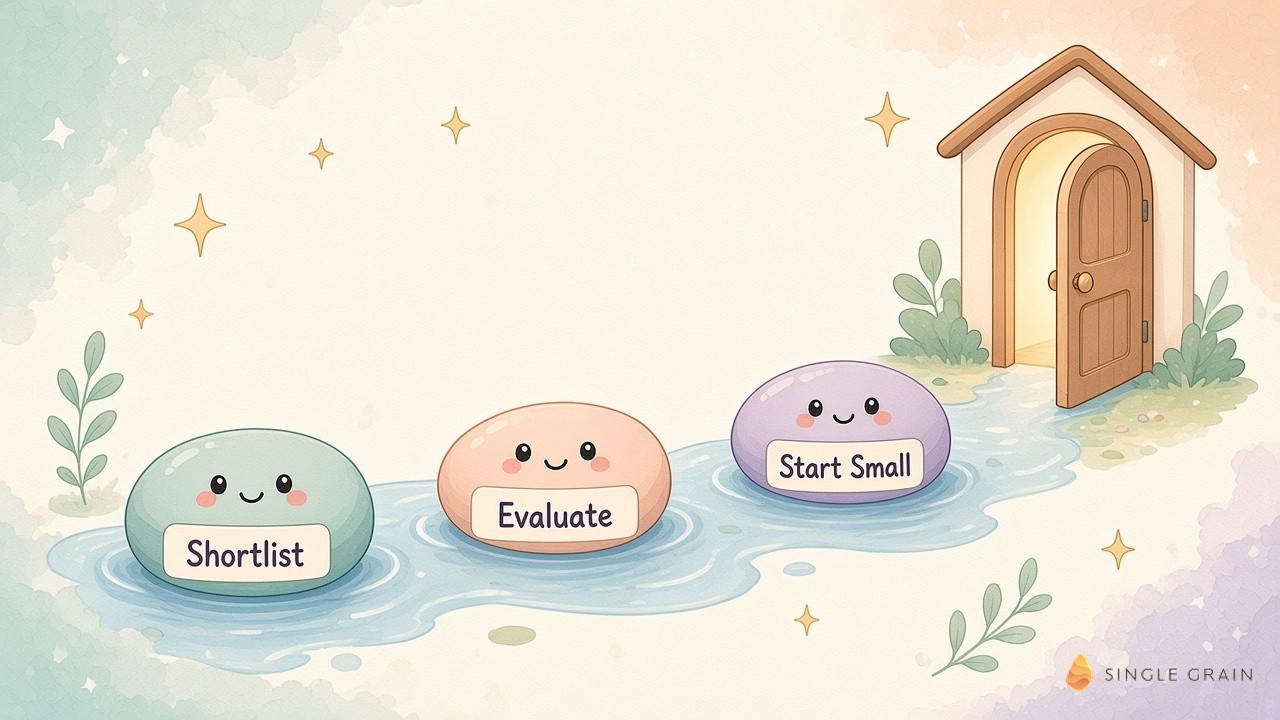
A defined first project shows you how the agency works before you commit long term.
What Agency Pricing Usually Looks Like
Price is one of the hardest things to compare, because agencies package work so differently.
Common Pricing Models
Retainers cover ongoing work for a fixed monthly fee. Project fees cover a defined scope like an audit, a site launch, or a campaign build. Paid media agencies often charge a percentage of ad spend, sometimes with a minimum fee. Performance deals tie part of the fee to results.
Compare Scope, Then Price
Two quotes at the same price can buy very different amounts of work. Line up deliverables, team seniority, and reporting before you compare totals. For a sense of how one service is priced, see this look at PPC audit cost.
Budget for the Extras
Media spend, software, content production, and design often sit outside the agency fee. Ask for a full estimate so the first invoice doesn’t surprise your finance team.
A clear view of total cost makes the final comparison fair.
Red Flags When Choosing an Agency
Some warning signs show up early. Take them seriously.
Guarantees
No honest agency guarantees rankings, viral content, or a fixed revenue number. Results depend on too many outside factors.
Vague Scopes
If you can’t tell what gets delivered each month, you can’t hold anyone accountable. Ask for a written scope with named deliverables before signing.
Locked-Down Data
Any agency that keeps your accounts in its own name, or limits your access, makes leaving painful. Insist on ownership from day one.
These red flags are easy to spot once you know to look for them.
Pick a Partner You Can Measure
Choosing a marketing agency comes down to clarity. Define your goal, ask every agency the same ten questions, agree on revenue-tied KPIs, and start with a scope you can judge. The right partner will welcome the scrutiny.
If you want a growth partner that ties marketing to revenue, Single Grain’s go-to-market strategy team can help. Contact Single Grain to get started.
Frequently Asked Questions About Choosing a Marketing Agency
-
How do I choose the right marketing agency?
Start with your goal and budget, shortlist agencies with relevant results, ask the same set of questions to each, check references, and agree on KPIs and reporting before you sign.
-
What questions should I ask a marketing agency?
Ask about results in your industry, who will do the work, how they measure success, how they report, what they need from you, how pricing works, and how you can exit the contract.
-
What KPIs should a marketing agency report on?
Tie KPIs to business outcomes such as qualified pipeline, customer acquisition cost, revenue, or return on ad spend, with channel metrics like traffic and conversion rate as supporting signals.
-
How long should a marketing agency contract be?
Many agencies ask for three to 12 months. Shorter starting terms or a defined pilot scope reduce risk while you test the fit.
-
What are red flags when hiring a marketing agency?
Guaranteed rankings or results, vague deliverables, no access to your own ad accounts or data, reporting without business metrics, and no named team members.