
AI Visibility Audit: How to Run an Audit using Jev Images


If you’ve ever ran an AI visibility audit on your website, you know how pricey it can get. For instance, a person might spend 240 minutes on an audit, which at $50 an hour is roughly $200. With Jev Images, the same AI visibility audit job only cost me about $0.41 and a few minutes of my time. At this price and time savings, there’s no reason to audit once a year when you can audit every week!
The version I run is a citation-gap audit. It checks a fixed list of buyer prompts across AI surfaces, logs who gets named and which sources get cited, and feeds a 12-week scorecard.
Want to run one on your brand this week? Discover my exact setup, the citation checks I rely on, and how to report results without inventing numbers.
TL;DR
- An AI visibility audit shows where AI answers name you and where they name a competitor. It covers a fixed set of buyer prompts across tools like ChatGPT and Google AI Mode.
- A bot makes it cheap enough to run weekly. A manual audit can take about 240 minutes, while a Jev Images run might cost around $0.41.
- Citation gaps are the main output. The sources cited instead of you show which pages, listings, and publishers to work on.
- Track progress on a 12-week scorecard. Report verified fixes first, then actual traffic and consultations once the data shows up.
TABLE OF CONTENTS:
- What Is an AI Visibility Audit?
- How My Team Runs an AI Visibility Audit With Jev Images
- What a $0.41 AI Visibility Audit Replaces
- The 4 Checks in a Citation-Gap Audit
- How to Track Results on a 12-Week Scorecard
- How Often Should You Run an AI Visibility Audit?
- 3 Mistakes That Make an AI Visibility Audit Useless
- Find Your Citation Gaps Before a Competitor Does
What Is an AI Visibility Audit?
An AI visibility audit measures how often AI tools mention your brand when buyers ask about your category. It records which answers name you, which name a competitor instead, and which sources each answer leans on.
The goal is a ranked list of gaps you can fix. A single “visibility score” tells you you’re behind, and the gap list tells you what to do about it.
Why AI Search Visibility Needs Its Own Audit
Classic rankings don’t tell you whether an AI answer names you. Google says AI Overviews and AI Mode may use a “query fan-out” technique, running several related searches across subtopics, and the two features can show different responses and links. You can read the details in Google’s guide to AI features and your website.
AI search visibility also moves with each run. The same question can name you on Monday and skip you on Tuesday, which is why one screenshot proves very little and a repeatable audit proves a lot.
If you’re already watching citations with a dashboard, my team’s roundup of tools for monitoring AI citation and answer engine visibility is a good companion. The audit below goes one layer deeper, into why a competitor gets picked.
How My Team Runs an AI Visibility Audit With Jev Images
Jev is the classifier from TypeSafe my team already uses as a quality gate for content. Its Jev Images feature reads screenshots, so a bot can capture AI answers and Jev can judge whether a brand appears inside them. Here’s the run, in order.
- Write ten buyer questions for the category. For a running shoe brand, think “best running shoes” or “best trail running shoes.”
- Capture every answer on four AI surfaces. My team used ChatGPT, Google AI Mode, Google AI Overviews, and Bing’s AI answer in a logged-out browser set to American English.
- Run the whole set twice. Ten questions across four surfaces and two runs gives you 80 captures.
- Let Jev read each screenshot. A brand counts only when Jev reads it inside the AI answer and the page text confirms it.
- Roll it up. Report the share of answers naming the brand next to the most-named competitors.
Perplexity and Copilot didn’t make the cut because a sign-up wall or an empty render blocked the capture. Note gaps like this in your report so nobody reads a missing surface as a zero.
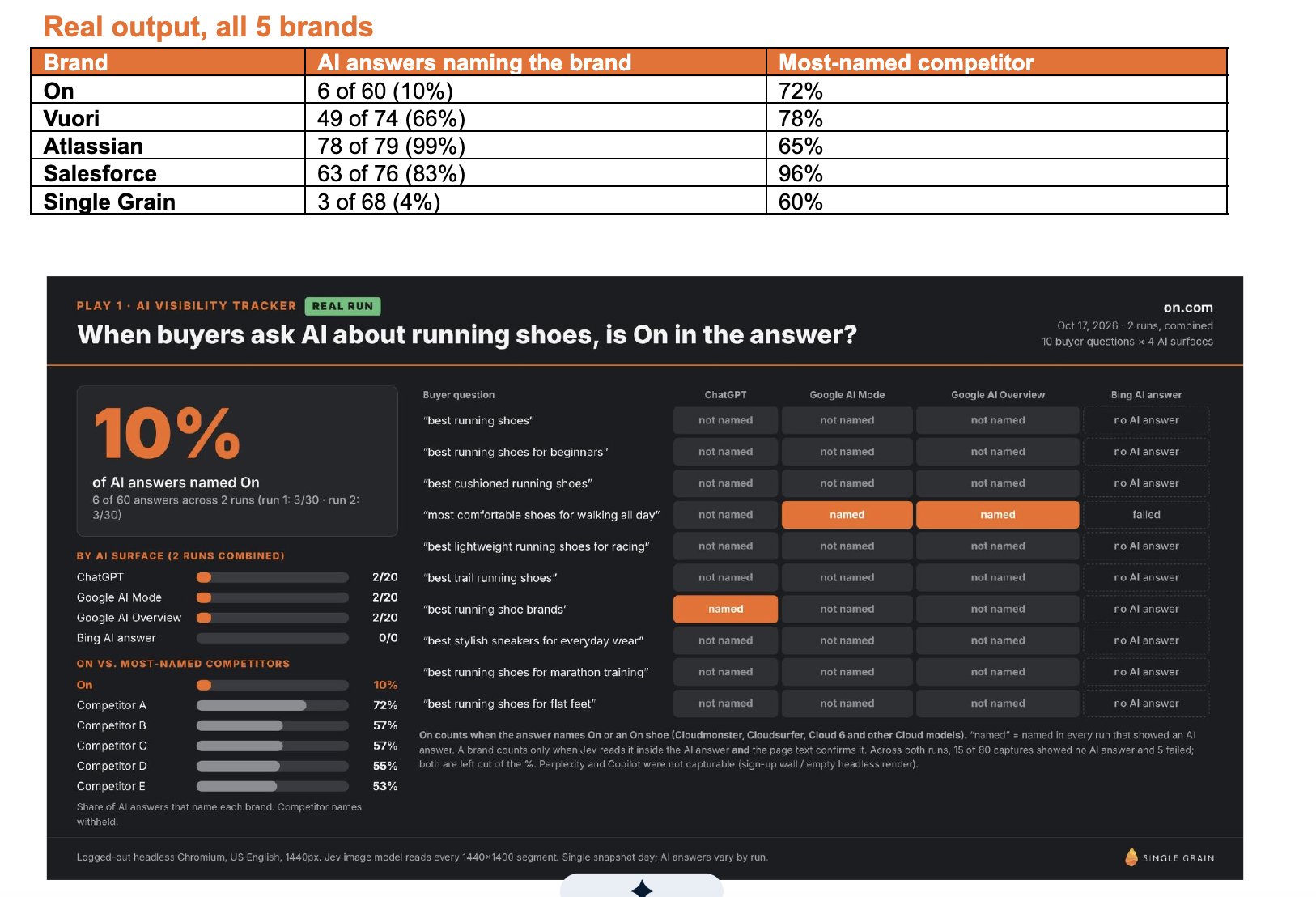
Here’s what the tracker found across five brands in a single snapshot.
| Brand | AI answers naming the brand | Most-named competitor |
|---|---|---|
| On | 6 of 60 (10%) | 72% |
| Vuori | 49 of 74 (66%) | 78% |
| Atlassian | 78 of 79 (99%) | 65% |
| Salesforce | 63 of 76 (83%) | 96% |
| Single Grain | 3 of 68 (4%) | 60% |
On showed up in six of 60 answers while its most-named competitor appeared in 72%. Totals vary by brand because failed or empty captures drop out of the math. My own 4% is exactly why I care about this, and I’d rather see it in a tracker than guess.
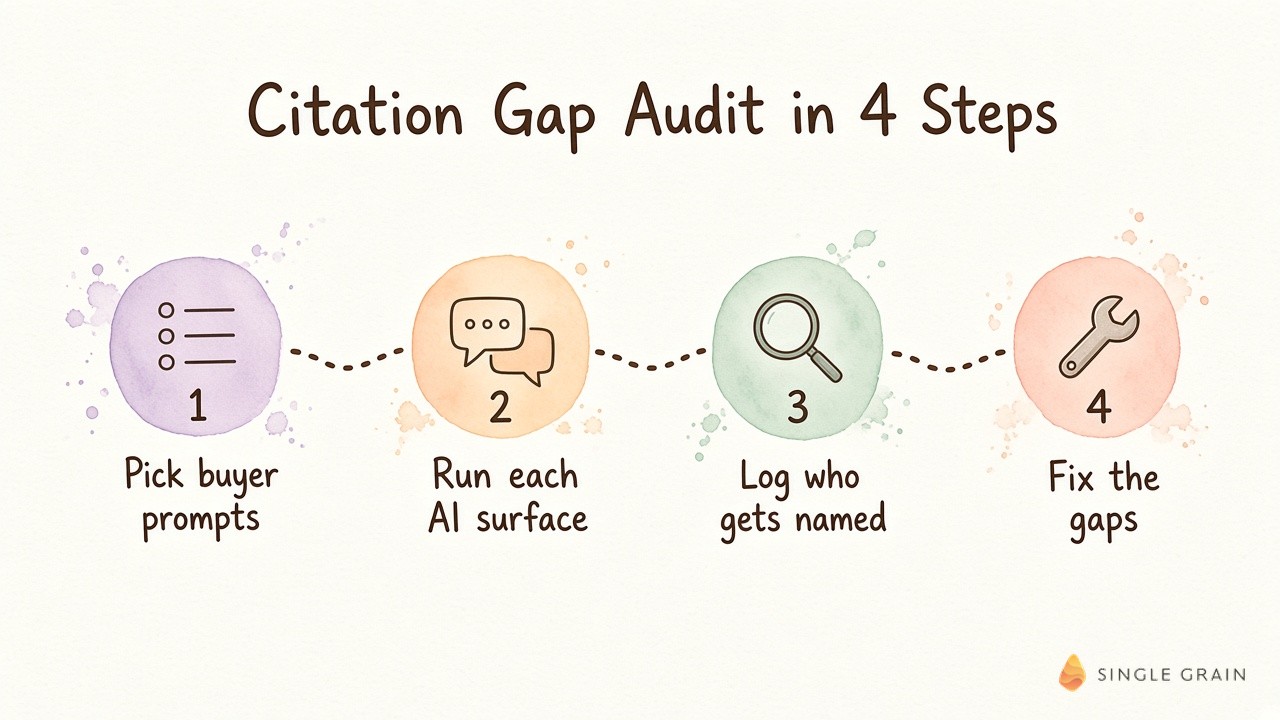
You pick prompts, run each surface, log who gets named, and fix the gaps.
| Pay Attention |
|---|
| TypeSafe labels image input a preview and says it isn’t production-ready yet. Keep the page-text confirmation step and spot-check a sample of captures by hand before anyone acts on the numbers. |
You can read TypeSafe’s limits in its image documentation. With a careful setup, the savings get hard to ignore.
What a $0.41 AI Visibility Audit Replaces
A manual audit eats about 240 minutes. At $50 an hour, it could cost you about $200 per audit.
My team’s estimates for the bot version look very different.
- One tracker run. Eighty captures cost about $0.41.
- A two-sweep report. It costs about $0.82.
- Volume. A thousand runs a month comes to roughly $410, and ten thousand to roughly $4,100.
Important note: Treat those as estimates, since model pricing and capture counts can move. Even with a wide margin, the cost drops far enough to audit every week and to audit competitors on the same schedule.
The 4 Checks in a Citation-Gap Audit
Every run should answer four questions, and each one points to a different kind of fix.
1. Prompt Coverage
Start from the questions a buyer asks before choosing a vendor, like “best tool for X,” “how do I fix Y,” or “X vs. Y.” Run each one and record whether your brand appears, where it appears, and what the answer says about you. Keep the core list frozen from month to month.
2. Cited Sources
For every prompt, list the pages each answer cites or links. Mark which mention a competitor, which mention you, and which mention nobody in your category. This list tells you which publishers, directories, and review sites AI tools already trust for the question, and digital public relations (PR) aimed at ChatGPT citations is often how you get onto them.
3. Competitor Wins
Flag each prompt where a competitor is named and you aren’t. Those prompts go to the top of the fix list, and each one should earn an owned citation brief for the page you want cited.
4. Pages and Listings Worth Citing
Check the pages you want AI tools to quote. Each should answer one question clearly near the top, make specific claims, and stay current. Google also lists keeping your Business Profile and Merchant Center information up to date among its search engine optimization (SEO) best practices for AI features, and technical SEO for large language model (LLM) scrapers covers the crawl side.
| Pro-Tip |
|---|
| Freeze your core prompt list and add new prompts in a separate tab. Month-over-month results only mean something when the questions stay the same. |
Finding gaps is half the job. Proving the fixes worked is the other half.
How to Track Results on a 12-Week Scorecard
The 12-week scorecard from my New Rules of AI Search webinar ties content to free consultations, the number leadership watches most. You can build your own version around five rows.
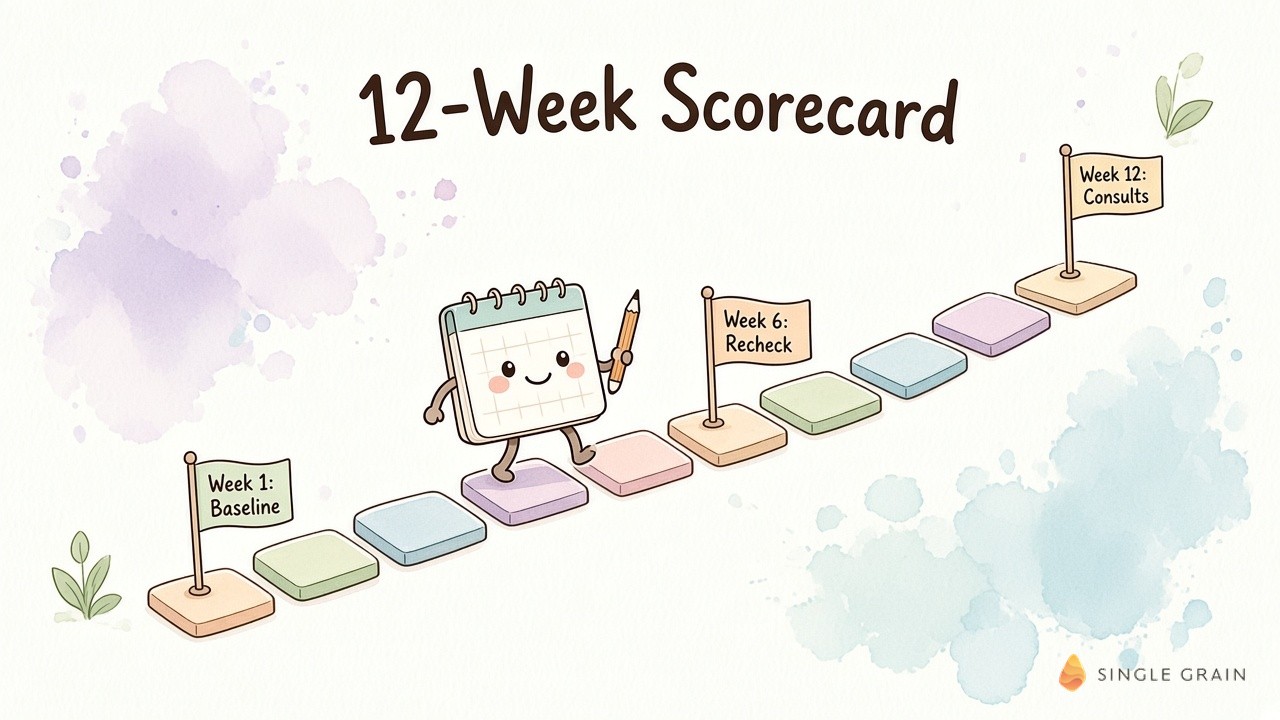
- Share of answers naming you. Rerun the frozen prompt list on a set schedule and compare against week one.
- New sources citing you. Count publishers and directories that start naming your brand.
- Fix status. Mark each gap as to fix, in progress, or verified live, with the live link and the date you checked it.
- Search and AI traffic. Google counts AI Overviews and AI Mode traffic in the Web search type of Search Console, so pull actual impressions and clicks from there.
- Free consultations. Tie the pages you fixed to the consult requests they produce.
My content bot already checks new posts at seven, fourteen, and twenty-eight days, and the same rhythm works for audit fixes.
| What You Should Do |
|---|
| Leave the results column empty until actual data exists. A projected impression looks like a result, and it breaks trust the first time actual data disagrees. |
Report states first and outcomes second, and the scorecard stays honest.
How Often Should You Run an AI Visibility Audit?
Run the full audit once to set a baseline. After the baseline, split it into two rhythms. The prompt check is light, so run it weekly or monthly against the same list, and repeat the source, listing, and page checks each quarter or after a big change like a rebrand or site migration.
A bot run costing under a dollar makes the weekly rhythm realistic. Add competitor audits on the same schedule, since their gains often explain your losses.
The schedule only helps if you avoid a few traps.
3 Mistakes That Make an AI Visibility Audit Useless
Each one quietly ruins the data, and each one is easy to avoid.
1. A Prompt List That Changes Every Month
New prompts make results impossible to compare, and nobody can tell whether a fix worked. Keep the core list stable and test new prompts separately.
2. A Visibility Score With No Fix List
A score shows you’re behind and stops there. Every lost prompt should map to a named source, listing, or page, with a fix and an owner.
3. Domain-Wide Averages That Hide Weak Pages
Strong domains still lose prompts because one page or one location is weak. Audit at the page and listing level, the way the tracker reads each answer on its own.
Get these right, and the audit turns into a weekly habit your team can trust.
Find Your Citation Gaps Before a Competitor Does
An AI visibility audit costs less than a coffee when a bot runs it, and it shows exactly where AI answers send buyers to someone else. Run it on a fixed prompt list, chase the cited sources, and track fixes on a 12-week scorecard.
If you want help closing those gaps, my team at Single Grain helps brands get found on Google and in AI answers through Search Everywhere Optimization and SEO services.
Frequently Asked Questions About AI Visibility Audits
-
What is an AI visibility audit?
An AI visibility audit measures how often AI tools like ChatGPT and Google AI Mode name your brand when buyers ask about your category. It also records which competitors and sources those answers rely on.
-
How much does an AI visibility audit cost?
A manual audit can take about 240 minutes, roughly $200 at $50 an hour. My team estimates a Jev Images tracker run of eighty captures might cost about $0.41.
-
How often should you run an AI visibility audit?
Set a baseline once, then rerun the same prompt list weekly or monthly. Repeat the source, listing, and page checks each quarter or after a rebrand or site migration.
-
What is a citation-gap audit?
A citation-gap audit finds the buyer prompts where AI answers cite a competitor instead of you, plus the sources behind those answers. Each gap becomes a fix with an owner, such as a page update or digital PR for ChatGPT citations.
-
How do you improve AI search visibility?
Work the gap list: earn mentions on the sources AI answers already cite, make target pages answer one question clearly near the top, and keep listings consistent. Track progress on a 12-week scorecard tied to actual traffic and consultations.