Does AI Referral Traffic Convert Better?


AI referral traffic might be the smallest line in your analytics report, but I would argue that it is the most valuable one! If your sessions from ChatGPT, Perplexity, and Gemini look tiny, it’s tempting to shrug them off. That would be a BIG mistake, because those visitors often show up ready to buy.
Adobe’s latest data shows AI-referred retail shoppers converting 60% better than everyone else. Neil Patel (my co-host on my Marketing School podcast) and I dug into those numbers, and my take is blunt. Fewer clicks can still mean more revenue, so we should stop judging AI traffic on sessions.
With that being said, does AI referral traffic really convert better for every business? And how do you prove it in your own reports? Keep reading for the data, the caveats, and the simple reporting setup my team uses.
TL;DR
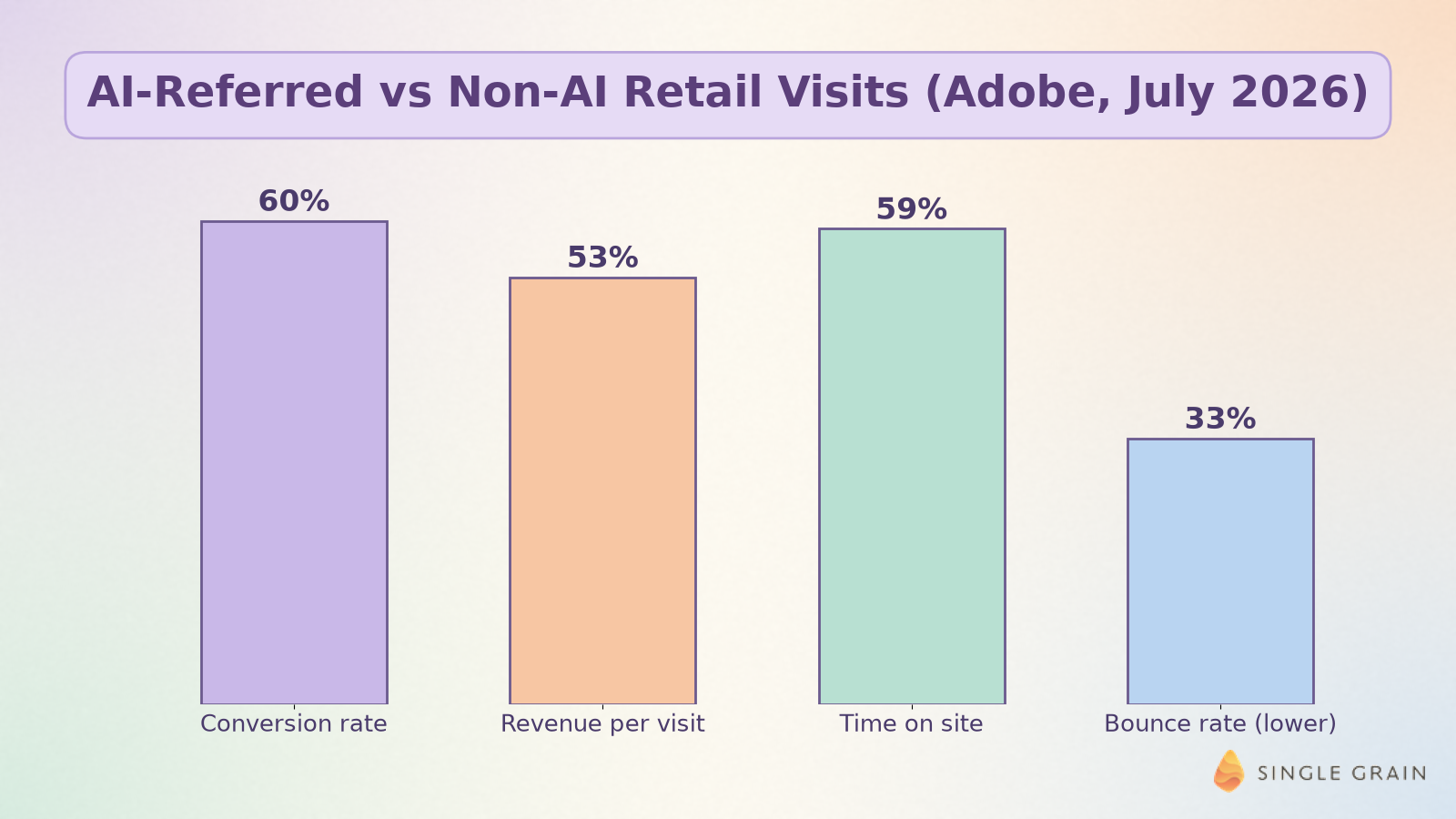
- AI-referred shoppers convert at a higher rate. Adobe found AI-referred retail visitors converted 60% better than non-AI traffic in July 2026 and brought 53% more revenue per visit.
- Results vary by industry and dataset. In travel, AI referrals converted about 1% worse, and Neil and I see smaller lifts than the headline in agency data.
- Track AI traffic as its own channel. Group ChatGPT, Perplexity, Gemini, Copilot, and Claude referrals so they don’t vanish into “referral” or “direct.”
- Report on conversions and pipeline. Sessions undercount AI’s impact, so judge the channel on leads, revenue, and assisted deals.
What Is AI Referral Traffic?
AI referral traffic is any visit that arrives from an AI assistant or answer engine, such as ChatGPT, Perplexity, Gemini, Copilot, or Claude. It shows up when someone clicks a link or citation inside an AI answer.
AI Traffic vs. LLM Traffic
You’ll hear “AI traffic” and “LLM traffic” used for the same thing. Both describe visits from tools built on large language models. Some teams also include AI Overviews in Google, but those clicks usually report as organic search, so keep them separate in your reporting.
Why It Looks Small in Most Reports
Many AI visits never get labeled. Some apps strip the referrer, so the visit lands in “direct.” Others show up as a generic referral. Plenty of buyers also read an AI answer, then type your brand into Google later, which looks like branded search.
How Much AI Traffic Should You Expect?
For most brands, AI assistants still send a small slice of total visits. Growth is the story. Adobe reported AI-referred visits to U.S. retail sites up 62% year over year in July 2026, and up 1,219% since October 2024.
Small volume with fast growth is exactly when you want clean tracking. If you wait until the channel is big, you’ll have no history to compare against.
Those blind spots matter, because the visits you can see are behaving very differently from the rest of your traffic.
Does AI Referral Traffic Convert Better? What the Data Says
The short answer is yes, in most of the large datasets published this year. The longer answer depends on your industry and how you count.

The Adobe Numbers
Adobe’s AI Traffic Trends Report, released in August 2026, covers more than one trillion visits to U.S. retail sites. In July 2026, AI-referred retail visitors converted 60% better than non-AI traffic and generated 53% more revenue per visit. A year earlier, non-AI visits were worth 128% more, so the gap has fully flipped. Retail coverage picked it up fast, including MediaPost’s advice on readying product pages for AI shoppers.
Digital Commerce 360’s summary of the Adobe data adds more detail. AI-referred shoppers spent 59% more time on site, bounced 33% less, and added items to cart 28% more often.
Where the Headline Breaks Down
Travel is the exception in Adobe’s data. AI referrals there converted about 1% worse than non-AI traffic in July, although the gap keeps shrinking.
Neil also pushed back on the size of the lift. Across the agency and client data we both see, AI traffic converts better than most other sources, but we’re not seeing jumps as steep as the headline. Treat big benchmarks as direction, then measure your own.
Why AI Visitors Arrive Pre-Sold
My theory is simple. By the time someone clicks a link inside an AI answer, the assistant has already done the comparison work. The buyer has asked follow-up questions, narrowed the list, and picked a few brands to check.
Adobe’s consumer survey backs this up. Two-thirds of consumers said they visit a brand’s site directly to verify an AI recommendation, and 89% said they click links or sources an AI assistant provides. Those visits are verification trips, and verification trips convert.
So the real question isn’t whether AI traffic converts in general. It’s whether it converts for you, which means you need clean tracking.
How to Track ChatGPT Referral Traffic and Other AI Sources
You don’t need a new tool to start. You need a clear channel definition and a report built around outcomes.
Group AI Sources Into One Channel
Create a custom channel group in GA4 for AI assistants. Match referral sources such as chatgpt.com, perplexity.ai, gemini.google.com, copilot.microsoft.com, and claude.ai. Keep the list in a shared doc, because new assistants show up often.
Tag the Links You Control
If you place links in places AI tools read, such as your own GPTs, partner pages, or app listings, add UTM parameters. Tagged links survive even when the referrer gets stripped.
Connect It to Your CRM
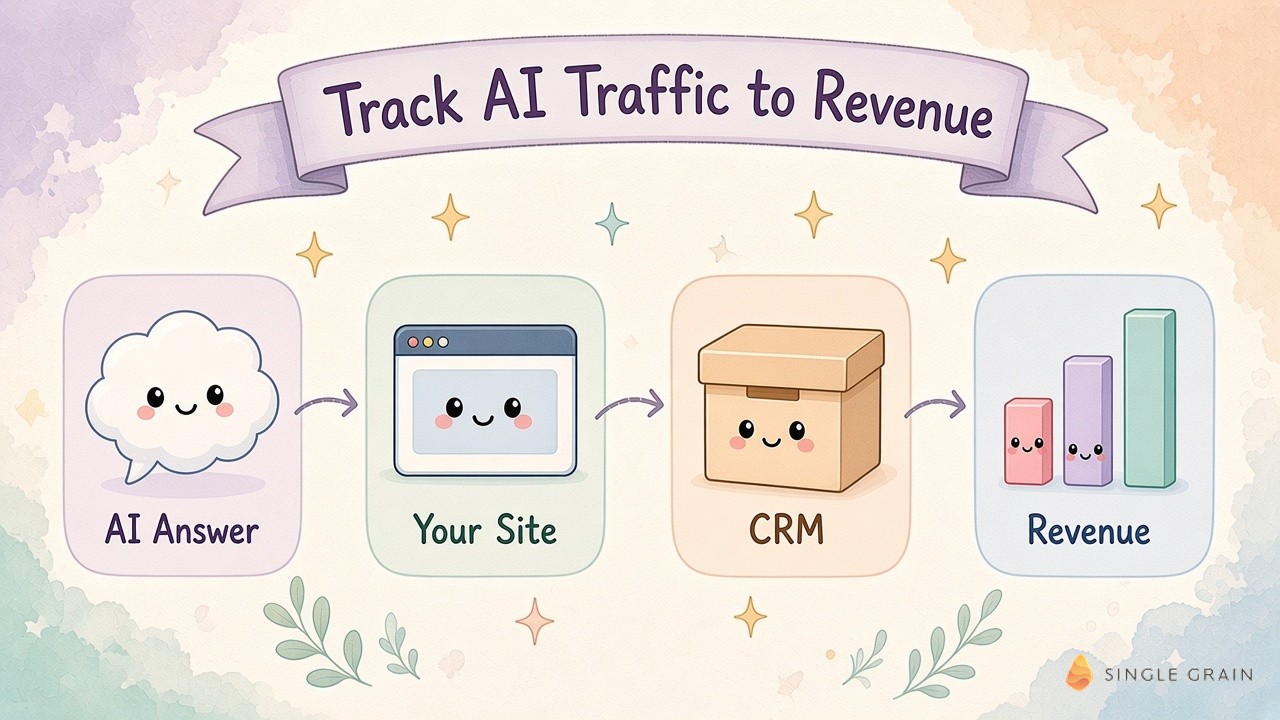
Pass the first-touch source into your CRM when a lead converts. Then you can see AI-sourced pipeline and closed revenue, which is the number your CFO cares about. Our guide to aligning CRO testing with AI traffic attribution covers the setup in more depth.
| Pro-Tip |
|---|
| Add a “How did you hear about us?” field to your demo form with ChatGPT and other AI assistants as options. Self-reported source catches the AI visits your analytics labels as direct. |
Self-reported answers won’t be perfect, but they fill the biggest gap in your data and often surprise sales teams.
Set a Baseline Before You Change Anything
Give your new channel group four weeks of clean data before you start optimizing. Record AI sessions, conversion rate, and revenue or pipeline per visit for that window. Compare the same numbers for organic search and paid search.
This baseline keeps the team honest. When you publish a new comparison page or land a big press mention, you’ll see whether AI-sourced conversions actually moved. Without it, every change looks like a win or a loss depending on who’s reading the report.
Once the tracking is live, the way you report the channel decides whether anyone takes it seriously.
Report AI Traffic on Conversions and Pipeline
This is the shift I push hardest with my team. Sessions make AI look like a rounding error. Conversions show what it’s worth.
| Metric | What it tells you | Why it matters for AI traffic |
|---|---|---|
| Sessions | How many visits arrived | Undercounts AI because of missing referrers |
| Conversion rate | Share of visits that convert | Shows visitor quality |
| Revenue or pipeline per visit | Value of each visit | Lets you compare AI with paid and organic |
| Assisted conversions | Deals the channel touched | Captures buyers who research in AI, then return |
Put AI next to paid search and organic in the same view. When leadership sees revenue per visit side by side, the conversation changes fast. Review the view monthly rather than weekly, since AI volume is small and swings a lot from week to week.
Watch the Pages AI Sends People To
AI visitors often land deep in your site, on comparison pages, pricing pages, and detailed guides. Each of those pages needs an obvious path forward for the visitor. Soft conversion paths for early-stage AI traffic, such as a calculator or checklist, catch visitors who aren’t ready to book a call yet.
With reporting in place, you can start growing the channel on purpose.
How to Get More AI Traffic That Converts
AI assistants recommend brands they can find, trust, and quote. A few moves make a big difference.
- Publish comparison and pricing pages. Buyers ask AI to compare options, so give the assistant clear, factual pages to cite.
- Earn third-party mentions. Reviews, roundups, and press coverage shape which brands AI recommends. Digital PR for ChatGPT citations is one of the fastest routes.
- Check where you show up today. A free AI visibility report shows which prompts mention your brand and which mention competitors.
- Measure ROI on the channel. Tie the work to revenue with a clear AI ROI framework.
Each of these compounds over time, because better pages earn more citations and more citations send more ready-to-buy visitors.
Make AI Traffic a Channel You Can Defend
AI referral traffic is small for most brands today, but it often converts better and carries more revenue per visit. Track it as its own channel, connect it to your CRM, and report on conversions and pipeline instead of sessions. Then grow it with comparison pages, third-party mentions, and regular visibility checks.
Want help turning AI search into pipeline? Single Grain’s AI SEO services cover AI visibility, content, and measurement. Contact Single Grain to see where AI assistants already send you buyers.
Frequently Asked Questions About AI Referral Traffic
-
What counts as AI referral traffic?
Any visit that arrives from an AI assistant or answer engine, such as ChatGPT, Perplexity, Gemini, Copilot, or Claude, after someone clicks a link or citation in an AI answer.
-
Does AI traffic convert better than organic search?
In Adobe’s July 2026 retail data, AI-referred visitors converted 60% better than non-AI traffic. Results vary by industry, and travel converted slightly worse, so measure your own data.
-
How do I track ChatGPT referral traffic in GA4?
Create a custom channel group that matches AI referral sources such as chatgpt.com and perplexity.ai, tag links you control with UTMs, and pass first-touch source into your CRM.
-
Why does AI traffic show up as direct?
Some AI apps strip the referrer, so the visit lands in direct. Others show as generic referrals. Self-reported attribution on your forms helps catch these visits.
-
How can I get more AI referral traffic?
Publish clear comparison and pricing pages, earn third-party mentions, and check your current visibility with a free AI visibility report.