Query Fan Out After Gemini 4 Hydrogen: What Changes?


Google just made query fan out a much bigger deal in Search, and I think it’s the most important SEO change of the month. Google’s new Hydrogen model now powers Search globally for all users, and Google calls it the “biggest model upgrade to Search yet.” One of the headline improvements is a stronger query fan-out that links to a broader range of sites.
If you run SEO or content, the practical question is whether your pages show up in those extra searches Google now runs behind the scenes.
A single ranking for your head term used to be the goal. Now the AI answer pulls from pages that cover each subtopic of a question. Good news if you’ve built deep topic coverage. Rougher news if your site leans on a handful of big pages.
Below, you’ll see what query fan-out is, what Hydrogen changed, how it affects AI Mode and AI Overviews, and a practical plan to rank in Google AI Mode.
TL;DR
- Query fan-out breaks one question into many searches. Google issues multiple related queries across subtopics at the same time, then builds one answer.
- Gemini 4 Hydrogen supercharges it. Google says Search now connects people to a broader range of helpful links than before.
- It’s live globally for all users. Hydrogen powers Search by default, a few days after Gemini 4 Carbon launched in AI Mode for paid subscribers.
- Topic coverage beats single-keyword pages. Pages that answer specific subtopics clearly have more chances to be cited.
What Is Query Fan Out?
Query fan-out is the technique Google uses in AI Mode and AI Overviews to answer complex questions. Google’s AI features documentation describes it as issuing multiple related searches across subtopics and data sources to develop a response.
How Query Fan-Out Works
When someone asks a long or layered question, Google splits it into smaller pieces. It runs searches on each piece at the same time, finds supporting pages, and combines what it learns into one answer with links. When Google first introduced AI Mode, its Search team explained that this lets Search dive deeper into the web than a traditional search.
A Simple Example
Picture a question like “best CRM for a 20-person B2B team that integrates with LinkedIn and costs under $50 per user.” Fan-out might run separate searches on CRM options for small B2B teams, LinkedIn integrations, and pricing tiers. Each search can surface different pages, and each one can earn a link in the final answer.

That branching is why the update matters so much for content strategy.
What Gemini 4 Hydrogen Changed in Google Search
Search Engine Land reported Google’s announcement that Hydrogen is now available globally in Search for all users. Google listed four improvements.
1. Better Understanding of Intent
Search can handle more nuanced questions, including multi-part questions, typos, and highly specific requests. Deeper instruction following and tool calling help it address each part of the question.
2. Improved Query Fan-Out and Linking
This is the big one for SEO. Google says Hydrogen’s reasoning supercharges query fan-out, running simultaneous queries across all relevant subtopics. The result connects people to a broader range of links, including sites they might not have found before.
3. More Visual Responses
Expect more images, structured responses, comparison tables, and custom tools inside answers. Google describes these as adaptive and easy to scan. For marketers, this means the answer itself may show a comparison your page used to own, so your page needs details worth clicking for, such as deeper specs, real examples, or calculators.
4. Richer Language Understanding
Responses are more nuanced across all supported AI Mode languages. If you serve international markets, check how your localized pages show up. A translated page with thin subtopic coverage may now lose citations to a local competitor with fuller answers in that language.
| Pay Attention |
|---|
| Hydrogen is the default in Google Search for everyone, while Gemini 4 Carbon runs in AI Mode for paid subscribers. Your pages may be cited differently depending on which model a searcher hits. |
We saw a similar split earlier with Gemini 4 Argon in AI Mode, so it’s worth checking your visibility in both experiences.
How Query Fan Out Affects Your Traffic
A wider fan-out cuts both ways. Let me walk you through some of the impacts you may see on your traffic.
More Chances to Be Cited
Because Google now searches more subtopics, a page that answers one narrow piece well can earn a link, even if it doesn’t rank for the head term. Smaller sites with sharp, specific content may benefit. Old support articles, FAQs, and integration guides that never ranked for anything competitive could suddenly earn citations!
Early data points the same way. Aleyda Solis on X reported a jump in cited pages in AI Overviews right around the release, based on Ahrefs Brand Radar data:
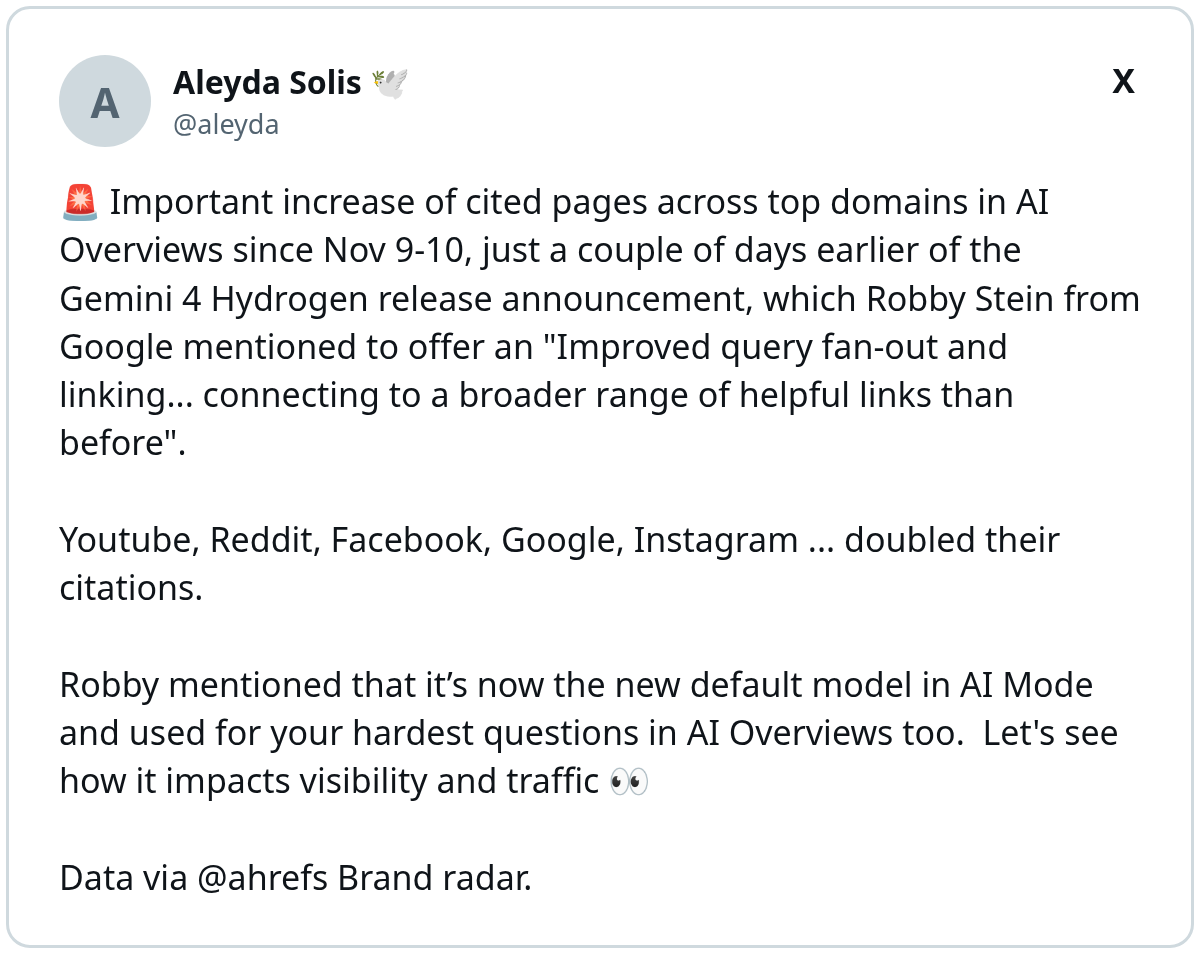
That’s one dataset, and the biggest gains she lists went to giant platforms. Still, it’s an early sign the pool of cited pages is getting wider, which is good news for specific, well-built pages.
More Competition per Answer
More links per answer also means more sites sharing attention. Clicks may spread across more sources, and your click-through rate could shift. Brands that relied on one top ranking for a broad term may see fewer clicks even if their position holds. If you’re testing how AI answers affect clicks, see how to run an AI Overview CTR opt-out test safely.
Visual Answers Pull From Structured Content
With more comparison tables and structured responses, pages with clean tables, clear specs, and labeled sections give Google more to work with.
AI Mode SEO: How to Rank in Google AI Mode After Hydrogen
Here’s how I’d adjust an AI Mode SEO plan this week.
Map the Subtopics Behind Your Core Queries
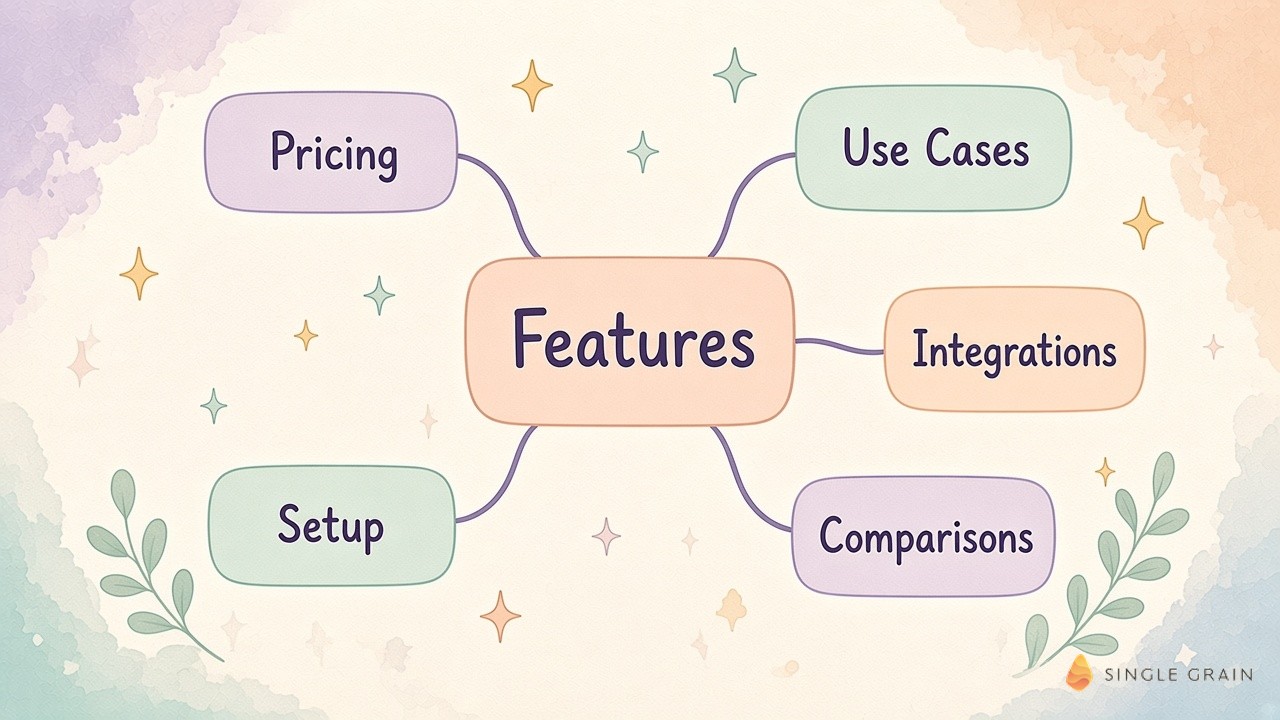
List the questions buyers ask around each product or service, then break them into parts such as pricing, use cases, integrations, comparisons, and setup. Each part is a likely fan-out search.
Will, who builds content engines for GTM teams, put the payoff plainly on X:
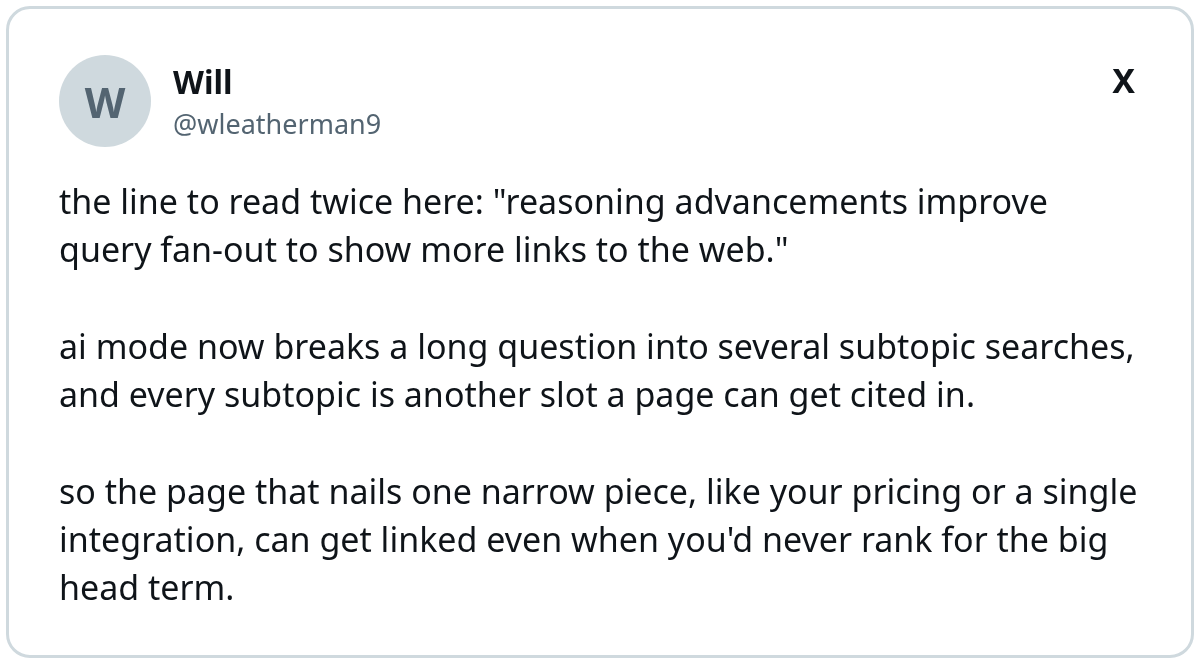
That’s why I’d start your map with the specific pages you already have, like pricing, integrations, and setup guides, before you write anything new.
Cover Each Subtopic Clearly
Give every important subtopic its own clear section or page. Use descriptive headings and answer the question in the first sentence or two. Skip vague headings like “Overview” or “More Info.” A heading that names the exact question, such as “How much does it cost for a 20-person team,” is far easier for Google to match to a fan-out search. Our guide to building topical authority without cannibalizing your posts shows how to do this without competing against yourself.
Add Tables and Structured Details
Comparison tables, pricing grids, and spec lists match the more visual answers Hydrogen produces. Keep them accurate and easy to scan. Add a short sentence above each table explaining what it compares, so the context travels with the data when Google pulls it into an answer.
Track Which Prompts Cite You
Monitor which queries pull your pages into AI answers. A query capture playbook for AI Overviews helps you decide which prompts deserve a dedicated page.
| Pro-Tip |
|---|
| Look at your Search Console queries for long, multi-part searches. They often reveal the exact subtopics Google is fanning out to, and they’re a quick source of new section ideas. |
These steps also strengthen classic rankings, so the work pays off either way, even if Google changes models again next quarter.
AI Mode SEO Checklist for Hydrogen
Use this table to audit one priority topic at a time.
| Check | What good looks like | Why it matters for fan-out |
|---|---|---|
| Subtopic coverage | Each major buyer question has a clear section or page | Every subtopic is a separate search Google may run |
| Direct answers | The first one or two sentences under each heading answer the question | Easy for the model to extract and cite |
| Structured details | Accurate tables, specs, and pricing grids | Feeds the more visual answers Hydrogen produces |
| Internal links | Subtopic pages link to and from the main topic page | Helps Google see the full depth of your coverage |
| Freshness | Dates, prices, and product details reviewed recently | Outdated facts are less likely to be trusted |
Work through the table for your top three revenue topics before you expand to the rest of the site.
How to Measure Fan-Out Visibility: 3 Tips
You can’t see Google’s fan-out searches directly, but you can measure their effects. Here are three tips you can follow.
1. Watch Long-Tail Impressions
In Search Console, filter for longer queries with several words. Rising impressions on specific, multi-part queries can signal that your pages are being pulled into more fan-out searches.
2. Track Citations by Subtopic
Group the prompts you monitor by subtopic, such as pricing or integrations. If one group rarely cites you, that’s the gap to close first.
3. Compare AI Mode and Classic Results
Run your priority queries in both AI Mode and classic results. Pages can earn a citation in an AI answer without ranking on page one, so track both views separately.
My Take on Hydrogen
My view is that this update rewards the sites that already did the hard work of covering a topic in depth. Big brands still have an edge, but fan-out gives specialists a real shot at being cited next to them. The sites that win will have the clearest answers to specific subtopics.
Build for the Fan-Out
Query fan out now drives how Google Search builds AI answers for everyone, and Gemini 4 Hydrogen just widened it. Map your subtopics, answer each one clearly, add structured details, and track which prompts cite you.
If you want help building an AI Mode SEO strategy around fan-out, Single Grain’s SEO team can audit your coverage. Contact Single Grain to get started.
Frequently Asked Questions About Query Fan Out
-
What is query fan out?
It’s a technique Google uses in AI Mode and AI Overviews that issues multiple related searches across subtopics and data sources at once, then combines the results into one answer with links.
-
What did Gemini 4 Hydrogen change in Google Search?
Google says Hydrogen improves intent understanding, supercharges query fan-out and linking, adds more visual responses, and improves language understanding. It’s live globally for all users.
-
How do I rank in Google AI Mode?
Map the subtopics behind your core queries, answer each one clearly in its own section or page, add accurate tables and structured details, and track which prompts cite your pages.
-
Does query fan out reduce website traffic?
It can spread clicks across more sites, but it also gives pages that answer narrow subtopics more chances to be cited. Results vary by query and industry.
-
Is AI Mode SEO different from regular SEO?
The basics overlap, but AI Mode rewards deep subtopic coverage and clear, structured answers more heavily, because fan-out searches each part of a question separately.