

How to Find Buyer Intent Signals for $0.31: Ultimate Step-by-Step Guide


When you learn how to find buyer intent signals, you can reach a frustrated customer complaining about your competitor online right now. This person is telling the whole internet they want to switch. But most sales teams never see the post, or by the time they do, a rival has already replied.
This is a huge missed opportunity! That’s why I built a fix for pennies on the dollar.
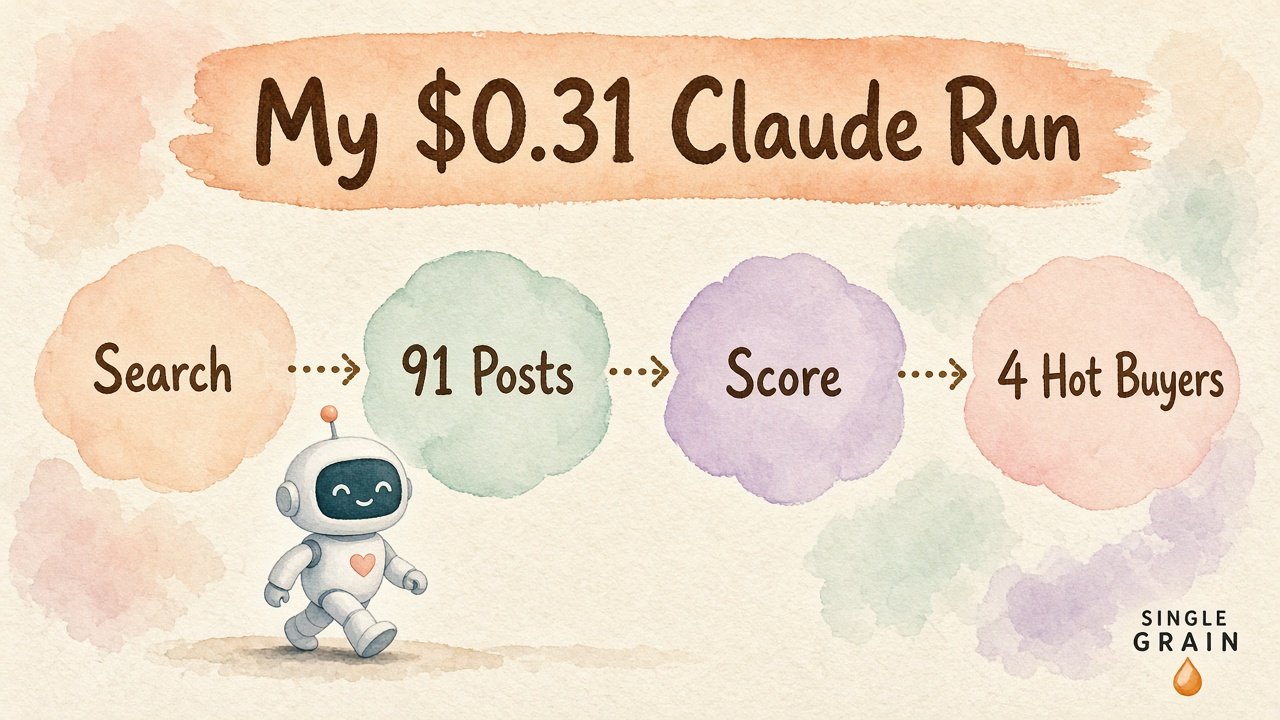
In my X post introducing Buyer Signals for Claude, I displayed an agent built to search Reddit, LinkedIn, and the web, then score every post as hot, warm, or noise. Today’s real run pulled 91 posts and surfaced 4 hot buyers for $0.31.
Many intent tools charge thousands of dollars a year for a similar list, and I think most teams are overpaying for signals they could catch themselves.
In this ultimate guide, I’ll cover what buyer intent signals are, the main types with examples, where to find each one, and how to score them. Then, I’ll walk you through the Claude workflow my team uses, step by step!
TL;DR
- Buyer intent signals are clues someone is getting ready to buy. Visits to your pricing page, competitor complaints, review-site research, and new tool installs all count.
- There are four main types. First-party signals come from your own site and CRM, third-party signals come from outside data networks, social signals come from public conversations, and technographic signals come from a company’s tech stack.
- Your scoring matters as much as your search. Sort every signal into hot, warm, or noise so your reps spend their day on people ready to talk.
- An AI agent can do the social search for pennies. My Claude run scanned 91 posts and found 4 hot buyers for $0.31.
What Are Buyer Intent Signals?
Buyer intent signals are actions or words that show a person or company is moving toward a purchase. Think of them as breadcrumbs. One visit to a blog post is a faint crumb, while a public post saying “we’re leaving our current vendor next month” is the whole loaf!
The data behind these breadcrumbs is usually called intent data. Marketers use it to decide who to call first, which accounts to target with ads, and what message to lead with. If you run account-based programs, intent feeds straight into your ABM account scoring model.
Here’s a quick test I use. A buying signal answers one question: is this person closer to spending money today than they were last week? If the answer is yes, it belongs on your list.
This test works across every source, so let’s look at where these signals actually come from.
Types of Buyer Intent Signals, With Examples
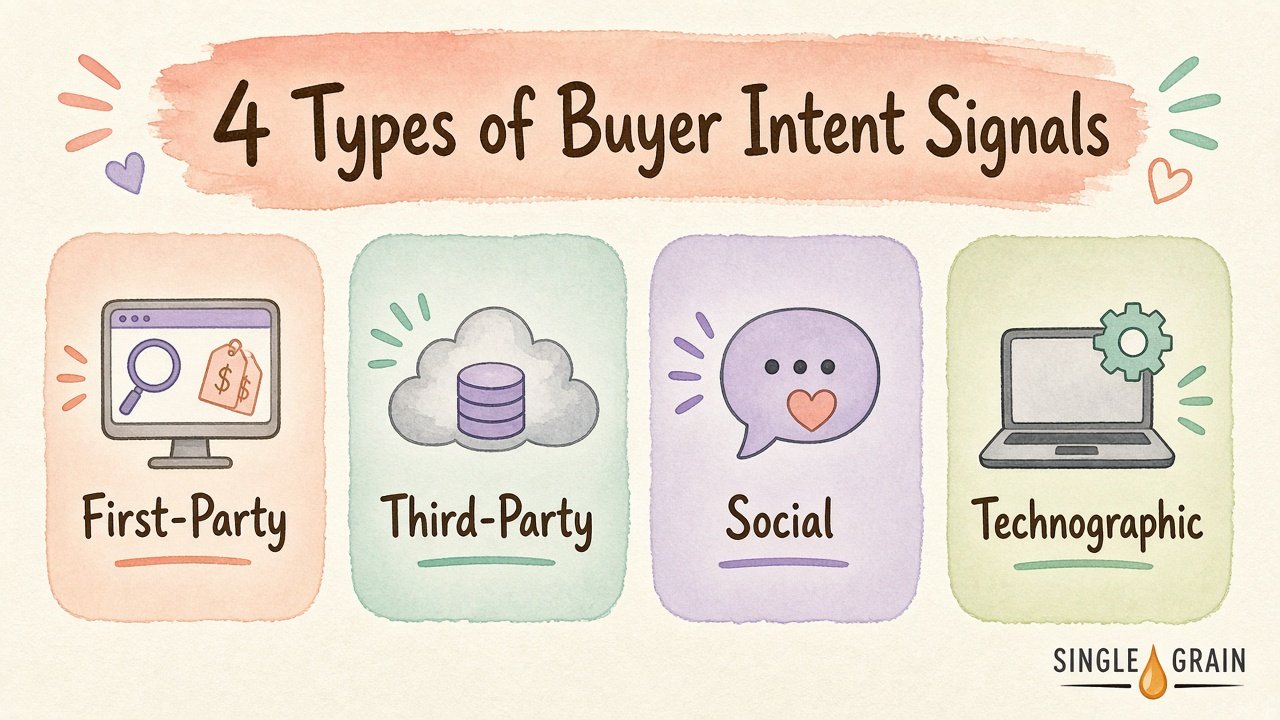
Most signals fall into four buckets. Each bucket has its own strengths, its own blind spots, and its own price tag.
1. First-Party Intent Signals
First-party signals come from your own channels: your website, product, email, and CRM. They’re the most reliable kind because you collect them directly. Examples include:
- Repeat visits to your pricing, demo, or comparison pages.
- Free trial signups, or trial users hitting a usage limit.
- Replies to sales emails or webinar attendance.
- Several people from the same company reading your content in one week.
2. Third-Party Intent Signals
Third-party signals come from outside networks tracking research activity across many publisher and review sites.
A company suddenly reading lots of articles about a topic you sell into is the classic example. These signals help you spot accounts with no visits to your site, though they usually tell you a company is interested without telling you which person.
3. Social and Community Signals
Social signals are public conversations on Reddit, LinkedIn, X, forums, and niche communities. They’re my favorite type because people say exactly what they want in their own words. Examples include:
- “Can anyone recommend an alternative to [competitor]?”
- Complaints about price hikes, outages, or bad support from a rival.
- Questions about how to solve the problem your product solves.
- A LinkedIn post announcing a new initiative your service supports.
If you’ve never mined Reddit before, this guide on using Reddit for market research covers the basics.
4. Technographic and Firmographic Signals
Technographic signals describe the tools a company uses.
A business adding a tool built to pair with yours, or removing a competitor’s script from its site, is sending a clear message. Firmographic changes count too: a funding round, a new executive, a hiring spree for a role using your product, or an expansion into a new market.
The buckets are the easy part. Most teams stall when they try to pull fresh signals from each one every week, so here’s the process.
How to Find Buyer Intent Signals Step by Step
Work through these in order. The first steps cost nothing and use data you already own.
- Tag your high-intent pages. Mark pricing, demo, comparison, and integration pages in your analytics. In GA4, you can mark events as key events so a demo request or pricing view stands out from casual browsing.
- Connect site activity to your CRM. Send form fills, trial events, and email replies into one record per contact. Your reps should see the whole trail before they call.
- Mine your search data for buyer intent keywords. Open the Search Console performance report and filter for queries with words like “pricing,” “alternative,” “vs,” “best,” and “reviews.” Those searchers are comparing options.
- Watch public conversations. Search Reddit, LinkedIn, and the open web for your competitors’ names next to words like “alternative,” “switching,” “frustrated,” or “recommend.” Save every hit with its link and date.
- Track company changes. Keep a short list of target accounts and check them for funding news, leadership moves, job posts, and tech stack changes each week.
- Layer in third-party data last. Once your own signals are flowing, decide whether an outside intent feed adds enough new accounts to justify its cost.
IMPORTANT: Step four eats hours by hand, which is exactly why I handed it to an agent. Before I show you the agent, though, you need a way to rank what you find.
How to Score Buyer Intent Signals: Hot, Warm, or Noise
A pile of unscored signals is just a longer to-do list. I sort everything into three tiers, the same ones my Claude agent uses.

- Hot. The person names a pain, a timeline, or a switch. “We’re moving off our current tool this quarter, any suggestions?” is hot. Reach out within a day.
- Warm. The person is researching the problem without a clear deadline. A question about how others handle a task, or a third pricing page visit, lands here. Nurture with useful content and retargeting.
- Noise. Students, job seekers, vendors pitching, jokes, and old threads. Ignore them and move on.
To keep scoring consistent across your team, give each signal points for three things: fit (does this person or company match your ideal customer?), urgency (is there a deadline or active pain?), and recency (did it happen this week?). High scores on all three make a hot lead.
P.S. For a deeper look at weighting and validation, read this guide to lead scoring that predicts revenue.
With a scoring rubric in hand, you can let an agent do the searching and the first pass of sorting. Here’s how I set this up.
My $0.31 Claude Workflow for Finding Buyer Intent Signals
Buyer Signals for Claude does three jobs: it searches Reddit, LinkedIn, and the web. After that, it scores every post as hot, warm, or noise, and it hands back a short list. On my real run, this turned into 91 posts in, 4 hot buyers out, and a bill of just $0.31.
You can build a version of this for your own market. Here’s the setup I’d follow:
- Write your buyer brief. List your product, your top three competitors, your ideal customer, and the pains making people switch. This brief is what the agent judges every post against.
- Choose your search terms. Pair each competitor name with switching words like “alternative,” “cancel,” “frustrated,” and “recommend.” Add the problem phrases your customers use.
- Point the agent at Reddit, LinkedIn, and the web. Ask it to collect each matching post with its link, date, and a short quote.
- Have it score every post. Paste in the hot, warm, and noise rules from the section above so the agent sorts the way your team would.
- Review the hot list yourself. Read each hot post, confirm the fit, and reply or reach out with something genuinely helpful.
- Save it as a reusable skill. Once the prompt works, turn it into a saved instruction file so you can rerun it daily. This piece on AI skills versus one-off prompts explains why this matters.
| Starter prompt for a buyer signals agent |
|---|
| You are my buyer signals researcher. Here is my buyer brief: [product, competitors, ideal customer, switching pains]. Search Reddit, LinkedIn, and the web for posts from the last 7 days where someone complains about a competitor, asks for an alternative, or describes the problem we solve. For each post, give the link, date, a one-line quote, and a score of hot, warm, or noise using these rules: [paste rules]. Return hot posts first, then warm. Leave noise out of the list and tell me how many you dropped. |
A word of caution on outreach. Treat a hot post as a conversation starter. Answer the person’s actual question first, and pitch only when it truly helps. People on Reddit can smell a sales script from a mile away.
| Pro-Tip |
|---|
| Keep a running log of every hot buyer the agent finds and whether they became a meeting. After a few weeks, feed this log back into your scoring rules so the agent learns what a real buyer looks like in your market. |
Once the hot list is flowing, the next question is what to do with it at scale. This is where my team comes in.
Turn Buyer Intent Signals Into Pipeline
Your signal list is step one. The payoff comes from acting fast: reply to the hot posts, retarget the warm accounts, and feed every result back into your scoring. If you’re already running ads to target accounts, pair your signal list with account-based retargeting so warm buyers keep seeing you.
Want to try the same buyer signals run yourself? When I shared the prompt on X, I linked to SingleBrain Gateway, our tool for giving Claude one key to your own marketing accounts and the paid research tools it calls.
Prefer a hand with setup? A forward deployed marketer from my team can help! Tell me about your pipeline, and I’ll show you where to start.
Frequently Asked Questions About Buyer Intent Signals
-
What are buyer intent signals?
Buyer intent signals are actions or words showing a person or company is moving toward a purchase, such as pricing page visits, competitor complaints, review-site research, or new tool installs.
-
What are examples of buying signals?
Common buying signals include repeat visits to pricing or demo pages, trial users hitting limits, public posts asking for an alternative to a competitor, funding announcements, new executive hires, and tech stack changes.
-
What are buyer intent keywords?
Buyer intent keywords are search terms showing someone is comparing or ready to buy, such as queries containing pricing, alternative, vs, best, or reviews.
-
How do you score buyer intent signals?
Sort each signal into hot, warm, or noise. Give points for fit with your ideal customer, urgency such as a deadline or active pain, and recency, then reach out to hot signals within a day.
-
Can AI find buyer intent signals?
Yes. An AI agent can search Reddit, LinkedIn, and the web for posts matching your buyer brief and score each one. My Claude run scanned 91 posts and found 4 hot buyers for $0.31.