

When AI Builds Interactive Answers, What Happens to Your Traffic?


Ask an AI chatbot how much your savings could grow, and you may now get a working calculator instead of a paragraph. With its GPT-6 release, OpenAI added Intelligent UI, which lets ChatGPT build interactive AI answers with charts, forms, tappable buttons, and small tools right inside the chat.
The launch post on X set off a wave of reactions from marketers, builders, and everyday users. Below, you’ll find the main sentiments, what each one means for your traffic, and what to do next.
TL;DR
- Interactive AI answers turn a reply into a usable tool. ChatGPT can now answer with calculators, charts, maps, and forms, so a visitor who once clicked through to your page may finish the task in chat.
- Simple tool pages carry the most risk. The loudest worry in the replies was calculator, converter, and planner sites will lose traffic, and this concern is reasonable for generic tools.
- Trust is the gap you can fill. Commenters asked how a polished widget shows when it is wrong, which gives cited, expert sources a bigger role inside the answer.
- Optimize for being the source. Audit which pages answer simple tasks, add original data and clear facts that AI systems can cite, and measure mentions alongside clicks.
TABLE OF CONTENTS:
- What Are Interactive AI Answers, and Why Should You Care?
- What People Are Saying About Interactive AI Answers
- Concern 1: Will Tool Websites Lose Their Traffic?
- Concern 2: Can You Trust a Polished AI Answer?
- Concern 3: Do Widgets Save Clicks or Add Them?
- The Upside: Why So Many People Are Excited
- The Skeptics: Is Intelligent UI Really New?
- How to Protect Your Traffic and Get Cited in Interactive AI Answers
- Stay the Source AI Answers Depend On
What Are Interactive AI Answers, and Why Should You Care?
Interactive AI answers are chat replies that do more than show text. When you ask a question, AI can build a working chart, calculator, form, button, or diagram right inside the response. This way, you can adjust numbers, compare options, or finish a simple task without leaving the chat.
For example, let’s say you ask how much a loan would cost. Instead of a paragraph of math, you get a calculator with sliders you can move yourself.
OpenAI calls this feature Intelligent UI. The model picks the format best suited to your question, and it still answers in plain text when text works best.
Interactive AI Answers and the AEO Connection
For marketers, interactive answers push a familiar trend further.
Searches that end without a visit to any website, often called zero-click searches, started with featured snippets and grew with AI summaries. When the answer itself can run the calculator or build the comparison, even fewer people need to click through.
This is why answer engine optimization (AEO) matters more now. AEO is how your brand stays visible in the answer when fewer people reach your site. It is the work of shaping your content so AI assistants find, trust, and cite it.
P.S. Need help with AEO? My team at Single Grain is at the forefront of LLM SEO and can help you get cited and mentioned by LLMs! Check us out.
Why Does This Matter for Your Business?
ChatGPT reaches more than 1.2 billion people each week, according to OpenAI. Paid tiers (Plus, Pro, Business, and Enterprise) got the update first on a model called GPT-6 Sol. Free and Go users followed shortly after on GPT-6 Luna. The change applies to the Chat experience only, so the models behind Work and Codex stayed the same.
If you already track why your clicks are disappearing, consider this the next step in the same trend.
What People Are Saying About Interactive AI Answers
The reaction split into a few clear camps. Some people celebrated, while others braced for lost traffic or questioned whether the answers can be trusted.
Five themes stood out:
- Traffic and app fears. People predicted tool sites, apps, and startups would lose users.
- Accuracy and trust doubts. Commenters asked whether a polished interface hides errors.
- Usefulness versus clutter. Several replies questioned whether widgets save clicks or add new ones.
- Excitement about richer answers. Many people liked moving past walls of text.
- Skepticism about novelty. A few replies called the feature repackaged or overhyped.
Let’s take the themes one at a time.
Concern 1: Will Tool Websites Lose Their Traffic?
This was the loudest reaction. Short replies like “1000 startups dead,” “so many startups just died,” and “RIP tons of startups” appeared almost as soon as the feature went live. One person summed up the shift as “a lot of tiny apps just became a chat message.”
A quote post made the traffic case directly:
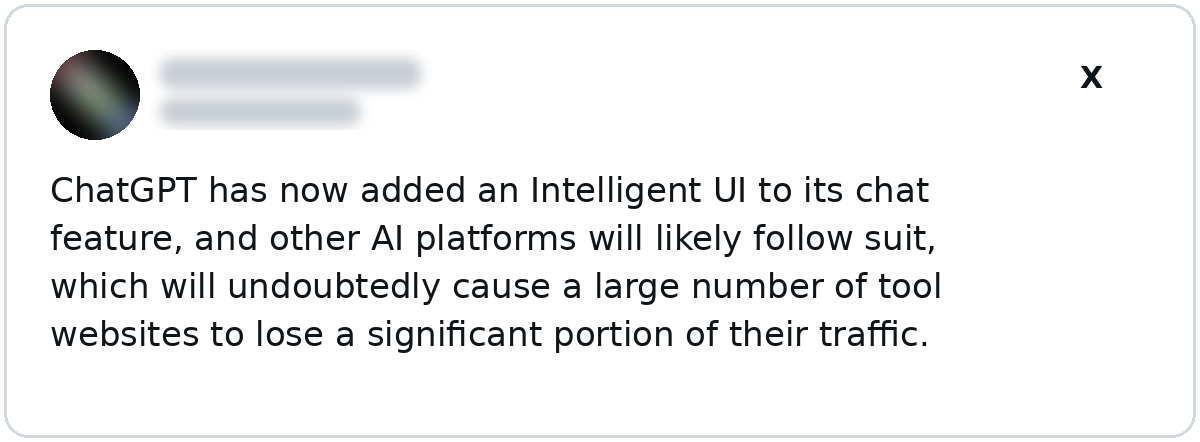
Here’s my take: the worry fits pages that only do one simple job.
A basic tip calculator, a unit converter, or a generic planner template is exactly what OpenAI demoed, from a bill splitter to a savings calculator. Expect those queries to shift into chat first.
Pages with something an AI system can’t produce on the spot are safer. This includes proprietary data, live pricing, account logins, and tools tied to your product. A mortgage calculator using a lender’s real rates still gives people a reason to visit.
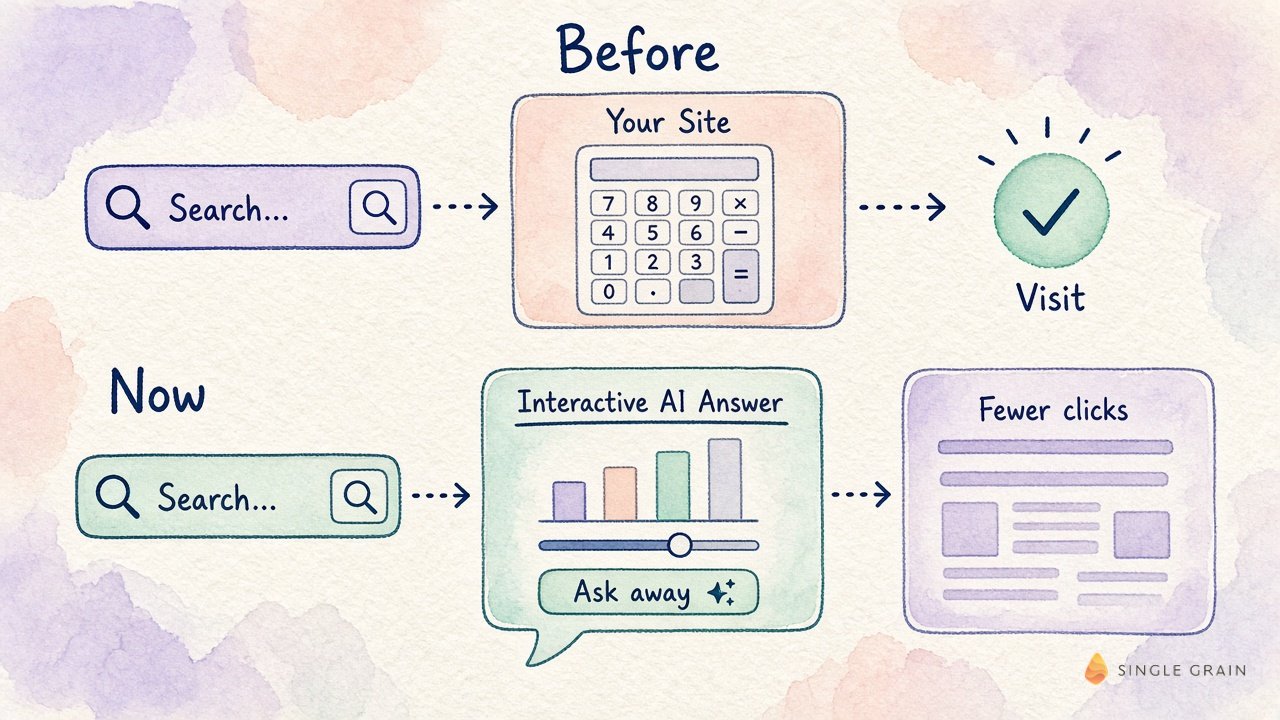
Before Interactive AI Answers vs Now
From my perspective, here is the before and now. Before, a search led to a calculator on your site, and the visit counted as traffic. Now, the same search can end in an interactive AI answer inside chat, with a chart and slider doing the job, so fewer people click through to any website.
| What You Should Do |
|---|
| Export your top 50 landing pages from your analytics. Tag each one as either a generic task (a chatbot could rebuild it) or a unique asset (it needs your data, product, or expertise). Move budget toward the unique assets first. |
Concern 2: Can You Trust a Polished AI Answer?
A second group cared less about traffic and more about accuracy. These replies asked a fair question: does a slick chart make a wrong answer look right?
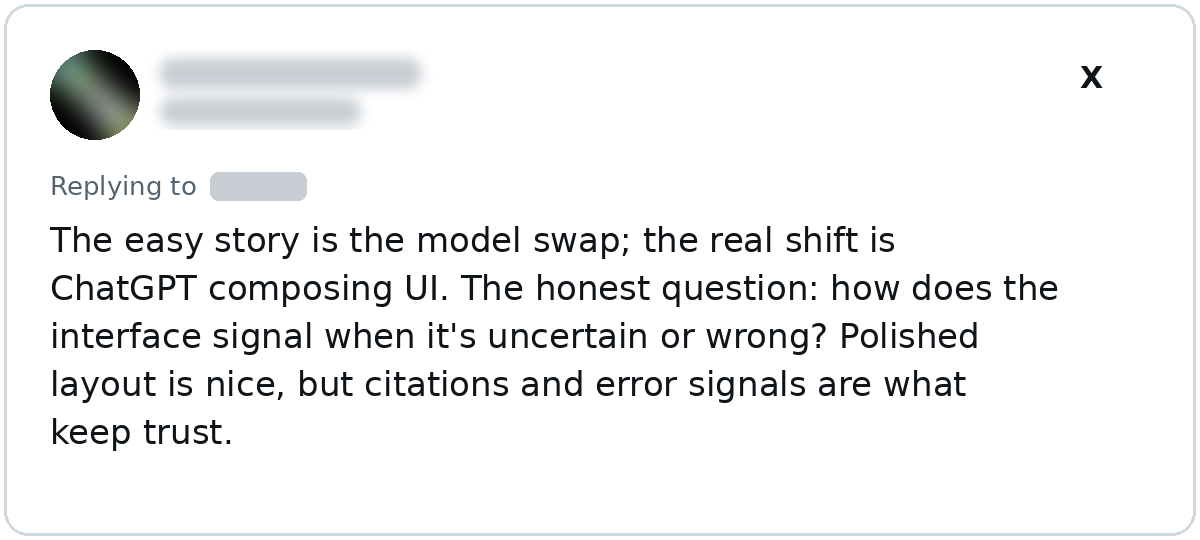
Others echoed the same doubt. One reply said the real test is “whether interactive outputs remain accurate, editable, and easy to verify.” Another asked whether the tools “clarify decisions or just make answers feel more polished.”
OpenAI claims GPT-6 is better at recognizing the limits of its own capabilities and makes better decisions about when to search the web. Even so, a model can only cite sources it finds and trusts.
In my opinion, this gap is your opening. When an assistant builds a chart about your industry, it needs numbers from somewhere. Brands with clear, original, well-sourced facts are the ones that get pulled in and credited. Strong digital PR for ChatGPT citations helps your figures show up in the places AI systems check.
| Pro-Tip |
|---|
| Put your most quotable numbers in plain sentences near the top of a page, with the date and method beside them. AI systems lift clear claims far more easily than figures buried in a PDF or an image. |
Concern 3: Do Widgets Save Clicks or Add Them?
Several replies pushed back on the idea of more interface always being better. One user wrote “please let the UI know when to get out of the way.” A second called decorative widgets that add clicks without reducing confusion the main failure risk.
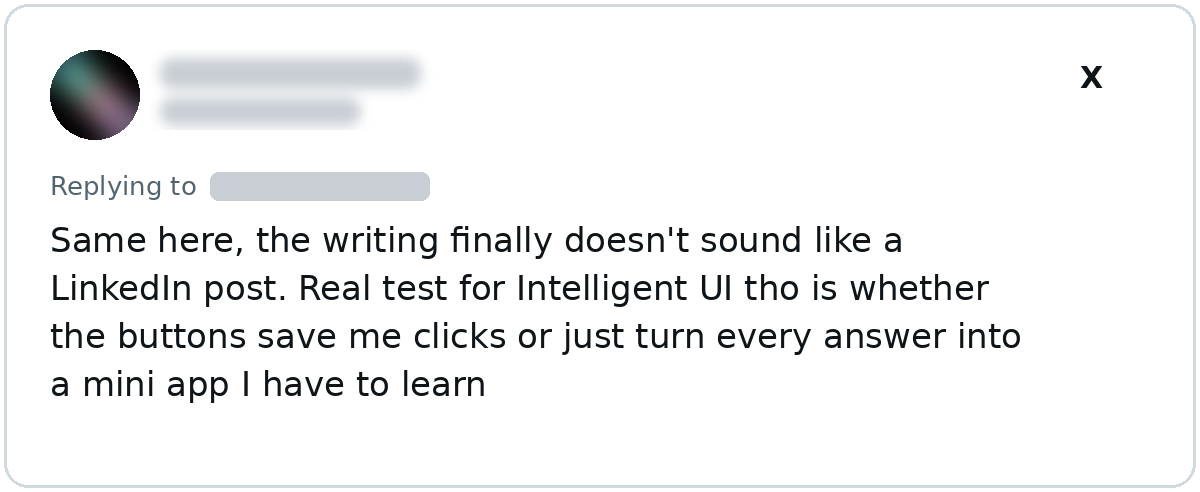
For marketers, this debate matters more than it looks. When the in-chat tool feels clunky, people still search for a better version. Your own interactive pages have to be faster and clearer than what a chatbot spins up in seconds.
Look at your calculators, quizzes, and configurators with fresh eyes. Cut steps, show the result above the fold, and explain the next action. These types of interactive content still work when they solve a problem better than a generic widget.
The Upside: Why So Many People Are Excited
The mood wasn’t all doom. Plenty of posts welcomed the change, with lines like “walls of text were never the product” and “The interface is becoming part of the answer.” Teachers and learners liked the idea of changing one input and watching the result.
A quieter point showed up too. One post argued customers will expect the same interactivity from websites. I agree. Once people get used to answers they can play with, a static page with a wall of copy will feel dated.
So treat this as a design brief for your own site.
Comparison pages can become sortable tables, and pricing pages can include a simple estimator. When someone does click through from an AI answer, give them something richer than what they just saw in chat.
The Skeptics: Is Intelligent UI Really New?
A smaller group doubted the hype. One reply argued the components already existed in open-source projects and called the launch a way “to make users stay in their platforms.” Another posted, “have you heard of apps?”
Whether the parts are new barely matters to your traffic. Distribution changes behavior. A feature placed in front of over a billion weekly users resets expectations, even if developers could build something similar before.
OpenAI also notes the format depends on the question, and plain text still appears when it is most useful. Rollouts like this tend to expand over time, so plan for more queries to stay inside chat.
How to Protect Your Traffic and Get Cited in Interactive AI Answers
Every sentiment above points to the same playbook. Treat your site as a source AI systems rely on, and give human visitors a reason to come through.
- Sort pages by risk. Separate generic task pages from pages built on unique data or expertise, then decide where to invest.
- Publish citable facts. Original stats, benchmarks, and definitions written in short, clear sentences are easy for an assistant to quote and credit.
- Keep pages readable for AI crawlers. Clean HTML, fast pages, and open access for AI bots matter here. This crawl and citation readiness checklist covers the technical side.
- Upgrade your own interactive pages. Build tools that use your data, so they beat any generic version a chatbot creates.
- Measure visibility alongside visits. Track how often your brand appears in AI answers next to organic sessions. Plenty of LLM tracking tools for brand visibility can handle this reporting.
Search fundamentals still apply here. Google has said optimizing for AI search is SEO, and the same quality signals help you in both places.
| Starter prompt for a page risk audit |
|---|
| Here is a list of my top landing pages with their main query. For each one, tell me whether an AI chatbot could fully answer the query with an interactive tool or chart. Label it high, medium, or low risk, and suggest one unique asset that would make the page worth visiting. |
Stay the Source AI Answers Depend On
Interactive AI answers will take some clicks, especially from simple tool pages. They also create a bigger need for trusted sources, because a chart is only as good as the data behind it. Brands that publish clear facts and build genuinely useful experiences can win in both places.
My team at Single Grain helps companies get cited in AI answers while protecting the organic traffic that still drives revenue. Talk to us about your AEO plan, and we’ll show you which pages are most exposed.
| Action Step |
|---|
| Ask ChatGPT five questions your best landing pages answer. Note which replies turn into interactive tools, and whether your brand gets cited. |
Frequently Asked Questions About Interactive AI Answers
-
What are interactive AI answers?
Interactive AI answers are chatbot replies that include charts, calculators, forms, buttons, or diagrams you can use directly in the conversation. OpenAI calls its version Intelligent UI, which arrived with GPT-6 in ChatGPT.
-
Will interactive AI answers reduce website traffic?
They will likely reduce clicks for simple tasks, such as basic calculators, converters, and generic planners, because people can finish those tasks in chat. Pages built on proprietary data, live pricing, or real expertise are less exposed.
-
How is AEO different from SEO?
SEO focuses on ranking in search results and earning clicks. Answer engine optimization (AEO) focuses on getting your content found, trusted, and cited inside AI answers. Both rely on the same fundamentals: useful content, clear facts, and pages search engines and AI crawlers can read.
-
How can my brand get cited in AI answers?
Publish original data and clear facts in plain sentences, earn mentions on trusted third-party sites, and keep your pages fast and open to AI crawlers. Then track how often your brand appears in AI answers over time.
-
Who can use Intelligent UI in ChatGPT?
According to OpenAI, Plus, Pro, Business, and Enterprise users got it first on GPT-6 Sol, and Free and Go users followed shortly after on GPT-6 Luna. It applies to the Chat experience in ChatGPT.