

What is AI Content Creation?


In an increasingly digital world, content is king. From blog posts and social media updates to marketing copy and technical documentation, businesses and individuals constantly strive to produce high-quality, engaging content to capture attention and convey messages effectively. The advent of Artificial Intelligence (AI) has brought about a transformative shift in this landscape, introducing new possibilities for content creation. But what exactly is AI content creation, and how is it reshaping the way we generate written material?
AI content creation refers to the process of leveraging artificial intelligence technologies, particularly machine learning algorithms and generative AI models, to automate or assist in the production of various forms of written content. Discover how AI is transforming various industries in our latest industry report. This innovative approach moves beyond simple automation, enabling machines to understand context, generate coherent text, and even adapt to specific tones and styles. It’s akin to having a smart writing assistant that can handle tasks ranging from basic product descriptions to complex marketing campaigns, freeing up human creators to focus on more strategic and creative endeavors. Learn more about optimizing your content workflow with our AI tools comparison.
TABLE OF CONTENTS:
Understanding AI Content Creation
At its core, AI content creation involves sophisticated algorithms that analyze vast datasets of existing text to learn patterns, grammar, style, and factual information. These models can then generate new text that is often indistinguishable from human-written content. The process typically involves:
- Natural Language Processing (NLP): AI systems use NLP to understand, interpret, and generate human language. This allows them to process input prompts and produce relevant outputs.
- Machine Learning (ML): ML algorithms enable AI models to learn from data, improving their ability to generate high-quality content over time. This includes deep learning techniques, particularly neural networks.
- Generative AI Models: These are specialized AI models, such as Large Language Models (LLMs), that can create new content based on learned patterns. Examples include models like GPT-3, GPT-4, and others that power many AI writing tools.
How AI is Revolutionizing Content Creation
AI is not just a tool for automation; it’s a catalyst for revolutionizing the entire content creation workflow. Its impact is felt across various stages, from ideation to publication.
Enhanced Efficiency and Speed
One of the most significant advantages of AI in content creation is the dramatic increase in efficiency and speed. AI tools can generate drafts, summaries, or even full articles in a fraction of the time it would take a human writer. This allows businesses to produce content at scale, meet tight deadlines, and respond quickly to market trends. For more insights on content strategy, explore our guide to effective content planning.
Improved Content Quality and Consistency
While early AI-generated content sometimes lacked nuance, modern generative AI models are capable of producing high-quality, coherent, and contextually relevant text. They can maintain a consistent brand voice and style across all content, which is crucial for brand identity. AI can also assist in grammar checks, plagiarism detection, and readability improvements, further enhancing overall quality.
Cost Reduction
By automating repetitive and time-consuming writing tasks, AI can significantly reduce the operational costs associated with content production. This allows businesses to reallocate resources to other critical areas or invest more in human creativity and strategy.
Personalization at Scale
AI enables unprecedented levels of content personalization. It can analyze user data and preferences to generate tailored content for different audience segments, leading to more engaging and effective communication. This is particularly valuable in marketing, where personalized messages can drive higher conversion rates.
Key Applications of AI in Content Creation
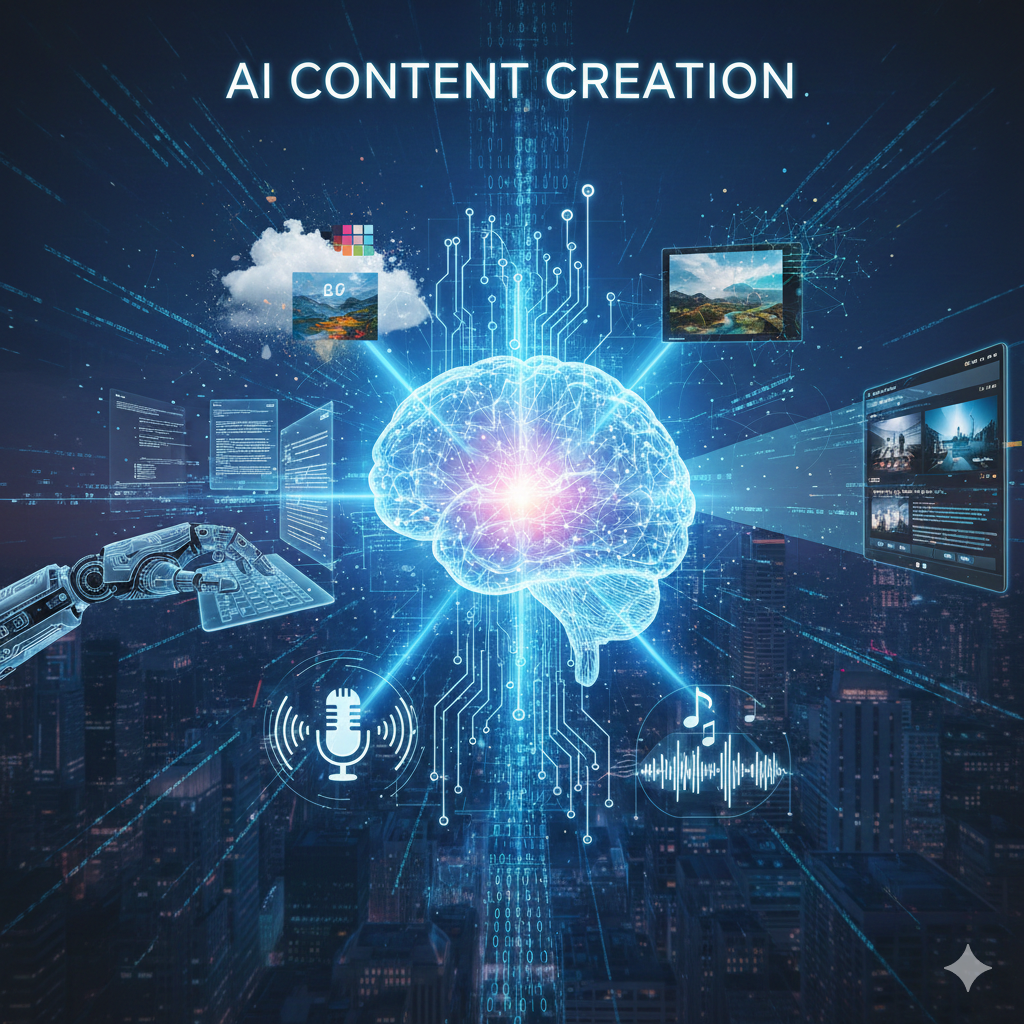
AI’s versatility means it can be applied to a wide array of content creation tasks:
- Blog Posts and Articles: Generating outlines, drafting sections, or creating entire articles on various topics.
- Marketing Copy: Crafting compelling headlines, ad copy, social media posts, and email newsletters.
- Product Descriptions: Automatically generating detailed and engaging descriptions for e-commerce products.
- Summarization: Condensing long documents or articles into concise summaries.
- Translation: Providing quick and accurate translations of content into multiple languages.
- Report Generation: Automating the creation of business reports, financial summaries, and analytical documents.
Challenges and Limitations of AI Content Creation
Despite its numerous benefits, AI content creation is not without its challenges and limitations. It’s important to recognize that AI is a tool, and its effectiveness often depends on human oversight and guidance.
Lack of Genuine Creativity and Emotional Intelligence
While AI can generate novel combinations of words and ideas, it often lacks genuine creativity, emotional intelligence, and the ability to understand complex human experiences. It cannot truly empathize or bring a unique human perspective to storytelling, which is vital for deeply engaging content.
Potential for Bias and Inaccuracy
AI models learn from the data they are trained on. If this data contains biases, the AI-generated content may perpetuate those biases. Similarly, AI can sometimes generate factually incorrect or misleading information, especially if the training data is outdated or flawed. Human fact-checking remains essential.
Ethical Considerations
The rise of AI content creation raises ethical questions regarding authorship, intellectual property, and the potential for misuse, such as generating misinformation or propaganda. Clear guidelines and responsible AI development are crucial.
Over-reliance and Loss of Human Skills
An over-reliance on AI could potentially lead to a decline in human writing skills and critical thinking. It’s important to strike a balance between leveraging AI’s capabilities and nurturing human talent.
The Future of AI Content Creation
The trajectory of AI in content creation points towards a future where human and artificial intelligence collaborate seamlessly. AI will continue to evolve, becoming more sophisticated in understanding context, generating nuanced language, and even developing more creative outputs. The focus will likely shift from full automation to AI as a powerful co-pilot, augmenting human capabilities rather than replacing them entirely.
Future developments may include:
- Hyper-personalization: AI will enable even more granular personalization of content, adapting not just to user preferences but also to their real-time emotional states and needs.
- Multimodal Content Generation: AI will increasingly generate content across various modalities, including text, images, audio, and video, creating richer and more immersive experiences.
- Enhanced Human-AI Collaboration: New tools and workflows will emerge that facilitate more intuitive and effective collaboration between human creators and AI systems, allowing each to leverage their unique strengths.
Conclusion
AI content creation is a powerful and rapidly evolving field that is fundamentally changing how we approach content generation. By offering unparalleled efficiency, scalability, and personalization capabilities, AI tools are empowering businesses and individuals to produce more content, faster, and often at a higher quality. However, it’s crucial to navigate its challenges, including ethical considerations and the need for human oversight, to harness its full potential responsibly. The future of content creation is undoubtedly a collaborative one, where AI serves as an indispensable partner to human creativity, driving innovation and shaping the digital landscape.
Frequently Asked Questions About AI Content Creation
Q: Can AI completely replace human content writers? A: While AI can automate many writing tasks, it currently lacks genuine creativity, emotional intelligence, and the ability to understand complex human experiences. It is best viewed as a powerful tool that augments human writers, allowing them to focus on higher-level strategy and creativity.
Q: Is AI-generated content detectable? A: The detectability of AI-generated content is an ongoing area of research. While some tools claim to identify AI-written text, AI models are constantly evolving, making detection increasingly challenging. The focus should be on producing high-quality, valuable content regardless of its origin.
Q: What are some popular AI content creation tools? A: Many AI tools are available, ranging from general-purpose AI writing assistants to specialized tools for specific content types. Some popular examples include Jasper, Copy.ai, and various platforms powered by large language models like GPT-3 and GPT-4.
Q: How can businesses ensure the quality of AI-generated content? A: To ensure quality, businesses should implement a robust review process involving human editors. This includes fact-checking, editing for tone and style, ensuring accuracy, and verifying that the content aligns with brand guidelines and ethical standards.
Q: What are the ethical implications of using AI for content creation? A: Ethical concerns include potential biases in AI-generated content, issues of authorship and intellectual property, and the risk of generating misinformation. Responsible AI development and deployment, along with clear disclosure when content is AI-assisted, are crucial.
Ready to explore how AI can transform your content strategy? Contact Single Grain today to learn more about leveraging AI for impactful content creation!