

Brand Equity Citation Hygiene When LLMs Attribute You Wrong


What do you do when an LLM attributes your brand to the wrong product?
Citation hygiene is an operating loop for wrong brand attributions in AI answers. It separates an incorrect statement from an unsupported suspicion, connects the correction to an authoritative source, and assigns someone to verify the outcome. Single Grain’s recommendation is to install that control before increasing content production or buying a stronger model. Thin evidence stays labeled thin until a repeatable check supports a stronger conclusion.
- Capture the exact answer and distinguish its claims from its citations.
- Route ownership ambiguity before commissioning correction content.
- Publish only assets that clarify a documented fact.
- Close tickets against recheck evidence, not publication activity.
At a morning brand-ops review, an analyst captures a ChatGPT answer that assigns a competitor’s product to the brand she monitors. She saves the prompt, answer, cited links, and capture date in a Citation Hygiene Ticket. The failure is specific enough to investigate: a product has been attached to the wrong company.
At the next AEO work session, the correction owner opens that ticket beside an official product page. A clarification asset can address the confusion, but publishing it will not prove that the answer changed. These are illustrative operator scenes, not reported client results. The job is to preserve evidence, correct what the team controls, and recheck the original failure.
Job delta: Closest live coverage treats brand mentions as a monitoring problem. This page installs a citation-hygiene ticket loop: capture the wrong claim, attach the correct fact+URL, assign a recheck , without claiming the model will flip.
Kill rule: no wrong-claim capture + correct fact URL + recheck owner → no correction publish.
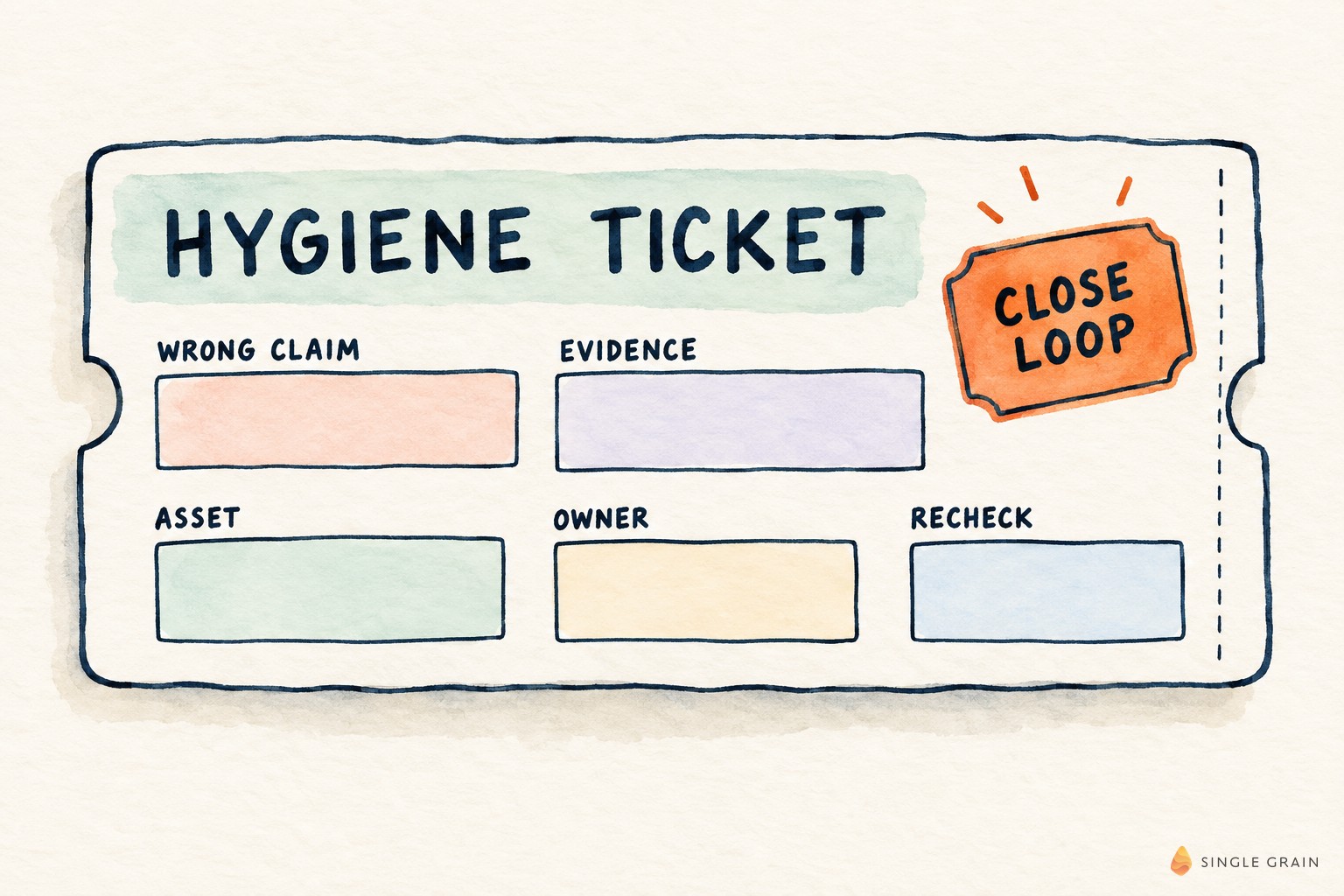
Operator artifact , citation hygiene ticket (illustrative wrong-claim fixture; not a client result). Brand ops blocks correction publish until the recheck owner and correct fact URL are filled:
| Field | Example value |
|---|---|
| Wrong claim text | “OpenAI operates Google AI Overviews.” Constructed test fixture. |
| Surface (ChatGPT/AIO/other) | ChatGPT test fixture; not an observed production answer. |
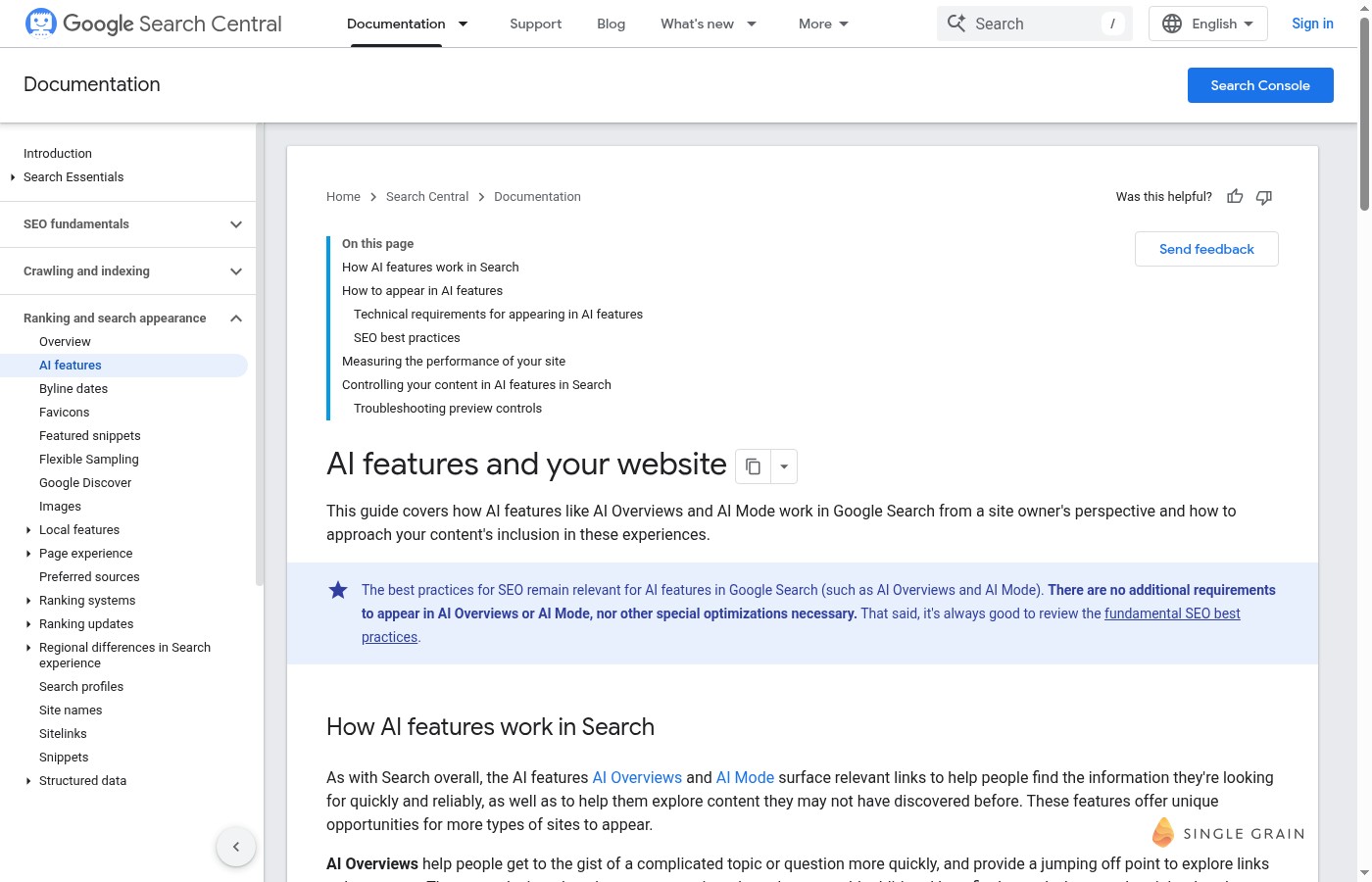
| Correct fact + URL | AI Overviews is a Google Search feature. Google Search Central documentation. |
| Correction asset | Comparison-page clarification: “Google AI Overviews is part of Google Search.” Publication pending. |
| Owner | Maya Chen, illustrative editorial lead. |
| Recheck date | September 30, 2026, illustrative scheduled check. |
| Status | Open: evidence attached; publication and recheck outstanding. |
Because Open Future Forum CMO AI Leverage Report (2026-09-06) finds 81% of 230 marketing/growth leaders past exploring agentic AI, and attribution was the leading named challenge, brand ops spends the next hour on a citation-hygiene ticket (wrong claim + correct fact URL + recheck owner) instead of another awareness asset. Forrester (2026-09-08) puts 83% of B2C marketing decision-makers into agentic implementation (85% see meaningful value), so the kill rule is: no evidence-backed correction asset, no publish.
Eric’s Jev for work: classify, test criteria, route uncertain cases; early tests, human review changes where control sits before the next expensive write. The same review applies Reusable workflows beat custom premium work; build them, then hand them to the team, so uncertain rows route to a human instead of auto-publishing. Together with the embedded scene above, that is three on-angle Eric tape inputs for this job, not a link dump.
TABLE OF CONTENTS:
- Why brand-recall research is not citation hygiene
- Worked scene: the LLM that merges your brand with a competitor
- Worked scene: correction loop fields and human approval that close the ticket
- Citation hygiene ticket (wrong claim, evidence, correction asset, owner, recheck)
- Single Brain installs the system; Single Grain runs it when you need the team
Why brand-recall research is not citation hygiene
Single Grain’s article on how LLMs influence brand recall after ad exposure addresses a different question: how exposure affects what people remember. Citation hygiene asks whether an answer assigns the right product, statement, or capability to the right organization. A brand can be memorable and still receive the wrong attribution.
That distinction changes the work order. Buying reach does not repair an ambiguous ownership page. Publishing more mentions does not establish which source supports a disputed sentence. Start with the claim, its provenance, and the surfaces your team can change.
The Open Future Forum September 2026 report reports that 81% of 230 marketing and growth leaders are past exploring agentic AI. Attribution was the leading named challenge, appearing in 20 of 96 open answers. Those findings support investing in operational controls. They do not measure wrong-brand answers or establish an LLM hallucination rate.
Worked scene: the LLM that merges your brand with a competitor
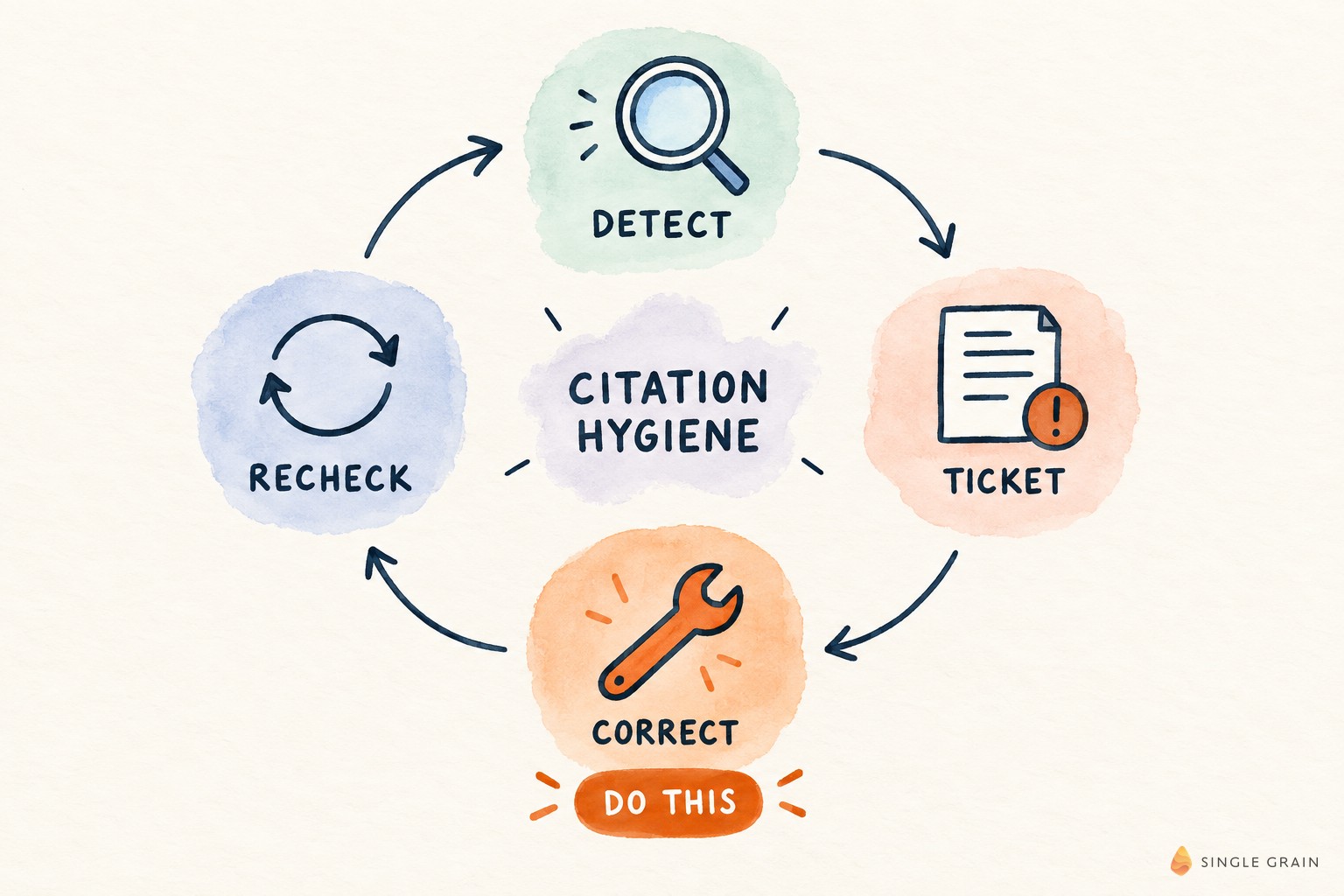
Return to the analyst’s captured answer. For a concrete demonstration, use the deliberately incorrect statement “OpenAI operates Google AI Overviews.” This is a constructed test fixture, not a claim about an observed ChatGPT response. Google’s AI features documentation establishes AI Overviews as a Google Search feature. The ticket can therefore record a specific ownership error with a primary source.
The analyst first separates the answer’s wording from its linked evidence. Does a cited page actually support the ownership statement? Is the sentence wrong, the citation mismatched, or both? Saving only the answer screenshot loses the distinction and makes the correction brief less useful.
In Eric’s September Leveling Up discussion of a decision layer for existing agents, the operating sequence is to use feedback to improve checks when evidence is thin. Applied here, the captured answer becomes feedback for the checker: test product ownership explicitly on the next run. One capture warrants a ticket, not a claim that every answer surface has the same defect.
Eric’s Jev middle-layer discussion changes the spending sequence. Put classification, criteria, and routing ahead of expensive drafting. The middle layer labels this ticket “product ownership,” attaches the source, and checks for missing evidence. It does not immediately commission a new campaign.
Worked scene: correction loop fields and human approval that close the ticket
The AEO owner now receives the same ticket. The correction asset states the ownership relationship plainly, links to Google’s documentation, and removes any conflicting wording on the controlled page. It should have a useful editorial purpose, such as clarifying a comparison already confusing readers. A page manufactured solely to repeat a brand name adds little evidence.
Google’s guidance recommends existing search fundamentals for AI features, including crawl access and helpful content. That changes the implementation choice: inspect the existing page before creating a separate “GEO-only” stack. Single Grain’s explanation of why AI search optimization is SEO provides the corresponding operating frame.
Eric’s Jev work discussion emphasizes classification, test criteria, and routing uncertain cases during early tests. Accordingly, ambiguous ownership or weak evidence goes to a human reviewer, and publication never happens automatically. Assign a named ship gate, such as Maya Chen, the illustrative editorial lead for this example. Use Single Grain’s editorial review process for AI accuracy to define what she checks.
After publication, the owner records the live URL and schedules the original prompt for a fresh session. The recheck retains the surface, date, available model identifier, answer text, and citations. A changed answer is evidence about that check. It does not prove the asset caused the change or that other surfaces are corrected.
Citation hygiene ticket (wrong claim, evidence, correction asset, owner, recheck)
This filled Citation Hygiene Ticket uses the constructed example above. The owner and correction asset are illustrative; the Google evidence URL is real. Its status remains open because no observed recheck has been supplied.
| Field | Example value |
|---|---|
| Wrong claim text | “OpenAI operates Google AI Overviews.” Constructed test fixture. |
| Surface (ChatGPT/AIO/other) | ChatGPT test fixture; not an observed production answer. |
| Correct fact + URL | AI Overviews is a Google Search feature. Google Search Central documentation. |
| Correction asset | Comparison-page clarification: “Google AI Overviews is part of Google Search.” Publication pending. |
| Owner | Maya Chen, illustrative editorial lead. |
| Recheck date | September 30, 2026, illustrative scheduled check. |
| Status | Open: evidence attached; publication and recheck outstanding. |
Eric’s recommendation to build reusable workflows and hand them to the team changes the deliverable. Package these fields, source rules, and closure criteria as a reusable job card. The operations view should show evidence gaps, assigned owners, and due rechecks, rather than a single reassuring accuracy score.
Close the ticket only when the scoped recheck supports closure. Keep unresolved answers open; record conflicting results as mixed. If the source itself is ambiguous, stop the correction job and resolve the fact first.
Single Brain installs the system; Single Grain runs it when you need the team
Single Brain is the AI implementation OS for job-specific agents, evaluations, and kill switches. For citation hygiene, that means a capture schema, ownership checks, evidence routing, and a stop condition when sources conflict. Single Grain can install and run that workflow when you do not want to staff the operating team.
Eric’s point that a better model still needs a better workflow sets the buying rule: fix missing fields and closure criteria before upgrading models. Keep occasional, ambiguous cases manual. Automate repeatable intake only when the classification criteria can be tested.
Gartner predicts over 40% of agentic AI projects will be canceled by the end of 2027, citing costs, unclear value, or inadequate risk controls. That is a forecast, not a measured failure rate. It reinforces a narrow purchase: a working correction loop with inspectable evidence. Contact Single Grain to scope installation and ongoing operation around the answers your buyers actually encounter.


