

11 Creative Fashion Ads to Inspire Your Own Campaign


2-min audio summary:
Creative fashion ads are a must if you want to stand out from other clothing brands online.
By its very nature, the fashion industry makes it easy to take your advertising to the next level. Creative clothing ads will help your fashion brand stand out and attract more customers.
In this post, we’ve curated 11 creative fashion ads to inspire your next strategy.
TABLE OF CONTENTS:
- Key Highlights for Creative Fashion Ads
- Successful Fashion Advertising: More Than Just Visibility
- 11 Creative Fashion Ads That Nail It
- 1) Hollywood-Esque Video Ad: Burberry
- 2) Surrealism on the Runway: Prada
- 3) Rave Innovation: Puma x Dua Lipa
- 4) Shop the Look Campaign: Lulus and MICAS on Pinterest
- 5) Theme Ad Campaign: Svaha Clothing
- 6) Express Brand Ethics: Girlfriend Collective
- 7) Be Fun and Silly: Fashion Nova
- 8) High-Tech Ad Campaign: ASOS
- 9) Go Back in Time: ModCloth
- 10) Unusual Location and Background: Jacquemus x Bad Bunny
- 11) Mixed Media: Dior x Shawn Stussy
- 10 Tips to Create the Perfect Fashion Ad
- Tip #1: Define Clear Objectives
- Tip #2: Understand Your Target Audience
- Tip #3: Craft Compelling Visuals
- Tip #4: Tell a Story
- Tip #5: Incorporate Creativity and Innovation
- Tip #6: Include a Clear Call-to-Action (CTA)
- Tip #7: Prioritize Mobile Optimization
- Tip #8: Consider Influencer Collaborations
- Tip #9: Implement A/B Testing
- Tip #10: Engage in Post-Campaign Analysis
- From High-Tech to Hollywood: Creative Fashion Ads That Nailed It
- Related Video
Key Highlights for Creative Fashion Ads
- Collection of standout fashion ads showcasing unique approaches to branding, storytelling, and visual appeal in the fashion industry.
- Examples from top fashion brands like Gucci and Nike, highlighting campaigns that have successfully captured audience attention.
- Analysis of creative techniques like bold visuals, emotional storytelling, and innovative formats that make these ads memorable.
- Insights into how fashion brands use ads to connect with their audiences, create lifestyle appeal, and drive brand recognition.
- Key takeaways for marketers on crafting visually impactful and emotionally resonant ads in competitive markets.
- Ideal for advertisers, creatives, and fashion industry professionals looking for inspiration in ad design and branding.
Successful Fashion Advertising: More Than Just Visibility
Before we dive into the specific fashion ads, it’s worth saying a quick word about the importance of a really good, truly creative ad for any fashion brand.
In the fiercely competitive realm of fashion, creating advertisements for your brand isn’t merely about gaining visibility. It’s about doing it right, and doing it with flair.
Masterful fashion advertising transcends the basic objective of showcasing products. It weaves compelling narratives, evokes emotions, and encapsulates the essence of your brand. When executed adeptly, a creative ad can morph into a cultural statement, foster a deeper connection with your audience.
The clothing brand Benetton did this in the 1980s and ’90s, and was one of the most recognizable and talked about fashion brands in the world. They launched a series of controversial ads that addressed social issues such as environmentalism, racism, homophobia and AIDS: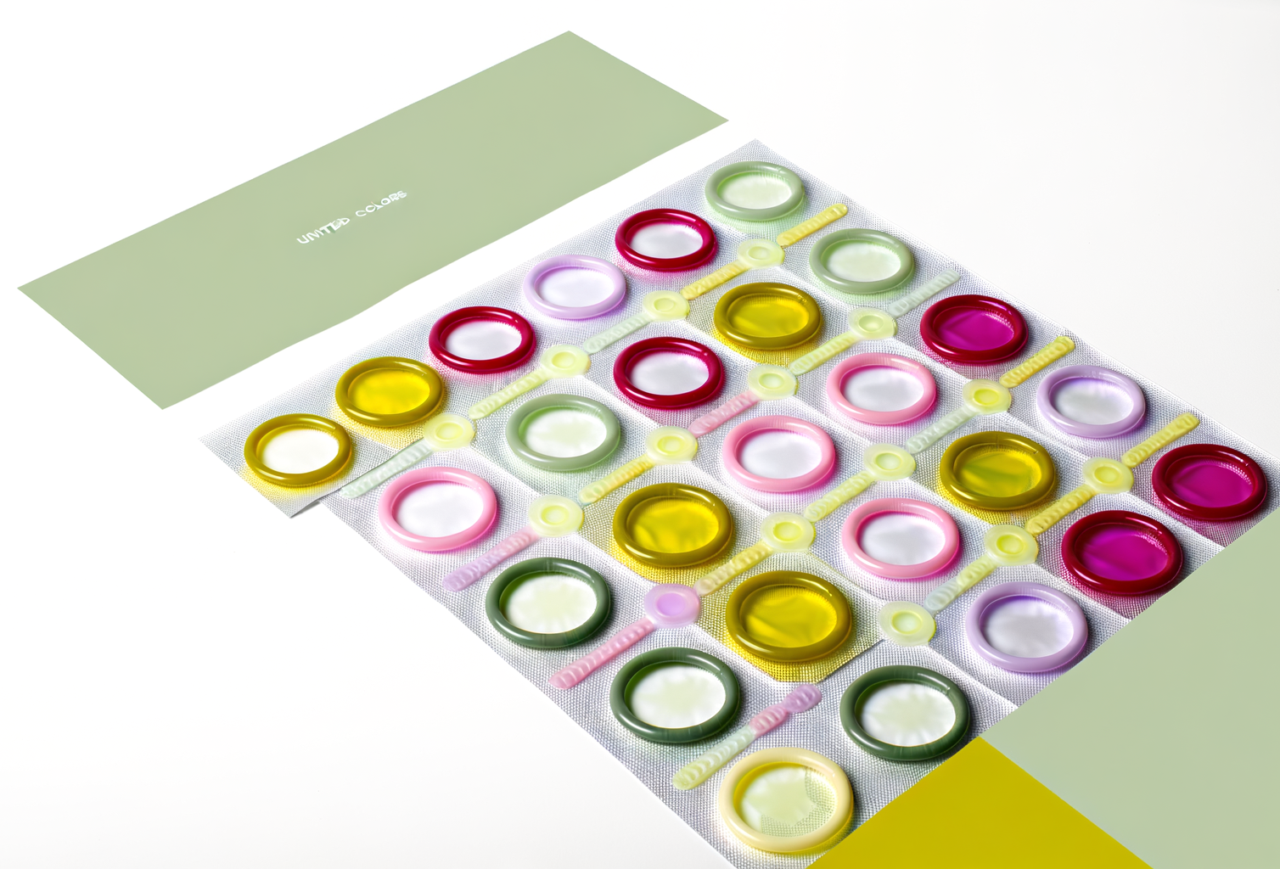
Here are the top advantages of investing in fashion brand ads:
- Brand Visibility: Fashion ad campaigns increase the visibility of a brand, making it known to a broader audience. This is crucial in a competitive market where new brands are emerging regularly.
- Consumer Engagement: Creative and well-executed fashion ads capture the attention of consumers and encourage engagement. Social media platforms, in particular, provide an avenue for direct interaction and feedback.
- Promotion of New Collections and Products: Fashion ads are an effective way to introduce and promote new collections or specific products. This keeps the brand fresh and relevant in the eyes of consumers.
- Storytelling and Connection: Many of the best fashion advertisement campaigns incorporate storytelling, creating an emotional connection between the brand and the consumer.
- Showcasing Brand Personality: Unique fashion ad campaigns allow brands to showcase their personality and values. Whether it’s through humor, elegance, innovation or ethical practices, a visual ad is the perfect way to reflect what the brand stands for.
- Highlighting Unique Selling Points (USPs): Advertising provides an opportunity to emphasize the unique features or selling points of a brand or product. This helps in setting the brand apart from competitors.
- Influencing Consumer Perception: Through strategic messaging and visuals, fashion ads can shape how consumers perceive a brand. This perception influences purchasing decisions.
- Targeted Marketing: Fashion campaigns can be tailored to specific demographics and target audiences. This targeted approach ensures that the message reaches the right people, increasing the chances of conversion.
- Cross-Promotion and Collaborations: Brands can use fashion ad campaigns to promote collaborations with other brands or influencers. This not only expands the reach but also brings in new audiences from different spheres.
- Educating Consumers: Ads can be used to educate consumers about the brand’s values, sustainability practices or the story behind certain products, as we saw with Benetton. This transparency resonates well with conscious consumers.
- Driving Sales and Conversions: Ultimately, the goal of fashion ad campaigns is often to drive sales and conversions. A well-executed ad campaign leads to increased traffic, sales and revenue for the brand.
- Adaptation to Market Trends: Innovative fashion advertising allows brands to stay relevant by adapting to current market trends. Whether it’s through the use of technology, social media trends, or cultural shifts, ads can reflect the current landscape.
11 Creative Fashion Ads That Nail It
21% of retail sales worldwide are from e-commerce, meaning internet shopping is only becoming more popular. And since more clothing companies are emerging online, competition is only becoming fiercer.
Using photography, video and art, these 11 examples of creative fashion ads will help you come up with your own innovative clothing ad campaign!
1) Hollywood-Esque Video Ad: Burberry
Even in the span of two minutes, your brand can make compelling fashion ads with a sense of entertainment. A captivating way to do this is by making your ad look like a Hollywood film.
Take a look at Burberry’s Open Spaces campaign as an example. This video takes four models as they walk through an open field. Once the wind picks up, the models fly and float in the air:

But the main detail is in the movement. Each model does all sorts of acrobatics in the air, making the video more compelling to watch. There are even action-packed scenes, such as when they soar through a cluster of trees. In the final scene, the models jump off a cliff, holding each other as they float over water.
With this ad, fashion brand Burberry proved they are true creatives. They created this ad to illustrate that their clothing pushes boundaries, such as how the models in this video defy gravity. Fashion ads such as this represent freedom in the way few clothing ads do.
This ad contains everything you would find in a Hollywood movie: adventure, action, captivating visuals, and an intriguing concept.
Dive Deeper: 9 Examples of Storytelling Marketing to Inspire Your Next Campaign
2) Surrealism on the Runway: Prada
Models strutting down the runway is a classic example of fashion ads. But what if you took this trope further and added a sense of artistry?
One of the world’s most iconic fashion brands, Prada, took a fashion-meets-Dali approach with its 2016 Fall/Winter Advertising campaign. The campaign features 27 models walking on what appears to be the runway, but clashing images and different backgrounds appear:
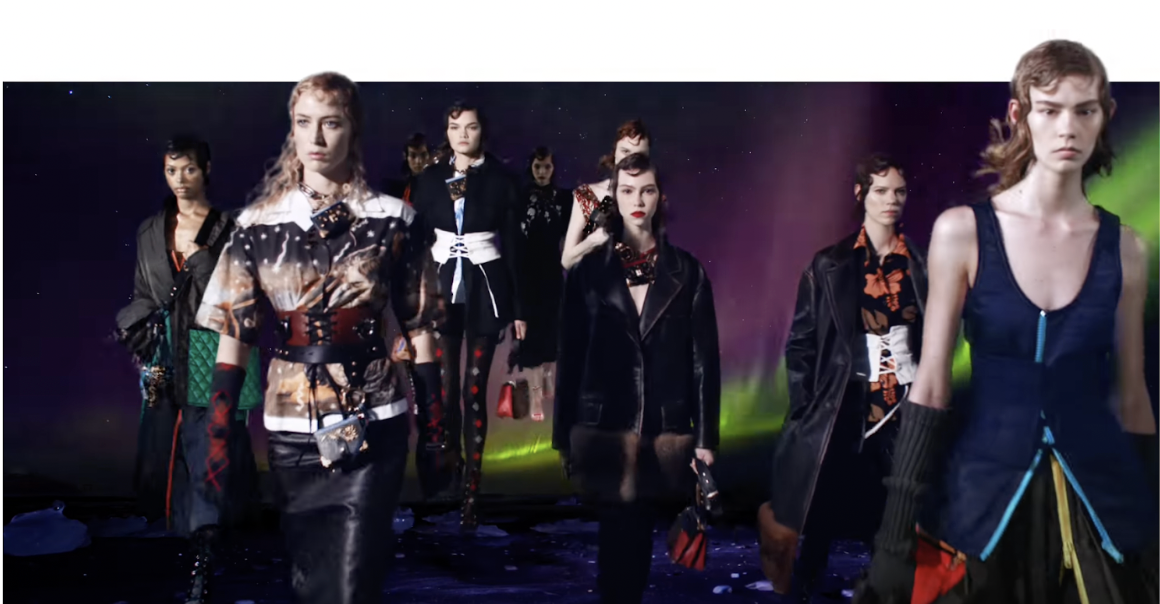
Each scenery is different: The models walk and pose against a sky before sunrise, a starry night sky, the Northern Lights, a mountain scape, and a storm brewing overhead, plus eclectic static serving as the background music. The models also appear to be walking on air, giving the ad a more ethereal element.
With this campaign, Prada injects a little wanderlust into its feminine and couture flair. The surrealist elements don’t take away from the dramatic vibe of the runway, and all 27 models are as fierce as you would expect.
With their coats and cross-body bags, the models all have a high-fashion traveler’s look, inspiring viewers to visit that dream destination – and look good while exploring the world. Some of the models included in this video include the celebrity Milla Jovovich.
Dive Deeper: 8 Tips for Running Instagram Clothing Ads that Convert
3) Rave Innovation: Puma x Dua Lipa
Singer Dua Lipa is Puma’s ambassador for their fashion ads. But she does more than rock Puma’s athletic apparel and sneakers, playing sports or running. Dua Lipa is proving Puma’s innovation by showing off a more colorful side of the brand in their stunning fashion ads.
In the second collection of the Flutur collaboration, Dua Lipa and a group of models (her real dancers) unveil a rave-inspired look in the ad campaign. Audiences are captivated by bright colors, and their poses give off a sense of dancing. The models all wear bright orange tracksuits, complete with a holographic finish.
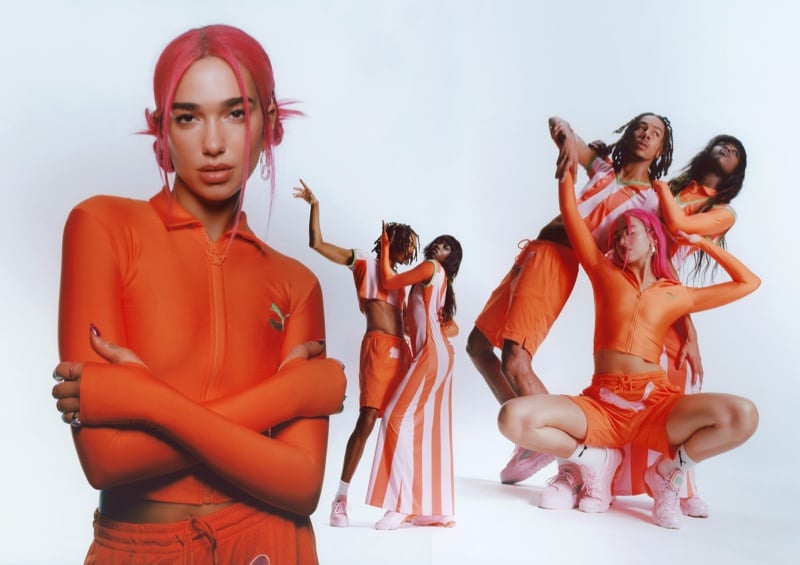
Flutur is a collaboration inspired by vintage looks while taking a modern approach. In the second Flutur collection, Dua Lipa took inspiration from rave culture to give nostalgic sports apparel a playful look in their ads. Puma uses this collection to promote their sports-meets-aesthetics apparel, inspiring fashion and fitness enthusiasts.
Dive Deeper: The Benefits of Investing in Luxury Ads
4) Shop the Look Campaign: Lulus and MICAS on Pinterest
One of the best examples of creative fashion ads is to make advertisements not feel like an ad campaign. A great way to do this is to give your audience inspiration rather than showing off your outfits.
Social media platforms like Pinterest offer the perfect outlet to post your “Shop the Look” fashion ads. While this Pinterest feed combines organic posts with ads, users can reference the two promoted brands: Lulus and MICAS.
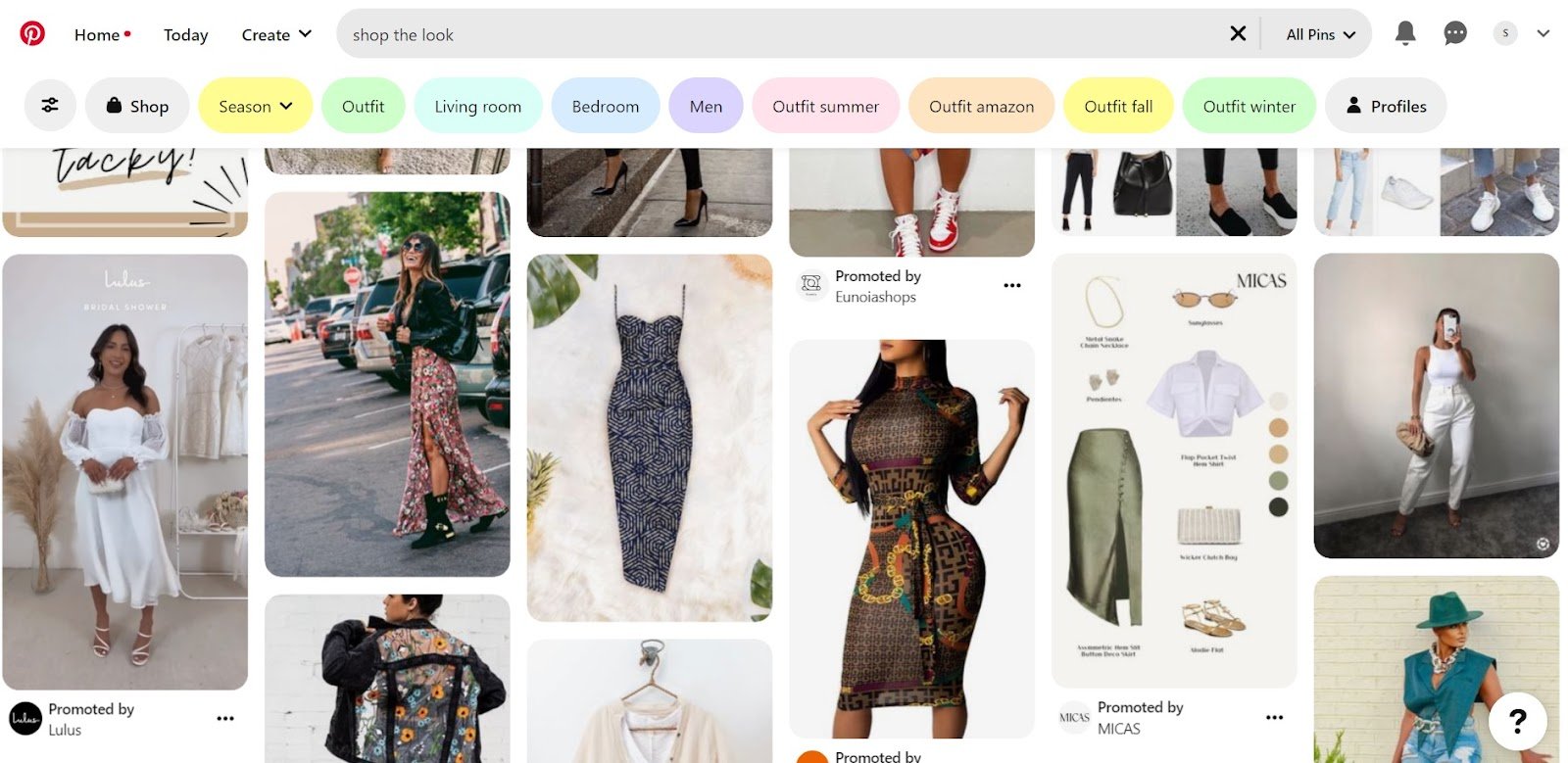
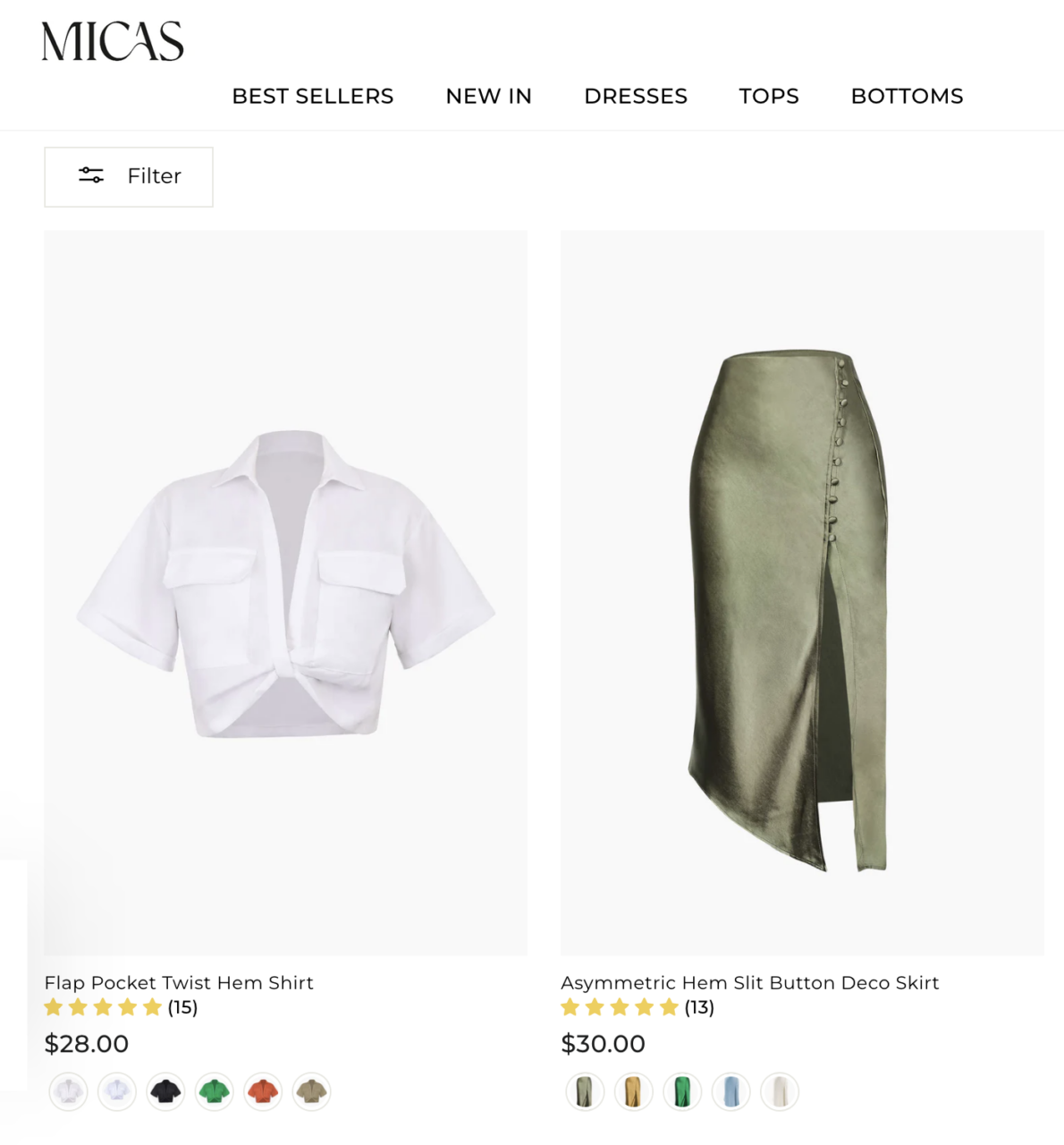
Let’s start with MICAS since they have the traditional “Shop the Look” post.
In this instance, users can see a full recommended outfit, including a crop button-down white blouse, green slit maxi skirt, beige sandals, white clutch bag, and various jewelry pieces. All users have to do is click the ad, and it will direct them to MICAS’ summer collection, where they can buy different pieces for the outfit (and some more):
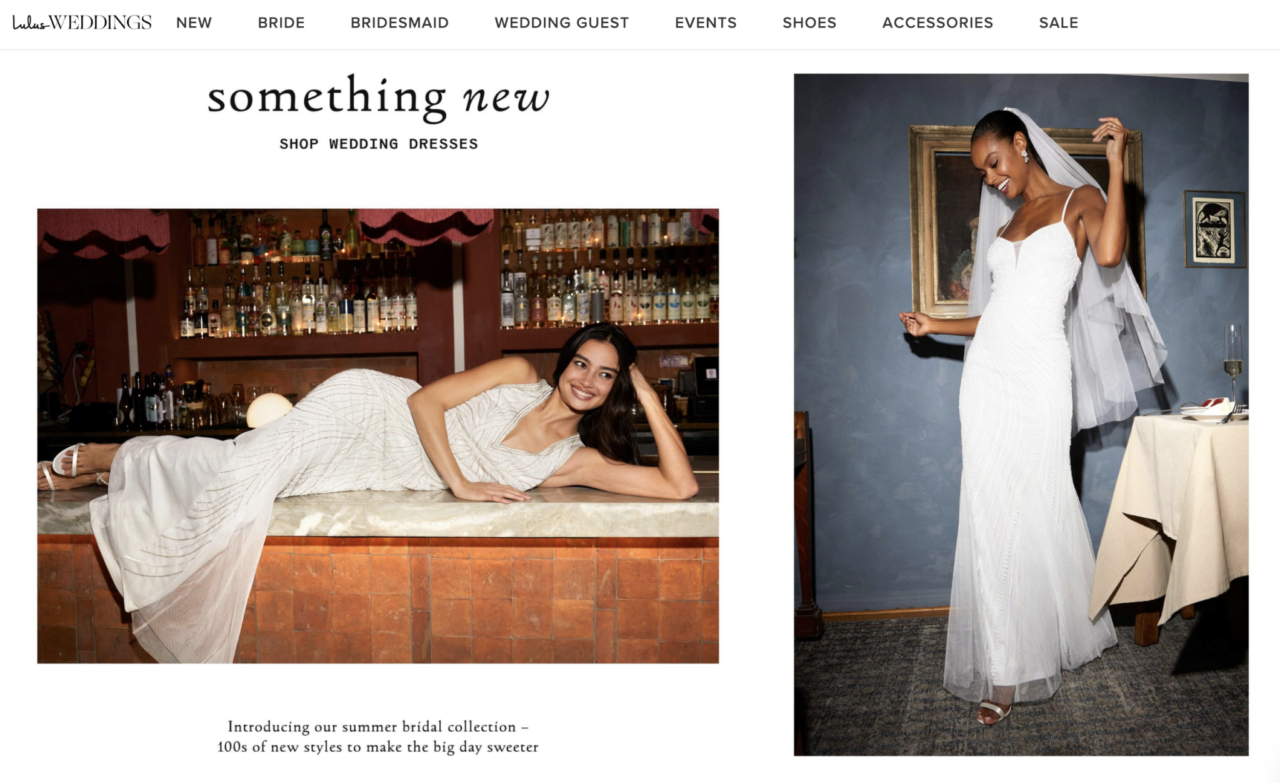
The Lulus ad is a video showing off different bridal dresses. They recommend dresses for different parts of a wedding, such as the bridal shower, bachelorette party, rehearsal dinner, and a wedding gown for the ceremony.
When users click the ad, it takes them to the Lulus Wedding Collection, where they can shop for different pieces in various wedding categories:
Dive Deeper: Is Pinterest Still a Good Platform to Advertise On in 2023?
5) Theme Ad Campaign: Svaha Clothing
Fashion is one of the many ways your audience reflects their interests and passions. Brands targeting a specific niche can use these ideas in their fashion ads, centering their campaign around a theme. While some themes are more common, such as vintage and goth, niche clothing brands can take theme fashion ads a step further.
Let’s use Svaha Clothing as an example. They make STEM and geeky clothing for adults and children passionate about science. But unlike other brands in this niche, Svaha Clothing makes stylish pieces anyone would want to wear, such as colorful dresses and blouses in fun, science-inspired patterns.
This ad is a perfect example of exceptional theme videos. The dress features a constellation pattern unfolding on its own.

Shoe and jewelry recommendations crawl onto the shot, making this ad a fun way to explore science-inspired clothing.
Because Svaha focuses on the science theme in their advertising, they create a lasting brand impression, which is pivotal during the lead generation phase. Since this brand also makes children’s clothing, science-loving parents will be more willing to treat their children to clothes from this company since it offers a dose of education with style.
6) Express Brand Ethics: Girlfriend Collective
More fashion consumers understand the environmental and social costs that come with fashion. Waste, human rights issues, supply chain inefficiencies, lack of diversity/inclusion, and sizing/fit restrictions are only some relevant issues that the fashion industry faces.
If your company isn’t sure how to support these issues, you’ve got the perfect opportunity to promote this in your fashion ads and destroy the competition.
88% of consumers want brands to help them be more ethical and environmentally conscious.
And buyers will pay attention to your social initiatives before supporting your company.
There are ways you can express brand ethics that are still fun and engaging. Take planet-forward activewear brand Girlfriend Collective as an example. They hosted an ad campaign comprised of four print fashion ads with clever eco-friendly slogans.
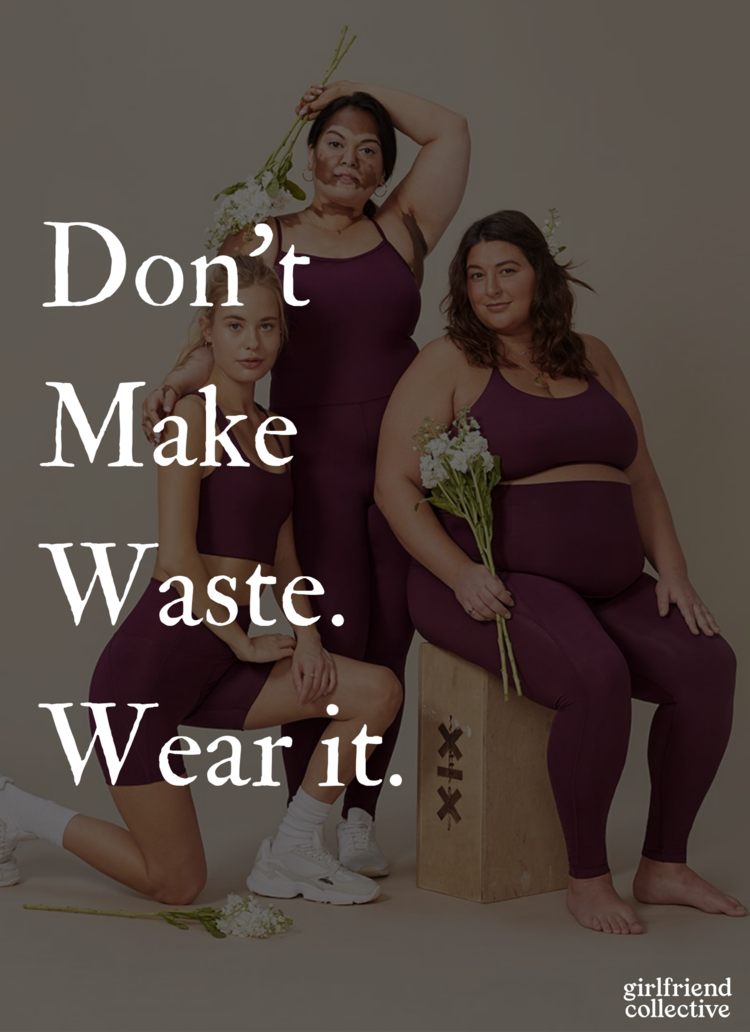
Slogans like “Don’t make waste, wear it” are catchy and inform consumers that Girlfriend Collective makes high-quality activewear with recyclable materials. Their advertising stays on brand and connects to customer values. This will attract a specific consumer base, leading to increased sales.
7) Be Fun and Silly: Fashion Nova
Fashion ads tend to be oh-so-serious, highlighting stoic models walking rigidly down the runway or in fierce, robotic poses. While these fashion ads may influence consumers to want to be glamorous, most buyers don’t relate to those ads. People want to smile, laugh, dance, and have fun. And why not look great while living your best life?
Fashion Nova is becoming one of the biggest clothing stores on the planet, and they changed the game when they were advertising their “stretchiest jeans ever” with playful videos:

The video shows the model wearing various Fashion Nova jeans. Throughout the video, she’s doing yoga poses, exercising, and dancing – things that you normally can’t do that comfortably in tight jeans. This ad engages the viewer, making anyone want to join the fun.
With this video, Fashion Nova is not only proving their jeans are flexible enough for exercising and dancing, they’re also showing off the entertaining side of their branding with their smiling and laughing model.
The ad campaign still has many aesthetics. Fashion Nova shows off their most stylish jeans, and there’s light-hearted music playing in the background. The aesthetics mixed with the fun model makes the ad more engaging to deliver a perfect social media ad campaign.
Dive Deeper: Why Facebook Clothing Ads Are a Must-Have for Fashion Brands
8) High-Tech Ad Campaign: ASOS
With the push to make fashion ads more interesting, clothing companies create their ads with high-tech elements to boost user engagement. There are many ways that clothing brands can create a high-tech fashion ad, such as with games and “choose your outfit” posts.
You can also achieve high-tech visuals in your ads. That’s what ASOS did with social media-inspired effects in their Feed Your Style campaign.
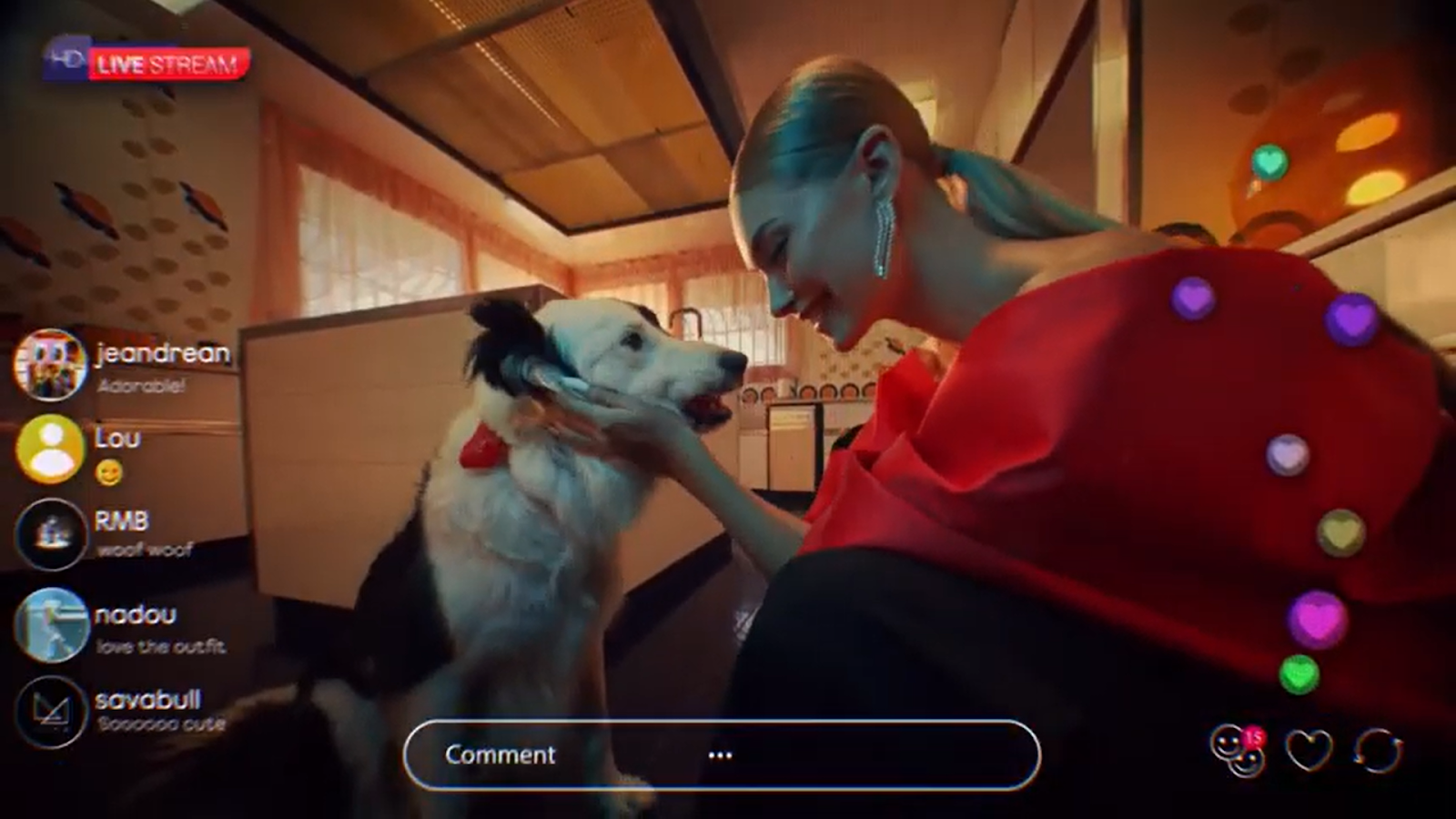
Throughout the course of the video, the ad takes a social media approach imposed over real-life events. Some effects consumers will see include a close-up of fingers scrolling on a screen, a live stream screen, Snapchat filters, low-battery warnings, and models playing fashion games.
This ad is not only engaging but fits the modern social media aesthetic. With this ad, ASOS engages young consumers and informs them that this is a modern and technology-driven clothing company.
Related Content: How to Create Winning Snapchat Clothing Ads
9) Go Back in Time: ModCloth
Of all the different fashion trends, vintage clothing is one of the biggest. Since what was popular in years past almost always makes it back to the present, the secondhand apparel market is set to grow by 127% by 2026.
If your brand sells secondhand clothes or you create vintage-inspired clothing, you can take the aesthetics from the past and revolutionize them in your fashion ads. That’s what ModCloth does in its ad campaign. These images promote ModCloth’s range of fruit-inspired clothing, featuring models holding sliced oranges and ice cream cones.
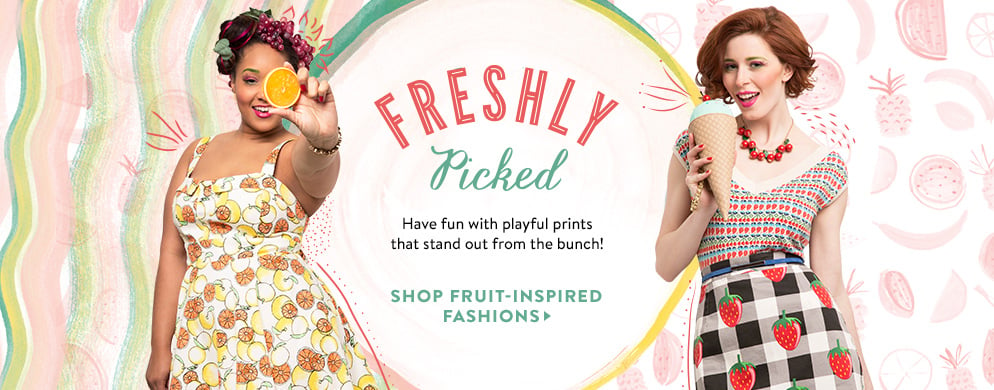
Both models wear ’50s-era skirts and retro dresses, all adorned with colorful fruit patterns. This ad is modern and features diverse models, adhering to ModCloth’s inclusivity and body positivity approach. But the style and aesthetics are nostalgic, making consumers want to rock some fun and classic 1950s outfits.
10) Unusual Location and Background: Jacquemus x Bad Bunny
Another simple way to stand out from competitors is to put your model in odd locations or feature unique backgrounds.
French designer Simon Porte Jacquemus owns one of the most vibrant fashion brands. His clothing is inventive and colorful, and he hosts unique fashion ads to promote his latest collections. But Jacquemus turned heads when he collaborated with Puerto Rican rapper Bad Bunny.
Bad Bunny is a fashion connoisseur, so it was no surprise that he became the face of Jacquemus’ fashion ads. To promote the range “Le Splash,” Bad Bunny is seen wearing a lime green suit next to a swimming pool, pouring water from a hose over his head.
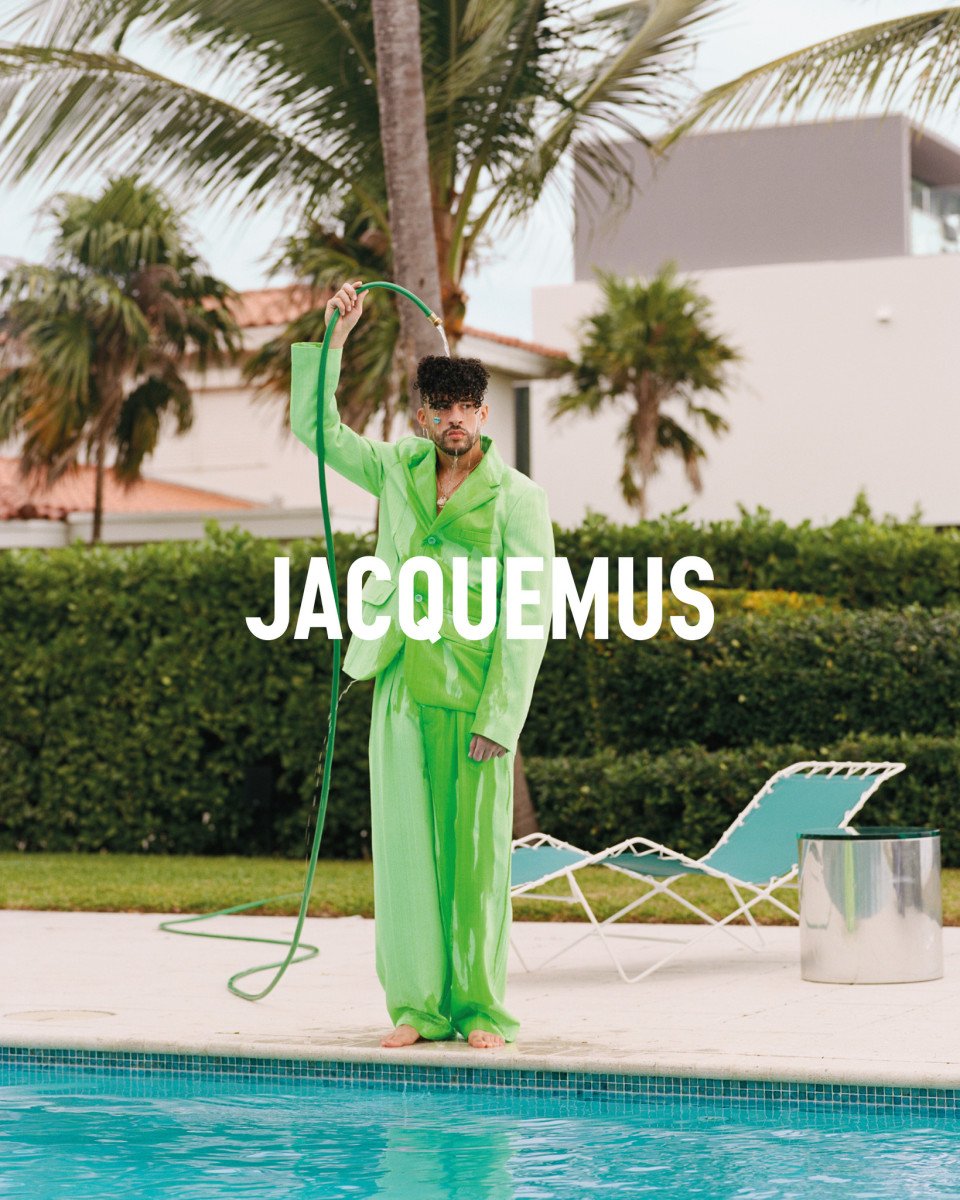
The outfit is vibrant, the pose is eye-catching, and the background stands out.
Tom Kneller photographed Bad Bunny in Miami, but not the glamorous South Beach Miami synonymous with fashion and luxury. Bad Bunny stands next to your average middle class-home swimming pool with tops of brick roofs and bland buildings in the background. This ad doesn’t look luxurious but is still colorful and interesting, staying on brand with Jacquemus.
Dive Deeper: 13 Jewelry Advertising Ideas to Increase Leads and Sales
11) Mixed Media: Dior x Shawn Stussy
An easy way to convey a sense of artistry is by using mixed media. Mixed media is the use of different materials. Collages are the most famous example, but clothing brands can combine art and photography for stunning fashion ads.
Dior promoted its 2020 pre-fall men’s clothing by taking a note from surfboard manufacturer Shawn Stussy. In this ad, we see various men rocking Dior outfits. They’re standing in a setting of black-and-white psychedelic-themed prints and letters.
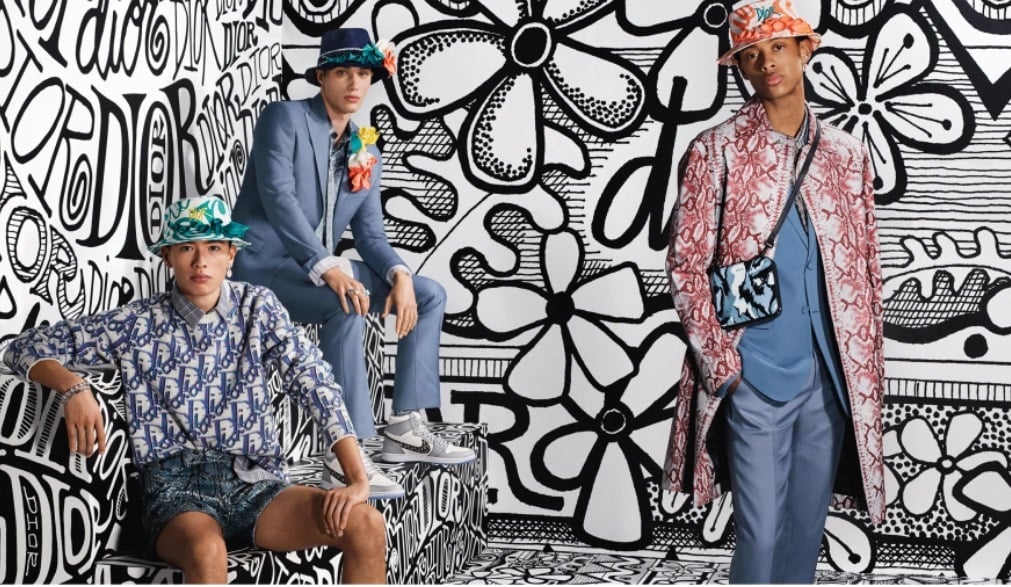
The ad captures Dior’s modern and eye-catching aesthetic while highlighting Stussy’s comeback to the fashion world.
Dive Deeper: The Art of Storytelling in Luxury Ads: Examples and Insights
10 Tips to Create the Perfect Fashion Ad
Here are ten great tips to create creative fashion campaigns:
Tip #1: Define Clear Objectives
Establish specific and measurable goals for the fashion ad, whether it’s increasing brand awareness, driving sales for a particular product or promoting a new collection.
Tip #2: Understand Your Target Audience
Conduct thorough market research to identify the preferences, behaviors and demographics of your target audience. Tailor the ad content to resonate with their interests and aspirations.
Tip #3: Craft Compelling Visuals
Invest in striking visuals that convey the brand’s identity and evoke emotion. Best fashion ads use high-quality photography or videography to grab attention and make a memorable impression.
Tip #4: Tell a Story
Use storytelling techniques to create a narrative around the brand or product. Engage the audience emotionally, making your fashion clothing ads not just a promotional piece, but an experience that connects with people.
Tip #5: Incorporate Creativity and Innovation
Popular fashion ads push creative boundaries by exploring unique concepts, visual styles or even technological innovations. Embrace creativity to differentiate your fashion ad from competitors and capture audience interest.
Tip #6: Include a Clear Call-to-Action (CTA)
Guide viewers on the next steps by incorporating a clear and compelling call-to-action. Whether it’s to visit a website, make a purchase or engage on social media, the best clothing ads use persuasive CTAs.
Tip #7: Prioritize Mobile Optimization
Given the prevalence of mobile usage, ensure that your clothing advertisements are optimized for mobile platforms. Use responsive design and concise messaging to cater to users accessing content on smartphones.
Tip #8: Consider Influencer Collaborations
Explore partnerships with fashion influencers or celebrities whose style aligns with your brand. Influencers can provide authenticity and broaden the reach of the fashion ad by leveraging their existing audience.
Tip #9: Implement A/B Testing
Post-campaign, conduct A/B testing to assess the effectiveness of different elements such as visuals, messaging or ad placements. Use data-driven insights to refine future campaigns and improve overall performance.
Tip #10: Engage in Post-Campaign Analysis
Analyze the success metrics of the fashion ad campaign, including reach, engagement, and conversion rates. Evaluate what worked well and what could be improved, informing future strategies and optimizations.
From High-Tech to Hollywood: Creative Fashion Ads That Nailed It
To ensure your campaigns are running optimally, it’s crucial to regularly analyze their performance. Using a comprehensive Google Ads audit checklist can help you identify areas for improvement and maximize your return on investment.
There are many examples of creative fashion ads. High-end designers make Hollywood-esque ads to sell their clothing, while Gen Z-fueled companies take a social media approach. Other companies collaborated with celebrities and used their ambassador’s unique looks to fuel their fashion ads and promote new collections.
If you want to create an innovative advertising strategy for your clothing store, consider your personal branding and your customers. These companies delivered ads that fit with their style and consumer base, resulting in ads that increased brand awareness and sales.
If you’re ready to level up your business with creative ads, Single Grain’s paid ads experts can help.👇
Frequently Asked Questions on Creative Fashion Ads
-
What makes a fashion ad stand out?
Bold visuals, strong storytelling, and unique creative angles are key to making a fashion ad memorable. The most impactful ads often connect emotionally with viewers or challenge conventional ideas.
-
Which brands are known for creative fashion advertising?
Brands like Gucci, Nike, and Chanel are renowned for their innovative ad campaigns. They often push boundaries with striking visuals and storytelling that resonates with their target audience.
-
How does storytelling enhance fashion ads?
Storytelling adds depth to fashion ads by portraying a lifestyle or values, helping consumers relate to the brand on a personal level. This makes the brand memorable and builds emotional connections with audiences.
-
What role does social media play in fashion advertising?
Social media platforms allow fashion brands to reach large audiences quickly and showcase ads in a visually dynamic format. Interactive features like Stories and Reels enhance engagement and help brands build communities.
-
How can fashion ads appeal to diverse audiences?
Including diverse models and perspectives in ads helps fashion brands resonate with a wider range of consumers. Celebrating diversity in body types, ethnicities, and lifestyles makes brands more inclusive and relatable.
-
What are some creative techniques fashion brands use in ads?
Fashion brands use techniques like bold color schemes, unconventional layouts, and collaborations with artists or influencers to create visually unique ads that grab attention and reflect their brand identity.
Related Video
https://www.youtube.com/watch?v=dzkvlUbrFnU
For more insights and lessons about marketing, check out our Marketing School podcast on YouTube.
Additional content contributed by Sam Pak.



