Chatbot to Human Handoff: Best Practices to Keep Customers Happy


Customers are begging chatbots for a real person, which tells me most chatbot to human handoff rules are still BROKEN. In recent discussions, I’ve heard people say that the phrase “I want to talk to a human” is the saddest sentence of the century. I’ve typed it myself more than once, and I’m guessing you have too… and it is sad!
If your company runs a chatbot on its site or support line, this hits close to home. Every trapped customer is a support ticket today and a churn risk next month. (Great for your containment rate. Less great for your reviews.)
Below, you’ll see what a good handoff looks like, what customers are saying right now, six escalation rules worth adopting, and how to measure whether your handoff actually works.
TL;DR
- Show the exit early. Tell customers how to reach a person before they need to ask, and keep the option visible.
- Escalate on clear triggers. Hand off after two failed answers, on high-stakes topics like billing, and on signs of frustration.
- Pass the full context. Send the transcript, intent, and account details to the person, so the customer never repeats the story.
- Measure the handoff itself. Track time to a human, repeat-information rate, and satisfaction after escalation, beyond containment alone.
What Is a Chatbot to Human Handoff?
A chatbot to human handoff is the moment an automated assistant passes a conversation to a person. Done well, the customer barely notices the switch. Done badly, they start over with someone who knows nothing about the problem.
Chatbots still earn their place for simple questions, order status, and after-hours help. My older post on the benefits and dangers of AI chatbots weighs those pros and cons. This post zooms in on one piece of the experience, which is the exit.
Warm Handoffs and Cold Transfers
Handoffs usually take one of these forms:
- Warm handoff. The bot sends the transcript and a short summary, and the person picks up mid-conversation.
- Cold transfer. The customer lands in a queue, and the person starts with a blank screen.
Warm handoffs take more setup. They also save every customer from telling the story twice, which is the part people hate most.
Why Customers Feel Trapped
Trapped customers usually hit one of three walls. The bot hides the human option, loops on the same wrong answer, or transfers them with zero context. Each wall teaches people to type “agent” over and over until something gives.
So how bad is it right now? The reactions on X this week paint a clear picture.
What Customers Are Saying About Chatbots Right Now
The trending story on X collected posts from people pleading with bots to reach a real person. One reply compared getting through to a human to beating a final boss. Another person admitted to yelling at the bot after several polite tries.
The Frustration in Their Own Words
Most of the posts share the same tone. Their anger points at one problem, which is being stuck with no visible way out.
Gaurav Goyal, an AI engineer who posts daily about AI, summed up the mood in one line.
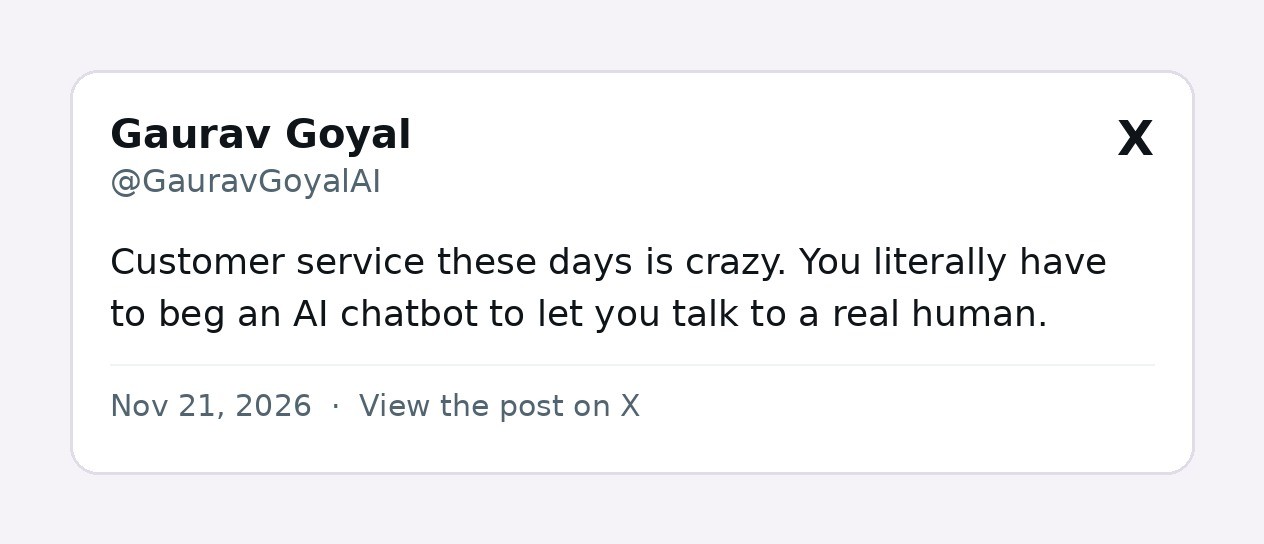
That line stings from someone who builds with AI every day. When AI fans feel trapped, regular customers feel it even more.
The Numbers Behind the Pleas
Fresh research backs up the mood. A Twilio survey of more than seven thousand consumers found 63% want a quick, easy way to reach a live person at any time. The same study found 78% have tried to bypass AI agents to speak with a human. Twilio ran the survey in April and May of 2026.
Trust depends on the exit too. A Five9 report from October 2026 found trust in AI more than doubles, from 26% to 55%, when a human option is visible. It also found 92% of consumers give AI less than ten minutes before they want a person.
With those numbers in mind, here are the rules my team recommends for every chatbot.
Six Escalation Rules for Every Chatbot
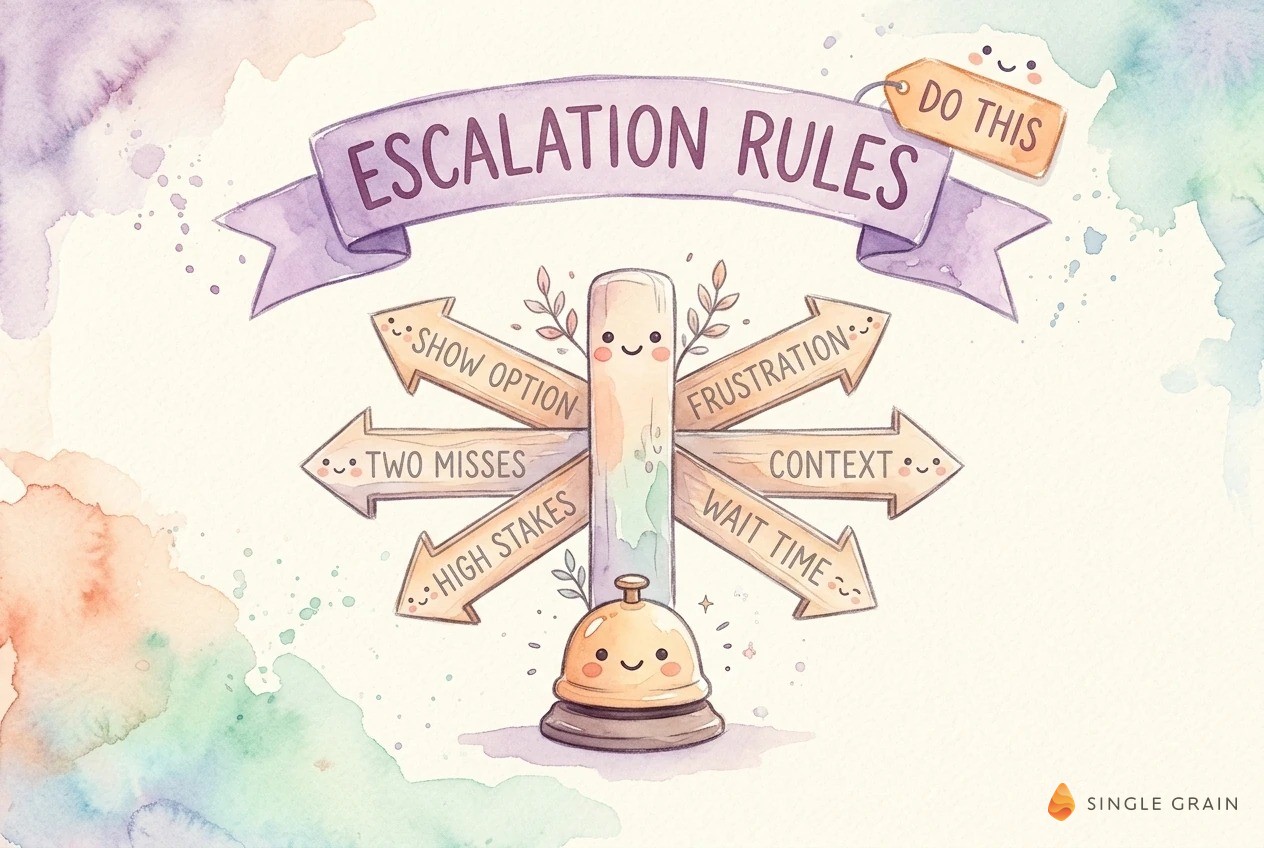
Escalation rules decide when the bot steps aside. Write them down, share them with support and marketing, and review them every quarter. These six rules cover most cases, in order of priority:
- Show the human option up front. Mention it in the first message and keep a “talk to a person” button visible.
- Escalate after two misses. If the bot fails to answer twice, offer a person without waiting for the customer to ask.
- Route high-stakes topics straight to people. Send disputes over billing, complaints, and cancellations past the bot.
- Watch for frustration signals. Repeated requests for an agent, all caps, and angry words trigger a handoff.
- Pass the full context. Send the transcript, intent, and account details with every transfer.
- Set wait expectations. Share the expected wait time, and offer a callback when the queue runs long.
Rules for High-Stakes Topics
Some issues belong with a person from the start. A Metrigy study of one thousand U.S. consumers found 49.4% say billing or payment disputes should always involve a human. Complex problems came in at 46.7%, and complaints at 45.9%.
Map those topics to direct routes. When a customer types “refund” or “charged twice,” the bot should confirm the topic and connect them to the right team. Topic routing works the same way as the label-and-route logic behind inbox triage agents.
Rules for Frustration Signals
Frustration rarely hides. Customers repeat themselves, type “agent” or “human,” switch to capital letters, or use angry words. Each signal should count toward a handoff, and two signals in one chat should trigger one right away.
| Pro-Tip |
|---|
| Add a quiet rule for repeat visitors. If someone contacted support about the same issue in the past week, skip the bot and send them to a person. |
Rules handle the timing. Context decides whether the handoff feels smooth.
How to Pass Context So Customers Never Repeat Themselves
Customers hate repeating information after a transfer. Five9 found roughly a third of escalated customers had to repeat details they already gave the bot. A TELUS Digital poll found repeating the same information was the most burdensome part of AI support for 22% of regular AI users.
What the Handoff Note Should Include
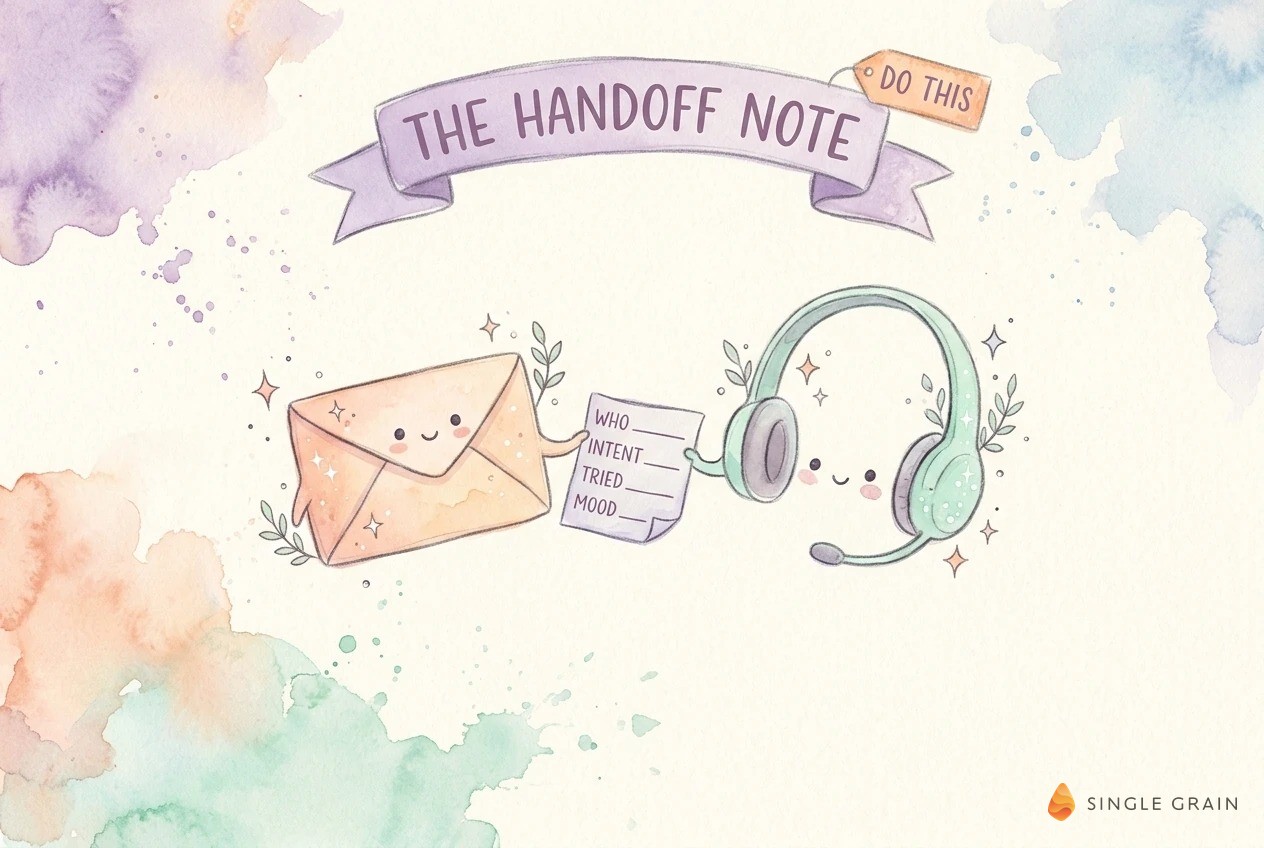
Every transfer should carry a short note with:
- Customer identity. Name, account, and plan, verified once.
- Intent. A one-line summary of what the customer wants.
- What the bot tried. The answers given and why they failed.
- Sentiment. A flag for frustration or urgency.
The person reads the note in seconds and opens with “I see you’re trying to fix your billing date.” That single line tells the customer the wait was worth it.
Bots should also know which replies they may send alone, the same split I use in my AI agent guardrails.
Handoffs for Voice Bots
Phone bots need the same discipline. If you’re weighing a voice agent, my post on AI voice agents covers the build-or-buy choice and the guardrails I’d set before a customer hears one.
Context only helps if a person is ready to receive it. Coverage comes next.
Who Covers the Human Side of the Handoff
A great escalation rule fails if nobody answers. Plan coverage before you promise a person.
Hours, Queues, and Callbacks
Publish real support hours inside the bot. After hours, the bot should collect details, set a callback time, and confirm it by email. A promised callback beats an endless queue every time.
Internal Escalation Paths
The same idea applies to your own marketing agents. My post on exception queues for marketing agents shows how to route hard cases to a person, and my guide to the human step in AI workflows covers who owns each handoff.
| Pay Attention |
|---|
| A high containment rate can hide a broken exit. If customers give up before reaching a person, the bot looks successful while satisfaction drops. |
Once people and rules are in place, the last step is proving the handoff works.
How to Measure Handoff Quality
Containment rate alone rewards trapping people. Track a few handoff numbers next to it.
Metrics Worth Tracking
Watch these numbers every month:
- Time to a human. Minutes from the first request for a person to a live reply.
- Repeat-information rate. Share of escalated chats where the customer restates the problem.
- Satisfaction after handoff. Survey scores for chats that ended with a person.
- Abandonment before handoff. Share of customers who leave while asking for a person.
Review the numbers with support and marketing together. Chatbot experiences shape reviews, social posts, and word of mouth, so both teams share the outcome.
Lessons From Klarna
Klarna became a famous example of an AI chatbot taking on the work of seven hundred workers. The trending story notes the company later pulled back on AI-only support after backlash, which shows how fast the balance can shift.
The lesson is simple. Plan the exit as carefully as the bot.
Give Every Customer a Clear Way Out
Customers will happily use a chatbot when they can see the exit. Show the human option early, escalate on clear triggers, pass the full context, and measure the handoff itself. Your chatbot to human handoff then becomes a reason people trust you.
If you want help turning your site experience and funnels into ones customers trust, Single Grain offers marketing consulting services and marketing funnel services.
Frequently Asked Questions About Chatbot to Human Handoff
-
What is a chatbot to human handoff?
A chatbot to human handoff is the moment an automated assistant passes a conversation to a person. A warm handoff sends the transcript and a summary, so the customer never repeats the problem.
-
When should a chatbot escalate to a human?
Escalate after two failed answers, on high-stakes topics like billing disputes and complaints, when the customer shows frustration, and any time they ask for a person.
-
What information should a chatbot pass to the agent?
Pass the customer’s verified identity, a one-line summary of intent, what the bot already tried, and a sentiment flag. The person can then pick up without asking the customer to start over.
-
How do I measure chatbot handoff quality?
Track time to a human, the repeat-information rate, satisfaction after handoff, and abandonment before handoff, alongside containment rate.
-
Are AI chatbots still worth using for customer service?
Yes, for simple questions and after-hours help, as long as the exit is visible. See the benefits and dangers of AI chatbots for the wider trade-offs.