

Optimizing Old Top-10 Pages for Featured AI Answers


Most SEO teams realize that featured AI answers SEO can make or break visibility, yet their best pages, already sitting in the top 10, rarely show up inside AI Overviews. Search is shifting from lists of links to synthesized answers, and those answers are built from a much smaller set of sources than the classic ten blue links. If your current winners are not being quoted or cited, competitors are effectively piggybacking on your hard‑earned authority.
This guide walks through a tactical “AI Answer Upgrade Path” specifically for existing top‑10 pages so that you can turn traditional rankings into durable visibility across answer engines. You will see how to prioritize which URLs to rework, how to reverse‑engineer AI Overviews and other answer surfaces, how to restructure legacy content into AI‑friendly modules, and how to measure and govern this new layer of search performance.
TABLE OF CONTENTS:
Why your top‑10 pages need an AI answer upgrade now
Answer engines aggregate, summarize, and respond to queries directly in the results, pulling from a small set of pages that they perceive as authoritative, clear, and structurally easy to reuse. These systems power experiences like Google’s AI Overviews, Bing Copilot, Perplexity answers, and chat‑style summaries layered on search results. Instead of pushing users to click through and read full pages, they extract and remix key snippets into a single, conversational response.
Legacy SEO content was often written and structured to win rankings and clicks, not to be quoted verbatim as a definitive answer. Long storytelling intros, buried definitions, and meandering sections can still rank, but they are harder for AI systems to mine for concise, structured information. Upgrading your existing pages for answer engines means making it effortless for these systems to find, understand, and safely reuse your best ideas.
From blue links to answer engines: What changed?
Classic SEO aimed to be the most relevant and authoritative result among ten blue links, assuming that users would click through to evaluate content themselves. Answer engines act more like research assistants: they fetch multiple sources, extract overlapping facts, and generate a composite answer in one place. That shifts the optimization task from “entice a click” toward “be the cleanest, most reusable building block.”
Many older top‑performing pages hide their main answer behind context, marketing copy, or design elements that are hard to parse. AI systems perform better with pages that provide clear definitions, step‑by‑step processes, well‑labeled sections, tables, and FAQs that closely map to queries. Resources that already align with featured snippets and structured SERP elements tend to translate more easily into AI summaries, which is why understanding the relationship between AI Overviews and featured snippets is so crucial for answer‑first optimization.
Once you recognize this shift, the opportunity becomes obvious. Instead of throwing away high‑ranking content, you can refactor it so answer engines see it as the safest, most precise representation of the topic. That requires some surgical editing, new sections, and markup, but not a complete rebuild of your entire content library.
Where your existing SEO wins still matter
Answer engines still need a high‑quality pool of documents to draw from, and they tend to start with pages that already demonstrate strong traditional SEO signals. Crawlability, indexation, relevant backlinks, and historical engagement all influence which URLs are even considered for inclusion in an AI Overview or chat response. Your existing top‑10 pages have a head start: they are already in the candidate set.
What changes is how you tune those pages for answer engines, sometimes called answer engine optimization or generative engine optimization. Instead of chasing a completely new algorithm, you are layering a new set of structural and semantic optimizations on top of the authority you have already built. That combination turns classic SEO gains into multi‑surface visibility.
Featured AI answers SEO signals that answer engines actually use
No search engine publishes a complete blueprint for how its AI summaries choose sources, but you can infer consistent patterns from observing live results. Pages that appear frequently as citations in AI Overviews tend to combine strong classic SEO fundamentals with answer‑friendly structure, clear entities, and up‑to‑date information. Treat these elements as levers you can deliberately tune rather than as mysteries.
At a high level, answer engines appear to weigh several broad categories of signals when deciding which pages to pull into an AI response:
- Topic and intent relevance to the exact query and common variations.
- Readable, extractable structure with clear headings, lists, tables, and concise summaries.
- Entity clarity around people, organizations, products, and concepts mentioned on the page.
- Authority and trust, supported by links, mentions, and behavior signals.
- Freshness, especially for queries where information evolves quickly.
- Technical accessibility, including clean HTML and minimal reliance on fragile rendering.
Featured AI answers SEO requirements for content structure
From the perspective of an answer engine, the ideal page offers a short, unambiguous response to the core question, followed by well‑organized detail. One practical tactic is to add a succinct, 2‑4 sentence “TL;DR” answer near the top of the page, framed in natural language that could be copied almost verbatim into an AI summary. Beneath that, each section should answer a clearly scoped sub‑question.
Think in terms of reusable building blocks: a definition box that explains the term in plain language, a step‑by‑step process with numbered headings, a comparison table for evaluating options, and a cluster of related questions and answers. AI systems can parse these structures more reliably than long, undifferentiated paragraphs. If you want to go deeper into the types of formats that appear in AI summaries, it helps to study a dedicated breakdown of how to get your content featured in AI Overviews and then map those patterns onto your own pages.
Authority, entities, and freshness as selection filters
Even perfectly structured content may be ignored if answer engines cannot confidently associate your page with the right entities. Reinforcing key entities in your copy, headings, and schema, such as products, brands, and core concepts, helps systems align your page with their knowledge graphs. Markup types like Organization, Product, Article, FAQPage, and HowTo provide machine‑readable hints about what your content represents.
Keeping high‑value pages updated is equally important. When answer engines weigh multiple potential sources, they often appear to prefer pages that have been revised recently over those that have not changed in a long time, especially on topics like tools, laws, or best practices that evolve. Refreshing content with new sections, current terminology, and revised examples simultaneously improves human usefulness and strengthens your case for inclusion in AI answers.
All of this presumes that the underlying content quality is strong. Shallow or overly generic text, even when technically optimized, is less likely to be reused in synthesized responses than in‑depth guides that demonstrate real experience and expertise, which is why a separate focus on AI‑ready content quality pays off consistently.
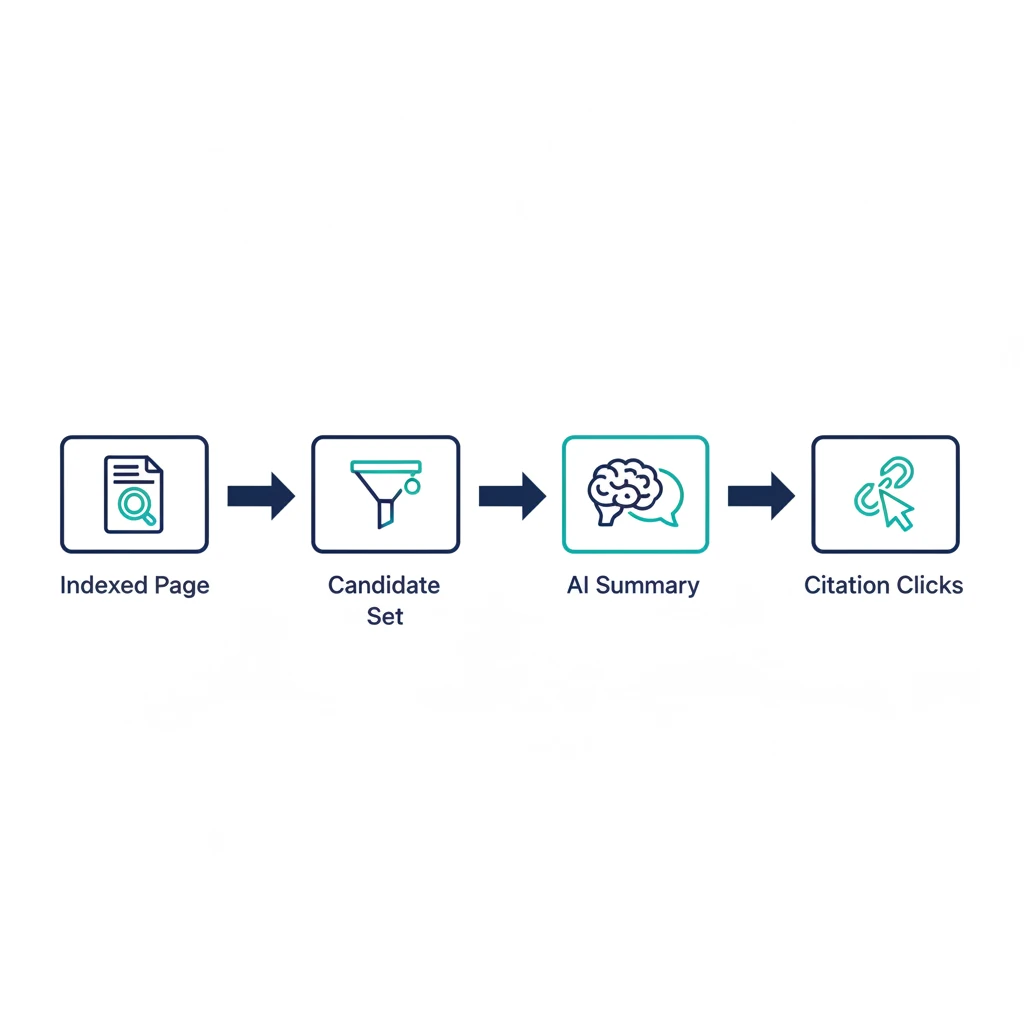
Featured AI answers SEO upgrade path for existing top‑10 pages
With the core signals in mind, the next step is to apply them systematically to the URLs where you already rank. The “AI Answer Upgrade Path” is a repeatable workflow you can run across your portfolio: prioritize pages, audit the current SERP and AI responses, refactor structure and markup, then monitor impact and keep iterating. Treat this as an ongoing program rather than a one‑time content refresh.
Each step builds on the last, so it is worth documenting your process in a shared spreadsheet or project board. That way, as you move through dozens or hundreds of URLs, you maintain consistency in how you score opportunities, design AI‑friendly modules, and report outcomes to stakeholders.
Prioritize which top‑10 pages deserve AI investment
Start by exporting a list of queries where you currently rank in the top 10, along with their associated landing pages, impressions, and click‑through rates. This gives you a concrete inventory of URLs with search traction. Within that list, focus first on the pages that occupy more of the answer space and would meaningfully influence revenue, pipeline, or retention, not just vanity traffic.
Because you cannot optimize everything at once, apply a small set of prioritization criteria to score each URL. For example, an informational guide that drives high‑value leads, a comparison page where being recommended first would directly lift conversions, or a how‑to that underpins product activation are stronger candidates than fringe blog posts. You can flag those priority URLs and move them into an AI upgrade backlog.
- High impressions for queries with clear informational or commercial investigation intent.
- Existing visibility in featured snippets, People Also Ask, or other SERP features.
- Direct connection to business outcomes such as qualified demos, signups, or sales.
- Substantial content depth that is currently under‑leveraged by AI surfaces.
Run an AI‑focused SERP and overview audit
For each prioritized query, manually review the live search results across multiple surfaces. On Google, note whether an AI Overview appears, which domains are cited, and how the answer is structured. On other engines like Bing Copilot or Perplexity, observe whether your brand appears in citations or recommended links, and which competitors dominate the responses.
Capture your observations in a simple template to compare patterns across queries:
- Presence or absence of an AI Overview or chat‑style answer for the query.
- Number and type of citations included in the AI response.
- Dominant response format (definition, steps, comparison, checklist, or mixed).
- Competitors that appear most often in citations across different engines.
- Whether your own URL is cited, and if so, how extensively it is quoted.
Over time, this audit will reveal which answer formats, content types, and competitors are most frequently reused in AI responses for your niche. If you want inspiration for tactical moves you can test, reviewing a focused exploration of ways to rank in AI overviews with AIO‑style optimization can spark ideas for modules and experiments to prioritize first.
Restructure content with AI‑friendly modules
Armed with your audit, you can now refactor each page’s structure so it becomes the easiest candidate for answer engines to reuse. The goal is to keep the core narrative and SEO value while reorganizing it into modules that align with how AI responses are formatted. Often this means adding a short-answer box, tightening headings, introducing new subsections, and pulling existing information into clearer patterns.
Useful modules to consider adding or refining include:
- TL;DR summary at the top that concisely answers the primary question.
- Definition section explaining the core term in straightforward language.
- Step‑by‑step workflow with numbered headings that map to each action.
- Comparison matrix summarizing options, criteria, or vendors side‑by‑side.
- Pros and cons list for key approaches or tools.
- Question hub that groups closely related sub‑topics.
- Conversational FAQ mirroring follow‑up questions users might ask an AI.
Imagine an old guide that opens with three paragraphs of backstory before it defines the concept. In an upgraded version, you might lead with a short definition and key benefits, then a numbered list of steps, followed by deeper sections that expand each step. You are not discarding the original insight; you are simply reshaping it into tiles that answer engines can stack into coherent responses.
Because featured snippets and AI Overviews often favor similar structures, it is helpful to borrow patterns that already work for snippet‑focused optimization. Resources that explore featured snippet SEO for the AI answer era in detail can serve as blueprints for redesigning headings, summaries, and supporting sections on legacy pages.

Schema, entities, and internal links: The technical layer
Once the visible structure is in good shape, add or refine schema markup to make those modules machine‑readable. For example, a clear set of steps can be annotated with HowTo schema, while a set of questions and answers can use FAQPage. Articles that include explicit definitions, author information, and last‑updated dates benefit from Article or BlogPosting markup with robust metadata.
On the entity side, make sure your brand, products, and core concepts are consistently referenced and linked to dedicated hub pages where appropriate. Internal links that connect related entities, such as a product page, a comparison guide, and a how‑to tutorial, help search systems understand how your content pieces fit together. This kind of entity‑based internal linking supports both traditional rankings and AI answer selection.
Technical hygiene remains essential. Ensure that critical content is not hidden behind complex JavaScript rendering, that canonical tags correctly represent your preferred URL, and that duplicate or near‑duplicate pages are consolidated. When answer engines pick a citation, they prefer stable, canonical sources they can trust to remain available.
As you refine this layer, it is useful to think beyond just winning clicks and toward becoming the default citation for your topic. Strategic internal linking and markup go hand‑in‑hand with broader zero‑click SEO strategies for AI answers and SERP citations, where visibility and quoted authority often matter as much as traffic.
Featured AI answers and SEO checklist for legacy content
Before pushing an updated page live, run it through a concise checklist to confirm that it aligns with your AI Answer Upgrade Path. This does not need to repeat every detail of your process, but it should verify that the essential layers are in place across intent, structure, semantics, and measurement.
- Primary query, intent, and business value for the page are clearly documented.
- Current SERP and AI responses for the query have been audited and recorded.
- Page now includes a concise summary, clear definitions, and structured modules that mirror real answer formats.
- Relevant schema types and key entities are implemented and validated.
- Internal links connect the page to related hubs, products, and supporting resources.
- Baseline metrics and a timeline for reassessment are defined before launch.
If your team would rather accelerate this program with experienced support across SEO and answer engine optimization, partnering with a specialist agency that lives and breathes SEVO (Search Everywhere Optimization) can compress your learning curve and help you build an upgrade roadmap aligned with revenue goals.
Measure, govern, and scale your AI answer presence
Optimizing for answer engines only matters if you can demonstrate meaningful impact and keep your brand safe in how it is represented. Because many AI responses are inherently zero‑click or route traffic through opaque layers, measurement and governance look different from traditional rank tracking and last‑click attribution. You will rely more on structured observation, controlled experiments, and proxies for influence.
At the same time, once you have a reliable workflow, you will want to tailor it to different segments of your business and incorporate AI tools as assistants rather than as autonomous authors. That combination lets you scale featured AI answers and SEO efforts without sacrificing E‑E‑A‑T or compliance.
Measurement playbook for AI answer visibility
Because most analytics platforms do not yet label traffic that originates specifically from AI summaries or chat answers, you need a set of indirect indicators. Start by selecting a subset of target queries and pages to track AI presence over time. For each one, you can perform regular spot checks, annotate changes in your optimization, and connect those changes to movements in impressions, clicks, and downstream conversions.
While no single metric tells the whole story, a combination of observational data and standard analytics can show whether your answer‑focused work is moving the needle. Documenting this clearly is essential for explaining progress to stakeholders who may still be anchored in classic rank reports.
- Maintain a log of whether your pages are cited in AI Overviews or chat answers for target queries each month.
- Track organic impressions, clicks, and average position for upgraded URLs in your search console data.
- Segment branded search volume and navigational queries that mention core topics after major content releases.
- Use controlled tests where only a subset of similar pages receives AI‑focused upgrades, then compare trends.
- Correlate changes in key business metrics, such as demo requests or assisted revenue, with your optimization timeline.
These practices align well with broader approaches to succeeding in a zero‑click world, where appearing prominently in AI answers and citations can serve as a form of visibility and influence even when users stay on the results page.
Governance, hallucination risk, and brand safety
AI systems can occasionally misinterpret, oversimplify, or even invent details about your brand or product. While you cannot fully control how external models behave, you can reduce risk by publishing clear, consistent, and up‑to‑date information on your own properties. When answer engines encounter a strong canonical description of your offerings and positioning, they are less likely to rely on outdated third‑party sources.
For topics that touch on legal, medical, financial, or other sensitive areas, include explicit disclaimers and encourage users to consult qualified professionals where appropriate. This not only protects your organization but also signals a responsible stance aligned with user safety. Internally, make sure legal and compliance stakeholders are aware that your content is increasingly being reused in AI responses so that they can weigh in on guardrails.
Finally, consider maintaining a lightweight brand style and messaging guide specifically for AI‑facing content. Sections such as “canonical definitions,” “preferred terminology,” and “claims we avoid” help writers and editors maintain consistency across pages. Over time, that consistency improves how answer engines learn and reproduce your brand voice.
Segment-specific tactics and LLM‑assisted workflows
Different business models derive value from AI answers at various stages of the funnel, so align your upgrade path accordingly. A B2B SaaS company might focus on problem‑solution guides, integration explainers, and comparison pages; an e-commerce brand may prioritize category pages, buyer’s guides, and care instructions; local service businesses can lean into location‑specific how‑tos and service explanations; publishers often benefit from topic hubs and evergreen explainer content that answers broad informational queries.
Large language models can accelerate this work when treated as research and editorial assistants rather than as final authors. For example, you can feed an existing article into an LLM and ask it to list missing sub‑questions, suggest clearer heading structures, or propose follow‑up FAQs users might ask after reading your page. Editors then review, fact‑check, and integrate the best suggestions, maintaining human oversight and real‑world expertise throughout.
To push your program further once the basics are in place, studying a comprehensive playbook of ways to rank in AI Overviews with an answer‑engine‑oriented mindset can help you identify additional experiments, from new content templates to cross‑channel promotion that reinforces your authority in the topics that matter most.
Turn your existing rankings into durable AI answer moats
Your current top‑10 pages are already proven assets; they have earned visibility, links, and trust in the classic search ecosystem. Applying a disciplined featured AI answers SEO program to those same URLs will transform them from simple landing pages into durable building blocks that answer engines want to cite. The result is a greater share of voice in AI Overviews, chat responses, and other synthesized experiences that increasingly shape how users learn and decide.
Instead of chasing every new feature launch reactively, the AI Answer Upgrade Path gives you a repeatable way to prioritize opportunities, refactor content, enrich entities and schema, and monitor outcomes. As mentioned earlier, the work is incremental at the URL level but compounding across your site: each upgraded page strengthens your topical authority and your presence in answer‑driven search.
If you want a partner that combines deep technical SEO with answer engine optimization and SEVO (Search Everywhere Optimization) strategy, Single Grain specializes in helping growth‑minded brands grow visibility across Google, AI summaries, and social search in a unified program. To see how this could look for your own top‑10 pages and AI ambitions, visit Single Grain and get a FREE consultation about building an AI‑ready organic growth engine.
Related video

Frequently Asked Questions
-
How often should we revisit and re-optimize our top‑10 pages for featured AI answers?
Most teams benefit from reviewing priority pages at least quarterly, and more often in fast‑changing industries. Use each review to assess whether user questions, competitor coverage, or the search experience have shifted enough to warrant new sections, examples, or clarifications.
-
How do we balance upgrading existing content with creating new pages for featured AI answers SEO?
Treat upgrades and new content as separate workstreams with clear goals: upgrades defend and expand current visibility, while new assets fill topical gaps and emerging questions. Start by securing your highest‑value rankings with upgrades, then invest incremental bandwidth into new pages that extend your authority into adjacent themes.
-
What are common mistakes teams make when trying to optimize for AI‑driven answers?
Teams often over‑optimize for bots by stripping out nuance, stuffing keywords, or auto‑generating filler content that weakens trust signals. Another frequent misstep is changing page structures without involving analytics or sales, so they can’t tie efforts back to qualified demand or customer impact.
-
How can small marketing teams execute a featured AI answers strategy without a large budget?
Start with a very short list of high‑intent queries and pages, and focus on simple, high‑leverage improvements like clearer headings, direct answers, and better internal linking. Document a lightweight checklist and apply it gradually, treating each upgraded page as a template you can replicate across the site over time.
-
What role do off‑site efforts like digital PR and thought leadership play in AI answer visibility?
Consistent mentions, quotes, and expert contributions on reputable third‑party sites reinforce your brand’s authority, which in turn supports your eligibility as a source for synthesized answers. Aim for coverage that showcases your subject‑matter expertise rather than generic directory listings or low‑quality links.
-
How should international or multilingual sites adapt their strategy for featured AI answers SEO?
Optimize each language version natively, reflecting local terminology, regulations, and examples instead of direct translations. Use proper hreflang implementation and country‑specific case studies so AI systems can confidently match regional queries to the most relevant localized page.
-
How can we align sales, product, and customer success with our AI answer optimization efforts?
Use frontline teams to surface the most frequent objections, ‘how does this work?’ questions, and competitive comparisons they encounter, then translate those into structured content on top‑10 pages. Share before‑and‑after examples and impact metrics so non‑marketing stakeholders see how better AI visibility shortens sales cycles and improves customer education.