

Why Overlearning Is Stunting Your Growth


We’re in the age of information. As the world becomes more digitized and homogenized, knowledge and information are readily available, creating near-limitless sources of learning. Or are we overlearning?
You can absolutely learn too much if constant learning starts to replace action; expanding your knowledge is valuable, but it’s crucial to balance it with implementation instead of endlessly consuming new information.
In this post, we’ll take a look at why overlearning can ultimately hinder your growth and progress as a business leader.
The Trap of Continuous Learning
Forty years ago, most of us were thrilled by the notion of universal and shared information via the internet, but the reality we find ourselves in isn’t quite as romantic as the fantasy we dreamed of. No, we now find ourselves facing information overload—or “overlearning.” In a business context, overlearning is the excessive accumulation and analysis of information without timely execution, where teams remain stuck in research, planning, and optimization cycles instead of actually making decisions and using that knowledge to drive measurable results. As they say, “Knowledge without action is useless.” The purpose of learning is not just to accumulate knowledge, but to apply and implement what we learn to gain a deeper understanding of its practicality and effectiveness:
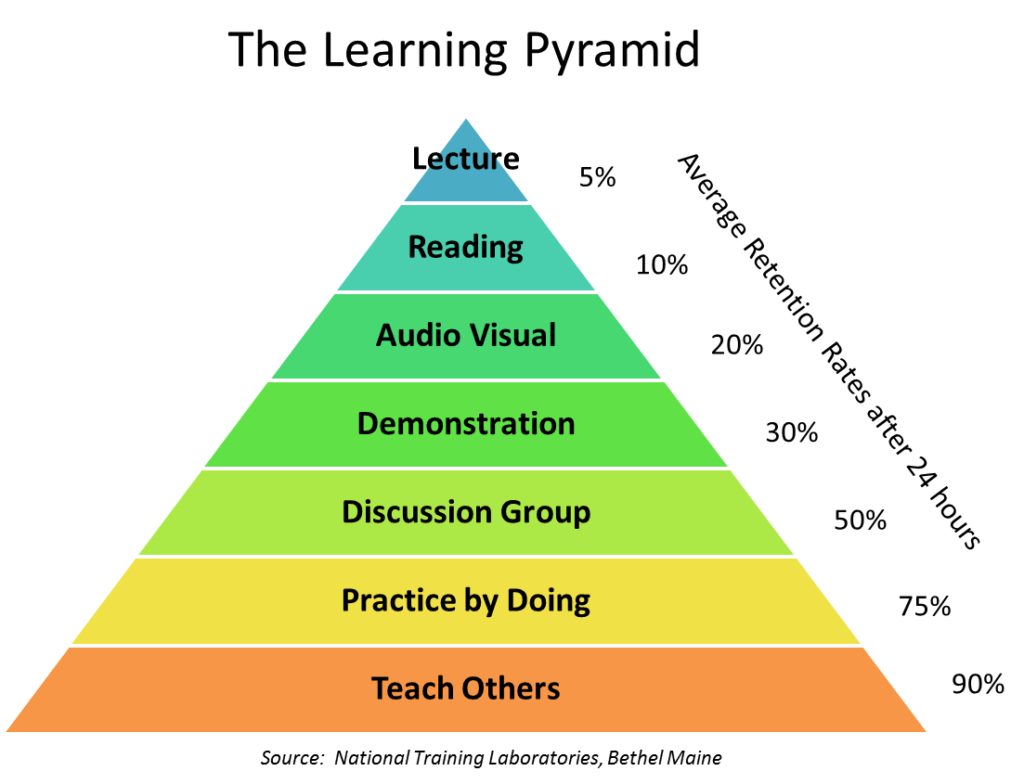
If we’re not careful, this constant thirst for knowledge without application can lead to diminishing returns and wasted time. It’s a paradoxical situation — gaining vast amounts of information without reaping the benefits of its practical use.
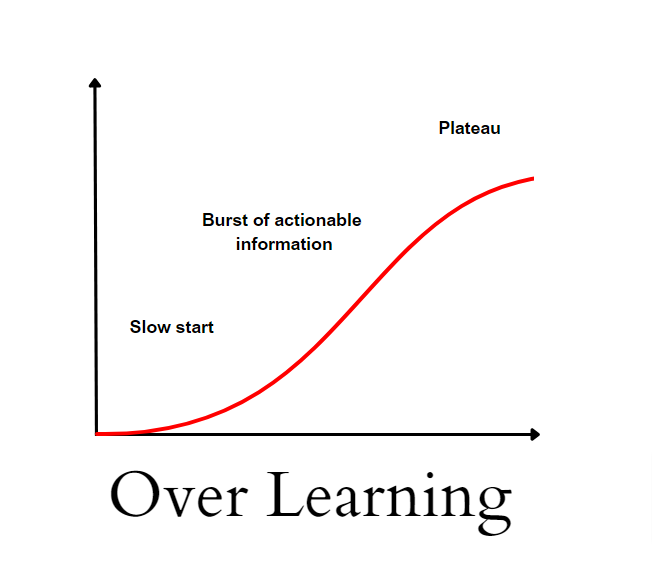
The true purpose of learning goes beyond the mere accumulation of knowledge. Learning should empower us to apply what we’ve learned in real-world scenarios. It’s through this process that we gain a deeper understanding of the practicality and effectiveness of the information we’ve acquired. The value lies in our ability to bridge the gap between theory and practice, transforming knowledge into actionable results. Imagine reading a book on entrepreneurship but never taking the leap to start your own business. Or attending a seminar on public speaking but never stepping onto the stage to share your ideas. Without implementation, our learning remains theoretical, and its potential remains untapped. It’s the application of knowledge that solidifies our understanding, hones our skills, and propels us forward on our growth journey. We encounter challenges, make mistakes and learn from them. It’s in these moments of action that our understanding deepens, our skills sharpen, and our growth accelerates. The transformation happens when we bridge the gap between knowing and doing.
Related Content: Startup Content Marketing That’ll Help Your Company Grow
Trial and Error: Wisdom Through Experience
Quick calibration: Are you learning, or hiding behind learning?
-
You’re probably learning “enough” if: each new insight leads to a small experiment, you’re regularly shipping or sharing work (even if imperfect), and you can point to decisions or behaviors that have changed in the last 30–60 days.
-
You’re probably learning “too much” if: you keep consuming content but struggle to name the last thing you actually tried, you delay action until you feel “fully prepared,” or learning time keeps replacing time for execution.
-
You’re probably not learning “enough” if: you repeat the same mistakes without adjusting your approach, you rely only on past experience in a changing environment, or feedback from others rarely alters how you work.
Practical rule of thumb: for every hour you spend learning, spend at least an hour applying or testing what you’ve learned. If you can’t clearly describe what you’re experimenting with this week, you’re likely over-indexing on learning and under-investing in action.
Elon Musk’s journey with SpaceX exemplifies the importance of learning by doing. Despite initial setbacks and failed launches, Musk persisted, learned from each experience, and eventually achieved success:
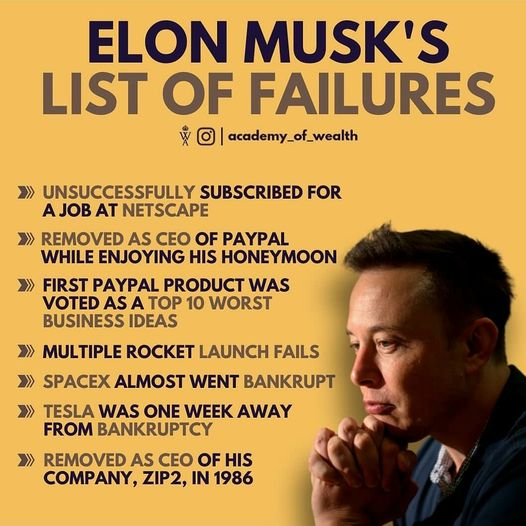
Overlearning without implementation would have resulted in missed opportunities for improvement and innovation. The same principle applies to all aspects of life and business. Merely amassing knowledge about a subject is insufficient; true growth comes from applying that knowledge and learning from the outcomes. Becoming a perpetual student, constantly seeking new knowledge without applying it, can lead to a shallow understanding of the world. On the other hand, true wisdom is forged through the application of knowledge in real-world scenarios.
We must be willing to fail in our application of knowledge in order to achieve eventual success.
How many times did Elon Musk stumble around with failed ventures before he scored big with companies like SpaceX and Tesla? Mistakes and failures are an integral part of the learning process. When we step out of the realm of theory and into the arena of action, setbacks are bound to occur. However, these setbacks should not discourage us; instead, they should be seen as stepping stones on the path to growth and progress. Mistakes provide valuable insights and lessons that textbooks and lectures cannot convey. They challenge us, push us to reassess our strategies, and fuel our determination to find better solutions. Each failure brings us closer to success, shaping our understanding and refining our approach. The wisdom we gain from these experiences becomes a driving force for future endeavors.
Related Content: How to Find and Hire a VP of Growth for Your Business
The Loop of Repetition
It may seem counterintuitive, but revisiting fundamental concepts repeatedly can be immensely beneficial. While it’s tempting to crave new and advanced information, the basics serve as building blocks for growth. Try to be content with the knowledge you’ve attained and balance the amount of information your take in with the number of actions that you take out. In other words, you should be expressing what you learn in an actionable way. Once you feel like you’ve started running out of ways to take action on that knowledge, that’s when you can resume learning. Devote yourself to mastering one or two keystone principles that will make you an authority in your industry. Master them so thoroughly that people come to you to learn about them, not the other way around. – Set a clear “good enough” standard before you start, then ship when you hit it. – Rotate focus across a few core skills instead of obsessing over microscopic refinements in one. – Limit how many times you revisit a decision or document—cap review rounds in advance. – Schedule short, time-boxed learning blocks and spend the rest applying what you already know. – Ask your team to flag when you’re polishing instead of progressing, and act on that feedback.
Related Content: Repetition in Advertising: Why We Keep Repeating the Same Things
Final Cautions About Overlearning
Overlearning is easy to fall into, but can impede your growth by slowing decision-making, delaying project execution, and reducing revenue opportunities if not accompanied by implementation.
Acquiring knowledge is essential, but its true value lies in how we apply it to real-life situations. Remember, wisdom is gained through experience, and it is by taking action that we truly unlock our potential! So, break free from the cycle of learning too much and start using what you’ve learned. Being willing to fail forward, pick yourself up from your missteps, and use those lessons to propel yourself forward.
If you’re ready to grow your business, Single Grain’s growth experts can help!👇
Repurposed from our Marketing School podcast.



