

How to Rehearse a Marketing-Agent Rollback Before It Touches Production


Before a copy agent gets a live CMS credential, the content operations lead opens a staging post, saves its current revision, and starts a 15-minute revert timer. The agent changes one paragraph. The rehearsal’s artifact is a restored post with a revision trail. A preview that looks right while a queued write remains active is an unfinished drill.
In the paid media sandbox, the media lead pins the prior approved creative before an ad-copy agent starts its replacement job. Then the drill operator interrupts the run. The question is concrete: who can stop the pending write and restore the pinned asset when the agent’s task is still mid-flight? These are proposed rehearsals, not reported client results.
TABLE OF CONTENTS:
- Quick Overview
- Why incident response is not a rollback drill
- Worked scene: canary copy write with a timed revert rehearsal
- Worked scene: who owns the revert key when the agent is mid-flight
- Rollback-drill checklist (canary, timer, owner, evidence, stop)
- Single Brain installs the system; Single Grain runs it when you need the team
Quick Overview
A marketing-agent rollback drill tests recovery before production write access exists. Give it a bounded target, a saved baseline, a timer, an accountable owner, and evidence of restoration. Use the findings to improve the control layer rather than declare the agent autonomous. A clean rehearsal supports a narrowly scoped next test, not blanket permission.
- Rehearse against a staging canary or sandbox creative.
- Test stopping queued work as well as restoring content.
- Record observed recovery time without turning it into an SLA.
- Refuse automation when the baseline, permissions, or restoration evidence is missing.
Why incident response is not a rollback drill
Incident response begins after a bad production ship. Single Grain’s guide to an agent shipping bad copy covers that downstream problem. This page owns the rehearsal before production writes: whether a restore action exists, whether the right operator can execute it, and whether pending work can undo the recovery.
In Eric’s Leveling Up discussion of decision layers and early tests, the starting point is existing agents.

The next move is to improve their checks through feedback, even when evidence remains thin. Apply that sequence here: keep the copy job bounded, test its revert path, and feed the failure evidence into the decision layer. The CMS rehearsal below is an application of that principle, not a CMS demonstration attributed to the tape.
Adoption makes this worth scheduling. Open Future Forum’s September report says 81% of 230 marketing and growth leaders are past exploring agentic AI. Attribution was the most-named challenge, appearing in 20 of 96 open answers. That changes the evidence requirement: preserve job IDs, revision IDs, and actor identities so operators can connect a change to its initiating run.
Forrester reports that 83% of B2C marketing decision-makers are implementing agentic AI, covering seven categories and 52 use cases. These are different populations, not a trend line or evidence of rollback readiness. Inventory the specific write jobs you operate rather than treating adoption as proof of control.
Worked scene: canary copy write with a timed revert rehearsal
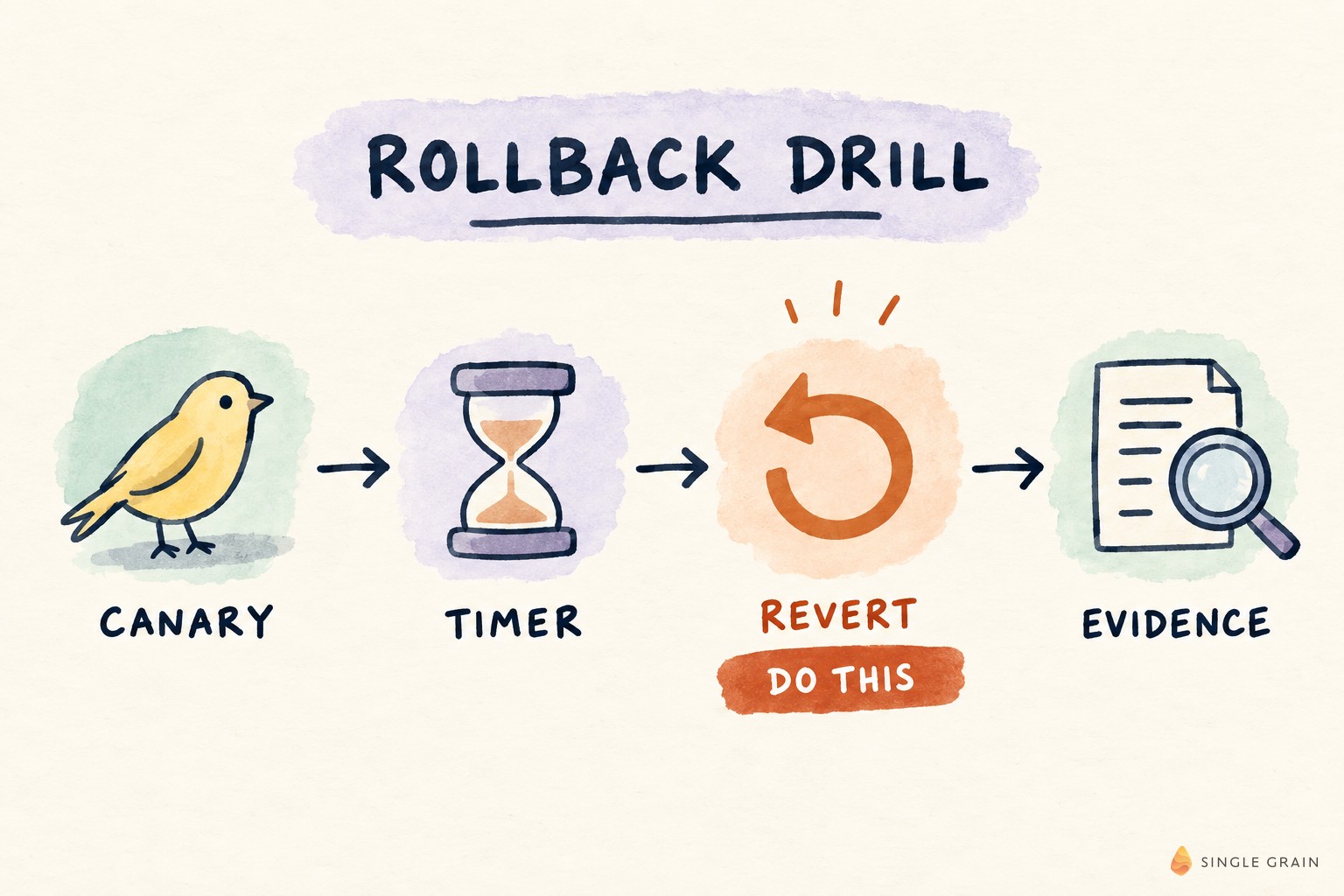
Give the staging CMS job one task: replace a paragraph in a designated canary post. Its inputs are the post ID, baseline revision, proposed replacement, permitted fields, and a restore command. Exclude slugs, redirects, templates, and distribution hooks. A paragraph test cannot establish that those other surfaces are recoverable.
The content operations lead captures the baseline and starts the 15-minute timer immediately before the test write. This is an exercise limit, not an observed recovery metric. After confirming the changed paragraph, the drill operator stops new work, invokes the restore command, and checks both stored content and rendered output against the saved revision.
Success requires the restored revision, matching rendered content, and evidence that the interrupted job cannot rewrite the post. Keep timestamps and command results together. If the timer expires or a queued task changes the restored paragraph, close the exercise with that limitation recorded. Do not extend the timer silently.
Eric’s point that a better model still needs a better workflow determines the purchase decision. A missing revision identifier or restore schema is a control defect. Fix it before buying a stronger model. Add this test to the marketing-agent evaluation harness so workflow changes trigger another rehearsal.
Worked scene: who owns the revert key when the agent is mid-flight
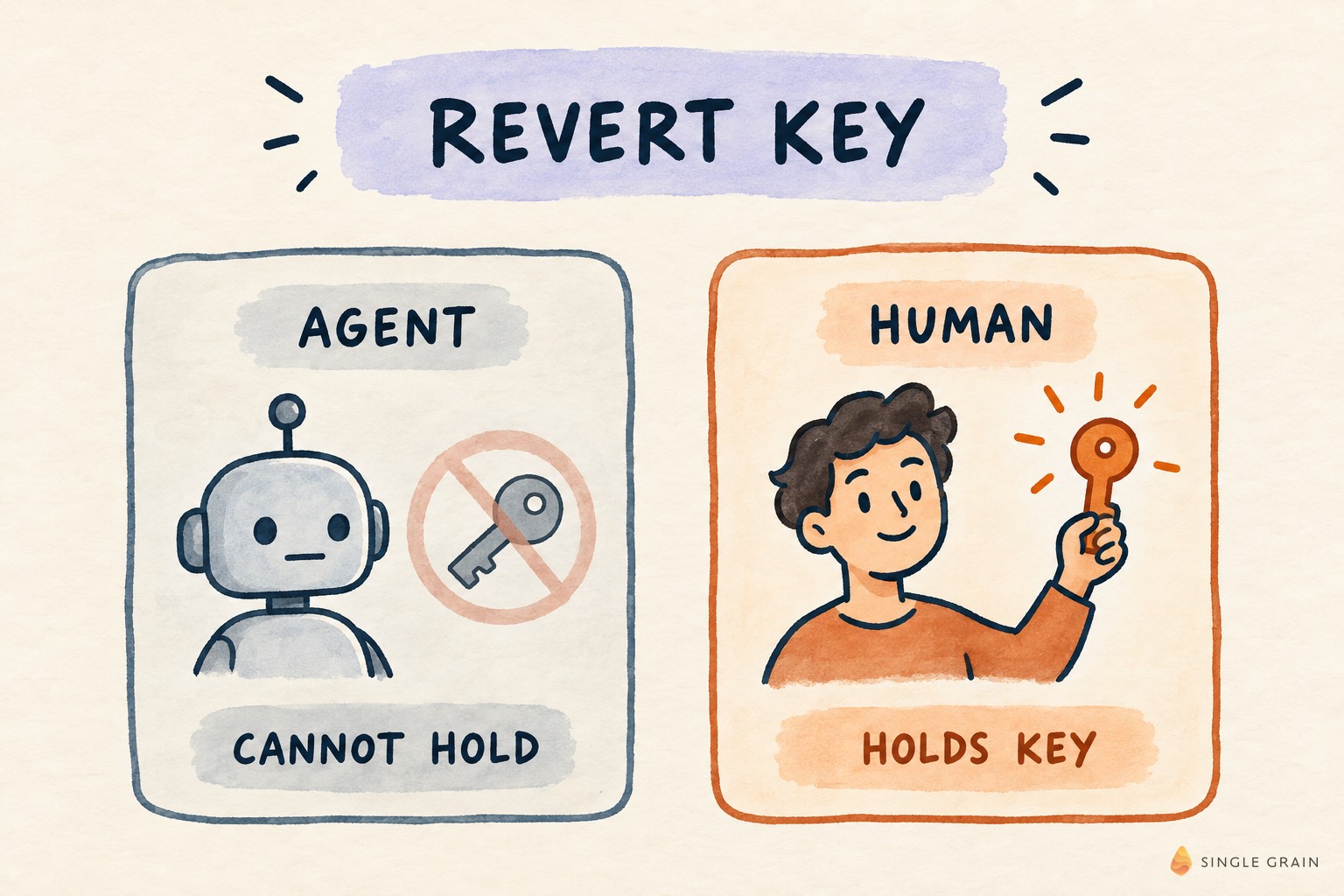
For the paid media rehearsal, the media lead pins the prior approved creative, including its asset identifier and copy fields. The agent prepares a replacement in a sandbox. The drill operator then interrupts it between preparation and simulated activation. Restoration must use the saved asset, not ask the model to reconstruct yesterday’s language from memory.
Keep the creative snapshot alongside the pinned prompt and model configuration. They answer different questions: what content should return, and which configuration produced the attempted change? Check pending retries before declaring the prior creative restored.
Eric’s Jev discussion emphasizes classification, test criteria, and routing uncertain cases. His discussion of people’s continuing role keeps taste, output review, and workflow management with people. Accordingly, route ambiguous asset matches to human review rather than automatic action. Name the media lead as the human ship gate for irreversible writes and teardown; the agent cannot approve its own release.
Assign the revert key to an operator whose access does not depend on the agent’s credential. Record that responsibility in the pipeline RACI. Forbes’ report on Amazon blocking Meta’s Muse shopping agent illustrates external access constraints. It does not establish a marketing rollback outcome. It does justify rehearsing credential loss rather than assuming the agent’s original route will remain available.
Rollback-drill checklist (canary, timer, owner, evidence, stop)
Turn both rehearsals into repeatable job cards. Eric’s recommendation to build reusable workflows and hand them to the team changes the deliverable: retain executable instructions, not a bespoke presentation that requires its author to return.
- Canary: identify the isolated target, allowed fields, and baseline.
- Timer: define the start event and exercise limit; record actual elapsed time.
- Owner: name the revert operator and backup; test their credentials.
- Evidence: retain revision or asset IDs, before-and-after state, and command logs.
- Stop: disable retries, inspect queues, and verify no pending task can overwrite restoration.
Walk away from automated writes when you cannot isolate the canary, retrieve the prior state, or stop downstream execution. Keep the agent on drafting or classification until those controls exist. Label untested dependencies explicitly. Thin evidence remains thin after a polished demo.
Single Brain installs the system; Single Grain runs it when you need the team
Single Brain is the AI implementation OS for job-specific agents, evaluations, and kill switches. For rollback readiness, the installation should produce a bounded write job, a restoration path, an evaluation fixture, and a reusable drill card with an accountable owner.
Hire Single Grain to install and run that system when you need the operating team without staffing it internally. Start with one CMS or paid media job, establish its limits, and expand only as the evidence supports. Talk to Single Grain about a pre-production rollback rehearsal.


