

7 Great Tools for Measuring Social Media Engagement


Your social feeds may look busy, but without the right tools for measuring social media engagement, it is difficult to see which interactions are actually driving pipeline, revenue, or retention. Posts that attract reactions but never lead to site visits or conversations can distract you from the content that quietly moves buyers forward.
When you can quantify engagement, benchmark it by channel, and connect it to outcomes like demo requests or purchases, social stops being a vanity exercise and becomes a predictable growth driver. This guide walks through the core metrics that matter, then reviews seven powerful tools for measuring social engagement in different ways, with a special focus on B2B and LinkedIn-led strategies.
TABLE OF CONTENTS:
- Make engagement measurable, not mysterious
- 7 great tools for measuring social media engagement
- 1. Karrot.ai: Next-gen tools for measuring social media engagement in B2B
- 2. Sprout Social: Robust listening and reporting
- 3. Hootsuite: Scheduling-led engagement analytics
- 4. Buffer: Simple, clear engagement reporting for lean teams
- 5. Sprinklr: Omnichannel engagement for complex enterprises
- 6. Statusbrew: Collaboration and workflow-focused engagement
- 7. Socialinsider: Competitive social benchmarks and reporting
- How to choose the right engagement measurement stack
- Turn your tools for measuring social media engagement into revenue
Make engagement measurable, not mysterious
Social media engagement is every action people take that shows they are paying attention: reactions, comments, shares, saves, link clicks, replies, and even how long they watch or read your content. Unlike reach or impressions, which simply show how many people saw something, engagement reveals who cared enough to respond.
For marketers, the real value of engagement lies in mapping each signal to the stages of the journey. A post save or long video watch might indicate early interest, a thoughtful comment can signal active research, and repeat engagement from the same company often precedes opportunities entering your pipeline.
Key engagement metrics every team should track
Before you evaluate any platform, clarify the metrics your tools must provide. The best tools give you both raw numbers and context, so you can interpret what those numbers mean for your strategy.
- Awareness and discovery: impressions, reach, profile visits, and video views to see how far your content travels.
- Interaction depth: likes or reactions, comments, replies, saves, and story interactions that show genuine interest.
- Amplification: shares, reposts, retweets, and mentions that expose you to new audiences.
- Click and consumption: link clicks, click-through rate, watch time, completion rate, and session duration from social traffic.
- Conversion and pipeline: form starts and completions, trials, demo requests, purchases, and high-intent page visits originating from social.
- Brand health and community: sentiment, recurring advocates, and user-generated content volume that indicate long-term loyalty.
Most teams calculate engagement rate at least once by dividing total engagements by impressions, reach, or follower count, then multiplying by 100 to get a percentage. More advanced programs track separate rates for each objective (for example, per-impression engagement when optimizing distribution, versus per-follower engagement when evaluating audience quality) so they can fine-tune both content and targeting.
As social search and AI answer experiences evolve, marketers are also watching where their brand appears beyond traditional feeds, and adopting frameworks for measuring share of voice inside AI answer engines to complement classic engagement metrics. That broader view prevents you from optimizing only for likes and comments while missing how often you are cited or recommended in emerging discovery channels.

7 great tools for measuring social media engagement
There is no single “best” platform for every organization. Instead, you want a stack of tools for measuring social media engagement that fits your channels, data needs, team size, and sales motion. Some platforms emphasize publishing and basic analytics, while others specialize in deep listening, B2B account insights, or competitive benchmarking.
The seven tools below cover a spectrum of use cases, from lean teams just getting serious about analytics to complex organizations that need enterprise-grade social data integrated with CRM, support, and advertising systems.
| Tool | Best fit | Engagement strength |
|---|---|---|
| Karrot.ai | B2B and LinkedIn-first teams | Account-level engagement intelligence and AI insights |
| Sprout Social | Mid-market and enterprise brands | Listening, reporting, and collaboration |
| Hootsuite | Teams prioritizing scheduling | Unified publishing and performance dashboards |
| Buffer | Lean startups and small teams | Straightforward post-level analytics |
| Sprinklr | Global enterprises | Omnichannel engagement and customer care |
| Statusbrew | Collaboration-heavy social teams | Engagement routing and approval workflows |
| Socialinsider | Analysts and agencies | Competitive benchmarks and reporting |
1. Karrot.ai: Next-gen tools for measuring social media engagement in B2B
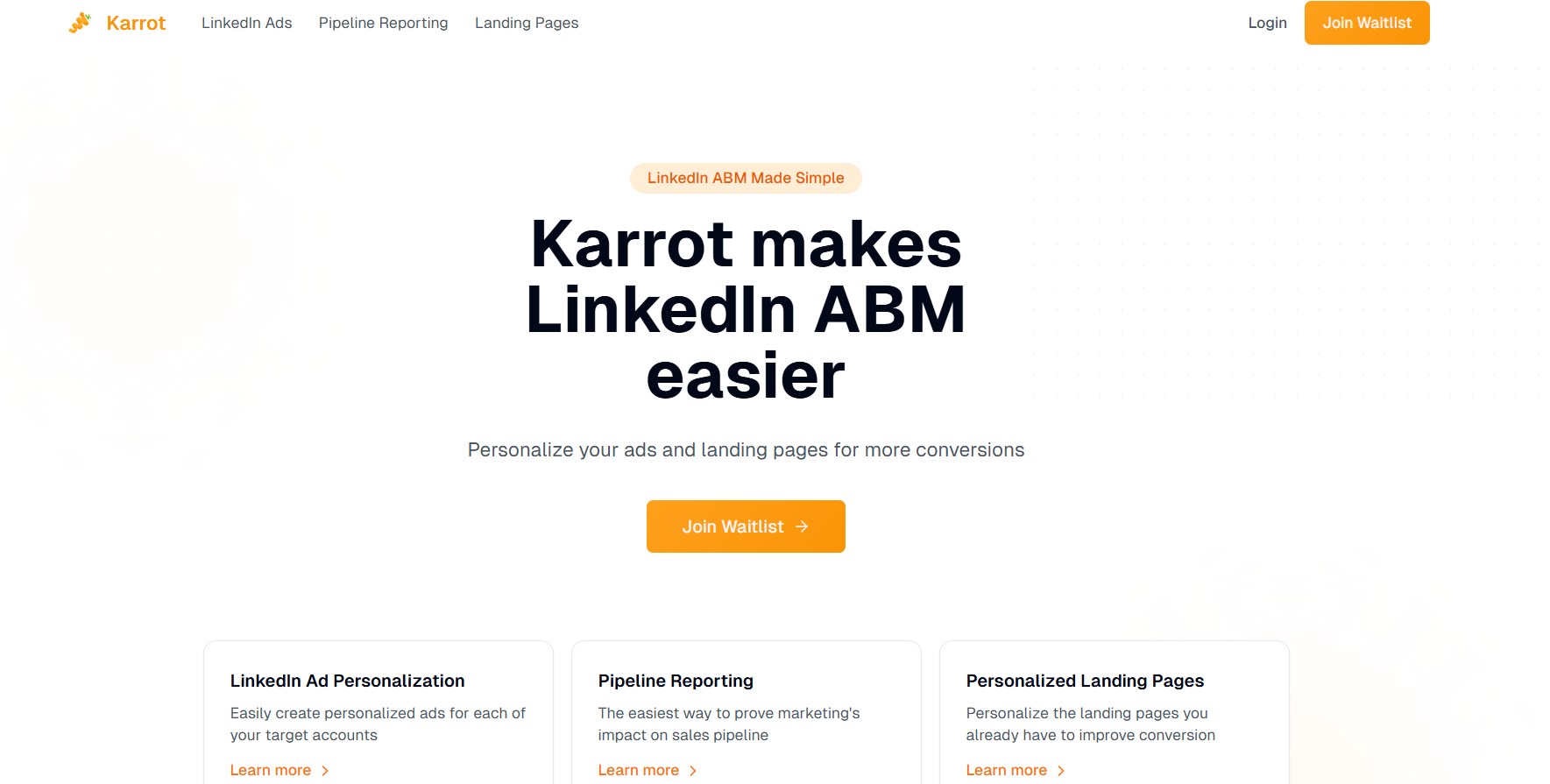
Karrot.ai is built for revenue-focused B2B teams that care less about follower counts and more about which target accounts are leaning in on channels like LinkedIn. Instead of only summarizing engagement at the post level, it aggregates interactions by company, persona, and buying committee so you can see which accounts are warming up before they ever fill out a form.
The platform emphasizes full-funnel visibility, connecting social engagement to web behavior and CRM outcomes so you can spot patterns like “accounts that watch our product teaser on LinkedIn and then visit pricing are 3x more likely to book a demo.” If you already rely on AI-driven account engagement scoring for LinkedIn ABM, Karrot.ai’s analytics layer helps you enrich those models with nuanced social signals and AI-generated summaries that highlight priority accounts for sales and marketing follow-up.
2. Sprout Social: Robust listening and reporting
Sprout Social suits organizations that treat social as a strategic communications channel spanning marketing, support, and PR. Its engagement tools consolidate comments, messages, and mentions, enabling teams to respond quickly while capturing response times and resolution rates as measurable performance indicators.
On the analytics side, Sprout provides detailed post and profile reports, audience breakdowns, and listening features that surface conversation themes around your brand or industry. That combination makes it easier to see how specific topics, creative angles, or campaign hashtags influence engagement volume and sentiment over time.
3. Hootsuite: Scheduling-led engagement analytics
Hootsuite is often adopted for its publishing calendar, but its built-in analytics provide core engagement metrics across major networks in a single interface. For teams moving beyond native platform dashboards, standardized views of likes, comments, shares, and click-through rates across profiles can be a significant upgrade.
Because your scheduling, engagement monitoring, and reporting live together, it’s easier to run experiments on posting times, content formats, and copy variations. Over time, those tests help you build a playbook grounded in observed engagement patterns rather than guesswork.
4. Buffer: Simple, clear engagement reporting for lean teams
Buffer focuses on clarity and ease of use, which is ideal for startups or small teams that need to understand performance without a steep learning curve. Its analytics highlight top-performing posts, basic audience trends, and key engagement metrics, all in a lightweight interface.
That simplicity makes Buffer a solid starting point for organizations moving from sporadic posting to a more intentional content strategy. You can quickly see which formats and topics resonate before investing in more advanced or specialized analytics platforms.
5. Sprinklr: Omnichannel engagement for complex enterprises
Sprinklr is designed for large organizations that manage high volumes of interactions across social media, messaging apps, review sites, and support channels. Its engagement tools help teams route, prioritize, and resolve messages at scale while maintaining detailed records for compliance and quality control.
From a measurement perspective, Sprinklr allows you to tie social engagement to broader customer experience metrics, such as case resolution, customer satisfaction, or retention indicators. That makes it particularly useful when you want social analytics embedded in a unified customer data ecosystem rather than operating as an isolated channel report.
6. Statusbrew: Collaboration and workflow-focused engagement
Statusbrew suits teams that need tight coordination between social managers, copywriters, designers, and stakeholders. Its collaboration features include post approvals, shared inboxes, and role-based permissions, all underpinned by engagement metrics that show how well each approved asset performs after going live.
Because conversations from multiple networks are consolidated into joint views, marketing and support can jointly monitor high-priority threads. Over time, those conversations feed into reports that reveal which topics, campaigns, and service initiatives are generating the most meaningful engagement.
7. Socialinsider: Competitive social benchmarks and reporting
Socialinsider is geared toward analysts and agencies that need to contextualize their engagement performance against competitors or industry peers. It pulls in detailed post-level data so you can benchmark engagement rates by content type, posting cadence, and channel.
For brands that rely heavily on communities or discussion platforms, insights into how similar companies manage conversation volume can guide better resource allocation. When you extend that thinking to spaces like Reddit and pair it with specialized Reddit analytics methods that drive marketing ROI, you can build a more comprehensive picture of engagement across both traditional and beyond social networks.
How to choose the right engagement measurement stack
Evaluating tools for measuring social media engagement is not just about feature checklists. The best stack for you depends on where your audience spends time, how complex your sales motion is, and how mature your analytics and attribution systems are today.
Rather than chasing every advanced feature, start with your top business questions. For example, do you need to know which LinkedIn posts correlate with qualified pipeline, which creators are driving incremental sales, or which topics generate the most high-intent conversations? Clear questions make it much easier to compare platforms and avoid overbuying.
Evaluation criteria that actually matter
Certain criteria consistently separate effective engagement tools from frustrating ones. Looking through this lens helps you avoid getting stuck with a pretty interface that cannot answer your most important questions.
- Channel and format coverage: Ensure your priority platforms and formats (LinkedIn, Instagram, TikTok, YouTube Shorts, X, Threads, stories, and long- or short-form video) are fully supported.
- Data freshness and depth: Check how often metrics refresh, what historical depth is accessible, and whether you can drill into post, audience, and account-level data.
- Attribution and integrations: Look for connections to web analytics, CRM, and advertising platforms so you can tie engagement to pipeline, revenue, or retention instead of stopping at likes and comments.
- Segmentation and account views: For B2B and ABM programs, the ability to group engagement by company, buying committee, or segment is essential.
- AI and insight automation: Modern stacks increasingly rely on summarization, anomaly detection, and predictive features, similar to how AI visibility dashboards tracking generative search metrics in real time distill complex datasets into clear trends.
- Collaboration and governance: If multiple teams work in social, evaluate permissions, approval workflows, and shared inbox capabilities.
Another often-overlooked consideration is how well your tools illuminate “dark social” activity, such as link shares in DMs or private groups. While you cannot fully track those spaces, strong analytics platforms surface indirect indicators, like sudden traffic spikes or concentrated account activity, that reveal when content is circulating behind the scenes.
Example workflows powered by engagement tools
Thinking in terms of workflows helps you decide whether a tool will fit how your team actually operates. Instead of evaluating features in isolation, picture how data flows from social platforms into insights and then into decisions.
A simple weekly workflow might look like this: your publishing tool tags posts by campaign, your analytics platform aggregates engagement and click-through metrics by tag, and a shared report highlights which assets exceeded or lagged behind engagement benchmarks. From there, you can replicate winning topics and formats and revise those that underperformed.
More advanced workflows layer in UTMs and custom events so you can see, for instance, how many people who engaged with a LinkedIn carousel later started a trial or requested pricing. For brands investing in creators or community programs, pairing these workflows with approaches that scale social proof with AI-generated UGC contests creates a feedback loop where high-engagement content directly informs your next wave of collaborations and campaigns. Community and discussion platforms introduce additional issues, since engagement may take the form of threads rather than traditional likes and shares.

Once these workflows are defined, it becomes much easier to see where a specialized platform like Karrot.ai fits alongside general-purpose schedulers or enterprise suites. Instead of overlapping capabilities, you get a complementary stack where each tool has a clear job in turning engagement data into revenue-impacting decisions.
Turn your tools for measuring social media engagement into revenue
The right tools for measuring social media engagement act as a bridge between surface-level buzz and concrete business outcomes. When you track the metrics that truly reflect intent, connect them to your web and CRM data, and interpret them through the lens of account or customer journeys, social becomes one of your most accountable channels.
For B2B and LinkedIn-led teams, platforms like Karrot.ai add the crucial layer of account intelligence and AI-driven insight that generic dashboards often lack, helping you see exactly which companies are engaging and how that behavior correlates with pipeline. Combined with broader analytics tools and well-designed workflows, this gives you a clear narrative from first touch to closed revenue.
If you want help auditing your current analytics, selecting the best-fit platforms, and designing an end-to-end engagement measurement strategy, a specialized partner can accelerate the process. Get a FREE consultation to build a social media engagement stack that connects every like, comment, and share to the metrics that matter most for your growth.


