
ChatGPT Ads in Your Marketing Funnel: TOFU MOFU BOFU Strategies


Your ChatGPT ads marketing funnel probably isn’t the problem; the problem is that your TOFU, MOFU, and BOFU campaigns are all asking prospects to do the same thing. When every ad feels like a hard sell, you burn through audiences, feed platforms low-quality signals, and make it impossible for algorithms to understand who actually converts.
Aligning generative-AI ad creative with each funnel stage changes that dynamic. Giving ChatGPT stage-specific briefs will generate ads that introduce problems at the top, clarify options in the middle, and remove friction at the bottom, while your data closes the loop and continually improves performance. This guide walks through how to architect and operationalize that system across TOFU, MOFU, and BOFU.
TABLE OF CONTENTS:
Strategic Foundations for Your ChatGPT Ads Marketing Funnel
Before you start spinning up dozens of AI-written ads, it’s worth defining the strategic container they live in. A powerful funnel is less about any single ad and more about how messages progress from curiosity to commitment, mirroring how people actually buy.
Think of ChatGPT as an accelerator inside that system, not a replacement for it. The clearer your funnel architecture is, the higher the quality of the prompts you feed it, and the more your AI-generated ads will feel coherent rather than random.
Mapping TOFU, MOFU, BOFU to a ChatGPT-Powered Funnel
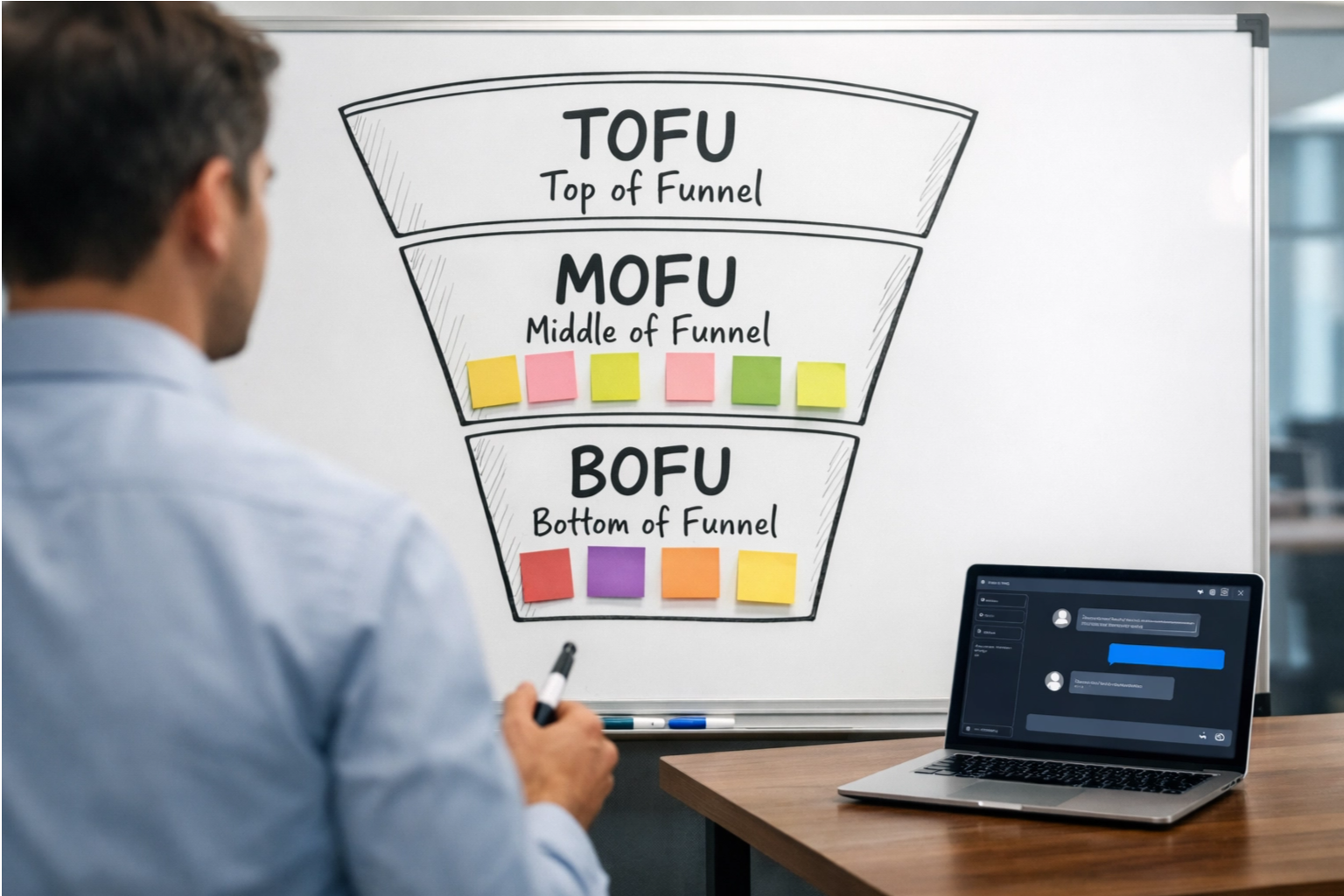
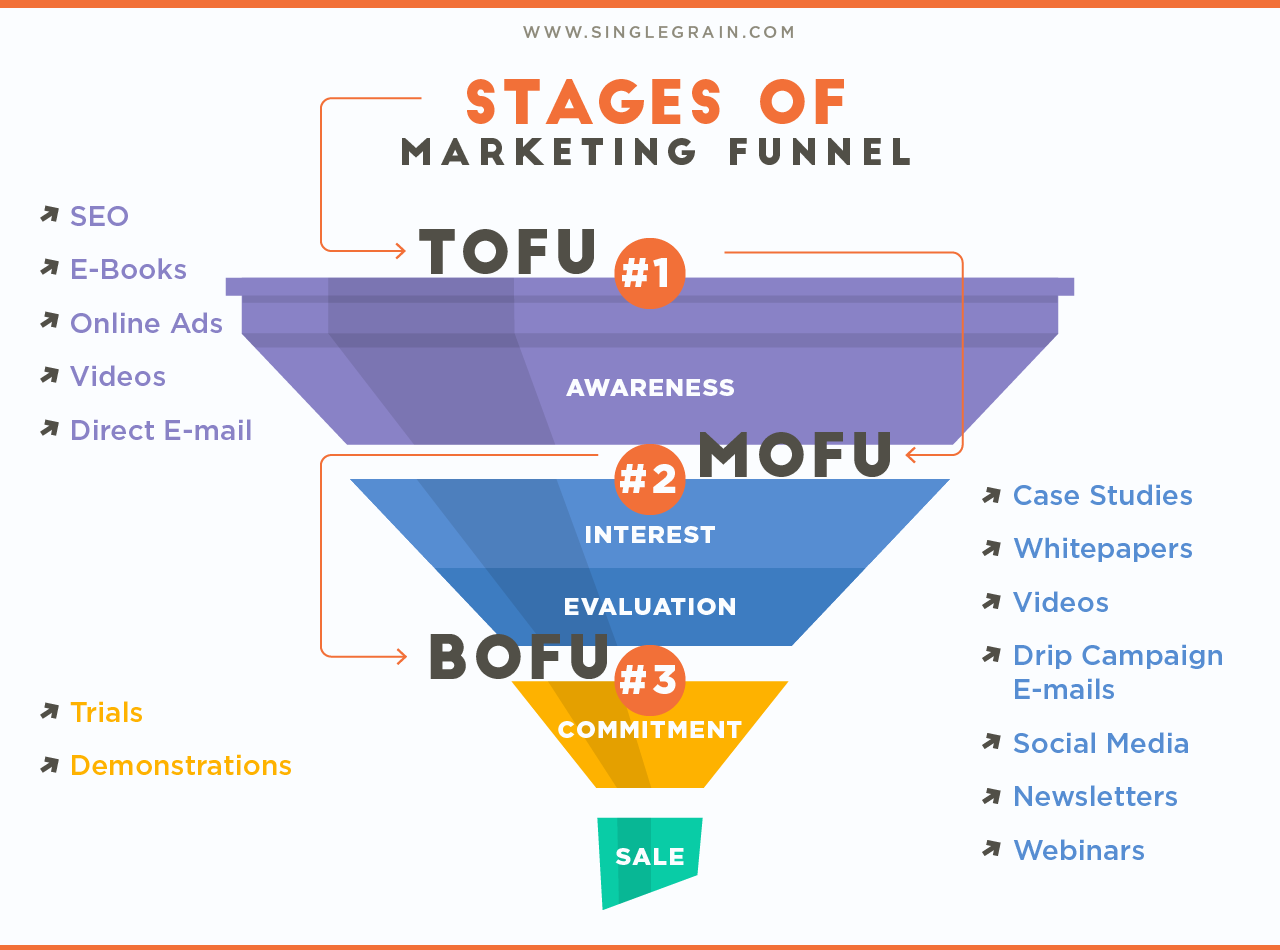
A classic marketing funnel has three core stages. Top-of-funnel (TOFU) exists to earn attention and spark interest among people who may not even know they have a problem yet. Middle-of-funnel (MOFU) helps those newly aware prospects evaluate approaches and decide what matters. Bottom-of-funnel (BOFU) focuses on making a specific offer feel safe, urgent, and aligned with their decision criteria.
Each stage answers a different primary question in the buyer’s mind. TOFU asks, “Why should I care at all?” MOFU asks, “What’s the smartest way to solve this?” BOFU asks, “Why should I trust you and act now?” When you ask ChatGPT to generate ads, instruct it to answer only one of these questions per asset.
That’s where a structured view of your funnel helps. By documenting objectives, buyer mindset, and key metrics for each stage, you give ChatGPT a simple, repeatable briefing format that makes its outputs far more useful on the first pass.
| Funnel stage | Buyer mindset | ChatGPT roles in ads | Primary KPIs |
|---|---|---|---|
| TOFU (Top-of-funnel) | Unaware or problem-aware, low intent | Hooks, educational angles, pattern interrupts, thumb-stopping scripts | Reach, impressions, video views, engaged sessions |
| MOFU (Middle-of-funnel) | Actively researching, comparing options | Comparison ads, objection-handling copy, case-study angles | Lead volume, content downloads, demo requests, time on site |
| BOFU (Bottom-of-funnel) | Solution decided, picking vendor and timing | Offer tests, urgency framing, reassurance and risk-reversal messages | Trials started, proposals requested, purchases, ROAS |
With this map, you can tag every campaign, ad group, and asset to a specific funnel stage. Then each ChatGPT prompt can reference the intended stage, the buyer question to answer, and the KPIs to influence, instead of relying on generic “write me a great ad” requests.
Why AI-Generated Ads Belong in Every Funnel Stage
Generative AI is already reshaping early-stage creative. 86% of buyers are using or planning to use generative AI for video ad creatives, which is especially powerful for awareness campaigns that rely on high volumes of fresh concepts.
But confining AI to the top of the funnel leaves performance on the table. When you use ChatGPT to generate not only hooks but also comparison messages, offer tests, and post-click experiences, your whole system can adapt faster. That only works if each asset has a clear stage role and your analytics are structured to feed results back into your prompt library.
The most effective teams treat ChatGPT as a co-pilot. They bring it customer research, product nuance, and funnel goals, then iterate human edits on top of AI drafts. This keeps ads on-brand while dramatically reducing time from idea to test across TOFU, MOFU, and BOFU.
Top-of-Funnel ChatGPT Ads That Build Demand
Top-of-funnel campaigns exist to make the right people care about a problem or possibility they’re currently ignoring. This is where ChatGPT can help you turn raw customer insights into scroll-stopping hooks and story angles at scale, especially across paid social, YouTube, and display.
The key is to brief ChatGPT to generate curiosity and relevance, not premature offers. TOFU ads should promise insight or entertainment, then hand off interested users to mid-funnel experiences where you can educate them further.
TOFU Prompt Frameworks for High-Impact ChatGPT Ad Creative
Most weak AI ads start with weak prompts. Instead of “write a Facebook ad about our product,” your TOFU prompts should encode audience, problem, emotional tone, and the specific content asset you’re promoting.
A simple step-by-step framework for TOFU prompts looks like this:
- Context: Describe your product, category, and target audience in 2–3 sentences.
- Stage: Specify that this ad is for TOFU, with low-intent, problem-aware, or unaware users.
- Hook type: Choose a style such as contrarian insight, surprising data point, short story, or common mistake.
- Destination: Explain what the ad clicks into (e.g., a short video, a blog, a quiz) and the single takeaway you want viewers to gain.
- Constraints: Set character limits, platform, format, and any brand voice rules you must follow.
Putting it together, a TOFU prompt might say: “You are a performance marketer generating TOFU LinkedIn ads for B2B SaaS CMOs who are frustrated with stagnant pipeline. Generate five 120-character hook variations using a contrarian insight style, promoting a 3-minute video about why ‘more leads’ is hurting their close rate. Avoid jargon and use clear, direct language.”
TOFU Formats and Metrics That Fit ChatGPT-Generated Ads
ChatGPT is especially strong at scripting short, insight-rich content. For TOFU, that translates into social hooks that tease a bigger idea, skimmable video scripts for YouTube or Reels, and carousel copy that reframes a familiar problem from a fresh angle.
Because these prospects are early in their journey, you should judge success by engagement and qualified curiosity, not immediate sales. Metrics like engaged video views, click-through rate to high-intent content, and percentage of new users who spend meaningful time on site are better indicators than last-click ROAS at this stage.
One common trap is allowing AI to overpromise. If your TOFU ads hype outcomes your product or content can’t realistically deliver, you might win cheap clicks but poison downstream performance. Avoid that by ensuring every ChatGPT prompt includes a short description of the actual landing experience, so it generates copy that matches what users will see post-click.

Middle-of-Funnel ChatGPT Ads That Nurture and Educate
Once people have engaged with your TOFU campaigns, they move into a more deliberate research phase. Here, MOFU campaigns should deepen their understanding of the problem, clarify what “good” looks like in a solution, and introduce their unique approach without forcing a decision too early.
Investment is shifting toward AI-driven experimentation in this zone. 54% of marketers plan to increase spend on AI-driven media and ads powered by AI agents, aligning with dynamically generated, mid-funnel experiences tailored to different segments.
Designing Comparison and Education Ads With ChatGPT
MOFU buyers are asking, “Is this the right category and approach for me?” This is where ChatGPT can help you turn technical nuance into clear, persuasive narratives through comparison ads, explainer creatives, and myth-busting content.
For comparison assets, a strong prompt might be: “Generate three Google Display ad copy variations comparing [your approach] vs [legacy approach] for [specific audience]. Emphasize differences in implementation time, risk, and long-term scalability. Assume the reader is technically savvy but not an expert.” You can then pair those ads with a deeper comparison guide or calculator post-click.
Education ads benefit from prompts that focus on frameworks instead of features. For example: “Create a 45-second YouTube script explaining a 3-step framework for evaluating [solution type], aimed at busy marketing leaders. Use simple language, a concrete example, and end with an invitation to see the full framework in a downloadable guide.” ChatGPT can draft the script, key visual beats, and even alternate hooks to test in thumbnails and first seconds.
MOFU Nurture Sequences Across Channels
Mid-funnel is where isolated ads underperform. Instead of designing one-off creatives, think in terms of short sequences that meet prospects across channels: a retargeting video that drives to a webinar, a follow-up email sequence, and then social proof ads for those who engaged but didn’t yet convert.
ChatGPT can help you maintain a consistent story across this sequence. You might first feed it the transcript of a top-performing sales call, then ask it to distill the three most common objections and the metaphors your reps use to overcome them. Next, you can prompt it to turn those into a MOFU video script, an email series outline, and a set of retargeting ads that each address one objection.
This approach keeps your MOFU messaging anchored in real customer language while compressing the time required to turn an insight into a creative across multiple platforms. The more tightly you link these assets, the easier it becomes to see where prospects drop off and which mid-funnel narratives correlate with high-intent BOFU actions.
At this point, many teams realize they need help orchestrating everything from creative prompts to channel mix and attribution. A full-funnel partner that understands both performance media and AI workflows can design a MOFU strategy in which ChatGPT-generated ads, email, and content reinforce each other rather than compete for attention.
If you’re looking for that kind of partner, Single Grain specializes in building integrated paid media and content systems that connect TOFU awareness, MOFU education, and BOFU conversion. Their focus on AI-powered experimentation and funnel analytics means your ChatGPT ads marketing funnel can be engineered around revenue.
Bottom-of-Funnel ChatGPT Ads and Optimization
Bottom-of-funnel is where buying decisions happen. Prospects here already understand the problem and category; they’re deciding which vendor to trust and when to act. ChatGPT’s role shifts from broad education to sharp, reassuring messages that align tightly with sales conversations and remove the last pockets of friction.
Because stakes are higher, you’ll want to pair AI-generated BOFU ads with robust testing, clear tracking, and conversion-focused landing experiences. This is also the stage where your funnel-level data and AI tools for analysis can uncover whether your earlier-stage campaigns are actually creating high-intent opportunities.
High-Intent BOFU Ads with ChatGPT
For search and performance max campaigns, ChatGPT can help you quickly generate large libraries of responsive search ad headlines and descriptions tailored to high-intent queries like “best [solution] for [use case]” or “[category] pricing.” Rather than asking for generic copy, prompt it with your positioning, unique proof points, and any compliance or brand rules you must follow.
A focused BOFU prompt might be: “You are writing responsive search ad assets for users searching ‘[brand] pricing’ and ‘[brand] demo.’ Generate 15 headlines under 30 characters and 4 descriptions under 90 characters that emphasize fast time-to-value, transparent pricing, and live onboarding support. Avoid hype and keep language concrete.” You can then filter and refine those options before uploading into your ad platform.
ChatGPT is equally useful for remarketing ads that tackle late-stage hesitations. Feed it a short list of real objections from sales (budget, integration risk, internal buy-in), then ask it to write carousel or video scripts in which each frame addresses one concern and uses a specific proof element, such as a case study or guarantee.
Stage-Level Measurement With an AI Layer
Even with strong BOFU creative, many teams struggle to see how each funnel stage contributes to revenue because their data is locked behind complex models and dashboards. Adding a natural-language AI layer to your marketing data can dramatically speed up stage-level analysis.
The core principle is to let humans ask strategy questions in plain language, while AI does the heavy lifting of aggregating and visualizing data by funnel stage. This makes it much easier to spot when TOFU is over-funded relative to BOFU capacity, or when certain MOFU narratives consistently precede high-value conversions.
Standardizing Your ChatGPT Ads Marketing Funnel Playbooks
As your operation matures, the biggest gains come from standardization. Instead of every media buyer or copywriter inventing new prompts, build a documented library organized around your ChatGPT ads marketing funnel, with separate sections for TOFU awareness, MOFU evaluation, and BOFU decision campaigns.
You can start by capturing the prompts that produced your best-performing ads at each stage, and annotating them with context such as audience, offer, and channel. Then add simple governance rules, such as requiring every new prompt to specify funnel stage, buyer persona, and primary KPI, so your AI outputs stay aligned with strategy.
To keep these playbooks improving, connect them to your experimentation backlog and post-campaign reviews. For every test, record which prompt template you used, how assets performed by stage, and what feedback you received from sales and customers. Over time, this creates a feedback loop in which your prompts, ads, and funnel structure evolve together.
Teams that want to accelerate this process often turn to partners with deep experience in SEVO (Search Everywhere Optimization), paid media, and CRO. An agency like Single Grain can help you codify your ChatGPT prompt libraries, tie them into AI-informed CRO experiments, and ensure your BOFU landing pages convert the traffic your AI-generated ads are driving.
Turning Your ChatGPT Ads Marketing Funnel Into a Growth Engine
A high-performing ChatGPT ads marketing funnel is not just a collection of clever AI-written headlines; it’s a tightly orchestrated system where each stage has a clear job, every prompt encodes that intent, and your data continuously informs what you generate next. TOFU campaigns earn the right to educate, MOFU sequences shape how buyers evaluate, and BOFU ads make the decision feel obvious and low-risk.
To make this practical, focus on a few concrete actions: define your TOFU/MOFU/BOFU objectives and buyer questions; build stage-specific prompt templates; instrument your analytics to tag performance by funnel stage; and establish a simple process for updating your prompt library based on what actually wins. That’s how you turn generative AI from a novelty into a compounding advantage.
- Clarify funnel stages and map every campaign, ad group, and asset to TOFU, MOFU, or BOFU.
- Create structured ChatGPT prompt templates that reference stage, persona, offer, and KPI.
- Use AI layers on top of your data to answer stage-level performance questions in plain language.
- Standardize and continually refine a shared prompt and creative library across your team.
If you’d like expert support building and scaling this kind of system, Single Grain helps growth-focused companies design full-funnel paid media and SEVO strategies that integrate ChatGPT-powered creative, AI-enhanced analytics, and CRO. You can get a free consultation to audit your current funnel, identify TOFU, MOFU, and BOFU gaps, and design a roadmap to turn your ChatGPT ads into a predictable growth engine.
Frequently Asked Questions
-
How can I keep ChatGPT-generated ads on-brand throughout the funnel?
Create a short brand guide specifically for AI that includes your voice principles, forbidden phrases, and a few “gold standard” ad examples. Reference this guide in every prompt and ask ChatGPT to explicitly mimic the examples so tone stays consistent from TOFU to BOFU.
-
What type of customer research should I feed into ChatGPT to improve ad quality?
Use real voice-of-customer inputs such as survey responses, interview transcripts, support tickets, and sales call notes. Summarize key pains, desired outcomes, and common objections, then paste those summaries into your prompts so ChatGPT reflects actual customer language instead of generic marketing copy.
-
How do I safely use ChatGPT for ad creation without risking compliance or privacy issues?
Avoid pasting any personally identifiable information (PII), confidential contracts, or internal financial data into ChatGPT. Work from anonymized, aggregated insights, and collaborate with legal or compliance teams to create an AI usage policy that outlines what can and cannot be shared with external models.
-
How should I allocate budget between TOFU, MOFU, and BOFU when introducing ChatGPT ads?
Start by protecting BOFU spend so you don’t starve proven conversion campaigns, then use incremental budget to test ChatGPT-driven TOFU and MOFU concepts. As you see which stages generate profitable downstream conversions, gradually rebalance your budget to support the narratives and channels that create the most high-intent opportunities.
-
What’s the best way to organize team workflows around AI-generated ads?
Define clear roles where one person owns prompt templates, another reviews creative for brand and compliance, and a third manages deployment and performance analysis. Use a shared workspace or documentation hub to store prompts, winning variations, and learnings so your whole team builds on the same AI playbook.
-
How often should I refresh ChatGPT-generated creative to avoid ad fatigue?
Monitor frequency, click-through rate trends, and conversion rates by audience segment; when engagement declines for 1–2 weeks, it’s a sign to introduce fresh variations. Maintain a backlog of tested prompt templates so you can quickly spin up new hooks, angles, and offers without rebuilding your process from scratch.
-
Are ChatGPT-powered funnels effective for both B2B and B2C brands?
Yes, but the prompts and assets should reflect different buying journeys: B2B funnels usually require more education, multiple stakeholders, and longer MOFU sequences, while B2C funnels tend to favor faster, emotion-driven TOFU hooks and sharper BOFU offers. Tailor your stage objectives, content depth, and calls-to-action to the decision speed and risk level of your audience.