
Building a ChatGPT Ads Strategy From Scratch


Your performance marketing stack might be sophisticated, but your ChatGPT ads strategy is probably still a blank slate. While conversational AI is rapidly becoming the starting point for complex buying journeys, ad inventory within these interfaces is brand-new and unfamiliar. That combination of high intent and high uncertainty makes it easy to waste budget, damage trust, or miss a major opportunity.
This guide walks through a complete framework for building a ChatGPT advertising program from zero: understanding the environment, defining objectives and guardrails, designing native-feeling creatives, and launching a disciplined pilot you can scale. It is written for strategic marketers, media buyers, and growth leaders who want to treat ChatGPT ads as a measurable performance channel rather than an experimental side project.
TABLE OF CONTENTS:
Map the New Terrain: How ChatGPT Ads Actually Work
Before you can plan budgets or creatives, you need a clear mental model of what ChatGPT ads are and how they differ from search and social placements. Instead of appearing alongside a list of blue links or in an interruptive feed, these ads live inside a conversational interface where users are actively solving problems, exploring ideas, or making decisions.
That context changes everything. Users are not casually scrolling; they are typing specific questions like “Which project management tools scale for a 200-person engineering team?” or “Outline a 90-day onboarding plan for a new SDR.” Any ad that enters this space must feel like a helpful, relevant contribution to the conversation, not a jarring billboard.
Core principles of a trustworthy ChatGPT ad experience
Trust is a scarce resource in conversational AI, so governance is the starting point for any paid strategy. An early 2026 OpenAI article on its advertising approach emphasized strict rules such as answer independence, clear ad labels, and topic relevance, and described a limited U.S. free-tier pilot to gather safety and performance data before wider rollout.
Those policies hint at the long-term constraints marketers should design around. Ads cannot override or distort organic answers; they must be transparently labeled as sponsored and align with the user’s active topic. That means your ad copy, offer, and landing experience should extend or deepen the helpfulness of the AI answer, not pull the user into an unrelated sales pitch.
The result is a higher creative bar but also a more qualified environment. Users who see your placements are often mid-thought, mid-research, or mid-decision. If your messaging speaks precisely to the job they are trying to do in that moment, the path to high-intent clicks and conversions is shorter than on most other channels.
| Characteristic | Traditional Search Ads | ChatGPT Ads |
|---|---|---|
| User behavior | Single query, scan list of results | Multi-turn conversation, refine questions over time |
| Ad placement | Above, beside, or below results | Integrated into conversational answer flow |
| Expectation | Commercial intent is obvious | Helpfulness and neutrality are expected first |
| Optimization lever | Keywords, bids, ad rank | Prompt context, intent patterns, creative relevance |
| Risk of misalignment | Low trust impact if ad is irrelevant | High trust impact if ad feels intrusive or biased |
Where a ChatGPT ads strategy fits in your media mix
At the channel level, ChatGPT ads sit somewhere between research-oriented search and consultative sales conversations. They are best used to influence consideration and solution design for users actively working through a problem, rather than to spray broad awareness or to run bottom-funnel retargeting in isolation.
The macro budget shift supports allocating meaningful test funds here. Digital will account for 74.4% of total ad spend in 2025, up from 72.7% in 2024, which means leadership teams are already primed to reallocate budget toward emerging digital surfaces that can prove incremental impact.
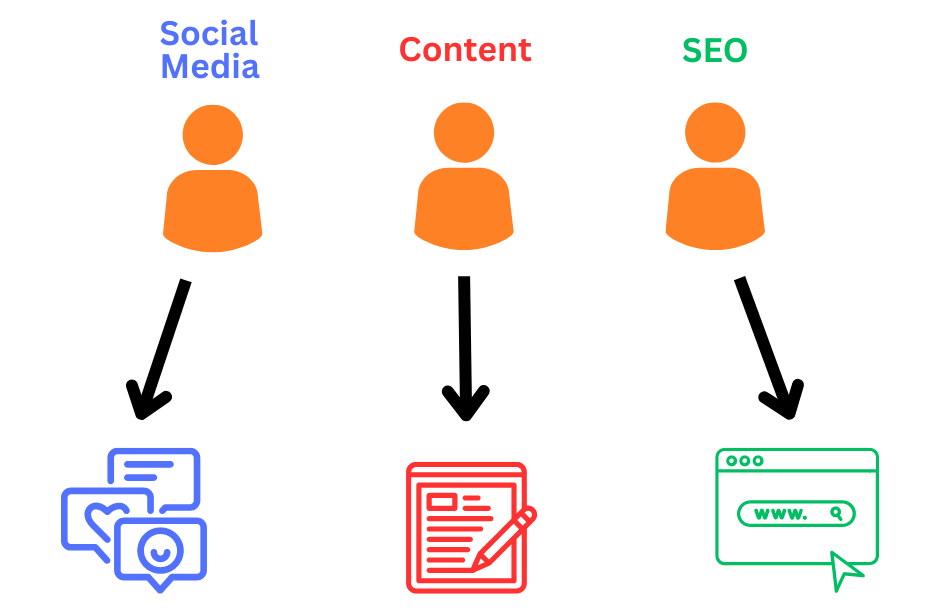
A balanced media mix treats ChatGPT as a “search everywhere” partner to classic search and social. You influence discovery through organic content and SEO, answer deeper questions through conversational AI, and then capture demand through performance campaigns across multiple platforms. A coherent ChatGPT ad strategy ties those touchpoints together so your brand shows up consistently wherever users are asking questions.
Lay the Foundation: Objectives, Audiences, and Guardrails
Once you understand the environment, the next step is to decide why you are advertising in ChatGPT at all. Vague goals like “test the new thing” or “get some AI traffic” guarantee scattered campaigns and soft reporting. Clarity on business outcomes, target audiences, and policy guardrails is what turns curiosity into a disciplined program.
This foundation phase does not require a single ad to be built. It is about getting executive alignment on what success will look like and which risks are unacceptable long before budgets move.
Clarify concrete business outcomes
Begin by mapping conversational touchpoints to stages in your revenue funnel. For many B2B and SaaS companies, ChatGPT is likely to influence mid-funnel behaviors such as vendor shortlist creation, solution comparison, or framework design more than last-click purchases.
Translate that influence into specific, measurable objectives. A few examples include:
- Generate high-fit demo requests from users exploring “best tools for…” or “platforms that…” prompts.
- Capture content downloads from users asking for templates, checklists, or frameworks in your niche.
- Increase assisted pipeline by ensuring your brand is present whenever prospects design strategies that your product enables.
From there, define primary and secondary KPIs such as qualified leads, pipeline created, revenue, and contribution margin from ChatGPT-influenced sessions. As mentioned earlier, this environment is not just another impression machine, so resist the temptation to optimize on surface metrics like click-through rate without a revenue lens.
Define audience intents in conversational language
Traditional persona documents focus on firmographics and job titles; conversational ads require you to think in terms of questions and phrasing. The key is to define audience segments based on the problems they bring to ChatGPT and how they naturally describe those problems in text.
To do that, mine intent data from channels you already own. Useful sources include:
- Search query reports from paid search and SEO to see how people articulate needs today.
- Sales call transcripts to surface real-world language and objections.
- Customer support tickets and community posts where users ask for how-to guidance.
- On-site search logs that reveal gaps in your content and product education.
Cluster these insights into “jobs to be done” rather than product-centric categories. For example, instead of “marketing managers at mid-market ecommerce brands,” think “operators trying to scale ROAS without adding headcount” and list the prompts they might type into ChatGPT when under pressure.
Those intent clusters later become the backbone of your prompts, creative angles, offers, and negative filters for your ChatGPT ads strategy, ensuring your media investment is grounded in how buyers actually think and speak.
If you already partner with a performance-focused agency such as Single Grain, align these intents and objectives with existing paid media goals so ChatGPT campaigns complement, rather than cannibalize, your search and social investments.
Once those pieces are in place, document a simple governance framework covering acceptable industries, messaging boundaries, approval workflows, and escalation paths. That policy will guide future creative ideation and prevent reactive decisions when novel scenarios inevitably arise.
With foundations set, you are ready to translate strategy into ad experiences that feel native inside a conversation.
If you want expert support building this foundation and integrating it with your broader acquisition engine, an AI-driven growth partner like Single Grain can help you connect ChatGPT placements to concrete revenue outcomes. Get a FREE consultation to stress-test your objectives, audiences, and measurement plan before you launch.

Create High-Impact ChatGPT Ad Experiences That Feel Native
The most effective ChatGPT ads do not read as display banners squeezed into text; they read like the next best sentence the user hoped to see. Achieving that requires a structured creative library that generative systems can remix, plus offers and landing pages that continue the conversational tone instead of resetting it.
Feed generative systems a rich, creative library
Generative platforms work best when they have abundant, high-quality raw material to assemble context-specific creatives. A 2026 Think with Google overview on digital marketing trends describes how brands that supply multi-format creative assets enable AI systems to build ads that perfectly match each natural-language query in evolving search experiences.
The same principle applies to ChatGPT. Instead of writing one or two static ad lines, build a modular library that includes:
- Problem-focused opening lines keyed to specific intents (“Struggling to keep ROAS stable as CAC climbs?”).
- Benefit statements mapped to different value dimensions (time saved, revenue gained, risk reduced, complexity removed).
- Proof snippets, such as anonymized case outcomes or benchmark ranges, that stay within platform policy.
- Clear, low-friction calls to action that feel like a natural next step in the conversation.
Structure these pieces in a way that the ad system can understand, tagged by funnel stage, intent cluster, and segment, so that generative models can assemble combinations that resonate with the user’s current question. This upfront work turns ChatGPT into a creative partner rather than just a placement.
Match offer, CTA, and landing page to the conversation
Even the best-crafted message fails if the subsequent experience breaks context. Someone asking ChatGPT for “a framework to prioritize product roadmap ideas” is unlikely to respond well to a hard “Book a sales demo” pitch as the first click. They are still designing their approach, not buying a platform.
For each intent cluster, map a sequence: current question, helpful angle your brand can add, appropriate offer, and landing page that continues the same narrative. Offers might include calculators, templates, teardown videos, or interactive tools that help users progress the task they are performing inside ChatGPT.
Landing pages should acknowledge the conversational origin explicitly and keep copy tight, scannable, and outcome-focused. Treat them more like a focused continuation of the AI answer than a generic campaign page. Reducing friction here is one of the highest-leverage levers in your entire ChatGPT ads strategy because it converts curiosity into data-rich engagement and revenue-qualified leads.
Step-by-Step ChatGPT Ads Strategy Blueprint for Your First Pilot
With environment, foundations, and creative philosophy set, you can assemble a concrete launch plan. The goal of your first pilot is not to conquer the channel but to build a repeatable system that can be optimized, scaled, or paused based on evidence.
A practical ChatGPT ads strategy launch plan
- Audit existing intent and performance data. Review your search terms, CRM notes, sales transcripts, and support logs to select three to five high-value “jobs to be done” where ChatGPT naturally fits into the buyer journey. Prioritize intents where you already have strong offers and content.
- Define a narrow objective and test budget. Choose one primary outcome, such as qualified demos or trial signups, and cap initial spend to an amount you can afford to lose while still yielding statistically useful data. Explicitly document how long the pilot will run and what thresholds count as success, failure, or “iterate and retry.”
- Finalize governance and approval workflows. Turn your earlier policy thinking into a simple, version-controlled document that defines what you will not advertise, how claims are substantiated, who approves new messages, and how quickly you will respond to edge cases surfaced by the platform.
- Build and tag your creative library. For each selected intent cluster, create multiple problem-openers, benefit lines, proof snippets, and CTAs, all tagged by stage and segment. Ensure at least one variant is conservative and one is more bold so you can learn how tone affects engagement and downstream conversion.
- Design conversation-continuation landing pages. Create or adapt pages that reference the user’s original task, deliver a fast win (such as a pre-filled template or checklist), and then invite a deeper relationship. Keep forms lightweight at this stage to maximize learning volume, adding qualification questions only where essential.
- Implement instrumentation and baselines. Configure analytics to track ChatGPT-referred sessions, key events, and revenue outcomes separately from other paid channels. Establish pre-launch baselines for the same intents via search or social so you can compare uplift, not just raw performance in a vacuum.
- Run AI-informed optimization loops. Automate as much learning as policy allows—testing messages, rotating creatives, and adjusting bids based on real-time performance.
At the end of the pilot window, review results against your predefined thresholds. Rather than asking “Did it work?”, diagnose which components worked: certain intents, tones, offers, or segments. That nuance will inform whether you scale, pivot, or pause ChatGPT as a performance channel.
Instrumentation and measurement from day one
Sophisticated measurement is what separates a novelty test from a scalable acquisition channel. Treat ChatGPT as one node in a broader “search everywhere” ecosystem that includes engines, social platforms, and AI Overviews, and ensure its impact is visible across that whole journey.
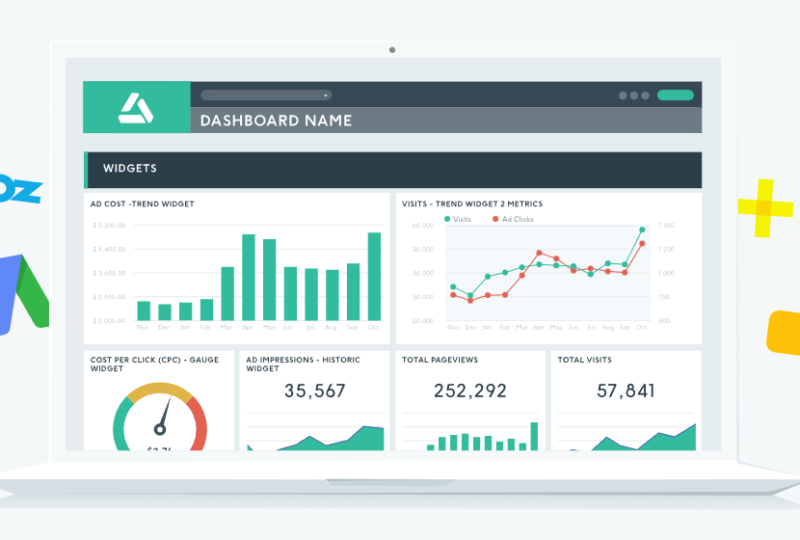
In practice, that means configuring analytics and attribution to capture ChatGPT impressions, clicks, conversions, and assisted revenue while respecting privacy and platform constraints. Use consistent naming conventions so your dashboards show ChatGPT alongside other paid media, not in an untagged “other” bucket.
Where possible, run incrementality tests such as geo-splits or time-based holdouts on specific intents. Those tests reveal whether ChatGPT placements are creating new demand, accelerating pipeline, or merely shifting last-click credit away from organic search and branded campaigns.
If you want help designing those experiments and integrating results into a unified “Search Everywhere Optimization” approach, a partner like Single Grain can connect ChatGPT data with your SEO, paid media, and CRO programs so you can make channel decisions with confidence.
Turn Your ChatGPT Ads Strategy Into a Competitive Moat
Most brands will dabble in ChatGPT advertising with scattered tests and weak measurement, then conclude the channel is “interesting but unproven.” By contrast, a structured ChatGPT ads strategy, grounded in clear objectives, intent-led audience design, native creative, and disciplined experimentation, can turn conversational AI into a durable edge in how you acquire and educate customers.
The playbook you have now is intentionally pragmatic: understand the environment, align stakeholders on outcomes and risks, equip generative systems with rich creative libraries, and run tightly instrumented pilots that teach you where ChatGPT belongs in your media mix. As you learn, you can layer on more advanced tactics such as cross-channel creative orchestration, deeper personalization, and integration with your lifecycle marketing stack.
If you want to accelerate that journey and avoid costly dead ends, partnering with an AI-first growth team can compress months of trial-and-error into a focused launch plan. Single Grain specializes in tying emerging channels to revenue, blending SEVO, paid media, CRO, and performance creative into cohesive growth engines. Get a FREE consultation to design, launch, and scale a ChatGPT advertising program that strengthens your entire acquisition strategy.
Frequently Asked Questions
-
How much budget should I allocate to ChatGPT ads once I move beyond the initial pilot?
After a successful pilot, a practical approach is to carve out 5–10% of your performance budget for ChatGPT ads and scale based on verified unit economics, such as CAC and payback period. Increase investment only when you see consistent efficiency at or better than comparable intent on search and social.
-
Are ChatGPT ads better suited for B2B or B2C brands?
ChatGPT ads can work for both, but they’re especially powerful in complex, considered purchases where users ask detailed questions before converting. B2C brands tend to see the most upside when promoting higher-ticket, research-heavy products or services rather than impulse buys.
-
How do I handle compliance and privacy concerns with ChatGPT advertising?
Work with legal and data teams to define what data you’ll capture from ChatGPT-driven traffic and how it’s stored, then mirror your existing consent and disclosure standards. Ensure that any claims in your creatives are substantiated and that regulated content (e.g., financial or health) complies with industry-specific guidelines.
-
What’s the best way to align ChatGPT ads with my sales team’s process?
Involve sales early by sharing the intents you’re targeting and the offers you’re promoting, then co-create qualification criteria for ChatGPT-sourced leads. Feed transcripts, objections, and outcomes from those leads back into your intent clusters and messaging so the whole loop keeps improving.
-
How can I prevent user backlash or brand damage from poorly received ChatGPT ads?
Use conservative messaging variants in sensitive categories, avoid exaggerated claims, and prioritize educational or utility-focused offers over aggressive sales language. Set up rapid monitoring for negative feedback or engagement anomalies so you can pause or adjust specific creatives quickly.
-
Should I adapt my ChatGPT ads for different languages or regions?
Yes, localize not just the language but also examples, pricing references, and problem framing to match regional norms and expectations. Validate translated prompts and creatives with native speakers or local teams to avoid nuance errors that can erode trust in conversational environments.
-
How do ChatGPT ads interact with my organic presence inside AI assistants?
Treat paid and organic as complementary: your organic content should earn mentions and recommendations, while ads appear when you want additional visibility on high-value intents. Use insights from ad performance to inform which topics you should deepen with organic content so you gradually rely less on paid for every interaction.