

How to Build an ABM Content Library


In today’s competitive B2B landscape, Account-Based Marketing (ABM) has emerged as a powerful strategy to drive revenue by focusing on high-value accounts. A critical component of a successful ABM strategy is a well-curated and easily accessible content library. This listicle will guide you through the essential steps and best practices for building an ABM content library that empowers your sales and marketing teams to engage target accounts with personalized and impactful content. We’ll delve into the strategic considerations, practical elements, and ongoing optimization necessary to transform your content into a powerful ABM asset. By the end of this guide, you’ll have a clear roadmap to developing a content library that not only supports but actively drives your ABM success. A well-structured ABM content library ensures that every interaction with a target account is meaningful, relevant, and moves them closer to conversion.
TABLE OF CONTENTS:
Understanding ABM Content Strategy
Define Your Target Accounts and Buyer Personas
Before you can build an effective ABM content library, you must have a clear understanding of your target accounts and the key individuals within those accounts. This involves more than just identifying companies; it requires deep research into their business challenges, goals, industry trends, and decision-making processes. Develop detailed buyer personas for each key stakeholder, outlining their roles, responsibilities, pain points, and preferred content formats. This foundational step ensures that all subsequent content creation and curation efforts are highly targeted and relevant. Understanding the nuances of each persona—from their preferred communication channels to the specific questions they need answered at each stage of their buying journey—is crucial for crafting content that truly resonates. This granular understanding allows for hyper-personalization, moving beyond generic messaging to deliver content that speaks directly to an individual’s needs and challenges.
Conduct a Content Audit and Gap Analysis
Many organizations already possess a wealth of content. The first step in building your ABM content library is to conduct a thorough audit of your existing content assets. Categorize your content by topic, format (e.g., whitepapers, case studies, blog posts, videos), funnel stage (Top-of-Funnel, Middle-of-Funnel, Bottom-of-Funnel), and target audience. Identify content that can be repurposed or updated for ABM initiatives. More importantly, perform a gap analysis to pinpoint areas where content is missing for specific target accounts or buyer personas. This will inform your content creation priorities and ensure you’re not duplicating efforts. A comprehensive audit should also assess content performance, identifying what has historically engaged your target audience and what hasn’t. This data-driven approach helps prioritize content creation and optimization, ensuring that new content fills critical gaps and existing content is leveraged effectively. Tools for content inventory and analysis can greatly streamline this process.
Key Elements of an ABM Content Library
Centralized Storage and Accessibility
A robust ABM content library requires a centralized, easily accessible repository. This could be a dedicated content management system (CMS), a digital asset management (DAM) platform, or a shared cloud-based drive. The key is to ensure that sales and marketing teams can quickly find and access the content they need, whenever they need it. A disorganized content library leads to wasted time and missed opportunities. Consider platforms that offer robust search functionalities, intuitive interfaces, and integration capabilities with your CRM and sales enablement tools. The easier it is for your teams to find and deploy relevant content, the more effective your ABM efforts will be. Centralization also helps maintain brand consistency and ensures that only approved, up-to-date materials are being used. Explore options for DAM solutions for marketing teams to find the best fit for your organization.
Content Tagging and Categorization
Effective content organization is paramount. Implement a comprehensive tagging and categorization system that allows for granular filtering of content. Tags should include attributes such as topic, funnel stage, asset type, target audience (industry, company size, persona), and language. This metadata-driven approach ensures that content can be easily discovered and matched to specific ABM campaigns and individual account needs. Consistent application of tags across all content assets is crucial for maintaining order and usability. Beyond basic tags, consider implementing a hierarchical tagging structure or a taxonomy that reflects your sales process and buyer journey. This level of detail empowers sales reps to quickly identify content tailored to specific conversations and challenges, significantly improving their efficiency and effectiveness. For best practices in content taxonomy and metadata, consult industry guides.
Building Your ABM Content Library: Steps and Best Practices
Personalization and Customization Capabilities
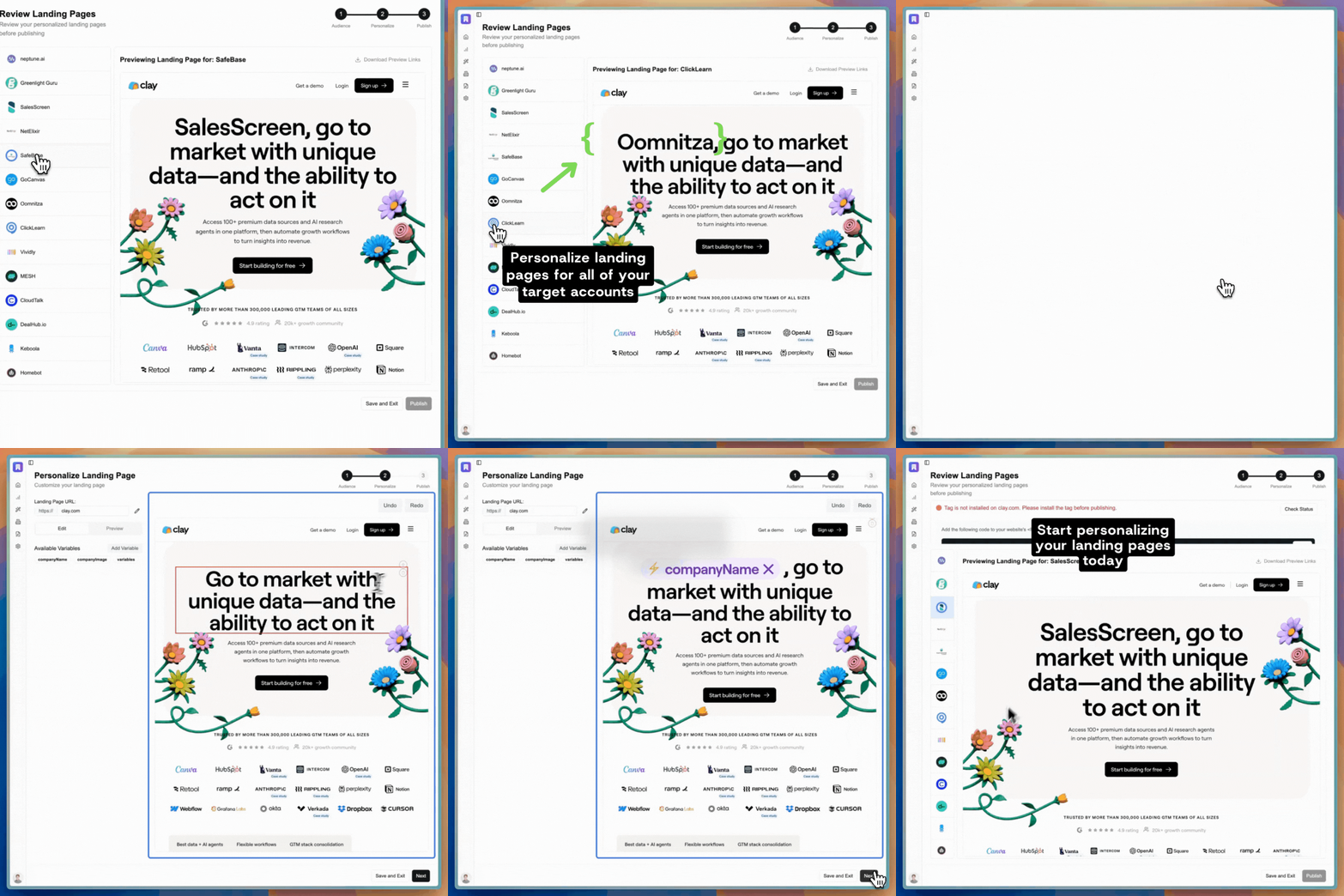
ABM thrives on personalization. Your content library should not only house generic content but also facilitate the customization and personalization of assets for individual accounts. This might involve templates that allow for easy insertion of company-specific data, case studies that can be adapted to highlight relevant use cases, or tools that enable sales teams to quickly assemble personalized content packages. The goal is to make each piece of content feel uniquely tailored to the recipient, demonstrating a deep understanding of their business. True personalization goes beyond merely inserting a company name; it involves tailoring the message, examples, and even the format of the content to align with the specific needs and challenges of the target account. This often requires collaboration between marketing and sales to ensure that content is not only relevant but also delivered at the right time and through the right channel. Learn more about dynamic content personalization strategies.
Version Control and Content Governance
As your content library grows and evolves, robust version control becomes essential. Implement a system that tracks changes, maintains previous versions, and clearly indicates the most current and approved content. This prevents the use of outdated or off-brand materials. Establish clear content governance policies, including guidelines for content creation, review, approval, and retirement. Assign ownership for different content categories to ensure accountability and maintain content quality and relevance over time. A well-defined governance framework minimizes risks associated with non-compliant or inaccurate content and ensures that all content aligns with brand messaging and legal requirements. Regular audits of your content governance process are also recommended to adapt to changing business needs and regulatory landscapes. For guidance on establishing content governance, refer to expert advice.
Measuring Content Effectiveness and Iteration
Building an ABM content library is an ongoing process. It’s crucial to continuously measure the effectiveness of your content and iterate based on performance data. Track metrics such as content engagement (views, downloads, shares), conversion rates, and pipeline influence. Analyze which content assets resonate most with specific accounts and personas, and use these insights to refine your content strategy and optimize your library. Regular reviews and updates ensure your ABM content library remains a valuable asset that directly contributes to your marketing and sales objectives. Beyond quantitative metrics, gather qualitative feedback from sales teams and target accounts to understand the impact and perceived value of your content. This holistic approach to measurement allows for continuous improvement and ensures that your content library remains a powerful engine for ABM success. Consider exploring platforms that offer advanced content analytics to gain deeper insights.
Conclusion
An ABM content library is more than just a storage space; it’s a strategic asset that fuels personalized engagement and drives revenue growth. By meticulously defining your target audience, auditing existing content, implementing robust organizational systems, and prioritizing personalization and continuous improvement, you can build a dynamic and effective ABM content library that empowers your teams and captivates your most valuable accounts. The journey to a truly optimized ABM content library is continuous, requiring dedication to understanding your audience, strategic content creation, and diligent measurement. Embrace these principles, and your content library will become an indispensable tool in achieving your ABM goals.
Frequently Asked Questions About How to Build an ABM Content Library
Q: What is the primary goal of an ABM content library?
A: The primary goal is to provide sales and marketing teams with easily accessible, personalized, and relevant content to engage high-value target accounts, ultimately driving pipeline and revenue.
Q: How often should a content audit be performed?
A: A content audit should be performed regularly, at least annually, to ensure all content is up-to-date, relevant, and aligned with current ABM strategies and buyer needs.
Q: What are some common challenges in building an ABM content library?
A: Common challenges include content sprawl, lack of consistent tagging, difficulty in personalizing content at scale, and ensuring adoption by sales teams. Addressing these requires clear processes, the right technology, and ongoing training.
Ready to transform your ABM strategy with a powerful content library? Sign up for Karrot.ai!