

ABM Tech Stack Integration: Connecting Your Tools for Success


Account-Based Marketing (ABM) has revolutionized how businesses approach their most valuable accounts. Instead of casting a wide net, ABM focuses on personalized, targeted engagement with specific high-value prospects. However, the true power of ABM is unleashed when your technology stack is seamlessly integrated. A well-connected ABM tech stack ensures that data flows freely between platforms, providing a unified view of your target accounts and enabling highly coordinated, impactful campaigns. This article will explore the essential components of an integrated ABM tech stack, the benefits it offers, common challenges, best practices for successful integration, and a glimpse into future trends.
TABLE OF CONTENTS:
- 1. CRM (Customer Relationship Management)
- 2. Marketing Automation Platform (MAP)
- 3. Account-Based Advertising (ABA) Platforms
- 4. Sales Engagement Platforms (SEP)
- 5. Account Intelligence Platforms
- 6. Content Management Systems (CMS) / Content Personalization Tools
- 7. Analytics and Reporting Tools
- Conclusion
- Frequently Asked Questions About ABM Tech Stack Integration: Connecting Your Tools for Success
- Ready to Optimize Your ABM Tech Stack?
1. CRM (Customer Relationship Management)
Brief Description: The CRM system serves as the central nervous system of your ABM tech stack. It houses all critical customer data, including contact information, interaction history, deal stages, and account-level insights. Effective integration ensures that all other ABM tools can access and update this foundational data in real-time.
Key Features/Benefits:
- Centralized Data Hub: Provides a single source of truth for all account and contact data, preventing data silos and inconsistencies.
- Enhanced Personalization: Enables highly personalized outreach by leveraging detailed customer profiles and historical interactions.
- Improved Sales-Marketing Alignment: Facilitates seamless handoffs and collaboration between sales and marketing teams, ensuring a unified approach to target accounts.
- Comprehensive Reporting: Offers robust reporting capabilities to track account progress, measure campaign effectiveness, and identify areas for improvement.
Example: Salesforce Sales Cloud, HubSpot CRM, Microsoft Dynamics 365. For instance, integrating your CRM with a marketing automation platform allows sales to see which content a prospect has engaged with, enabling more relevant follow-up conversations.
2. Marketing Automation Platform (MAP)
Brief Description: A Marketing Automation Platform automates, streamlines, and measures marketing tasks and workflows. In an ABM context, it’s crucial for delivering personalized content, nurturing leads, and orchestrating multi-channel campaigns tailored to specific accounts.
Key Features/Benefits:
- Personalized Content Delivery: Automates the distribution of relevant content to target accounts based on their stage in the buying journey and expressed interests.
- Multi-Channel Campaign Orchestration: Enables the creation and management of complex campaigns across email, social media, web, and other channels.
- Lead Nurturing and Scoring: Automates lead nurturing sequences and assigns scores based on engagement, helping prioritize accounts for sales outreach.
- Behavioral Tracking: Monitors account and individual engagement with marketing assets, providing valuable insights into their intent and preferences.
Example: Marketo, Pardot, HubSpot Marketing Hub. Integrating your MAP with your CRM allows for dynamic segmentation of accounts and ensures that sales teams have real-time visibility into marketing engagement, facilitating timely and relevant follow-ups.
3. Account-Based Advertising (ABA) Platforms
Brief Description: ABA platforms enable marketers to deliver highly targeted advertisements to specific individuals within target accounts across various digital channels. This ensures that marketing messages reach the right people at the right companies, increasing brand awareness and engagement among key decision-makers.
Key Features/Benefits:
- Precise Audience Targeting: Allows for granular targeting of individuals based on their roles, companies, and online behavior, minimizing ad waste.
- Personalized Ad Creative: Facilitates the delivery of customized ad content that resonates with the specific needs and challenges of each target account.
- Multi-Channel Reach: Extends ABM efforts beyond owned channels to display networks, social media platforms, and other programmatic advertising channels.
- Attribution and Measurement: Provides detailed reporting on ad performance, allowing marketers to track impressions, clicks, and conversions back to specific accounts.
Example: Terminus, RollWorks, Demandbase. Integrating ABA platforms with your CRM and MAP allows for dynamic audience segmentation and ensures that ad campaigns are aligned with ongoing marketing and sales efforts, creating a cohesive account experience.
4. Sales Engagement Platforms (SEP)
Brief Description: Sales Engagement Platforms empower sales teams to streamline their outreach, personalize communications, and track engagement with target accounts. These platforms integrate with CRM systems to provide sales representatives with a comprehensive view of account activity and automate repetitive tasks.
Key Features/Benefits:
- Automated Outreach Sequences: Enables sales teams to create and automate personalized email sequences, calls, and other touchpoints, ensuring consistent follow-up.
- Personalized Communication: Provides templates and insights to help sales reps craft highly relevant messages tailored to individual prospects and account needs.
- Engagement Tracking: Monitors email opens, clicks, replies, and website visits, giving sales teams real-time visibility into prospect engagement and intent.
- Task Automation: Automates administrative tasks such as logging activities in the CRM, scheduling follow-ups, and updating deal stages, freeing up sales reps to focus on selling.
Example: Salesloft, Outreach, Groove. Integrating an SEP with your CRM and MAP ensures that sales teams are working with the most up-to-date information and that their outreach efforts are coordinated with marketing campaigns, leading to a more cohesive and effective ABM strategy.
5. Account Intelligence Platforms
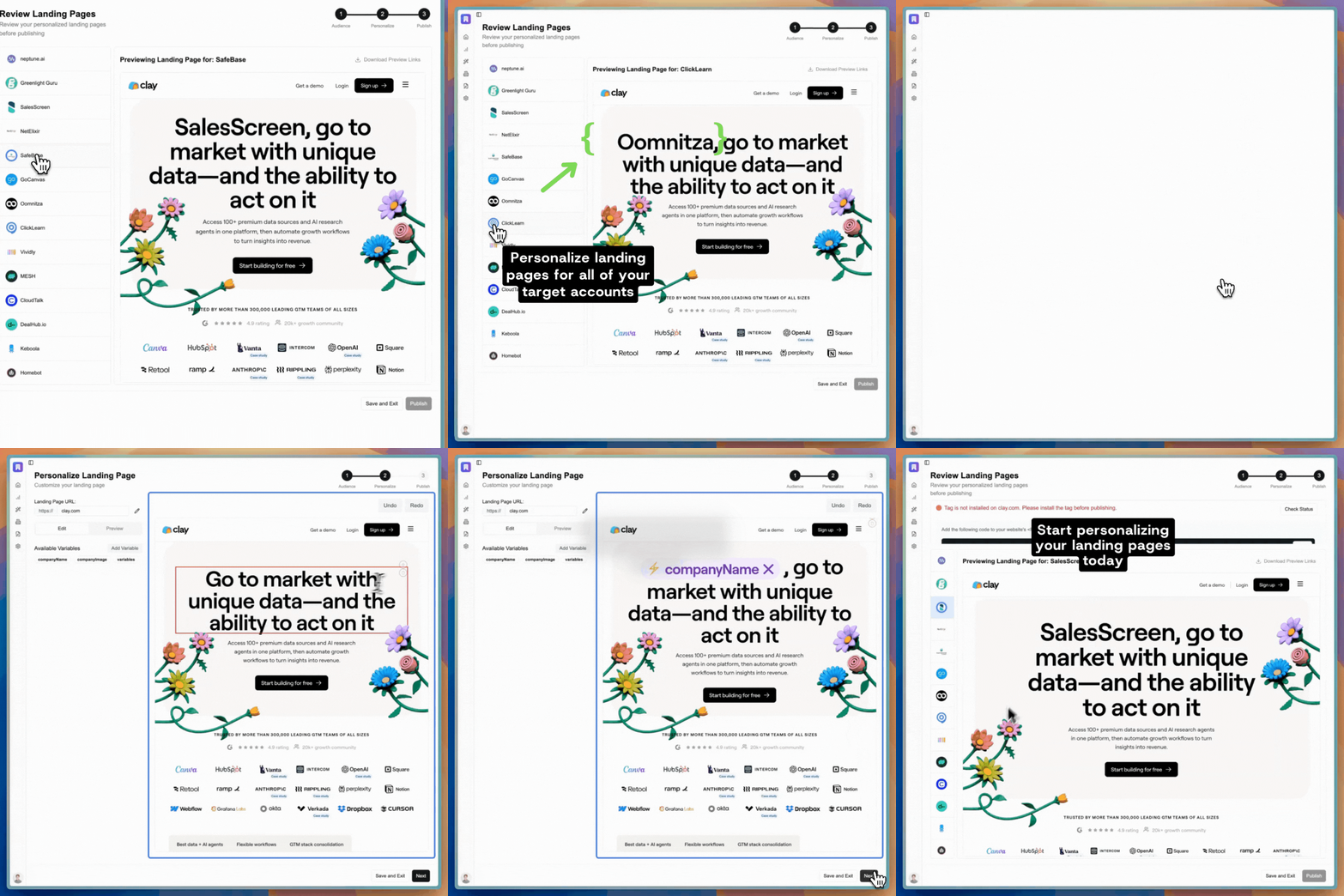
Brief Description: Account intelligence platforms provide rich, dynamic data about target accounts, including firmographics, technographics, intent signals, and contact information. This data is crucial for identifying the most promising accounts, understanding their needs, and personalizing outreach efforts.
Key Features/Benefits:
- Target Account Identification: Helps identify high-value accounts that fit your ideal customer profile based on various data points.
- Deep Account Insights: Provides comprehensive information about an account’s technology stack, recent news, hiring trends, and other relevant signals.
- Intent Data: Reveals which accounts are actively researching solutions like yours, allowing for timely and relevant engagement.
- Contact Discovery: Helps identify key decision-makers and influencers within target accounts, along with their contact information.
Example: ZoomInfo, Clearbit, Demandbase One. Integrating account intelligence platforms with your CRM and MAP enriches your existing account data, enabling more precise targeting, personalized messaging, and ultimately, more effective ABM campaigns.
6. Content Management Systems (CMS) / Content Personalization Tools
Brief Description: While not always considered a direct part of the ABM tech stack, a well-integrated CMS with content personalization capabilities is vital for delivering tailored experiences to target accounts. These tools allow marketers to dynamically adjust website content, landing pages, and other digital assets based on the visitor’s account, industry, or stage in the buying journey.
Key Features/Benefits:
- Dynamic Content Delivery: Presents relevant content to specific account visitors, enhancing engagement and demonstrating a deep understanding of their needs.
- Improved User Experience: Creates a more personalized and engaging website experience, guiding prospects to the information most valuable to them.
- A/B Testing and Optimization: Enables testing of different content variations to identify what resonates best with various account segments.
- Consistent Brand Messaging: Ensures that all digital touchpoints reflect a consistent brand voice and message, even when personalized.
Example: Optimizely, Adobe Experience Manager, HubSpot CMS Hub. Integrating your CMS with your MAP and CRM allows for a holistic view of account engagement, from initial ad impressions to website interactions and sales conversations. This integration is key to delivering a truly seamless and personalized buyer journey.
7. Analytics and Reporting Tools
Brief Description: Dedicated analytics and reporting tools are essential for measuring the effectiveness of your ABM strategy and identifying areas for optimization. These tools aggregate data from across your integrated tech stack, providing comprehensive insights into account engagement, campaign performance, and ROI.
Key Features/Benefits:
- Holistic Performance View: Consolidates data from various platforms to provide a complete picture of ABM performance, from initial outreach to closed-won deals.
- Granular Account Insights: Allows for deep dives into individual account performance, helping to understand what strategies are most effective for specific segments.
- ROI Measurement: Tracks the return on investment for ABM initiatives, demonstrating the value of your efforts to stakeholders.
- Predictive Analytics: Some advanced tools offer predictive capabilities, helping to forecast future performance and identify potential risks or opportunities.
Example: Google Analytics, Tableau, Looker, specific ABM analytics modules within platforms like Demandbase. Integrating these tools with your entire ABM tech stack ensures that you have access to the data needed to make informed decisions, continuously refine your strategy, and drive better results.
Conclusion
Integrating your ABM tech stack is not merely about connecting disparate software; it’s about creating a cohesive ecosystem that empowers your marketing and sales teams to deliver highly personalized and impactful experiences to your most valuable accounts. By strategically selecting and integrating the right tools—from CRM and marketing automation to sales engagement and analytics—businesses can achieve unparalleled alignment, efficiency, and ultimately, significant revenue growth. The journey to a fully integrated ABM tech stack requires careful planning, continuous optimization, and a commitment to leveraging data for smarter decision-making. Embrace integration, and unlock the full potential of your ABM strategy.
Frequently Asked Questions About ABM Tech Stack Integration: Connecting Your Tools for Success
Q1: What is an ABM tech stack?
An ABM tech stack refers to the collection of software and tools used to execute and manage Account-Based Marketing strategies. This typically includes platforms for CRM, marketing automation, account intelligence, sales engagement, and analytics, all integrated to work together seamlessly.
Q2: Why is integration important for an ABM tech stack?
Integration is crucial because it ensures a unified view of target accounts, enables data to flow freely between different platforms, and facilitates personalized, coordinated engagement across marketing and sales. Without integration, data silos can emerge, leading to inefficiencies and a fragmented customer experience.
Q3: What are the biggest challenges in integrating an ABM tech stack?
Common challenges include data inconsistencies, technical complexities in connecting disparate systems, lack of internal expertise, resistance to change from teams, and ensuring data privacy and compliance. Careful planning and a phased approach can help mitigate these challenges.
Q4: How can I measure the success of my integrated ABM tech stack?
Success can be measured through various metrics, including increased account engagement, higher conversion rates, improved sales-marketing alignment, faster sales cycles, and ultimately, a higher return on investment (ROI) from your ABM efforts. Robust analytics and reporting tools are essential for tracking these metrics.
Q5: What is the role of AI in ABM tech stack integration?
Artificial intelligence (AI) plays an increasingly important role by enhancing data analysis, predicting account behavior, personalizing content at scale, and automating routine tasks. AI-powered tools can help identify high-intent accounts, optimize campaign performance, and provide deeper insights into customer journeys.
Ready to Optimize Your ABM Tech Stack?
Discover how Karrot.ai can help you seamlessly integrate your ABM tools, streamline your workflows, and drive unparalleled results.