

How to Find the Best Instagram Hooks With Jev and Meta Muse


TABLE OF CONTENTS:
- Quick Overview
- Why Instagram hooks die in the saves folder
- The Jev to Meta Muse route
- Operator scene: the ledger beats the screenshot dump
- Pair the ledger with a fail-before-spend habit
- Weekly rhythm for bookmark to ledger
- Worked example: one bookmark night into a scored ledger
- Failure modes to log every Friday
- Want bookmarks to become a ledger?
Quick Overview
This is for creative and performance leads who bookmark strong Instagram posts and then lose the hooks in a camera roll graveyard. The job is finding the best Instagram hooks before you post, using Jev and Meta Muse. The mechanism routes bookmarks through Jev into Meta Muse so hooks, offers, and creatives get extracted, labeled, and ranked. The outcome is a ledger your team can test against past winners before anyone buys media.
One recent number: more than 50% of time spent on Instagram is on Reels. Video time on Instagram is up more than 30% since last year. A hook that uses both a visual and sound is 1.5 times more likely to rank in the top 20% for purchase intent. Source: Meta for Business, December 2, 2025.
- Bookmarks are raw inventory. The ledger is the working asset.
- Jev routes what to scrape and how to score it.
- Meta Muse pulls hooks, offers, and creative patterns into structured rows.
- Score against your own past winners before spend.
- Keep humans on taste calls; let the agent own the scrape and sort.
A performance marketer opened Instagram saves on a Sunday night and felt the familiar guilt. Dozens of bookmarks. Strong hooks. Clever offers. Zero system. By Monday standup the saves were still a scroll, not a spreadsheet, and the media plan still needed three new angles before noon.
Eric’s shorthand for the workflow is blunt. Use Jev to scan the people you bookmark on IG to scrape their hooks, offers, and creatives using Meta Muse. The same post points at scanning followers too. The point is routing: Jev decides what gets extracted and how it is labeled so Meta Muse is not a random scrape with pretty screenshots.
Why Instagram hooks die in the saves folder
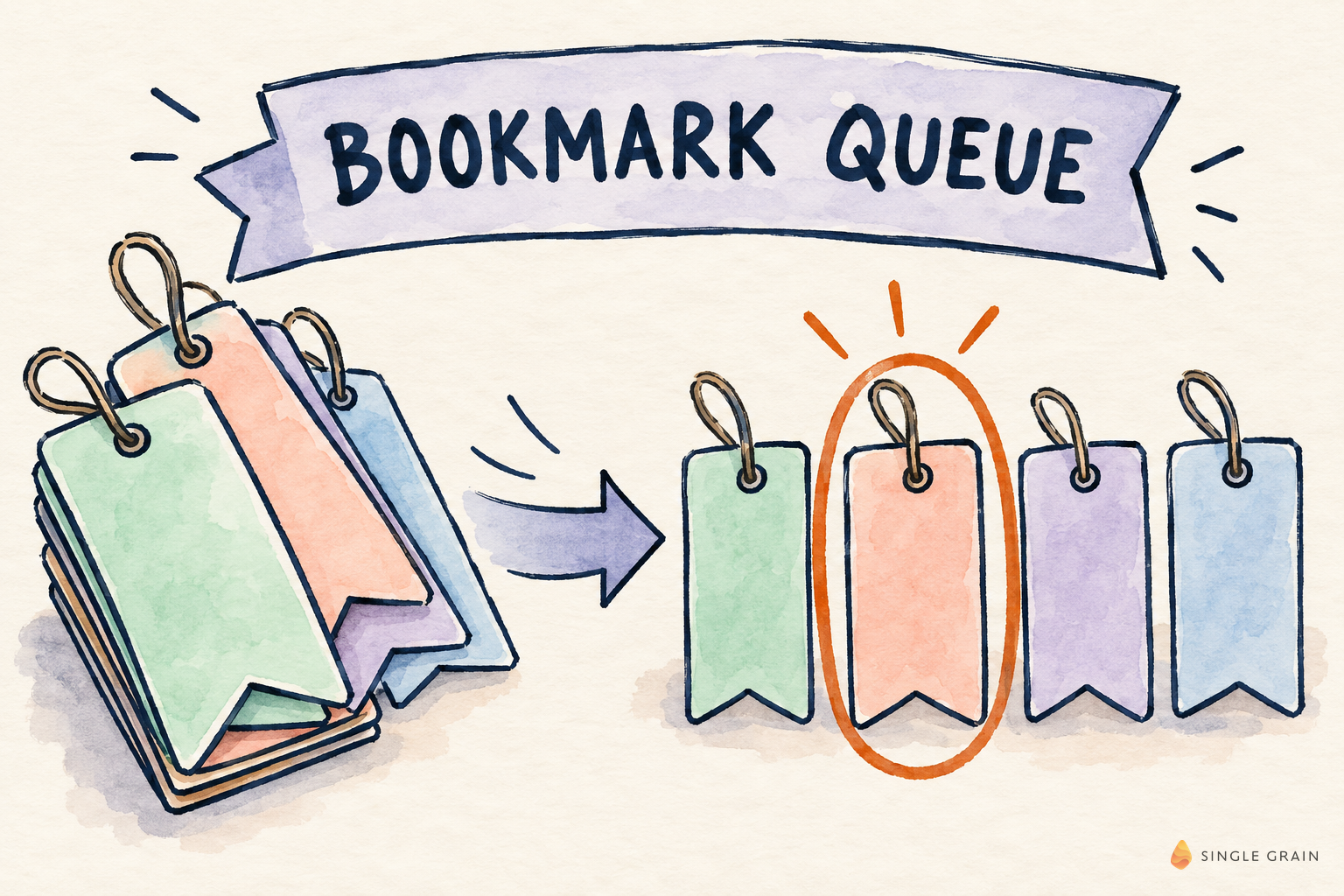
Saves feel like research. Without a ledger they are just delayed forgetting. The hook that made you tap save rarely survives into a brief unless someone types it into a row with a score and a next test. Teams that win on creative volume treat bookmarks as inbound ore. They refine it the same day.
Instagram hooks also travel poorly when they are copied as vibes. “This felt punchy” is not a ledger field. The ledger needs the hook line, the offer shape, the creative format, the source account, and a score against your own history.
Ledger columns that earn their keep
| Column | Purpose |
|---|---|
| Hook line | The first-line claim or tension, copied cleanly |
| Offer shape | Discount, demo, free tool, proof, urgency, or other |
| Format | Static, carousel, short video, UGC style |
| Source | Bookmarked account and save date |
| Score vs past winners | Pass, fail, or needs human taste call |
The Jev to Meta Muse route
- Collect. Export or sync Instagram bookmarks into a queue Jev can see.
- Route. Jev filters junk, duplicates, and off-category saves before scrape spend.
- Extract with Meta Muse. Pull hooks, offers, and creative patterns into rows.
- Score. Compare each hook against your own past winners and flops.
- Ship to test. Only passing rows enter the creative brief board.
If you skip the score step, you just built a prettier mood board. The ledger only matters when it can fail an angle on paper before it fails in spend.
What Jev should refuse to route
- Saves with no clear hook line (pure aesthetic posts).
- Offers your business cannot fulfill.
- Creatives that depend on a brand face or trademark you do not own.
- Duplicates of an angle you already killed last month.
Operator scene: the ledger beats the screenshot dump
In a September creative working session, the team that moved fastest was not the one with the most bookmarks. It was the one that refused to discuss an angle until it had a row. Meta Muse filled structure. Jev kept the queue clean. A human still said yes or no on taste. The screenshot dump in a Slack thread stopped winning arguments because it could not show a score.
This is a narrower job than choosing specialized marketing models. For model choice and pipeline jobs at the LLM layer, see specialized marketing LLMs for pipeline jobs. Come back here when the job is Instagram bookmarks into a scored hook ledger.
Pair the ledger with a fail-before-spend habit
Once hooks are rows, you can fail them against past winners before media buys. That habit pairs with kill switches when a scrape job goes noisy: SLAs and kill switches for managed marketing agents. If you later productize the ledger as a managed creative job, price it with eyes open using how to price managed marketing agents.
Weekly rhythm for bookmark to ledger
- Daily: bookmarks land in the queue automatically where possible.
- Twice a week: Jev route + Meta Muse extract into new rows.
- Same day: score pass or fail against the winners sheet.
- Creative standup: only pass rows get briefs.
- Friday: archive fails with a one-line reason so the score model learns.
Measure the system by angles tested per week and by how often a “hot save” dies at the score step. A high fail rate at scoring is healthy if it saves spend. A high fail rate at extraction means your bookmark diet is wrong.
Worked example: one bookmark night into a scored ledger
This pass is qualitative on purpose. No invented engagement rates. The point is the route from Instagram saves into a Meta Muse ledger with a human score.
Capture
A growth lead ends the day with a stack of Instagram bookmarks: hooks that felt sharp in the feed. Without a route, those saves die in the folder. The job starts by exporting the bookmark list into a queue with three fields only: hook text, offer family, and source post URL.
Jev route
Jev classifies each row as keep, merge, or drop. Keep means the hook is distinct from the ledger. Merge means it is a near-duplicate of an existing row. Drop means it is off-ICP or unclear. Uncertain rows stay in a human pile. Nothing goes to Meta Muse until the keep set is locked.
Meta Muse + score
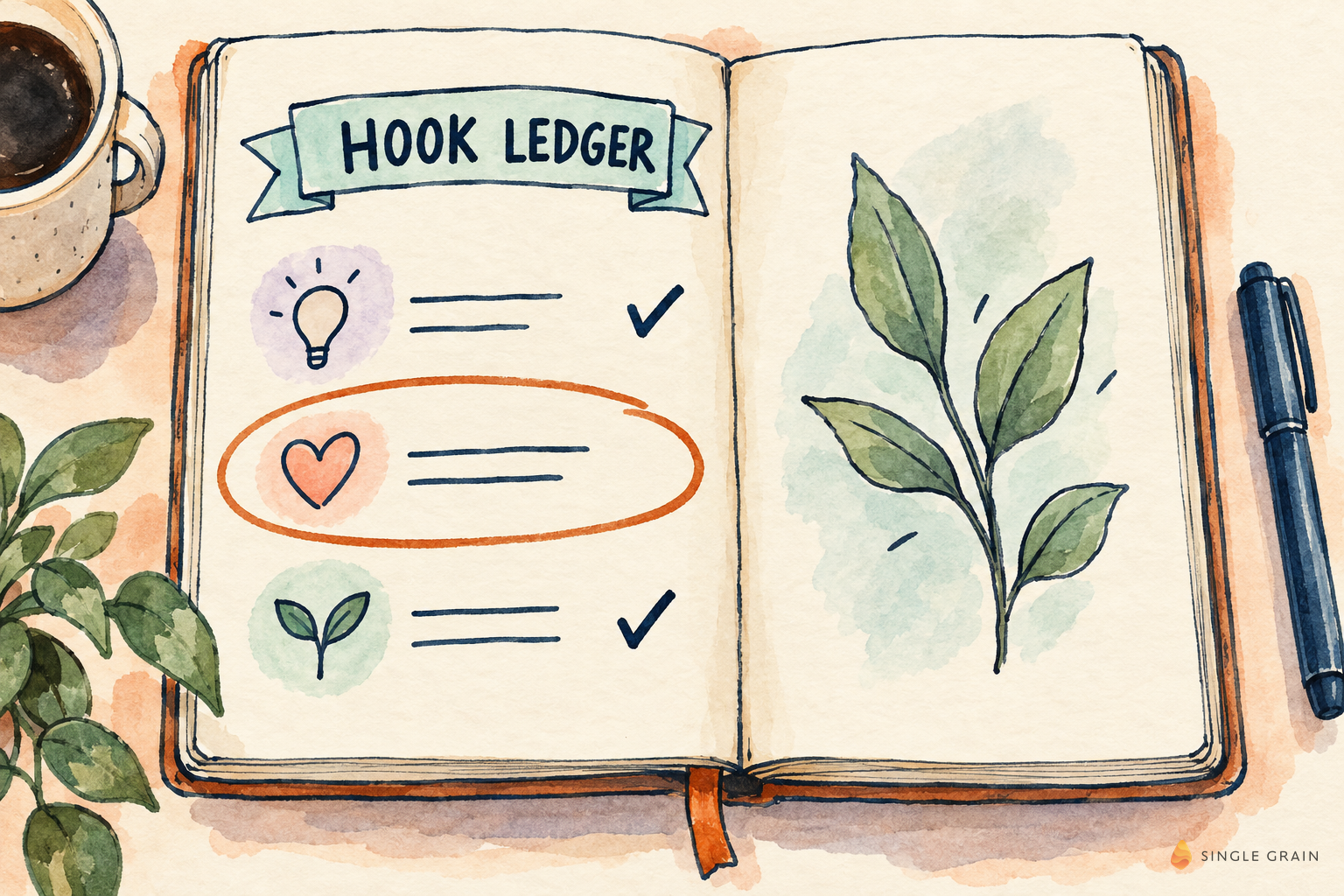
Keep rows enter Meta Muse as creative seeds. The operator scores each resulting concept against a short ledger: hook clarity, offer match, and brand safety. One orange recommended row is the weekly test candidate. Crossed-out rows stay in the ledger so the team does not re-save the same idea next week.
Friday audit
Log five wins and five misses. If Meta Muse output drifts from the offer, pause the route. The ledger is the source of truth, not the screenshot dump.
Failure modes to log every Friday
Pick five wins and five misses. If a hot save dies at scoring, that is healthy. If extraction fails, fix the bookmark diet. Before you trust a Meta Muse scrape in spend, follow Eric’s own holdout habit: test the Jev work in Meta Muse against past content decisions.
For how Meta Muse adapts formats in practice, see the Marketing School walkthrough at t=361s. And when you study offers, keep competitor research grounded the way Eric did when he used Meta Muse to study competitor offers that stayed live.
Pick five wins and five misses from the week. For each miss, name whether the criteria, the gate, or the handoff failed. Update one rule only. Broad rewrites of the whole stack every Friday are how institutional memory dies and how teams lose trust in the agent job.
Keep the Friday note in the same place as the prompt. If the note lives in a random Slack thread, next week starts from folklore again. The point of a managed job is that a new owner can read the runbook and run the same loop without a private briefing.
Refuse remains a first-class outcome. Not every row, bookmark, call, render, or flagged sentence deserves a clever next action. Teams that cannot refuse end up automating noise and then blaming the model for being unreliable when the real failure was missing judgment.
Owner checklist
- Input contract frozen before the run.
- Uncertain items have a named human.
- Refuse remains valid.
Week-over-week, publish a one-line health note: volume processed, uncertain share, and refused share. Those three numbers tell you if the job is alive.
Owners should be able to pause the job in one step. If pause requires an engineering ticket, you do not have a kill switch yet.
New teammates should shadow one full cycle before they edit prompts. Prompt edits without cycle context recreate silent failures.
Keep screenshots out of the source of truth. The runbook and the audit columns are the source of truth.
If a stakeholder wants a demo instead of a job, show the audit column. Demos without audits are how chatbot theater returns.
Write the refuse path in plain language. If nobody can name what gets refused, the system will accept everything under time pressure.
Store prompt versions next to ICP or brief versions. Mixing versions mid-batch creates labels nobody can defend later.
Celebrate clean uncertain piles. A shrinking uncertain share usually means better inputs, not a smarter model.
When two systems conflict, log the conflict. Silent resolution teaches the agent to hide disagreement.
Schedule a monthly teardown with five wins and five misses. Change one rule. Only one.
If the job cannot survive a vacation week, it is still a personal workflow, not a managed agent job.
Measure handoff latency from agent output to human action. Slow handoffs erase the value of fast classification.
Do not let executive demos skip the human gate. Special cases become the new default overnight.
Keep customer-identifying detail out of prompts unless the run is in an approved private sandbox.
When in doubt, hold. Holding is cheaper than a confident wrong route, flag, render, or rewrite.
Want bookmarks to become a ledger?
Single Grain routes Instagram hooks through Jev and Meta Muse into a scored ledger your media team can trust. Talk to Single Grain about installing the workflow before your next save folder overflows.


