

What Is GEO (Generative Engine Optimization)?


In the rapidly evolving landscape of digital marketing, a new paradigm is emerging: Generative Engine Optimization (GEO). As artificial intelligence (AI) models become increasingly sophisticated and integrated into search experiences, the way content is discovered, understood, and presented to users is undergoing a significant transformation. GEO represents a proactive approach to adapting digital content and online presence to thrive in this AI-driven environment.
TABLE OF CONTENTS:
- Understanding Generative Engine Optimization (GEO)
- GEO vs. SEO: A Fundamental Shift
- Key Strategies for Effective Generative Engine Optimization
- The Future of Search: Embracing Generative AI
- Frequently Asked Questions About Generative Engine Optimization (GEO)
- Ready to Optimize Your Content for the AI Era?
Understanding Generative Engine Optimization (GEO)
Generative Engine Optimization (GEO) is the practice of optimizing digital content for AI-powered search engines and generative models. Unlike traditional Search Engine Optimization (SEO), which primarily focuses on ranking in conventional search engine results pages (SERPs), GEO aims to enhance visibility and citation within AI-generated answers, summaries, and conversational interfaces. It’s about ensuring that your brand’s message is accurately represented and leveraged by AI systems that synthesize information to provide direct answers to user queries.
Why is GEO Crucial in Today’s Digital Landscape?
The rise of generative AI in search has fundamentally altered user behavior. Users are increasingly seeking immediate, concise answers directly from AI models rather than navigating through multiple websites. For businesses and content creators, this shift means that appearing as a cited source within an AI-generated response can be as, if not more, valuable than a top organic search ranking. GEO ensures that your content is not only discoverable but also digestible and trustworthy for these advanced AI systems, positioning your brand as an authoritative voice in your industry.
GEO vs. SEO: A Fundamental Shift
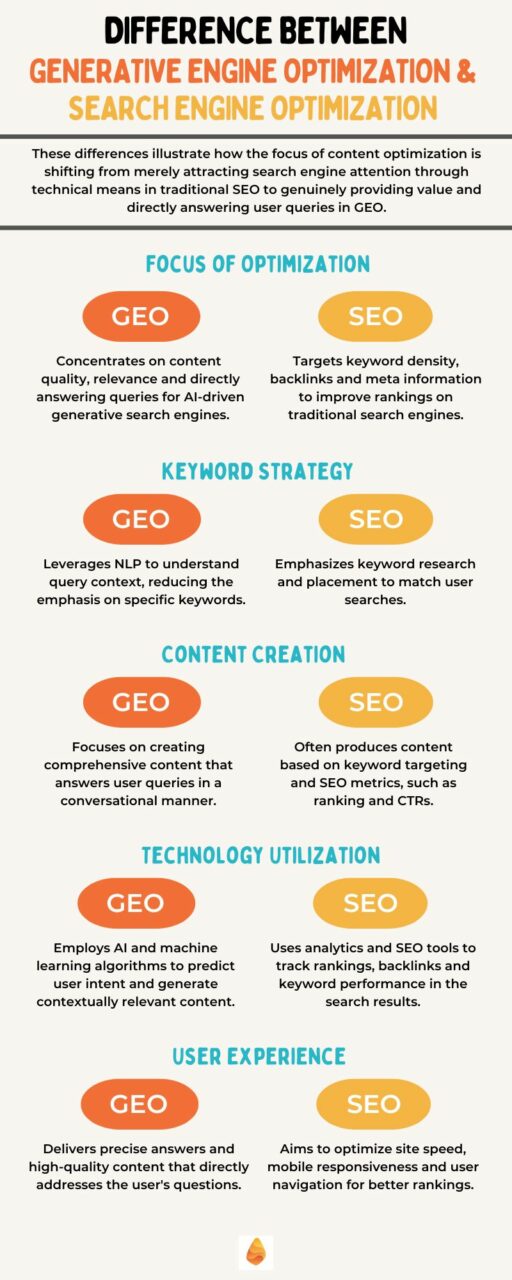
While both GEO and SEO share the overarching goal of increasing online visibility, their methodologies and focus points diverge significantly. Understanding these differences is key to developing a comprehensive digital strategy.
| Feature | Search Engine Optimization (SEO) | Generative Engine Optimization (GEO) |
|---|---|---|
| Primary Goal | Rank high in traditional search engine results pages (SERPs) | Be cited and referenced by AI-powered generative models and answer engines |
| Focus | Keywords, backlinks, technical SEO, user experience, organic traffic | Content clarity, factual accuracy, structured data, entity recognition, semantic understanding |
| Audience | Users navigating websites via search engines | AI models synthesizing information for direct answers and conversational interfaces |
| Key Metric | Organic rankings, click-through rates, website traffic | AI citation rate, accuracy of AI-generated summaries, brand mentions in AI responses |
SEO guides users toward the right destination (your website), while GEO’s purpose is to resolve a user’s need instantly within a single conversation or AI-generated answer. This doesn’t mean SEO is obsolete; rather, GEO complements SEO by addressing the evolving nature of information consumption.
Key Strategies for Effective Generative Engine Optimization
Optimizing for generative engines requires a nuanced approach that prioritizes clarity, authority, and structured content. Here are some key strategies:
- Semantic Content Optimization: Focus on creating content that is semantically rich and contextually relevant. AI models excel at understanding the meaning and relationships between concepts. Use clear, concise language and avoid jargon where possible. For example, instead of just listing keywords, explain concepts thoroughly and provide comprehensive answers to potential questions.
- Structured Data Implementation: Implement structured data (Schema Markup) to help AI models better understand the context and relationships within your content. This includes marking up FAQs, definitions, products, and services. Structured data acts as a roadmap for AI, making it easier to extract and utilize information accurately. Learn more about Schema Markup for better understanding. For a deeper dive into content optimization, explore our guide on Advanced Content Strategies.
- Entity-Based Content Creation: Develop content around specific entities (people, places, organizations, concepts) and their attributes. AI models build knowledge graphs based on entities, so providing clear, factual information about relevant entities can significantly improve your content’s chances of being cited. Consider creating dedicated pages or sections that define key terms and concepts related to your industry. You can also find valuable insights on Digital Marketing Trends to stay updated.
- Authoritative and Trustworthy Sources: AI models are designed to prioritize authoritative and trustworthy information. Ensure your content is well-researched, fact-checked, and backed by credible sources. Building a strong domain authority and establishing yourself as an expert in your field will naturally enhance your GEO efforts. A great resource for digital marketing insights is Search Engine Journal. Another valuable resource for understanding AI in marketing is Marketing AI Institute.
- Conversational Content Design: Write content that anticipates and answers direct questions, mimicking a conversational style. Think about how a user might phrase a question to an AI assistant and structure your content to provide clear, direct answers. This includes using question-and-answer formats within your content.
- Internal and External Linking: Strategically incorporate internal links to related content on your website and external links to reputable sources. This not only improves user experience but also signals to AI models the interconnectedness and authority of your content. For instance, you might link to a detailed guide on content marketing strategies within an article about GEO.
The Future of Search: Embracing Generative AI
The integration of generative AI into search is not a fleeting trend but a fundamental shift in how information is accessed and consumed. As AI models continue to advance, their ability to understand, synthesize, and generate content will only grow. Businesses that embrace GEO now will be better positioned to adapt to these changes, maintain their online visibility, and effectively reach their target audiences.
GEO is about future-proofing your digital strategy. It’s about moving beyond keywords and backlinks to a deeper understanding of semantic meaning, entity relationships, and the nuances of AI comprehension. By focusing on creating high-quality, structured, and authoritative content, you can ensure your brand remains at the forefront of the generative search revolution.
Frequently Asked Questions About Generative Engine Optimization (GEO)
Q: Is GEO replacing SEO? A: No, GEO is not replacing SEO. Instead, it complements SEO. While SEO focuses on optimizing for traditional search engine rankings, GEO focuses on optimizing content to be understood and cited by AI-powered generative models. Both are crucial for a comprehensive digital strategy.
Q: What are the main differences between GEO and SEO? A: The main differences lie in their primary goals and focus. SEO aims for high rankings in SERPs using keywords and backlinks, while GEO aims for citation in AI-generated answers through content clarity, structured data, and semantic understanding.
Q: How can I start implementing GEO strategies? A: Begin by focusing on semantic content optimization, implementing structured data, creating entity-based content, ensuring your sources are authoritative, and designing content with a conversational flow. Regularly review and adapt your strategies as AI technology evolves.
Ready to Optimize Your Content for the AI Era?
As the digital landscape continues to evolve with generative AI, staying ahead means adapting your content strategy. At Single Grain, we specialize in helping businesses navigate these changes and implement cutting-edge optimization techniques. Contact us today to learn how we can help you thrive in the age of Generative Engine Optimization.



