

How to Optimize ChatGPT Ads for Maximum Performance


ChatGPT ads optimization will quickly become a core performance skill as conversational AI turns into a mainstream ad channel. When offers appear as responses inside a conversational interface, small mistakes in intent targeting, creative, or measurement can quietly destroy return on ad spend. Instead of just bidding on keywords or audiences, you’re competing to be the most useful answer at the exact moment a user is asking for help. That shift requires a different optimization mindset than traditional search or social campaigns.
This guide walks through a complete, practical approach to making ChatGPT-style ad placements deliver real revenue instead of vanity metrics. You’ll learn how to interpret conversational intent, define the right success metrics, design high-performing dialogue-based creatives, leverage AI-driven targeting and bidding, build testing loops, and prepare your data infrastructure so you’re ready the moment these ad products scale.
TABLE OF CONTENTS:
- The New Rules of Conversational Ad Performance
- Strategic Foundations for ChatGPT Ads Optimization
- Designing High-Conversion Conversational Creatives
- Leveraging AI Targeting and Bidding Instead of Fighting It
- Turning Conversations Into Revenue With Testing and CRO
- Building Data and Infrastructure for the Next Wave of AI Ads
- Bringing ChatGPT Ads Optimization Into Your Growth Strategy
The New Rules of Conversational Ad Performance
Performance marketing has always relied on matching an offer to a moment, but conversational ads redefine what that moment looks like. Instead of a one-shot keyword query or a passive scroll, users are in a multi-turn dialogue, clarifying their needs and asking follow-up questions. Optimization now means aligning with that evolving context rather than just the first thing someone typed.
Early pilots of conversational placements show just how powerful this can be when done well. Context-aware offers embedded in the chat flow achieved conversion rates up to 23 times higher than those of standard search ads. That level of upside is only possible when ad experiences feel like a natural continuation of the conversation, not an interruption.
Because the ad unit is effectively an “answer,” users will hold it to the same standard they expect from the assistant itself: accuracy, clarity, and genuine usefulness. Generic benefit statements that might pass on a social feed will underperform inside a dialogue where people are actively interrogating options. The most important optimization levers become depth of help, specificity to the question, and how gracefully you guide someone toward the next step.
How ChatGPT ads reshape user intent and context
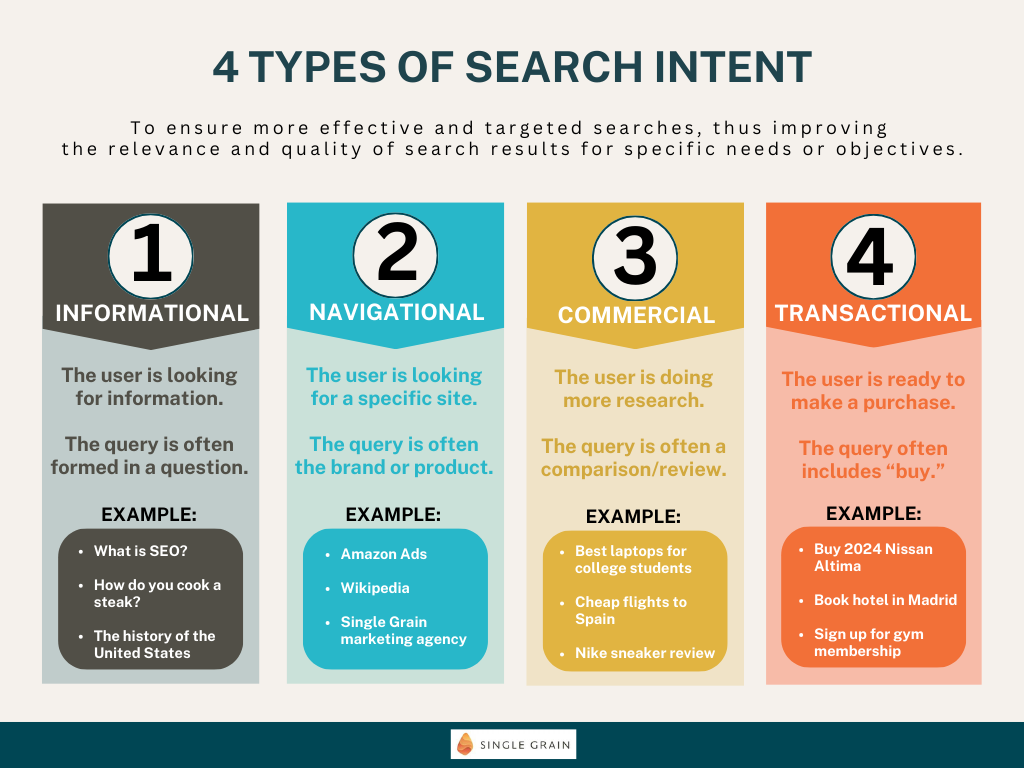
In search advertising, you infer intent from a short query; in conversational environments, intent unfolds over multiple turns. Users reveal constraints, preferences, objections, and edge cases as they keep chatting, which gives the underlying model far richer signals to decide which offers to surface. Effective advertisers treat each conversation as a narrative rather than a single data point.
Because the assistant remembers earlier parts of the dialogue, ad relevance is judged against the entire thread rather than a single keyword. If someone has already said they want “privacy-focused tools for a small remote team,” a vague productivity offer will feel tone-deaf, even if it technically matches the last phrase they typed. Optimization means anticipating the types of constraints your best customers mention and ensuring your messaging, product feed, and policies make those constraints easy to match.
Another critical shift is that users can question your offer in real time. They can ask for comparisons, push back on price, or clarify implementation details, all within the same thread. Campaigns that account for this by providing clear, honest, and detailed follow-up information will capture far more qualified demand than those that only optimize the initial impression.
Strategic Foundations for ChatGPT Ads Optimization
Before adjusting bids or rewriting prompts, you need a clear definition of what “winning” looks like for conversational campaigns. Because these ads can influence multiple stages of the customer journey (education, evaluation, and purchase), optimization can easily drift toward shallow metrics like interaction rate if you don’t anchor it in business outcomes. Choosing a single primary objective for each campaign keeps both experimentation and reporting honest.
Conversational placements also introduce intermediate signals that don’t exist in traditional ad formats, such as how often users request more details, ask for alternatives, or save a response. Treating these as supporting diagnostics rather than end goals lets you optimize for long-term revenue while still learning quickly from early behavioral patterns.
Defining success across the funnel
Different intents require different success metrics. Someone asking for “best project management platforms for agencies” is in a very different mindset from someone asking “how to migrate my existing projects without losing data.” Aligning each campaign with a specific stage of the journey keeps optimization disciplined and makes cross-channel reporting more meaningful.
The table below shows how to connect funnel stages, primary KPIs, and example conversational signals you can track once ad platforms expose them.
| Journey stage | Primary KPI | Example conversational signal |
|---|---|---|
| Problem definition | Engaged sessions with educational assets | User requests a deeper guide or framework after seeing your answer |
| Solution exploration | Qualified lead or trial sign-up | User asks for implementation details, pricing ranges, or integration support |
| Purchase decision | Completed purchase or signed contract | User clicks into a conversion-focused flow after reviewing a concise offer summary |
| Post-purchase | Expansion or retention metric | User searches for advanced use cases that match higher-tier plans or add-ons |
By assigning each campaign to one row in this table, you prevent mixed objectives that confuse both the optimization algorithm and your team. It also becomes much easier to brief stakeholders on performance because everyone knows which outcome each conversational placement is trying to drive.
A five-step ChatGPT ads optimization framework
Once your objectives are defined, you can apply a repeatable process to stand up and refine campaigns without getting lost in one-off experiments. The following five steps create a tight loop between user intent, creative, and results.
- Mine real questions from existing channels. Use search query logs, sales calls, support tickets, and community threads to collect the exact language your audience uses when they need help.
- Cluster questions by intent, not just topic. Group queries by what people are trying to decide or accomplish, such as “tool selection,” “migration risk,” or “budget justification,” rather than by product feature names.
- Match each intent cluster to a single offer. Decide which asset or action is the best next step for that cluster (demo, trial, ROI calculator, comparison page), so your conversational answer has a clear destination.
- Design one conversational flow per cluster. Draft initial answer templates and likely follow-up responses that solve the identified problem and naturally introduce your chosen offer.
- Schedule recurring optimization reviews. On a weekly or bi-weekly cadence, analyze performance and conversation logs for each cluster, decide which elements to adjust, and document what you learned.
Following this framework keeps ChatGPT ads optimization grounded in real user language and measurable outcomes instead of guesswork about what might resonate inside a new ad format.
Designing High-Conversion Conversational Creatives
In dialog-based environments, your “creative” is the conversation itself. That means traditional assets like headlines, body copy, and images are less important than the clarity, sequence, and helpfulness of the text that appears in the chat window. Users are not just skimming; they are actively reading and responding, which raises the bar for relevance and depth.
Scaling high-quality conversational answers is not optional. 86 percent of buyers are already using or plan to use generative AI for video ad creatives by 2026, and that same appetite for automation will extend to chat-based assets. Teams that build robust prompt templates, tone guidelines, and QA processes will iterate much faster than those relying solely on manual copywriting.
Prompt and response patterns that feel like real help
High-performing conversational ads usually follow recognizable patterns that balance education with a clear path forward. Instead of squeezing everything into a single block of text, they sequence the information so users can decide how deep they want to go before taking action. The goal is to make your offer feel like the natural next step after a genuinely useful explanation.
Several patterns tend to work well in ChatGPT-like environments when tailored to your audience and compliance requirements:
- Advisor with options: Briefly explain key decision criteria, then present two or three paths with distinct trade-offs, with your solution clearly positioned for a specific profile.
- Step-by-step guide: Outline a concise process to solve the user’s problem, then introduce your product or service to automate or de-risk one or more of those steps.
- Configurator or calculator: Ask for a small number of inputs (such as team size or budget), then return a tailored recommendation plus an invitation to refine the results on your site.
- Myth-versus-reality explainer: Debunk a common misconception relevant to the user’s question before presenting a clearer model that naturally points toward your offer.
Whichever pattern you use, the optimization work happens at the level of phrasing, ordering, and explicitness: how quickly you acknowledge the user’s situation, how transparently you explain trade-offs, and how frictionless it is to move from information to action.
If you want a partner that already blends AI-driven conversation design with performance creatives, Single Grain specializes in building campaigns where every answer is engineered for both usefulness and measurable business outcomes. Our team combines experimentation, copy strategy, and data analysis to turn emerging formats like ChatGPT ads into reliable revenue channels.

Leveraging AI Targeting and Bidding Instead of Fighting It
Conversational ad platforms will rely heavily on AI to decide which offers to show, when to show them, and how much to bid for that exposure. Rather than trying to reverse-engineer every signal, your goal is to feed the system clean inputs and clear guardrails so that automated decision-making consistently favors your best customers and highest-value outcomes.
Contextual signals you can influence
While you cannot control the internal mechanics of a conversational model, you can influence the signals it uses to judge when your offer is a good fit. Focusing on these controllable inputs gives you leverage without relying on speculative hacks that may break as platforms update their systems.
Key areas where you can deliberately shape signals include the following:
- Structured product and content feeds: Provide accurate, up-to-date descriptions, categories, and attributes so the system understands exactly what your solutions do and who they are for.
- Clear eligibility and compliance rules: Encode geographic, industry, or use-case restrictions so your ads are only considered when they are genuinely appropriate.
- Consistent brand and tone guidelines: Maintain a recognizable style across conversational answers so users and models associate certain types of language with your offers.
- Well-defined negative contexts: Specify situations where you would rather not appear—such as highly sensitive topics—to protect your brand and avoid low-quality impressions.
As platforms expose more levers over time, advertisers who already treat these inputs as optimization assets will be able to adapt quickly, while others scramble to retrofit their data and creative into an AI-first targeting world.
Turning Conversations Into Revenue With Testing and CRO
Even the most contextually perfect ad will underperform if the journey after the click or tap is clumsy. In conversational environments, users have already invested effort in explaining their situation, so any disconnect between the promise in the chat and the experience on your site will feel especially jarring. Conversion rate optimization becomes the bridge that turns high-intent conversations into predictable revenue.
Post-click optimization: Where most ChatGPT ad ROI is won
For many brands, the fastest gains in performance will come from aligning landing experiences with the expectation set inside the chat. If the assistant summarized a specific plan or configuration, the destination page should restate that plan rather than forcing users to reconstruct it from scratch. This continuity reduces cognitive load and keeps momentum on your side.
Strong post-click journeys for ChatGPT traffic often include pre-filled forms based on prior inputs, dynamic content blocks that match the segment inferred from the conversation, and clear ways to resume the dialogue if someone has follow-up questions. Over time, analyzing how these visitors behave compared with other channels will reveal which combinations of conversational answers and on-site experiences yield the highest lifetime value, allowing you to direct more budget to the most profitable paths.
Teams that already run disciplined AI-informed CRO programs are especially well positioned here, because they can plug conversational traffic into existing experimentation frameworks instead of inventing new processes from scratch.
Building Data and Infrastructure for the Next Wave of AI Ads
Behind every high-performing conversational campaign is a reliable data and tracking foundation. Without trustworthy conversion events, audience definitions, and revenue attribution, even the smartest optimization strategies degrade into guesswork. Preparing your stack now ensures you can take full advantage of ChatGPT-style ad products as soon as they become widely available.
This preparation is not limited to one channel. Conversational placements should be part of a broader “search everywhere” strategy that treats web search, social search, and AI assistants as interconnected surfaces. When your analytics, product feeds, and customer data are aligned, you can compare performance across these environments and allocate budget to the combinations that drive the most meaningful business outcomes.
Minimum viable stack for ChatGPT ad readiness
To support serious investment in chat-based advertising, most growth-focused organizations will need a small set of interoperable systems that work together smoothly. At a minimum, consider assembling the following components:
- Analytics platform with event-level tracking: Capture detailed user actions tied to revenue, including distinct events for conversational traffic so you can analyze it separately.
- Tag management and consent tooling: Ensure you can deploy and adjust tracking without code releases while honoring user privacy preferences across channels.
- Clean product or content catalog feed: Maintain a single source of truth for what you sell or publish, with rich metadata that conversational models can use when generating recommendations.
- Customer data platform or CRM: Unify interactions across web, email, and ads so you can evaluate how ChatGPT-driven touchpoints influence pipeline, retention, and expansion.
- Experimentation framework: Use a dedicated testing tool or clearly defined process so that changes to conversational flows and landing pages are measured rigorously instead of anecdotally.
With this foundation in place, ChatGPT ads optimization becomes an extension of your existing growth operations rather than an isolated experiment, making it far easier to secure budget and organizational support.
Organizations that want to accelerate this readiness often turn to partners with deep Search Everywhere Optimization and analytics experience, ensuring that data quality, measurement, and creative experimentation evolve together instead of in silos.
Bringing ChatGPT Ads Optimization Into Your Growth Strategy
Conversational ad products are opening a channel where marketing, product, and support blur into a single experience, and ChatGPT ads optimization is the discipline that keeps that experience commercially effective. Grounding your efforts in clear objectives, intent-based clustering, utility-first creative, AI-aligned targeting, disciplined testing, and robust data infrastructure will turn early experimentation into a durable advantage rather than a short-lived novelty.
If you want to move faster than competitors while keeping your focus on revenue, not just interaction metrics, Single Grain can help you design, launch, and scale ChatGPT-driven campaigns as part of a cohesive growth system. Get a free consultation to explore how an integrated mix of performance creatives, paid media management, CRO, and multi-touch attribution can translate conversational engagement into measurable, compounding ROI.
Frequently Asked Questions
-
How should I budget for early ChatGPT ad experiments?
Treat ChatGPT ads like a structured pilot: ring-fence a small, fixed test budget and tie it to a narrow set of offers or segments. As you hit predefined performance thresholds (e.g., cost per qualified lead within target), scale spend in controlled increments rather than shifting large budgets all at once.
-
What compliance and privacy issues should I consider with ChatGPT ads?
Work with legal and security teams to define which data can safely be referenced or passed between the assistant and your destination pages. Ensure disclosures, consent management, and data retention policies explicitly cover conversational channels, especially if you operate in regulated industries or across multiple jurisdictions.
-
Are ChatGPT ads better suited for B2B or B2C brands?
Both can benefit, but the use cases differ: B2B tends to value complex research, solution comparisons, and implementation guidance, while B2C often focuses on personalized recommendations and product discovery. Start with journeys where your buyers already ask nuanced questions and where better guidance materially impacts revenue.
-
How do I keep brand voice consistent in AI-generated conversational ads?
Create a detailed style guide tailored for chat, including preferred phrases, prohibited claims, tone by audience segment, and examples of on-brand vs. off-brand responses. Use these guidelines to govern prompt design and put human review in place for new flows until performance and quality are stable.
-
What skills should my team develop to manage ChatGPT ad campaigns effectively?
You’ll need a mix of prompt engineering, conversation design, performance analytics, and CRO expertise, plus someone accountable for governance and risk. Upskill existing paid media and content staff with conversational UX training rather than treating this as a completely separate discipline.
-
How can I measure the incremental impact of ChatGPT ads versus my existing channels?
Use controlled experiments, such as geo or audience holdouts, in which some segments are intentionally excluded from ChatGPT exposure. Compare downstream metrics like pipeline created, subscription starts, or repeat purchase rate between exposed and control groups to understand true lift rather than simple last-click attribution.
-
Can ChatGPT ads support international and multilingual campaigns?
Yes, but plan localization at the conversational level, not just by translating a single script. Develop language-specific flows that reflect local terminology, regulations, and buying norms, and validate them with native speakers before broad rollout.