

How to Advertise on ChatGPT: The Complete 2026 Guide


Imagine a world where advertising isn’t about static banners or intrusive pop-ups, but rather a dynamic, personalized conversation that guides consumers directly to the products and services they need. This is the reality emerging with ChatGPT advertising.
This comprehensive 2026 guide will walk you through everything you need to know about advertising on ChatGPT. My agency and I have been testing this platform since day one, and I’ll share the strategies, tactics, and frameworks that are actually working. We’ll explore the fundamental shifts AI brings to the advertising industry, dissect effective strategies for leveraging ChatGPT’s capabilities, outline best practices for ethical and impactful campaigns, and examine real-world examples with actual data.
By the end of this article, you’ll have a clear understanding of how to navigate this innovative advertising frontier and harness the power of conversational AI to revolutionize your marketing efforts.
TABLE OF CONTENTS:
- Understanding ChatGPT Ads: What Makes Them Different
- Step-by-Step Guide: Launching Your First ChatGPT Ads Campaign
- Step 1: Creating Your ChatGPT Ads Account (15-20 Minutes)
- Step 2: Defining Your Campaign Objective and Structure (30-45 Minutes)
- Step 3: Configuring Contextual Targeting Parameters (45-60 Minutes)
- Step 4: Crafting Conversation-Native Ad Creative (60-90 Minutes)
- Step 5: Setting Bids and Budget Allocation Strategy (30-45 Minutes)
- Step 6: Implementing Conversion Tracking and Attribution (20-30 Minutes)
- Step 7: Launching Your Campaign and Monitoring Initial Performance (1-2 Hours)
- Step 8: Optimizing Campaign Performance Through Iterative Testing (Ongoing)
- Strategies for Advertising on ChatGPT
- Comparison Table: ChatGPT vs. Traditional Ad Copywriting
- Best Practices for Effective ChatGPT Advertising
- Common Pitfalls and How to Avoid Them
- Measuring Success: Analytics and Reporting Framework
- The Future of ChatGPT Advertising
- Final Thoughts
Understanding ChatGPT Ads: What Makes Them Different
Before we dive into the tactical setup, you need to understand what makes ChatGPT ads fundamentally different from every other advertising platform you’ve used. This isn’t just Google Ads with a conversational interface. It’s a completely new paradigm.
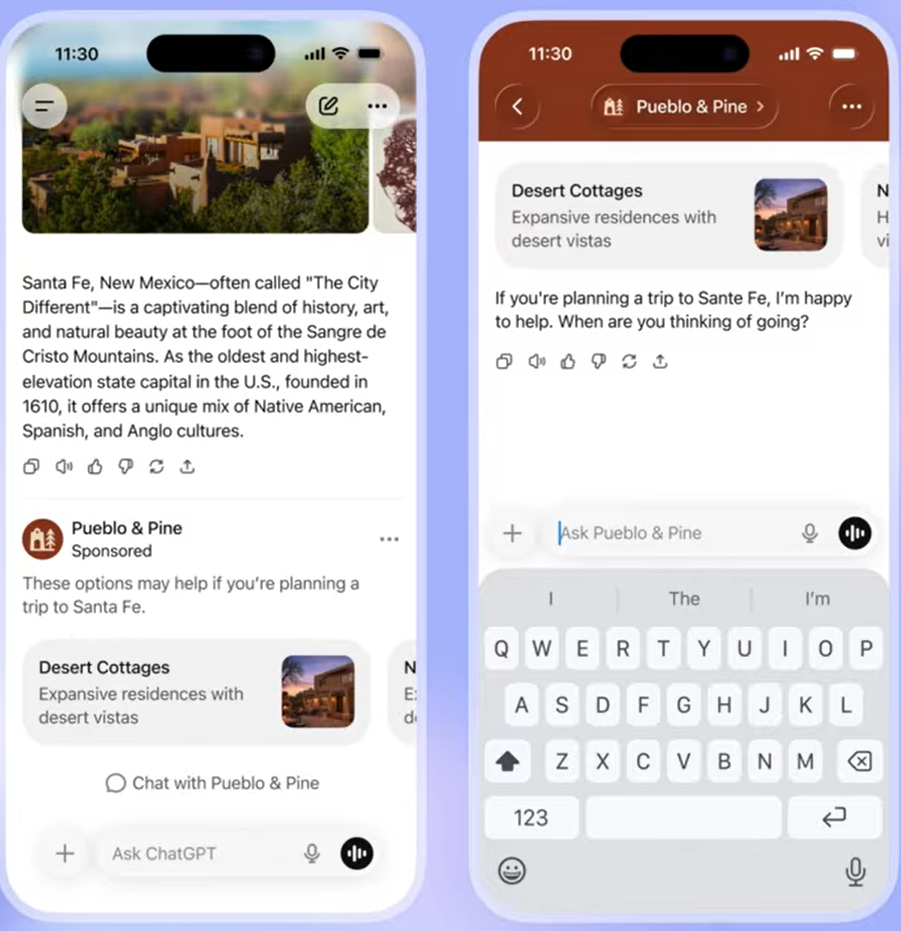
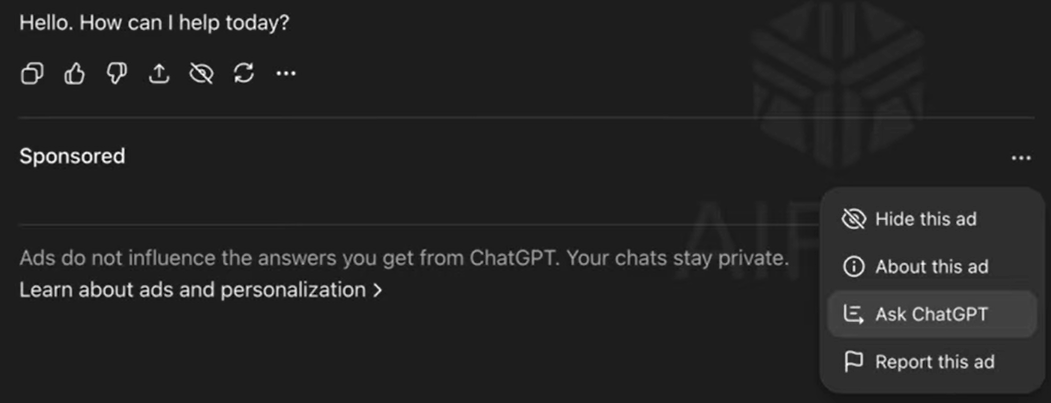
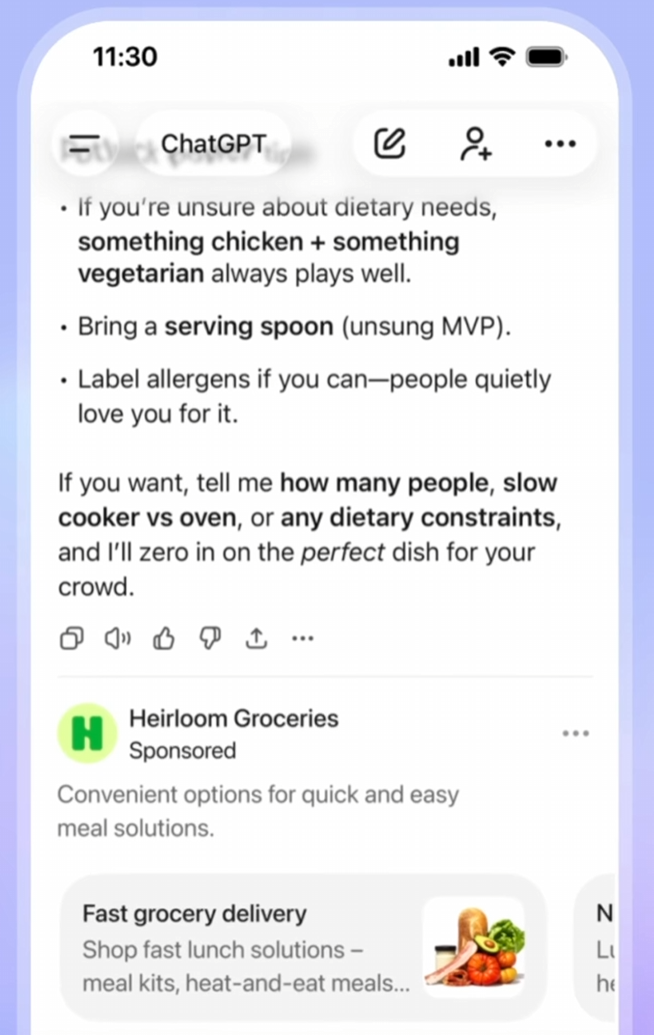
ChatGPT ads appear as lightly tinted conversation boxes that integrate seamlessly into the natural flow of dialogue between users and the AI. Unlike traditional search ads that interrupt browsing behavior, these ads emerge at contextually relevant moments when users are already engaged in problem-solving dialogue.
Here’s what you need to know upfront:
- Audience: The platform currently serves ads exclusively to Free tier users (approximately 60% of the user base) and ChatGPT Go subscribers (the new $8/month tier). Plus, Team and Enterprise subscribers remain in an ad-free environment. This means your campaigns target cost-conscious consumers and small business users who demonstrate high engagement with AI tools but maintain budget awareness.
- Answer Independence: OpenAI’s Answer Independence principle is critical to understand. This guarantees that advertising revenue never influences the AI’s core responses. The conversational answers users receive remain unbiased and factual, while ads appear as clearly labeled suggestions in separate interface elements. For more on this philosophy, check out my article on From Interruption to Solution: The ChatGPT Ads Philosophy.
- Contextual Understanding: The technical infrastructure relies on contextual understanding rather than keyword matching. The system analyzes the entire conversation thread—including user intent, problem complexity, and decision stage—to determine ad relevance. This is what I call the death of keywords, and it requires advertisers to think in terms of user journeys and conversation patterns rather than isolated search queries.
- New Metrics: ChatGPT’s advertising ecosystem also introduces new metrics that go beyond clicks and impressions. These include Conversation depth, Context relevance scores, and Response engagement. My team has written an entire guide on ChatGPT Ads Attribution to help you make sense of this new data.
User-Centric Features for Advertisers
Conversational Advertising for Lead Generation
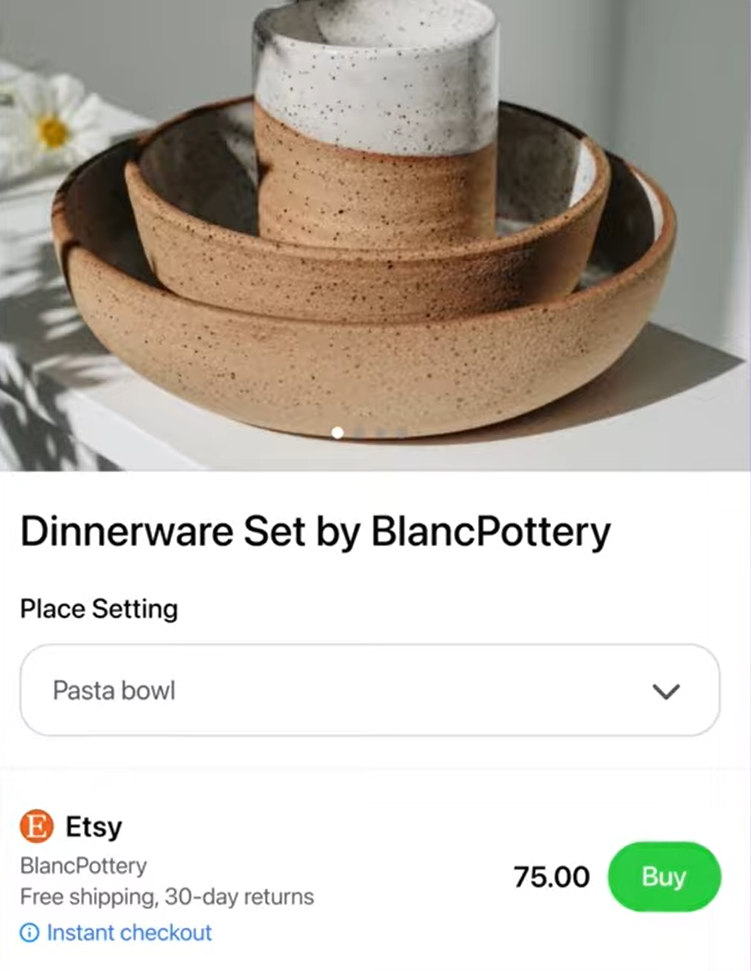
ChatGPT Shopping Capabilities
Step-by-Step Guide: Launching Your First ChatGPT Ads Campaign
Getting started with ChatGPT ads requires a different approach than traditional PPC. Here’s my agency’s battle-tested process for launching your first campaign, broken down into actionable steps.
Step 1: Creating Your ChatGPT Ads Account (15-20 Minutes)
First, navigate to chat.openai.com/ads and click the “Start Advertising” button. You’ll need an OpenAI account to proceed.
- Verification: OpenAI implements stricter advertiser verification than most platforms, requiring tax identification numbers for US businesses and equivalent documentation for international advertisers. This is a good thing because it keeps the ecosystem clean.
- Profile Creation: Enter your legal business name exactly as it appears on tax documents. Choose the most specific business category from OpenAI’s taxonomy of over 400 options to influence your ad eligibility.
- Billing: Configure your billing information. ChatGPT uses a monthly billing cycle. Set your monthly budget cap to prevent overspending.
- Conversion Tracking: Install the unique ChatGPT Pixel code snippet on your website’s conversion pages. Proper pixel installation is critical for optimization and ROI measurement. Use the built-in Test Events tool to verify tracking functionality.
- Policy Review: Finally, review OpenAI’s advertising policies. The platform prohibits advertising in sensitive categories, and your ad creative must avoid making absolute claims or mimicking ChatGPT’s conversational style.
Step 2: Defining Your Campaign Objective and Structure (30-45 Minutes)
ChatGPT ads organize around conversation-based objectives. The platform offers five primary campaign objectives:
- Awareness (maximizing unique users exposed to your brand)
- Consideration (driving conversation depth and follow-up questions)
- Traffic (generating website visits)
- Conversions (optimizing for completed actions like purchases)
- Engagement (encouraging users to continue discussing your product with the AI)
For most businesses, I recommend the Conversions objective as it provides the clearest ROI measurement. This objective requires functional conversion tracking and at least 50 conversions weekly to optimize effectively.
Campaign structure follows a three-tier hierarchy: Campaign, Ad Set, and Ads. Most campaigns perform best with 2-4 focused ad sets, each aligned to distinct conversation themes. For example:
- Informational queries (“how to choose accounting software”)
- Comparison queries (“QuickBooks vs Xero”)
- Transactional queries (“accounting software free trial”)
Step 3: Configuring Contextual Targeting Parameters (45-60 Minutes)
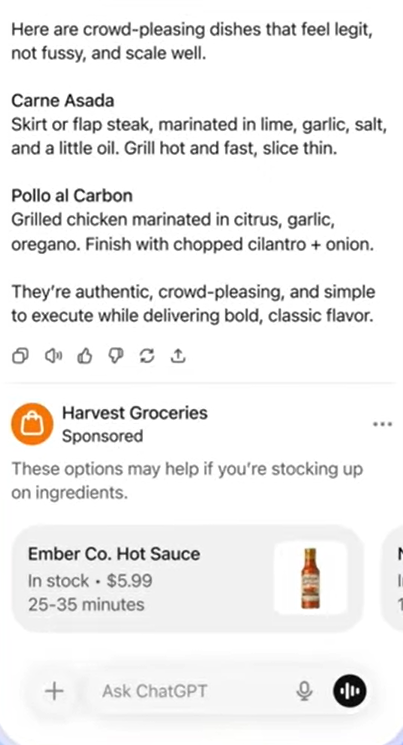
Instead of targeting keywords, you’re targeting conversation contexts. The platform offers several targeting dimensions that work together:
- Conversation Topics: Broad thematic categories like “digital marketing” or “personal finance.”
- Intent Signals: Identify whether users are in research, comparison, or purchase mode.
- Conversation Depth: Target users based on the number of messages they’ve exchanged.
- User Characteristics: Target based on user behavior patterns like “frequent users” or “new users.”
- Exclusions: Exclude conversation topics, specific phrases, or user segments.
Step 4: Crafting Conversation-Native Ad Creative (60-90 Minutes)
Your ads need to feel like a natural part of the conversation. Here’s what works:
- Acknowledge the user’s question or problem directly.
- Offer a specific solution, not a generic pitch.
- Use conversational language, not marketing speak.
- Include a clear, low-friction next step.
For ad creative, I always create at least 3-5 variations per ad set to test different angles. If you need help with ad copywriting, my agency offers specialized ChatGPT Ads Copywriting Services.
Step 5: Setting Bids and Budget Allocation Strategy (30-45 Minutes)
ChatGPT ads use an auction-based bidding system. The platform offers three bidding strategies:
- Manual CPC (Cost Per Click): You set the maximum amount you’re willing to pay for each click.
- Target CPA (Cost Per Acquisition): You tell the platform your target cost per conversion.
- Maximize Conversions: The platform automatically sets bids to get you the most conversions within your budget.
For your first campaign, start with Manual CPC bidding for more control over your costs and profit margins.
Step 6: Implementing Conversion Tracking and Attribution (20-30 Minutes)
In your account dashboard, navigate to the Conversions section and define what actions count as conversions (e.g., Purchase, Lead, Sign-up).
For each event, you’ll specify the event name, conversion value, conversion window, and attribution model. I recommend starting with last-click attribution for simplicity, then switching to position-based once you have enough data.
Step 7: Launching Your Campaign and Monitoring Initial Performance (1-2 Hours)
Before you launch, run through a pre-flight checklist to ensure everything is set up correctly. Once you launch, the platform enters a learning phase that typically lasts 3-7 days. Performance will be volatile during this period, so don’t make major changes.
Good benchmarks for ChatGPT ads are:
- CTR: 2-4%
- Context relevance score: 70+ (aim for 80+)
- Conversation depth: 1.5+ follow-up questions
Step 8: Optimizing Campaign Performance Through Iterative Testing (Ongoing)
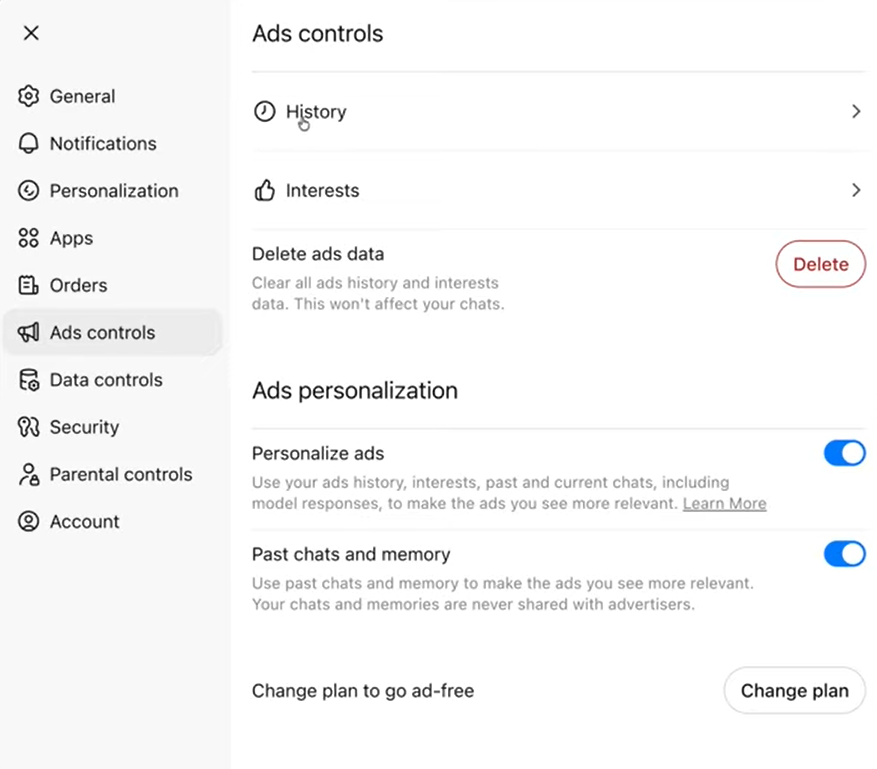
After the learning phase, it’s time to optimize. My framework for ongoing optimization is:
- Week 2-3: Identify winners and losers. Pause underperforming ad sets and increase budgets for winners.
- Week 4-6: Expand targeting to related conversation topics.
- Week 7-8: Test new creative formats like images or videos.
- Week 9+: Implement advanced optimizations like dayparting and device targeting.
Strategies for Advertising on ChatGPT
Beyond the tactical setup, let’s talk about the strategic approaches that are working for my agency and our clients. These strategies will help you move beyond the basics and start driving real ROI.
1. Master Conversational Ad Copy Generation
Using ChatGPT to generate ad copy is table stakes. The real advantage comes from using it to generate conversational ad copy that feels native to the platform. Here’s how my agency does it:
- Generate Multiple Angles: For any given product, we use ChatGPT to generate ad copy from different angles: feature-focused, benefit-focused, problem-focused, and competitor-focused. This gives us a wide range of creative to test.
- Create “Advertorial” Content: We use ChatGPT to generate long-form “advertorial” content that we host on our clients’ blogs. We then link to this content from our ChatGPT ads, enabling us to deliver more value and build greater trust with users.
- Develop a “Persona” for Your Ads: We’ve found that giving ChatGPT a persona to write from (e.g., “You are a helpful expert in personal finance”) results in more natural and engaging ad copy.
Here’s a prompt we use to generate conversational ad copy:
“You are a helpful expert in personal finance. A user is asking about the best ways to save for a down payment on a house. Write a short, conversational ad for our high-yield savings account that acknowledges their goal and offers a specific solution. The ad should be no more than 3 sentences and have a clear call to action.”
2. Hyper-Personalize With Micro-Segmentation
ChatGPT’s contextual understanding allows for a level of personalization that’s impossible on other platforms. Instead of targeting broad demographics, we create “micro-segments” based on the nuances of the conversation.
For example, for an accounting software client, we don’t just target “small business owners.” We create micro-segments for:
- Users asking about “DIY accounting”: We show them ads that emphasize the ease of use and affordability of our client’s software.
- Users comparing our client to a competitor: We show them ads that highlight our client’s unique features and competitive advantages.
- Users asking about “scaling their business”: We show them ads that focus on the advanced features and integrations of our client’s software.
This level of personalization results in higher context relevance scores, lower CPCs, and higher conversion rates.
3. Embrace Decision-Led Creative
As I mentioned earlier, ChatGPT ads perform best when they help users decide, not just click. This means your creative needs to be more than just a catchy headline and a pretty picture. It needs to provide real value and help the user make a more informed decision.
Here’s what that looks like in practice:
- Acknowledge and Validate: Your ad should start by acknowledging the user’s question or problem. This shows that you understand their needs and are not just serving them a generic ad.
- Provide a Clear Framework: Instead of just pitching your product, provide a framework for how to think about the problem. For example, if a user is asking about project management software, your ad could be “The 3 things to look for in a project management tool.”
- Offer a “Next Step,” Not a “Buy Now”: The call to action should be a low-friction next step, like “Read our guide to choosing the right software” or “Watch a 2-minute demo.”
4. Implement a Full-Funnel Conversational Strategy
Don’t think of ChatGPT ads as a standalone channel. They should be part of a full-funnel conversational strategy that guides users from awareness to conversion.
Here’s a simple framework for how to do this:
- Top of Funnel (Awareness): Target broad conversation topics with educational, non-salesy content. The goal here is to introduce your brand and build trust.
- Middle of Funnel (Consideration): Target users who are comparing solutions or asking for recommendations. Your ads should highlight your unique value proposition and provide social proof (e.g., case studies, reviews).
- Bottom of Funnel (Conversion): Target users who are asking for pricing or free trials. Your ads should have a clear call to action and link to a high-converting landing page.
5. Leverage Competitive Displacement
One of the most powerful strategies on ChatGPT is what I call “competitive displacement.” This involves targeting conversations where users are discussing your competitors and then inserting your brand as a compelling alternative.
For example, if you sell a CRM and a user is asking about Salesforce, you could run an ad that says:
“Looking for a CRM that’s easier to use and more affordable than Salesforce? [Your Brand] offers a more intuitive interface and a free-forever plan for small teams. See why thousands of businesses are making the switch.”
This is a highly effective way to steal market share from your competitors and capture high-intent users at the exact moment they are making a decision.
Advanced Strategies: Taking Your ChatGPT Ads to the Next Level
- Remarketing and Audience Building: Re-engage users who have previously interacted with your ads or visited your website. I typically see 2-3x higher conversion rates on remarketing campaigns.
- Conversation Sequencing: Show different ads to the same user as their conversation progresses, mimicking the natural buying journey.
- Integration with Conversational Marketing Strategy: Make ChatGPT ads part of a broader conversational marketing strategy that includes chatbots and conversational landing pages.
Comparison Table: ChatGPT vs. Traditional Ad Copywriting
To further illustrate the unique advantages of ChatGPT in advertising, let’s compare it with traditional ad copywriting methods:
| Feature | Traditional Ad Copywriting | ChatGPT-Powered Ad Copywriting |
|---|---|---|
| Speed | Slower, relies on human ideation and manual writing. | Rapid generation of multiple ad copy variations in seconds. |
| Cost | Higher, involves hiring copywriters or agencies. | Lower operational costs, especially for high-volume content. |
| Personalization | Limited, often requires manual segmentation and tailored messaging. | Highly scalable personalization based on user data and context. |
| Creativity | Human-driven, can be highly original but also subject to creative blocks. | AI-driven, can generate diverse and novel ideas, but may lack nuanced human touch. |
| Iteration | Time-consuming, requires manual revisions and testing. | Fast iteration and optimization based on performance data. |
| Scalability | Limited by human resources and time. | High, can generate vast amounts of content for various campaigns simultaneously. |
| Bias | Subject to human biases. | Can inherit biases from training data, requires careful monitoring. |
| Integration | Often manual integration with other marketing tools. | Can be integrated programmatically with marketing platforms for automation. |
Best Practices for Effective ChatGPT Advertising
- Ethical Considerations and Transparency: Be transparent about the use of AI in your advertising. A recent study revealed that 69% of consumers feel manipulated when brands use AI for advertising without disclosing it.
- Human Oversight and Refinement: Always have a human review and refine AI-generated content to ensure it aligns with your brand voice and is free of errors or bias.
- Integration With Existing Marketing Stacks: Integrate ChatGPT with your existing CRM, CMS, and analytics platforms to create a cohesive marketing ecosystem. If you need help, my agency offers ChatGPT Ads Agency services.
Common Pitfalls and How to Avoid Them
- Using Traditional Ad Copy: Don’t just copy and paste from other platforms. Your ads need to feel like helpful recommendations.
- Targeting Too Broadly: Start with narrow, specific conversation topics and expand based on performance.
- Ignoring Context Relevance Scores: This is the most important metric. Pause any ad sets with a score below 60.
- Not Testing Enough Creative Variations: Create at least 5 ad variations per ad set to give the algorithm options to optimize.
- Making Changes During the Learning Phase: Let campaigns run for at least 7 days without major changes.
Measuring Success: Analytics and Reporting Framework
To effectively measure performance, you need to track both platform-specific metrics and business outcomes.
- Platform Metrics (Track Daily): Impressions, CTR, Context relevance score, Conversation depth, CPC, Conversion rate, CPA.
- Business Metrics (Track Weekly): Revenue generated, ROAS, Customer lifetime value (CLV), Payback period. For more on this, check out my article on Is ChatGPT Advertising Worth It? ROI Analysis.
The Future of ChatGPT Advertising
Looking ahead, several trends that will shape the future of ChatGPT advertising include increased competition, enhanced targeting capabilities, new ad formats, and tighter e-commerce integration. Read the article The Future of PPC: How ChatGPT Ads Changes Everything for more insights.
Final Thoughts
The advent of ChatGPT has ushered in a new era for digital advertising. I’ve shown you how AI is fundamentally reshaping the industry, moving from static, one-way communication to dynamic, personalized, and conversational experiences.
The transformative potential of AI in advertising is undeniable. Businesses that embrace these technologies strategically will be best positioned to connect with their audiences in more meaningful ways, drive engagement, and achieve superior marketing outcomes.
But here’s the reality: ChatGPT ads are fundamentally different from any advertising platform you’ve used before. The learning curve is steep, and the cost of trial and error can be high. While this guide provides a foundation, mastering this platform requires hands-on experience, continuous testing, and deep expertise in conversational advertising.
Why Work With an Agency That Specializes in ChatGPT Ads?
At Single Grain, my team and I have been piloting ChatGPT ads since the platform’s beta launch. We’ve invested thousands of hours and hundreds of thousands of dollars testing what works across a variety of industries, from B2B SaaS and e-commerce to professional services and fintech.
Here’s what we’ve learned that you can’t find in any guide:
- Industry-Specific Conversation Patterns: What works for a SaaS company targeting CTOs is completely different from what works for an e-commerce brand targeting fitness enthusiasts. We’ve mapped the conversation patterns, intent signals, and contextual triggers that drive conversions across over 20 industries.
- Advanced Optimization Frameworks: We’ve developed proprietary frameworks for conversation sequencing, contextual targeting, and creative testing that consistently deliver 2-3x better performance than standard approaches.
- Cross-Platform Integration: ChatGPT ads don’t exist in isolation. We’ve built integration strategies that connect ChatGPT ads with your existing Google Ads, Facebook Ads, and SEO efforts, creating a cohesive, data-driven marketing ecosystem that maximizes ROI across all channels.
- Rapid Iteration and Testing: While you’re learning the platform, we’re already optimizing. Our team has run over 500 ChatGPT ad campaigns, and we know exactly which levers to pull to improve performance quickly.
The Cost of Going at It Alone
Let me be honest with you. When you’re learning a new platform, you’re going to make mistakes. You’ll waste budget on broad targeting, create ads that don’t resonate, and miss optimization opportunities. Based on our experience, the average advertiser wastes 40-60% of their initial budget during the learning phase.
For a business spending $10,000/month on ChatGPT ads, that’s $4,000-$6,000 in wasted spend over the first few months. And that doesn’t account for the opportunity cost of suboptimal performance or the time you’ll spend learning the platform instead of running your business.
How Single Grain Maximizes Your ChatGPT Ads ROI
When you work with my agency, you’re not just getting ad management. You’re getting a team of professionals who have been running ads for years and have spent months piloting ChatGPT ads specifically to understand how to extract maximum ROI.
Here’s what that looks like in practice:
- Faster Time to Profitability: We skip the learning phase entirely. Our campaigns are profitable from week one because we already know what works for your industry.
- Higher Context Relevance Scores: Our average context relevance score across all clients is 82 (vs. the platform average of 65). Higher relevance means lower costs and better performance.
- Lower Customer Acquisition Costs: Our clients see 30-50% lower CPAs compared to their other advertising channels because we’ve optimized every element of the campaign, from targeting to creative to landing page experience.
- Comprehensive Reporting and Insights: You’ll get weekly reports that show not just what’s happening, but why it’s happening and what we’re doing to improve performance.
Industries We’ve Mastered
Single Grain has successfully launched and optimized ChatGPT ad campaigns across:
- B2B SaaS (project management, CRM, marketing automation)
- E-commerce (fitness, home goods, consumer electronics)
- Professional Services (legal, accounting, consulting)
- Fintech (banking, payments, investment platforms)
- Education (online courses, coaching, certification programs)
- Healthcare (wellness products, telemedicine, health tech)
No matter your industry, we’ve likely run campaigns for businesses like yours, and we know exactly which conversation contexts, ad formats, and messaging strategies drive results.
Ready to Maximize Your ChatGPT Ads ROI?
If you’re serious about advertising on ChatGPT and want to avoid the costly trial-and-error phase, let’s talk. My agency offers a free strategy session where we’ll review your business, identify the highest-potential conversation contexts for your industry, and show you exactly how we’d structure your campaigns for maximum ROI.
Contact Single Grain today for a personalized consultation. We’ll show you what’s possible when you work with professionals who have been running ads for years and have invested heavily in mastering this new platform.
You can also check out our ChatGPT Ads FAQ for more information, or explore our ChatGPT Ads Glossary to understand all the key terms and concepts.
FAQs
-
What is ChatGPT advertising?
ChatGPT advertising refers to using OpenAI’s ChatGPT, a large language model, to assist with various aspects of advertising, including generating ad copy, personalizing messages, optimizing campaigns, and creating text-based creative assets. It leverages conversational AI to create more dynamic and engaging ad experiences.
-
How is AI changing the advertising industry?
AI is transforming the advertising industry by enabling hyper-personalization, automating content creation, enhancing audience targeting, and optimizing campaign performance. It enables faster ideation, more efficient resource allocation, and data-driven decision-making, resulting in more effective and engaging ad campaigns.
-
Is it ethical to use AI for advertising?
Yes, it can be ethical to use AI for advertising, provided that brands prioritize transparency and human oversight. It is crucial to disclose the use of AI-generated content to consumers and to rigorously review all AI-produced material for accuracy, bias, and brand alignment. Ethical AI use builds trust and maintains brand credibility.
-
What are the main benefits of using ChatGPT for advertising?
The main benefits include increased speed in content generation, enhanced personalization capabilities, improved campaign optimization through data analysis, and the ability to scale advertising efforts efficiently. ChatGPT helps marketers create more relevant and engaging ads while reducing manual effort.
-
Will AI replace human advertisers?
AI is more likely to augment rather than replace human advertisers. While AI can automate many repetitive and data-intensive tasks, human creativity, strategic thinking, ethical judgment, and emotional intelligence remain indispensable. The most effective approach involves a collaborative synergy between AI tools like ChatGPT and human marketing professionals.
-
How can I get started with ChatGPT advertising?
To get started, understand your target audience and campaign objectives. Experiment with ChatGPT to generate ad copy, headlines, and CTAs. Focus on integrating AI into your existing marketing workflows and always ensure human review and refinement of AI-generated content. Consider consulting with experts to develop a tailored AI advertising strategy.



