

ChatGPT Advertising Costs: Budgeting for the New Platform


Your ChatGPT advertising budget will be one of the hardest line items to justify this year because you’re funding a brand-new ad environment with almost no historical benchmarks. Finance leaders want concrete numbers on cost, reach, and return, but generative AI placements don’t behave like search keywords or social impressions.
To make smart decisions, you need to understand how ChatGPT ad inventory is priced, which levers actually drive cost, and how to model a test-and-scale plan that protects downside while preserving upside. This guide walks through the strategic building blocks of a ChatGPT ad budget, from cost drivers to example allocations, so you can move beyond guesswork and treat the channel like any other disciplined media investment.
TABLE OF CONTENTS:
Why ChatGPT Ad Costs Demand a Different Mindset
Most paid channels sell discrete units of attention: a search click, a social impression, or a video view. ChatGPT is different because people arrive with complex, multi-step questions and then stay to explore variations, follow-ups, and comparisons inside a single conversational thread.
That means you are not just paying to show up once; you are paying to participate in a high-intent, multi-turn exchange where the assistant is the primary interface. Understanding that shift is essential before you assign any real dollars to this line item.
Where ChatGPT Advertising Fits in Your Channel Mix
When users ask ChatGPT for product recommendations, comparisons, or how-to guidance, they are often in research and consideration mode rather than ready-to-buy mode. Your placements may appear alongside or within answers, adding your brand to the conversational “shortlist” instead of just chasing last-click conversions.
This positions ChatGPT advertising somewhere between classic search and upper-funnel content syndication. It can capture valuable mid-funnel intent, influence requirements, and shape buying criteria before prospects ever reach your site or a comparison page.
Because of that, you should view ChatGPT as a bridge between organic visibility, answer engine optimization, and your performance media stack. It will rarely replace paid search or paid social outright, but it can increase the effectiveness of those channels by seeding preference earlier in the decision journey.
Key Cost Drivers Behind ChatGPT Ads
Even before you see your first invoice, it is useful to map the forces that will push your ChatGPT advertising costs up or down. These levers differ from traditional bid-only environments and should guide both your planning and experimentation strategies.
Key cost drivers often include:
- Inventory scarcity: Conversational real estate is finite; the assistant can only surface a small number of sponsored options without degrading user trust.
- Query and context richness: Longer, more complex user prompts and context windows require more compute to process, which can affect how platforms price impressions or engagements.
- Targeting sophistication: The more granular your audience, topic, or intent filters, the smaller the effective inventory pool and the higher the likely cost.
- Creative complexity: Structured conversational prompts, multi-step flows, and dynamic personalization demand more upfront strategy and build time than a single static ad.
- Bidding and billing model: Whether you pay on a CPM, CPC, or engagement basis will change how you model risk and opportunity in your budget.
In some early programs, advertisers have reported beta CPMs around sixty dollars, reflecting both limited supply and the premium placed on high-intent conversational inventory. You should assume that pricing and formats will evolve quickly as the platform optimizes for user experience and revenue.

Breaking Down the Real Components of a ChatGPT Advertising Budget
Many teams initially think of their ChatGPT spend purely as a media line item, but the real cost includes experimentation, creative, data, and measurement. Treating it as an isolated CPM or CPC will understate the investment you actually need to learn meaningfully.
Instead, it is more accurate to frame your ChatGPT advertising budget as three interlocking layers: media spend, learning and experimentation, and operational enablement. Each needs its own allocation and success criteria.
Media Spend vs Learning Investment
Your media spend is the portion of your budget that goes directly into the platform to buy impressions, interactions, or conversations. This is the number that will appear most prominently in your reporting and invoices.
Your learning investment funds everything required to generate statistically useful insights: multiple creative concepts, different conversational flows, varied calls to action, and structured tests across audience or intent segments. Without this layer, your media dollars yield only anecdotes, not decisions.
A practical way to think about it is that every ChatGPT dollar either buys reach or buys learning. Early in your program, prioritize learning so you can later redeploy more of the budget into proven prompts, offers, and journeys.
People, Data, and Tooling Costs
The third layer is your operational cost: the people, data, and tools that make ChatGPT campaigns possible and measurable. This is easy to forget when you are under pressure to keep reported media ROAS high.
Operational costs often include campaign strategy resources, prompt engineering and conversation design, analytics and attribution setup, and the integrations needed to connect ChatGPT-driven traffic to your CRM or product analytics. These resources usually support multiple channels, so you will likely allocate only a portion of their cost to ChatGPT work, based on time or project scope.
Enterprise IT budgets are projected to rise about five percent in the near term, which gives many organizations room to carve out controlled experimental budgets for new AI-driven channels like ChatGPT while still maintaining discipline on core systems.
ChatGPT Advertising Budget Framework: From Test to Scale
Once you understand the moving parts, the next step is to turn them into a structured plan. Rather than picking a round number and hoping for the best, you can walk through a simple framework that aligns objectives, guardrails, and scenario planning.
This framework helps you decide how much to invest, how long to run tests, and what success looks like before you scale.
Clarify Objectives and Financial Guardrails
Begin by defining the single primary outcome you want from your initial ChatGPT program. That could be net-new customer acquisition, qualified lead generation, product sign-ups, or even high-intent traffic to a specific category or feature.
Next, translate that outcome into financial guardrails. Anchor on metrics you already use elsewhere, such as target cost per acquisition, payback period, or expected lifetime value. Your ChatGPT experiments do not have to match your best-performing channel immediately, but they should sit within a band that leadership considers acceptable for new test channels.
Finally, decide how much budget you are prepared to risk on the initial learning phase without requiring full performance parity with mature channels. This is your “tuition” for understanding how ChatGPT behaves for your audience, and it should be approved upfront so you don’t have to renegotiate mid-test.
ChatGPT Advertising Budget Scenarios and Guardrails
With objectives and guardrails in place, you can build scenarios that map potential outcomes to budget levels. Rather than assuming a single result, you will examine conservative, base, and aggressive cases so that leadership sees both upside and downside.
A straightforward starting structure is:
- Estimate reachable demand: Use your existing search, content, and sales insights to approximate how many relevant queries or user journeys might exist in ChatGPT for your category.
- Define engagement assumptions: Decide what constitutes a meaningful engagement for you: a click-through to your site, a lead captured within the chat, or a full guided path to product usage.
- Set performance bands: For each scenario, specify acceptable ranges for cost per engagement and downstream conversion efficiency based on your existing channels.
- Back into budget: Multiply your reachable demand estimates by your cost and conversion bands to see how much you would need to spend to get statistically useful results in each scenario.
To make this more concrete, consider an illustrative set of allocations based on different company stages. These numbers are examples, not benchmarks, and should be adapted to your reality.
| Company stage | Overall monthly paid media budget | Illustrative ChatGPT test budget (first quarter) | Notes |
|---|---|---|---|
| High-growth startup | About $50,000 | About $5,000 | Run a focused test on one core use case with multiple conversational flows. |
| Scaling mid-market company | About $250,000 | About $15,000 | Test several intents or product lines in parallel, each with clear success criteria. |
| Enterprise organization | About $1,000,000 | About $50,000 | Fund a dedicated cross-functional squad and pursue deeper personalization and experimentation. |
The percentage of total media in each example is small, but still large enough to produce learnings that go beyond anecdote. The most important step is agreeing internally that these are controlled experiments with predefined stop, continue, or scale rules.

Protecting and Optimizing Your ChatGPT Ad Spend Over Time
Once campaigns are live, your focus shifts from planning to stewardship: ensuring every incremental dollar either improves signal quality or drives outcomes within your agreed guardrails. This is where measurement design and operational discipline matter most.
84% of CIOs identify cost optimization as their top IT priority, so your ChatGPT program will be subject to the same scrutiny as any other technology-enabled investment.
To keep spend aligned with value, build your optimization plan around three pillars:
- Measurement that respects conversational journeys: Tag links from ChatGPT thoroughly, ensure your analytics platform can distinguish ChatGPT-driven sessions, and connect these to downstream events like pipeline creation or revenue.
- Creative and prompt iteration: Systematically test variations in how you frame problems, structure calls to action, and hand users off from the assistant to your owned properties, rather than tweaking bids in isolation.
- Budget pacing and guardrails: Use caps at the campaign or scenario level aligned with your original test plan, so overspending in one area does not silently erode the total program’s economics.
Common failure modes that quietly blow up ChatGPT budgets include copying search keyword lists directly into conversational targeting, under-investing in conversation design, and scaling spend before you have strong evidence of incremental impact versus other channels. Designing your optimization plan up front helps you avoid those traps.
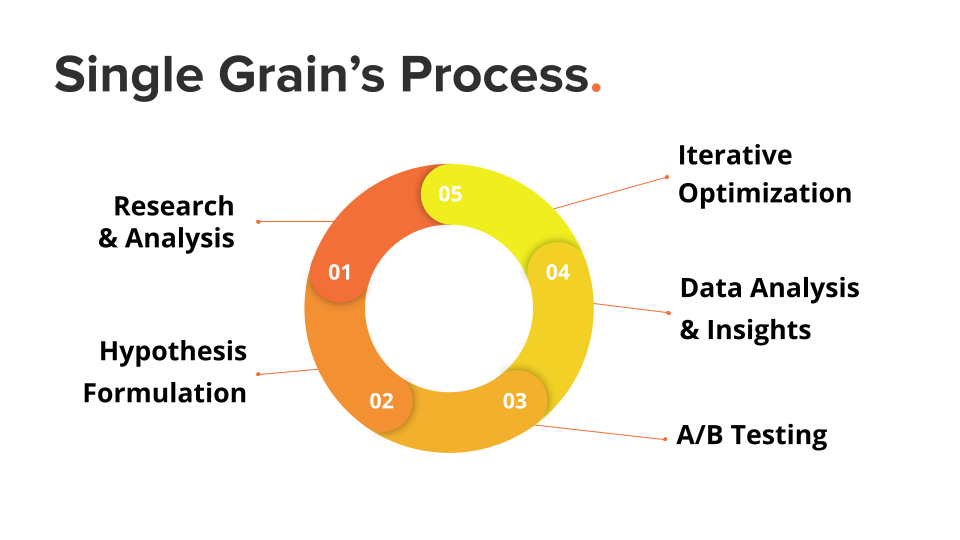
For brands that want a cross-channel view of AI-era performance, partnering with an experienced growth team can accelerate this learning curve. A specialized digital marketing agency like Single Grain can help you integrate ChatGPT experiments into your broader search, social, and answer engine strategy so that each channel informs the others rather than operating in isolation.
If you are ready to explore ChatGPT ads but want confidence that your spend is both disciplined and opportunity-aware, you can also request a FREE consultation to stress-test your assumptions, define guardrails, and build a roadmap for scaling what works.
Turning Your ChatGPT Advertising Budget Into a Competitive Edge
A well-structured ChatGPT advertising budget provides insight into how your future customers research, compare, and decide within conversational interfaces. Separating media from learning and operational costs will help you avoid underfunding the work that actually makes performance predictable.
The most effective teams clarify their objectives and financial guardrails first, then build scenario-based allocations that respect both upside and downside. They treat early spend as structured tuition, not gambling, and they protect their budgets over time with thoughtful measurement, creative iteration, and pacing controls.
As AI assistants become the default starting point for complex questions, organizations that have already mastered how to appear credible and profitable within these environments will pull ahead of competitors. Turning your ChatGPT experiments into a disciplined budgeting practice now can secure a durable advantage as the channel matures.
If you want a partner that understands generative search, paid media, and conversion optimization as a single system, Single Grain can help you design, launch, and scale ChatGPT campaigns tied directly to revenue outcomes. Get a FREE consultation to translate this framework into a concrete plan tailored to your goals, risk tolerance, and growth targets.
Frequently Asked Questions
-
How should smaller brands with limited budgets approach ChatGPT advertising tests?
Start with a narrowly defined use case, such as one product line or audience segment, and set a small fixed test budget for a short time window. Focus on learning which messages and journeys resonate, then expand only if you see a clear signal that this audience responds profitably.
-
Which types of businesses are most likely to benefit from early ChatGPT advertising?
Brands selling considered purchases—such as software, financial services, education, or high-ticket consumer goods—tend to see greater value because users ask complex, research-oriented questions. If your buyers do extensive comparison and learning before purchase, ChatGPT can meaningfully influence their shortlists.
-
How can I forecast ChatGPT ad performance when there’s almost no historical data?
Use proxy data from nearby channels, such as high-intent search and organic content performance, to estimate potential demand and conversion rates. Then model a range of outcomes (best, likely, worst) and treat your first campaigns as data-gathering exercises to refine those estimates.
-
What creative considerations are unique to ChatGPT ad experiences?
Instead of relying on a single headline or banner, you need assets that guide a back-and-forth conversation: clear question prompts, decision trees, and natural language responses that feel helpful rather than salesy. Plan your creative like an interactive script that adapts to user intent, rather than a one-shot pitch.
-
How do ChatGPT ads intersect with privacy and compliance requirements?
You’ll need to ensure that any data collected from ChatGPT-assisted journeys is captured and stored in accordance with your existing consent, privacy, and regional compliance policies. Coordinate with legal and security teams early to ensure tracking, lead capture, and integrations comply with regulatory and contractual obligations.
-
Should B2B and B2C brands allocate ChatGPT advertising budgets differently?
B2B brands often justify higher costs per engagement if campaigns influence qualified pipeline or multi-year contracts, so they may allocate more to deep, niche conversational flows. B2C brands usually emphasize scale and efficiency, testing broader prompts and shorter paths to purchase before committing larger budgets.
-
How can I align internal stakeholders around a ChatGPT ad budget that feels risky?
Frame the spend as a time-bound experiment with explicit success criteria, caps, and decision checkpoints rather than an open-ended commitment. Share scenario models and agree in advance on what results would trigger expansion, revision, or shutdown so finance, product, and marketing all see it as a controlled test, not a gamble.



