

ChatGPT Ads vs Programmatic Display: When to Use Each


ChatGPT ads vs programmatic is quickly becoming one of the toughest allocation questions for performance marketers deciding where the next incremental dollar should go. On one side, you have emerging conversational ad units inside AI assistants that promise high-intent engagement; on the other, a mature programmatic display ecosystem built for reach, scale, and measurable ROI.
Understanding how these two options truly differ, where each excels, and how they can work together is critical if you want to grow revenue. This guide breaks down how each channel works, compares them across key dimensions like reach, intent, and measurement, and provides practical frameworks for deciding when to lean into ChatGPT-style ads, when to rely on programmatic display, and when a hybrid approach makes the most sense.
TABLE OF CONTENTS:
- The New Ad Landscape: Conversational AI Meets Scaled Programmatic Display
- ChatGPT Ads vs Programmatic: Key Differences Marketers Must Understand
- Deciding When to Use Each Channel (And When to Combine Them)
- Practical Implementation: From Pilot Tests to Scaled Investment
- Making Confident ChatGPT Ads vs Programmatic Decisions Going Forward
The New Ad Landscape: Conversational AI Meets Scaled Programmatic Display
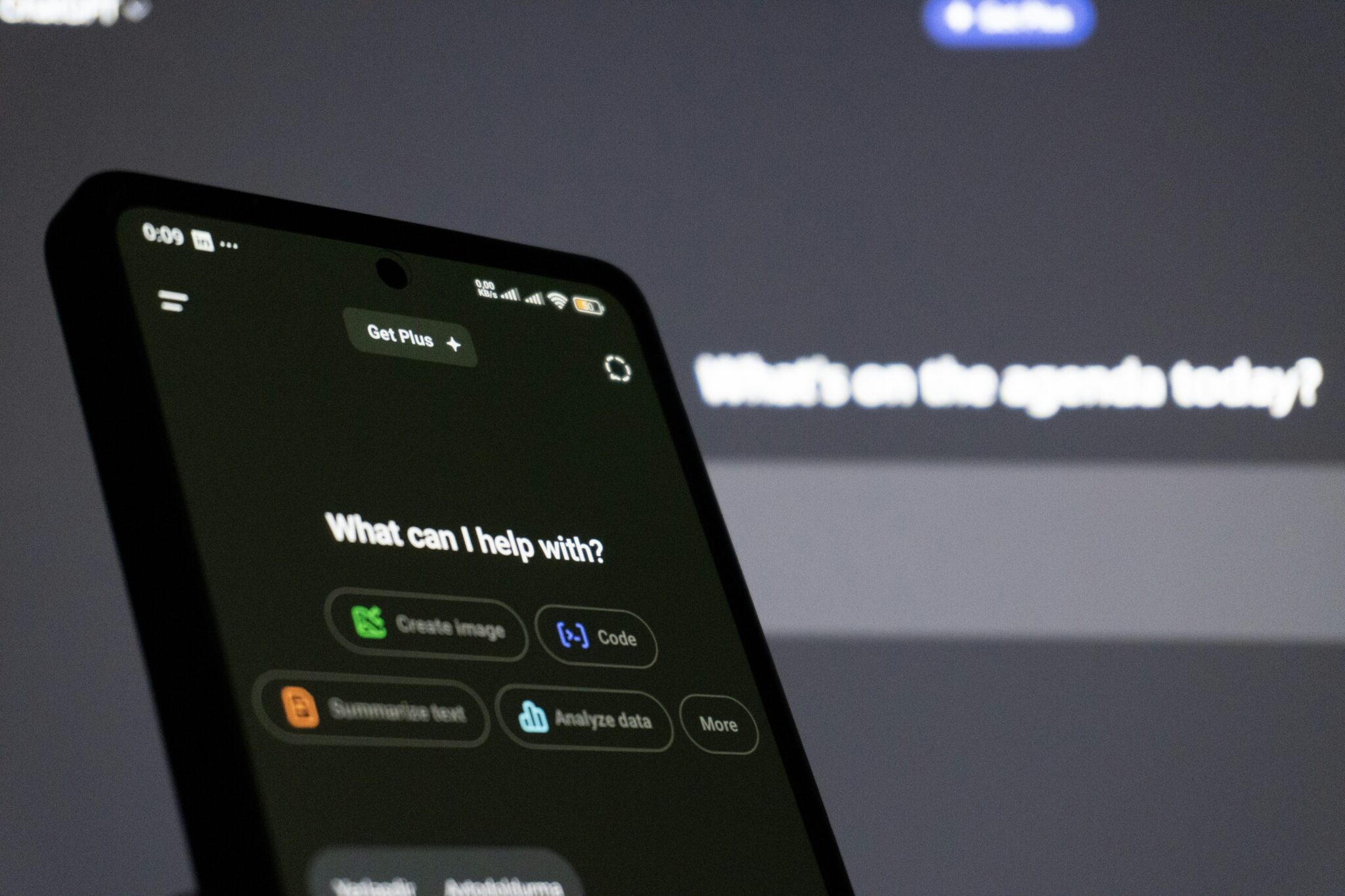
Generative AI has introduced an entirely new surface for advertising: the conversation itself. Instead of interrupting people with banners or pre-rolls, ChatGPT-style ads can show up as sponsored suggestions or conversational responses while a user is actively asking questions and exploring solutions.
At the same time, programmatic display has quietly become the default way digital impressions are bought and sold. More than 90% of all digital display ads are now purchased programmatically, underscoring just how entrenched automated buying has become.
Inside Emerging ChatGPT Ad Experiences
ChatGPT ads are still in pilot and early rollout stages, but the core idea is consistent: brands can pay to have their content, offers, or tools injected into relevant conversations. That might look like a sponsored answer, a recommended product comparison, or a call to action surfaced when someone is researching a problem your solution can address.
When a user is asking specific, high-intent questions, an ad that feels like a helpful continuation of the conversation can be far more contextual than a standard display impression. You can educate, qualify, and even capture leads within a single interactive flow, without relying on a click-through to a landing page.
However, this format is early, and its economics are still taking shape. OpenAI itself has a strong incentive to make these units work: about 95% of ChatGPT users generate no direct revenue, and projects that advertising plus commissions could account for roughly 20% (around $25 billion) of OpenAI’s total revenue by 2029.
Why Programmatic Display Remains the Workhorse Channel
Programmatic display, by contrast, is a mature infrastructure that connects demand-side platforms (DSPs) to exchanges, publishers, mobile apps, and connected TV (CTV). You can buy impressions against specific audiences, behaviors, and contexts across millions of sites and apps, often in real time, while algorithms optimize bids and placements toward your performance goals.
Because it is so well established, programmatic offers breadth and predictability that emerging ChatGPT ad inventory cannot yet match. Programmatic budgets will grow 12.5% year over year to reach $203 billion in 2026, highlighting that advertisers still see scaled, AI-optimized display as a safer bet for the bulk of their media investment.
ChatGPT Ads vs Programmatic: Key Differences Marketers Must Understand
Although they are sometimes discussed as direct substitutes, ChatGPT ads and programmatic display really serve different roles in your media mix. One lives inside an AI assistant and is triggered by conversation; the other spans the open web, apps, and CTV with impression-based buying.
Comparing them across a consistent set of dimensions makes it easier to see where each shines and where it falls short, so you can align channels with specific objectives rather than chasing hype.
| Dimension | ChatGPT Ads | Programmatic Display |
|---|---|---|
| Scale & Reach | Limited to AI assistant user base and available ad slots; currently experimental and smaller footprint. | Massive reach across web, apps, and CTV with billions of impressions available daily. |
| Intent Signal | High explicit intent from user prompts and questions in-session. | Implicit intent via browsing behavior, context, and audience segments. |
| Targeting Depth | Conversation-level context; limited traditional audience controls so far. | Rich audience, behavioral, contextual, and retargeting options via DSPs and data providers. |
| Creative Format | Text-based or conversational responses, tool calls, and interactive flows. | Banners, rich media, native display, video, and CTV creatives. |
| Interactivity | Two-way dialogue that can qualify and educate in real time. | Primarily one-way messaging, occasionally with light interactivity. |
| Measurement | Early-stage metrics; likely strong on engagement and lead quality but less standardized. | Robust reporting on impressions, viewability, clicks, conversions, and incremental lift. |
| Brand Safety Control | Centralized environment but still-evolving controls and disclosure norms. | Mature brand-safety tools, blocklists, and verification partners. |
| Maturity & Benchmarks | Few public benchmarks; rapid iteration expected. | Decade-plus of performance benchmarks across industries and objectives. |
| Cost Dynamics | Pricing and auction mechanics still stabilizing; likely premium early on. | Well-understood CPM/CPA dynamics and optimization levers. |
ChatGPT Ads vs Programmatic by Funnel Stage
The most practical way to think about ChatGPT ads vs programmatic is through the lens of your funnel. Each channel naturally aligns with certain stages, based on its strengths and limitations.
At the top of the funnel, programmatic display is better suited for broad awareness and reach-driven goals. You can blanket high-value audiences across premium publishers, social inventory via programmatic pipes, and CTV placements, then retarget engaged users later.
In the mid-funnel, conversational formats become more compelling. Someone actively asking an AI assistant for recommendations, how-tos, or vendor comparisons is likely in research or evaluation mode, making ChatGPT ads useful for education, lead capture, or product quizzes that guide them toward the right solution.
At the bottom of the funnel, programmatic again has the edge, especially for retargeting cart abandoners, site visitors, or CRM audiences. Persistent, frequency-controlled display and CTV impressions can reinforce offers and move people across the last mile to conversion.
Targeting, Data, and Measurement Trade-Offs
Programmatic display is deeply integrated with audience data: you can bring your own first-party lists, layer in third-party segments, and build lookalikes or predictive audiences, all while your DSP optimizes toward conversion data fed back from your analytics stack. This makes it especially powerful for brands with a solid data foundation and clear performance KPIs.
ChatGPT-style ads, by design, rely more on conversational context than on predefined audience segments, at least in their initial incarnations. You gain rich insight into the questions people ask and how they respond to different answers, but you may have less granular control over who sees your messaging and fewer standardized metrics to compare performance against your other channels.
For most teams, this suggests a complementary approach: use programmatic for scalable, data-driven audience reach and retargeting, and layer ChatGPT ads on top as a high-intent, insight-generating surface that can sharpen your messaging and offers across the rest of your media mix.
Deciding When to Use Each Channel (And When to Combine Them)
Once you understand the structural differences between ChatGPT ads and programmatic display, the next step is deciding how they fit into your actual strategy. That requires going beyond features and thinking concretely about use cases, risk tolerance, and where you can generate incremental lift rather than just shifting spend.
The following scenarios and patterns can help you decide whether to prioritize ChatGPT, stick with programmatic, or design a hybrid approach that uses both in a coordinated way.
Scenarios That Favor ChatGPT Ads
ChatGPT-style ads tend to work best when the value of your product or service is unlocked through explanation, guidance, or diagnosis rather than quick-hit visuals. In these cases, the ability to hold a conversation is an asset, not overhead.
Situations where this format is especially promising include:
- Complex or high-consideration products where prospects have many detailed questions before they feel comfortable shortlisting vendors.
- B2B solutions that benefit from discovery questionnaires, such as matching prospects to the right plan, deployment model, or feature mix.
- Educational offers like courses, reports, or webinars where the ad can function as a mini-consultation that tees up the deeper resource.
- Market research and voice-of-customer discovery, where you can analyze aggregated prompts and responses to refine positioning and content.
- Account-based motions targeting niche audiences, where volume is lower but insight and qualification quality are disproportionately valuable.
In all of these, the goal is not just to get a click, but to use the conversational surface to qualify interest, address objections, and route only the most relevant prospects into your sales or product experience.
Scenarios That Favor Programmatic Display
Programmatic remains the best choice whenever you need scaled, multi-format reach with tight performance controls. Its infrastructure is built to deliver a large volume of impressions, test creative variations rapidly, and optimize against clear conversion events.
It is particularly strong in scenarios such as:
- Brand awareness campaigns that must reach a large but well-defined audience across web, mobile, and CTV environments.
- Retargeting sequences that follow high-intent users after site visits, free trials, or cart activity, nudging them back with tailored offers.
- Product launches where you want synchronized messaging across display, video, and native placements with consistent frequency caps.
- E-commerce promotions where dynamic creative optimization can automatically swap in best-selling products or real-time pricing.
- Incrementality testing where you need clean test and control groups to measure the true lift generated by additional media.
Because these use cases depend heavily on audience data, attribution, and optimization levers, programmatic’s maturity and existing integration with analytics tools make it a more reliable backbone channel.
Designing a Hybrid Strategy That Actually Scales
The most advanced advertisers are not picking a winner in the ChatGPT ads vs programmatic debate; they are redesigning their workflows so conversational AI and automated buying reinforce each other. Generative models can ideate, personalize, and adapt creatives, while programmatic pipes handle scaled distribution and optimization.
A practical hybrid pattern looks like this: use ChatGPT ads to discover the language, objections, and feature combinations that resonate most in live conversations, then feed those learnings into your programmatic creative testing roadmap. Over time, the conversational surface becomes both a mid-funnel engagement channel and a continuous research engine that sharpens every impression you buy elsewhere.
If you want a strategic partner that can knit together conversational AI experiments with scaled programmatic display, a performance-focused paid media practice like Single Grain can provide the cross-channel planning, testing frameworks, and analytics needed to prove real revenue impact.

Practical Implementation: From Pilot Tests to Scaled Investment
Even if the strategic logic is clear, many teams struggle with how to operationalize ChatGPT ads alongside existing programmatic campaigns. The key is to treat conversational inventory as a structured experiment while continuing to harden the foundations of your programmatic setup.
That means defining clear hypotheses, guardrails, and KPIs for early ChatGPT tests, and resisting the temptation to divert large budgets away from proven channels before you have evidence of incremental lift.
Launching a Low-Risk ChatGPT Ads Pilot
A disciplined pilot gives you a signal on whether ChatGPT ads can move meaningful metrics for your business without exposing you to undue brand or budget risk. It also creates a repeatable playbook you can scale later if results justify it.
A straightforward pilot plan might follow these steps:
- Choose a single, narrow objective. For example, high-quality demo requests in one vertical, or downloads of a flagship resource for a specific persona, rather than trying to serve the entire funnel at once.
- Define the conversational journey. Map the key questions, decision points, and answers you want the assistant to guide people through, including when to surface offers or CTAs versus when to keep educating.
- Establish brand-safety and transparency rules. 69% of consumers feel manipulated by some AI-generated content, so build in clear disclosures, avoid over-claiming, and keep messaging consistent with what prospects will see when they click through.
- Instrument measurement from day one. Decide in advance how you will track engagement, qualified leads, and downstream revenue so you can compare results to existing paid search, social, or programmatic benchmarks.
- Cap budget and time-box the test. Set a limited spend and clear evaluation window, then commit to a go/no-go decision based on predefined thresholds for cost per qualified lead or opportunity.
This approach preserves upside while containing risk, and it forces the organization to treat ChatGPT ads as part of a broader experimentation portfolio rather than a binary bet.
Strengthening Your Programmatic Display Foundation
Before moving any meaningful budget into new conversational formats, it is worth asking whether your existing programmatic campaigns are fully optimized. Many advertisers still leave performance on the table through fragmented setups, under-tested creative, or weak measurement.
Areas to review include whether your DSP setup consolidates enough spend to provide algorithms with sufficient data, whether your creative rotation and testing cycle align with learning cycles, and whether your frequency management and exclusion lists prevent waste. Tightening these fundamentals often yields significant incremental gains at a lower risk profile than betting heavily on unproven channels.
From there, you can start to weave in AI more deeply; for example, by using generative models to produce and pre-test creative variations before pushing them into your DSP. This mirrors the workflow of top performers who integrate AI into their programmatic practice rather than treating it as an entirely separate channel.
For brands pursuing an integrated “search everywhere” approach that spans engines, social, programmatic, and AI surfaces, a unified strategy such as a Search Everywhere Optimization framework from Single Grain can help ensure that insights from one channel systematically improve performance in the others.
As you scale, keep your experimentation mindset alive: treat ChatGPT ads as one lane in a broader portfolio that includes search, social, and programmatic display, and allocate budget dynamically based on incremental revenue contribution rather than vanity metrics like clicks alone. Over time, your media mix should reflect hard data about how each channel performs for specific audiences and offers.
Finally, ensure your analytics and CRO capabilities can support this more complex ecosystem. When conversational ads drive highly qualified but lower-volume leads while programmatic delivers volume at different stages, you need robust attribution, lead scoring, and on-site experimentation to understand true ROI.
Investments in performance-focused paid media management and AI-informed CRO, such as those provided by Single Grain, can be the difference between scattered tests and a coherent growth system that compounds over time.
Making Confident ChatGPT Ads vs Programmatic Decisions Going Forward
ChatGPT ads vs programmatic is a question of fit, sequencing, and integration. Conversational inventory offers high-intent, insight-rich engagement that is well-suited to complex purchase journeys and mid-funnel education, while programmatic display remains the backbone for scalable reach, retargeting, and disciplined performance optimization.
The most effective marketers will keep their core programmatic engine running efficiently, layer in carefully designed ChatGPT pilots where conversation adds clear value, and use learnings from those interactions to sharpen creative and messaging across every other channel. As mentioned earlier, the advertisers who merge AI-powered creativity with consolidated programmatic buying are already pulling ahead on growth KPIs.
If you are ready to move beyond one-off tests and build a durable growth system that connects conversational AI, programmatic display, and the rest of your media mix, partnering with an experienced team like Single Grain can accelerate the journey. Start a conversation today and unlock a FREE consultation to map out how these channels can work together to drive measurable revenue for your business.
Frequently Asked Questions
-
How should I allocate my budget between ChatGPT ads and programmatic display when I’m just getting started?
Treat ChatGPT ads as an R&D line item and programmatic as your core working media. Many teams start by carving out 5–15% of their digital budget for conversational tests while keeping the majority in proven programmatic campaigns, then rebalance only after they see clear, incremental lift.
-
Are there any legal or compliance considerations unique to ChatGPT-style ads?
Yes, because conversational ads can feel like advice, you’ll want tighter legal review around claims, disclaimers, and data capture flows than for static banners. Brands in regulated categories (finance, health, insurance, etc.) should predefine “no-go” topics and escalation paths when sensitive questions arise in-session.
-
How should creative workflows change to support both ChatGPT ads and programmatic display effectively?
You’ll need two parallel but connected tracks: conversation design for ChatGPT (scripts, dialogue trees, objection handling) and asset systems for programmatic (modular headlines, images, and offers). A shared messaging library and feedback loop ensures that what works in conversation quickly informs your display creative, and vice versa.
-
Does the balance between ChatGPT ads and programmatic change for B2B vs. B2C brands?
B2B brands with long, information-heavy journeys usually see outsized value from conversational formats for qualification and education, using programmatic mainly for account-level reach and retargeting. High-velocity B2C brands often skew heavier toward programmatic for scale, layering in ChatGPT ads more selectively around complex or higher-ticket products.
-
What attribution model works best when I’m running ChatGPT ads alongside programmatic?
Multi-touch or data-driven attribution is preferable because conversational ads often influence consideration without driving immediate conversions. Avoid judging ChatGPT’s performance on last-click alone; instead, look at its contribution to assisted conversions, opportunity quality, and sales-cycle speed compared to programmatic-only paths.
-
How long should I run ChatGPT ad experiments before deciding whether to scale them?
Plan for a fixed test window that’s long enough to capture a full sales cycle for your main offer, often 4–8 weeks for mid-market B2B and 2–4 weeks for most B2C. Use predefined sample sizes and cost-per-outcome thresholds so you can make a confident scale, iterate, or pause decision rather than running indefinite “zombie” tests.
-
What organizational changes help teams manage ChatGPT ads and programmatic in a coordinated way?
Create a cross-functional pod that includes paid media, marketing ops/analytics, and a ‘conversation owner’ responsible for scripts and user experience. Meet regularly to review joint dashboards, share learnings, and reallocate budget based on incremental impact, rather than letting each channel operate in its own silo.



