

ChatGPT Ads vs Google Gemini Ads: Which AI Platform to Prioritize?


ChatGPT ads vs Gemini ads is quickly becoming one of the most important decisions performance marketers will make about their AI media budget. As conversational AI shifts from a side tool to a primary discovery channel, choosing the right platform to prioritize will determine how easily your brand shows up in AI-generated answers, rather than just in traditional search results and social feeds.
To make a smart call, you need more than hype or guesses about roadmap features. You need a clear view of how ChatGPT and Gemini will differ as ad environments, which kinds of campaigns each favors, how to measure performance within conversations, and how to build a roadmap that protects your budget as these products mature.
TABLE OF CONTENTS:
AI Ad Platforms Are Reshaping How We Buy Media
Generative AI has moved from experiment to line item in media plans, changing what “placement” even means. Instead of buying impressions on a web page or a pre-roll on a video, advertisers are starting to sponsor suggestions, recommended actions, and interactive answers inside AI assistants.
70% of advertisers prioritized generative AI for cost-saving efficiencies, such as automation, in 2025, signaling that most sophisticated advertisers are already earmarking budget for AI-powered experiences rather than treating them as side projects.
Enterprise AI spending reached $180 billion in 2025, underscoring that the shift is macroeconomic, not just tactical. That spend touches everything from analytics to creative production, but a meaningful slice is migrating into AI-native media such as emerging ChatGPT Ads and the projected Google Gemini Ads.
For marketers, that means AI advertising platforms comparison is no longer optional. You need to understand where conversational surfaces sit alongside search, social, and programmatic, and how they may change your benchmarks for reach, engagement, and ROAS.
From Search Results to AI Answers
Traditional search and social ads meet the user where they browse: a list of links, a scroll of posts, or a video feed. Conversational AI flips the model by making the assistant itself the primary interface, with answers appearing as paragraphs, lists, and follow-up prompts.
In that environment, ad inventory is less about “slots” and more about how and when an assistant injects a sponsored suggestion, tool, or action into an ongoing dialogue. Instead of a banner next to results, imagine a recommended product, template, or service mentioned directly in the answer with the option to continue the conversation or click out.
This is why answer engine optimization and AI-native ad planning need to evolve together. If AI systems become the default way people ask questions, then the platforms that power those answers, like ChatGPT and Google’s Gemini, inevitably turn into core ad channels, not just creative helpers.
Where ChatGPT and Gemini Sit in the AI Ad Stack
ChatGPT is a stand-alone conversational assistant with widespread direct use across the web and mobile, plus integrations with tools and workflows. Gemini is Google’s multimodal model embedded across Search, YouTube, Gmail, Docs, and Android, acting as an intelligence layer inside an existing ad empire.
Marketers already use both organically: ChatGPT and Gemini help with research, copy drafts, and campaign concepts, while Google Ads and social platforms still handle most paid distribution. The emerging ChatGPT Ads and future Gemini Ads simply formalize the paid layer on top of these assistants so that brands can sponsor outcomes, not just impressions.
Viewed this way, ChatGPT and Gemini should be evaluated as part of a broader comparison of AI advertising platforms, not in isolation. They will sit alongside Meta Advantage+, Performance Max, and third-party AI tools as complementary engines in a Search Everywhere strategy.
ChatGPT Ads vs Gemini Ads: Strategic Breakdown
Before you can prioritize one platform, you need a grounded view of what “ChatGPT Ads” and “Gemini Ads” actually mean. Today, ChatGPT is piloting conversational sponsorship concepts that highlight a partner solution in context and invite the user to take the next step without breaking the flow of dialogue.
Gemini Ads, by contrast, will likely manifest less as a single new placement and more as Gemini intelligence inside existing Google Ads products, plus dedicated Gemini chat and multimodal surfaces as they roll out. Think Gemini informing which creative variation appears in Search or YouTube, and eventually powering sponsored suggestions inside Gemini-style answer experiences.
ChatGPT Ads vs Gemini Ads: Core Capabilities Side by Side
The table below summarizes how ChatGPT Ads and Gemini Ads are shaping up conceptually. Details will evolve, but the directional differences are already clear enough to inform strategy.
| Dimension | ChatGPT Ads (conversational placements) | Google Gemini Ads (Gemini-powered placements) |
|---|---|---|
| Current status | Early pilots of sponsored answers and tools inside ChatGPT conversations | Gemini integrated into Google Ads products, with Gemini-style answer experiences expanding |
| Primary surfaces | ChatGPT web and mobile apps, plus partner integrations that expose ChatGPT’s UI | Google Search, YouTube, Display Network, and future Gemini chat interfaces |
| Ad experience | Sponsored suggestions or tools embedded directly in multi-turn conversations | AI-enhanced search and video ads, plus sponsored elements inside Gemini answer panels |
| Targeting foundation | Conversation context, user intent, and potentially advertiser-provided audiences | Google’s first-party signals, audiences, and intent data enriched by Gemini understanding |
| Bidding and pricing | Likely conversation-driven or action-driven pricing aligned to leads or key events | Familiar CPC/CPM/CPA auctions with Gemini improving matching and creative selection |
| Creative requirements | Conversational prompts, response templates, and structured offers that fit dialogue | Search, video, and display assets plus structured feeds, with Gemini generating variants |
| Strengths | Deep engagement, high-intent Q&A, and rich first-party insights from conversations | Massive reach, cross-channel frequency, and mature measurement infrastructure |
| Best-fit use cases | Complex consideration journeys, education, product discovery, and advisory experiences | Scalable acquisition, remarketing, and full-funnel campaigns across Google properties |
In practice, ChatGPT Ads will tend to excel at depth (capturing nuanced needs, objections, and preferences) while Gemini Ads will excel at breadth and orchestration across search, video, and display. The right mix for you depends on whether your biggest unlock is more qualified conversations or more efficient reach.
Advertiser and User Journeys on Each Platform
Understanding journeys on each platform clarifies where to plug AI ads into your funnel. The mechanics of a conversation-driven conversion look very different from a traditional click-to-landing-page path.
A typical ChatGPT Ads journey might look like this:
- The user asks ChatGPT a high-intent question, such as how to solve a specific business or personal problem.
- ChatGPT responds with a neutral, helpful answer and may also surface a clearly labeled sponsored suggestion that aligns with the query.
- The user can ask follow-up questions, refine requirements, or explore trade-offs within the same conversation thread.
- When ready, the user either clicks out to a site, activates a tool, or completes an action (like joining a waitlist) without leaving the assistant context.
On the Gemini side, journeys will usually span multiple surfaces. A user might search on Google, see a Gemini answer with integrated sponsored units, watch a related YouTube video with Gemini-optimized creative, and then encounter remarketing banners across the Display Network, all coordinated by shared intent signals.
For advertisers, this means ChatGPT campaigns will feel more like building guided sales or support scripts, while Gemini campaigns will feel more like orchestrating an AI-informed, multi-touch media plan. Your tracking, messaging hierarchy, and budgets need to reflect those very different realities.
Choosing Between ChatGPT, Gemini, and Other AI Ad Platforms
Even as you weigh ChatGPT ads vs Gemini ads, you are not choosing in a vacuum. Meta’s automation products, Google Performance Max, and third-party AI bidding tools are also competing for your experimental budget and creative bandwidth.
Assign scores to each platform based on your priorities (lead quality, creative velocity, available audience data, or measurement flexibility) and then stage your rollout accordingly. Use organic ChatGPT and Gemini sessions to prototype conversational experiences, and only once you have a playbook that resonates should you formalize it in paid pilots.
As your stack matures, ChatGPT Ads become your lab for conversational funnels and content-rich journeys, while Gemini Ads become your scaling engine for proven narratives across search, video, and display.
Performance, Measurement, and Governance for Gemini and ChatGPT Ads

Novelty alone will not justify AI-native ad formats for long. Both finance leaders and marketing ops teams will demand clarity on performance, attribution, and risk before they sign off on significant budgets for Gemini or ChatGPT campaigns.
Gemini AI Ad Performance vs ChatGPT Ads: Expected Strengths
When you compare Gemini AI ad performance with early ChatGPT ad pilots, think in terms of ecosystem versus interface. Gemini sits within the world’s largest performance marketing platform, so its main advantages are scale, rich data, and integration with existing reporting stacks.
That means Gemini-powered campaigns are likely to be easier to plug into your established KPIs, such as CPA, ROAS, and revenue per lead. You can test AI-enhanced creative and targeting while still operating inside familiar auctions and placements.
ChatGPT Ads will instead concentrate engagement into a smaller number of very rich sessions. Users tend to ask multi-step questions, reveal detailed context, and explore options, which can translate into fewer but more qualified conversions, longer time-in-conversation, and stronger signals about pain points and objections.
As a result, early performance comparisons will not be apples-to-apples. Expect Gemini to win on volume and cost predictability, and ChatGPT to compete on lead quality, insight density, and assist value across the funnel.
Measurement and Attribution in Conversational Interfaces
Standard last-click attribution breaks down quickly in multi-turn conversations. A single ChatGPT thread might include education, comparison, objection handling, and the final call to action, with no obvious “impression” or “click” boundary.
To measure effectively, you will need to:
- Define what counts as a conversion inside or after a conversation, whether that is a qualified lead, booked demo, trial start, or other key event.
- Instrument every action endpoint (forms, chats, checkouts, downloads) with UTMs and event tracking so you can attribute them back to their originating assistant and campaign.
- Use controlled experiments, such as rotating creative concepts or adjusting budget splits over 30-day windows, to estimate incremental lift rather than relying solely on raw volume metrics.
The key lesson is that you should assume neither engine will be “better” for your brand in the abstract. What matters is your ability to measure uplift consistently across platforms and reallocate budget based on observed, not perceived, advantage.
Data, Privacy, and Brand Safety in AI Advertising
Conversational AI adds new layers of risk beyond standard placement controls. An assistant can generate unexpected phrasing, misunderstand sensitive topics, or inadvertently connect your brand to queries that would never have matched your old keyword lists.
You will want to design your own governance framework before scaling spend. That includes documenting acceptable and unacceptable topics, building negative prompt and keyword lists, mandating human review of core conversational flows, and aligning legal and privacy teams on how first-party data and chat transcripts can be used for targeting and optimization.
If you want a partner to help you design cross-platform experiments and governance tailored to AI-native ad environments, an AI-focused marketing agency with deep SEVO and paid media experience can accelerate your path. You can explore Search Everywhere Optimization frameworks and AI-informed CRO approaches with a trusted team at Single Grain.
Designing Your Roadmap for ChatGPT Ads, Gemini Ads, and Beyond
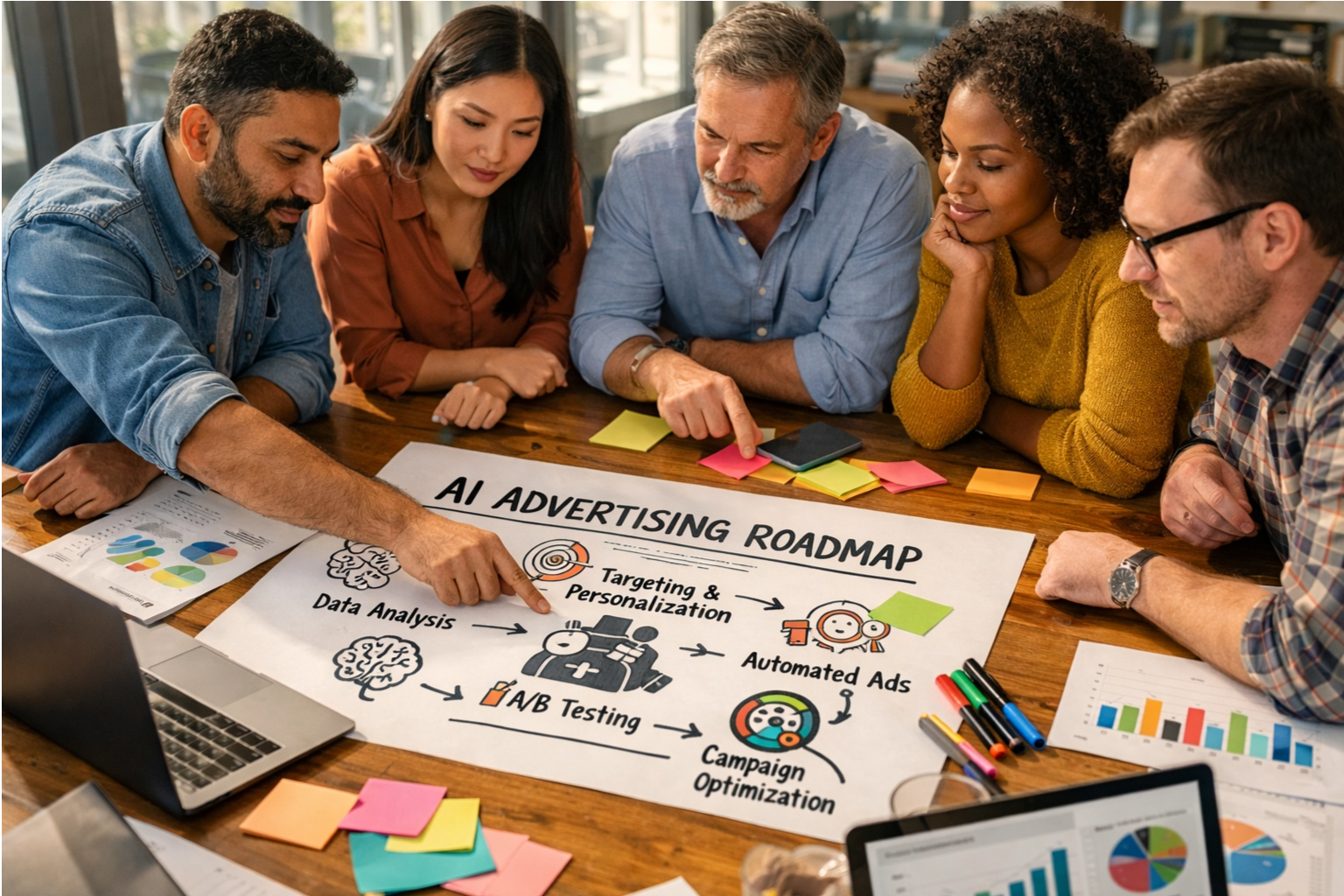
Because both ChatGPT Ads and Gemini Ads are still evolving, your goal should not be to pick a permanent winner but to build a flexible roadmap. That roadmap should let you exploit today’s advantages, adapt to new formats, and avoid overcommitting before the dust settles.
Industry-Specific Plays You Can Launch Now
Different verticals can lean into AI-native ads in distinct ways, even before every feature is live.
For e-commerce, conversational assistants can act as guided shopping concierges. A ChatGPT-powered experience might ask clarifying questions about style, size, and budget before recommending a curated set of products, while Gemini can reinforce those narratives with dynamic search and YouTube creative once the winning angle is validated.
B2B SaaS brands can use ChatGPT-style flows to diagnose problems, qualify prospects, and co-create solution roadmaps before handing off to sales, capturing richer intent data than a typical lead form. Gemini, in turn, can scale awareness by surfacing those same narratives inside AI-enhanced search and video placements to targeted accounts.
Local services, such as clinics, home repair, or professional practices, can leverage conversational AI to handle FAQs, triage service needs, and book appointments. When Gemini integrates more deeply with local search and maps, those same qualifiers can inform hyper-relevant, high-intent campaigns.
Education and info-product businesses are natural fits for conversational journeys. ChatGPT Ads can guide users through diagnostic quizzes and learning paths, while Gemini Ads can amplify the reach of best-performing curricula across search and video to reach new audiences at scale.
Readiness Checklist for the ChatGPT & Gemini Ad Era
Before you push serious budget into AI-native ad surfaces, make sure your organization is structurally ready. Use this checklist to identify gaps.
- Clarify your source of truth for performance data. Ensure analytics and CRM systems can cleanly attribute conversions to specific AI engines and campaigns.
- Upgrade first-party data quality. Standardize fields, de-duplicate contacts, and define segments so both ChatGPT- and Gemini-powered campaigns can use consistent audiences and conversion signals.
- Build a conversational content library. Collect FAQs, objection handling scripts, product comparisons, and customer stories that can feed both assistants and creative variants.
- Document tone and guardrails. Create a style guide for how your brand should “speak” in AI conversations, including prohibited topics and phrases.
- Align legal, privacy, and security teams. Decide how you will handle data sharing, transcript storage, and consent before launching pilots.
- Design a cross-platform test plan. Define hypotheses, KPIs, and budget tiers for ChatGPT Ads, Gemini Ads, and your existing AI-augmented channels.
- Train your team on prompt and conversation design. Treat this as a core skill for media, CRM, and lifecycle marketers, not just copywriters.
As you work through this checklist, you will naturally identify which campaigns can be translated into conversational formats now and which should wait for more mature Gemini surfaces or clearer ChatGPT ad products.
ChatGPT Ads vs Gemini Ads: How to Decide for Your Brand
The smartest way to resolve the ChatGPT ads vs Gemini ads debate is to anchor the decision in your objectives and constraints, not in predictions about product roadmaps. Start by mapping your funnel to desired outcomes (new customer acquisition, pipeline acceleration, retention, or brand preference) and identify where conversational depth or scaled reach will have the biggest impact.
If your primary need is to understand and convert complex, high-consideration demand, ChatGPT Ads deserve early experimentation because they can capture rich, multi-turn context. If your priority is to drive large volumes of measurable conversions across markets, Gemini Ads inside the Google ecosystem will likely become the heavyweight channel for the foreseeable future.
From there, design a staged test plan. Allocate a modest experimental budget across both engines, instrument every step of the journey, and commit to a fixed review cadence in which you rebalance spend based on observed lift in ROAS, pipeline quality, or customer lifetime value rather than vanity metrics.
If you want a partner who can architect that roadmap, integrate ChatGPT and Gemini with your existing Google, Meta, and lifecycle programs, and run attribution-first experiments, Single Grain specializes in AI-driven Search Everywhere Optimization and performance creative. Get a FREE consultation to design your next wave of AI-native campaigns and turn conversations into measurable growth.
Frequently Asked Questions
-
How should smaller brands with limited budgets approach testing ChatGPT Ads vs Gemini Ads?
Start with a narrow, clearly defined use case, such as a single lead-gen funnel or one flagship product, and split a small test budget between both platforms. Run short, time-boxed experiments, then double down on whichever channel delivers clearer learnings and more efficient cost per qualified action before expanding scope.
-
What kind of creative team structure works best for AI-native ad campaigns?
Instead of siloing copywriters and media buyers, form small pods that combine performance marketers, conversational designers, and data analysts. This lets you rapidly prototype prompts and scripts, monitor how assistants respond, and iterate creative based on real conversation transcripts rather than static ad performance alone.
-
How can B2B marketers use ChatGPT and Gemini ads to support account-based marketing (ABM)?
Use ChatGPT-style flows to qualify prospects, uncover pain points, and tailor messaging to specific account profiles, then pass those insights to sales. In parallel, use Gemini-powered placements to surround target accounts with consistent messaging across search and video, reinforcing the narratives that emerge from conversational insights.
-
What compliance and legal considerations should regulated industries keep in mind when testing AI ad platforms?
Highly regulated brands should pre-approve message frameworks, disclosures, and response boundaries before allowing any conversational experiences to go live. Work with legal teams to define which data can be collected in chats, how long it can be stored, and what topics require mandatory routing to a human representative.
-
How do international and multilingual campaigns factor into choosing between ChatGPT Ads and Gemini Ads?
Evaluate each platform’s language coverage, regional availability, and local policy restrictions before launching non-English campaigns. You may find that one engine provides better fluency or regional inventory in certain markets, so prioritize that platform where you have significant local revenue goals.
-
What are early indicators that your brand is a good fit for deeper investment in conversational ads?
If your sales cycles involve education, consultation, or complex product comparisons, and your audience already asks detailed questions in support or sales chats, that’s a strong signal. Consistently high engagement with interactive content, such as quizzes or assessments, also suggests users will respond well to conversation-led experiences.
-
How often should marketers revisit their ChatGPT vs Gemini budget split as these products evolve?
Plan to reassess budget allocation on a fixed workflow, such as quarterly, rather than reacting to every product announcement. Each review should incorporate fresh performance data, new feature availability, and updated business priorities so your mix stays aligned with results, not hype.



