

ChatGPT Ads Roadmap: What’s Coming Next?


In the rapidly evolving landscape of digital advertising, artificial intelligence (AI) has emerged as a transformative force. Among the myriad AI applications, large language models like ChatGPT are poised to redefine how businesses engage with their audiences. This article delves into the anticipated roadmap for ChatGPT in advertising, exploring the innovations on the horizon and their potential impact on the industry.
TABLE OF CONTENTS:
The Evolution of AI in Advertising
AI’s journey in advertising began with rudimentary automation, evolving into sophisticated algorithms that optimize ad placements, target audiences, and personalize content. Early applications focused on efficiency, but the advent of generative AI has shifted the paradigm towards creativity and dynamic content generation. ChatGPT, with its advanced natural language processing capabilities, represents a significant leap forward, offering unprecedented opportunities for advertisers to craft compelling narratives and interactive experiences.
From Automation to Augmentation
Initially, AI in advertising primarily automated repetitive tasks, such as bid management and campaign reporting. However, the current phase sees AI augmenting human creativity, providing insights, generating content drafts, and even simulating customer interactions. This transition from mere automation to intelligent augmentation is critical, as it empowers marketers to focus on strategic thinking while AI handles the heavy lifting of content creation and optimization. For instance, AI can analyze vast datasets to identify emerging trends, allowing advertisers to quickly adapt their messaging and campaigns.
Current State of ChatGPT in Marketing
Currently, ChatGPT is being leveraged in various marketing capacities, from generating blog posts and social media updates to assisting with customer service chatbots. Its ability to produce human-like text at scale has made it an invaluable tool for content creation. However, its direct integration into advertising platforms is still in its nascent stages, with most applications focusing on pre-campaign content development rather than real-time ad generation or optimization within ad ecosystems.
Anticipated Features in the ChatGPT Ads Roadmap
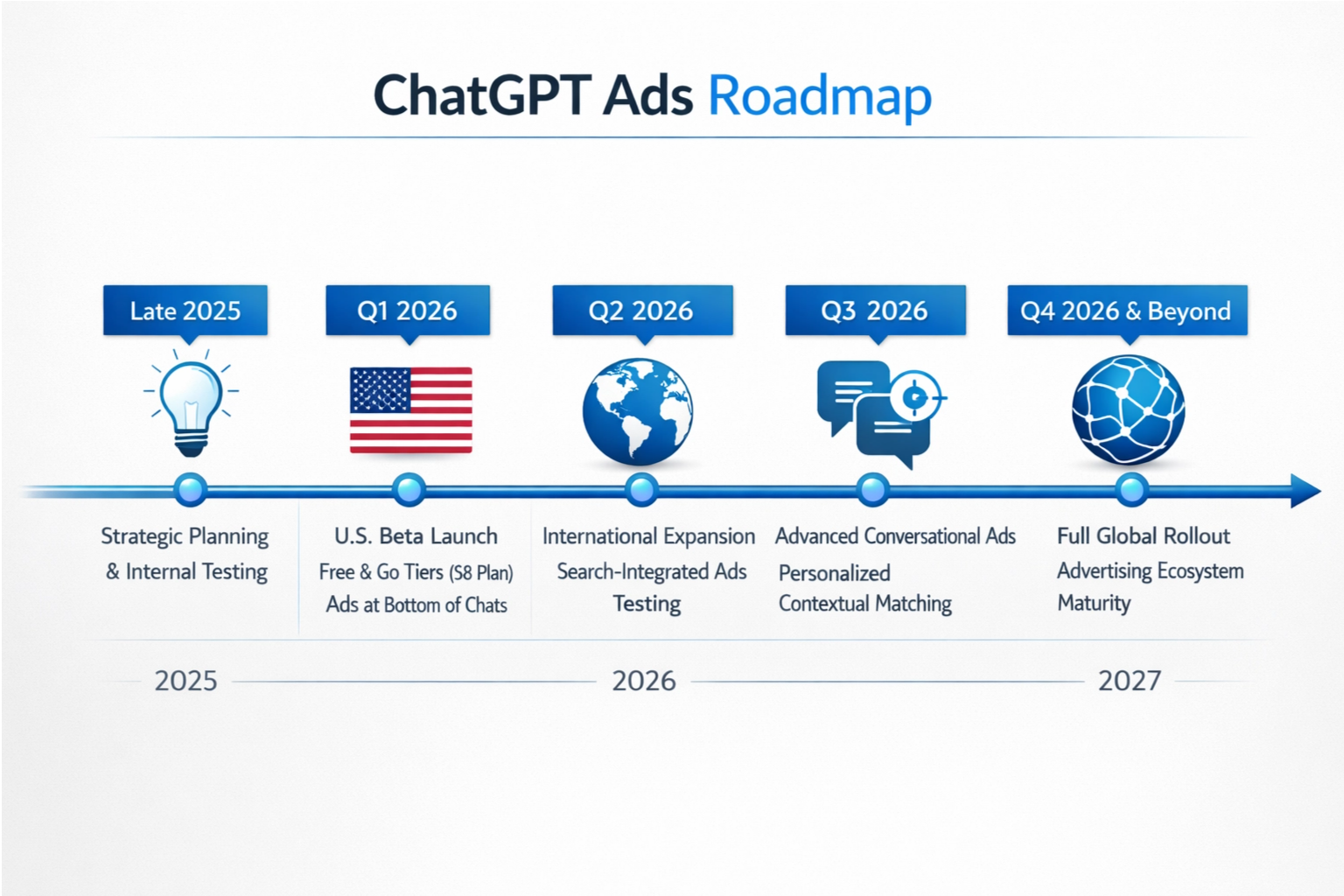
The future of ChatGPT in advertising promises a suite of advanced features designed to revolutionize campaign management, content personalization, and audience engagement. We anticipate developments in several key areas:
- Dynamic Ad Copy Generation: Real-time creation of ad copy tailored to individual user profiles, browsing history, and contextual cues. This will move beyond simple personalization to truly dynamic content that adapts on the fly.
- AI-Powered Creative Optimization: ChatGPT will likely integrate with creative tools to suggest visual elements, refine ad layouts, and even generate entire ad creatives based on performance data and brand guidelines.
- Enhanced Audience Segmentation: More sophisticated AI models will enable hyper-segmentation of audiences, allowing for ultra-targeted campaigns with messages that resonate deeply with specific niches.
- Interactive Ad Experiences: The roadmap may include features for creating interactive ad formats, such as conversational ads that let users engage with a ChatGPT-powered bot directly within the ad unit.
- Performance Prediction and Optimization: Advanced analytics driven by ChatGPT could predict campaign performance with greater accuracy, offering proactive recommendations for optimization before launch and throughout the campaign lifecycle.
Impact on Advertisers and Marketers
The integration of ChatGPT into advertising platforms will have profound implications for advertisers and marketers. It will necessitate a shift in skill sets, emphasizing strategic oversight, ethical considerations, and the ability to effectively prompt and guide AI tools. The role of the human marketer will evolve from content creator to AI orchestrator.
New Opportunities and Challenges
This evolution presents both exciting opportunities and significant challenges. Opportunities include unprecedented levels of personalization, increased efficiency in content creation, and the ability to scale campaigns with greater ease. However, challenges will arise in maintaining brand voice consistency, ensuring ethical AI use, and navigating the complexities of AI-generated content moderation. Advertisers will need to develop new frameworks for quality control and brand safety in an AI-driven environment. (External Link Placeholder 2)
Preparing for the Future of AI-Powered Ads
To thrive in an advertising landscape increasingly shaped by AI, marketers must proactively prepare. This involves investing in AI literacy, experimenting with current AI tools, and fostering a culture of continuous learning and adaptation.
Actionable Tips for Marketers
- Embrace AI Tools: Start integrating existing AI writing assistants and content generation tools into your workflow to understand their capabilities and limitations.
- Develop Prompt Engineering Skills: Learning how to craft effective prompts for AI models will be a crucial skill for guiding AI to produce desired outputs.
- Focus on Strategy and Ethics: Shift your focus to high-level strategy, creative direction, and ensuring ethical considerations are at the forefront of AI implementation.
- Stay Informed: Keep abreast of the latest developments in AI and machine learning, particularly as they pertain to advertising technology.
- Collaborate with AI: View AI not as a replacement, but as a powerful collaborator that can amplify your creative and analytical capabilities.
Frequently Asked Questions About ChatGPT Ads Roadmap: What’s Coming Next
Q: Will ChatGPT replace human copywriters? A: While ChatGPT can generate ad copy efficiently, human oversight remains crucial for ensuring brand voice, emotional resonance, and strategic alignment. AI will augment, not entirely replace, human creativity.
Q: How can businesses prepare for these changes? A: Businesses should invest in AI training for their marketing teams, experiment with AI tools, and develop clear guidelines for AI content creation and ethical use.
Q: What are the biggest risks associated with AI in advertising? A: Risks include maintaining brand authenticity, potential for misinformation, data privacy concerns, and the need for robust content moderation systems. (External Link Placeholder 3)
Conclusion
The ChatGPT ads roadmap signifies a pivotal moment in the evolution of digital advertising. As AI models become more sophisticated, they will unlock new dimensions of personalization, efficiency, and creativity for marketers. By understanding the impending changes and proactively adapting, businesses can harness the full potential of AI to create more impactful and engaging advertising campaigns. The future of advertising is intelligent, dynamic, and deeply integrated with AI, promising an exciting era for those ready to embrace it.



