

ChatGPT Ads: Complete Guide for Marketers in 2026


With new platforms and technologies emerging, the new state of digital advertising is redefining how brands connect with their audiences. In 2026, one of the most significant shifts comes with the introduction of ChatGPT Ads. This groundbreaking development from OpenAI promises to integrate advertising directly into the conversational AI experience, offering marketers an unprecedented opportunity to engage users at moments of genuine intent. This guide will delve into the intricacies of ChatGPT Ads, exploring their mechanics, benefits, challenges, and the strategic approaches marketers need to thrive in the new era of conversational advertising.
TABLE OF CONTENTS:
Understanding ChatGPT Ads
ChatGPT Ads represent a paradigm shift from traditional search or display advertising. Instead of appearing alongside search results or on websites, these ads are seamlessly integrated into ChatGPT’s conversational flow. When a user interacts with the AI, and their query aligns with a relevant product or service, a clearly labeled advertisement may appear directly within the chatbot’s response. This contextual placement is designed to capture user attention at a high-engagement, specific-need moment.
OpenAI’s approach to advertising is built on several core principles aimed at maintaining user trust and ensuring a positive experience. Ads are always separate and clearly labeled as sponsored content, ensuring users can distinguish between AI-generated responses and promotional material. Crucially, OpenAI has committed that advertising will not influence ChatGPT’s organic responses, which remain optimized for helpfulness and objectivity. Furthermore, user data and conversations are kept private from advertisers and are never sold.
Key Principles of ChatGPT Advertising:
- Mission Alignment: Advertising efforts support OpenAI’s mission to make AI accessible to all of humanity.
- Answer Independence: Ads do not dictate or alter ChatGPT’s core responses.
- Conversation Privacy: User data and conversations are protected and not shared with advertisers.
- Choice and Control: Users can turn off personalization and clear data used for ads, with paid tiers offering an ad-free experience.
- Long-term Value: OpenAI prioritizes user trust and experience over short-term revenue gains
This commitment to user experience and transparency is vital for the long-term success of ChatGPT Ads, fostering an environment where both users and advertisers can benefit. The initial rollout targets free and ChatGPT Go tier users in the U.S., with premium subscribers (Plus, Pro, Business, and Enterprise) remaining ad-free. This strategy mirrors that of many streaming platforms, offering a tiered access model where advertising supports broader accessibility.
The Mechanics of ChatGPT Advertising
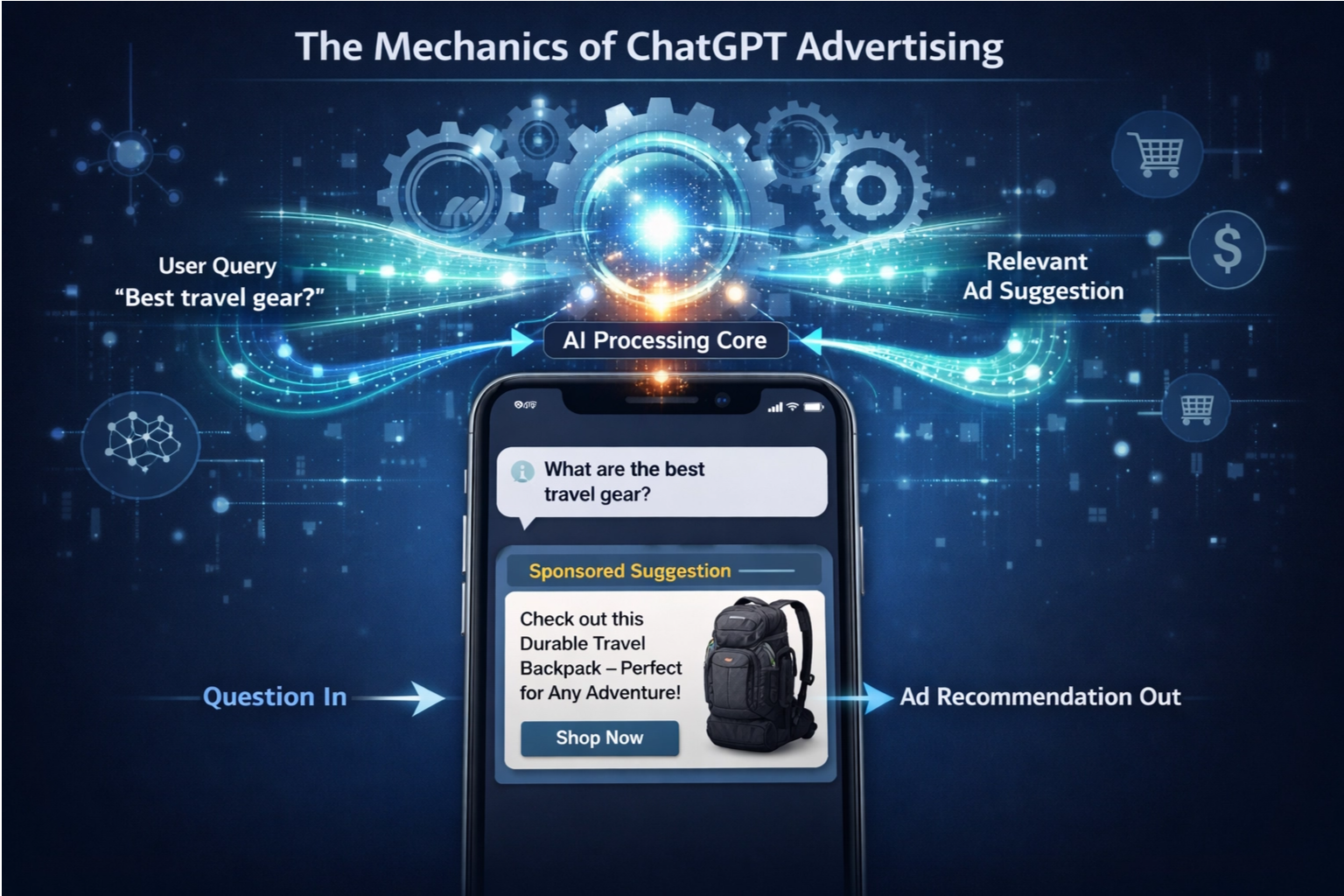
The operational framework of ChatGPT Ads differs significantly from established digital advertising models. Unlike traditional platforms that rely on keyword bidding or audience targeting across a vast network, ChatGPT Ads leverage the conversational context itself. When a user poses a question or engages in a dialogue, the AI identifies opportunities to present relevant advertisements based on the expressed intent and topic of conversation.
Consider a user asking ChatGPT for recommendations on “running shoes for flat feet.” After providing an answer, a contextually relevant ad for a shoe brand specializing in orthopedic footwear might appear. This direct alignment with user intent is a powerful differentiator. The ad placements are designed to be non-intrusive, appearing below the chatbot’s responses and clearly demarcated from the organic conversation.
Comparison with Traditional Advertising Models
To better understand the unique proposition of ChatGPT Ads, it’s helpful to compare them with established advertising channels:
| Feature | ChatGPT Ads | Traditional Search Ads | Display Ads |
|---|---|---|---|
| Placement | Within conversational AI responses | Alongside search engine results | On websites and apps across a network |
| Targeting | Real-time conversational intent | Keyword-based queries, user demographics | User demographics, interests, browsing behavior |
| User Intent | High, expressed directly in conversation | High, implied by search query | Moderate to low, often passive consumption |
| Ad Format | Contextual, integrated into chat flow | Text-based, product listing ads | Image, video, text banners |
| Measurement | Initial focus on impressions and clicks | Comprehensive conversion tracking, ROI metrics | Impressions, clicks, basic conversion tracking |
| Cost Model | Projected high CPM (e.g., $60) | Variable CPM (e.g., $38) | Lower CPM (e.g., $3) |
This comparison highlights that while ChatGPT Ads offer unparalleled contextual relevance, they currently face limitations in granular measurement and attribution. OpenAI has indicated that more detailed data and conversion tracking capabilities may evolve over time, but marketers should be prepared for a different measurement paradigm initially.
Benefits for Marketers
The advent of ChatGPT Ads opens up a new frontier for marketers, offering several compelling advantages that can redefine engagement strategies:
1. Unprecedented Contextual Relevance
One of the most significant benefits is the ability to reach users at the exact moment of need and intent. Unlike traditional advertising, where marketers infer intent from search queries or browsing history, ChatGPT Ads allow for direct engagement based on real-time conversational context. This means ads are presented when a user is actively seeking information, solutions, or recommendations, leading to higher engagement rates and more qualified leads. This hyper-contextual targeting minimizes ad waste and maximizes conversion potential.
2. Enhanced User Engagement
Conversational interfaces inherently foster a more interactive and personalized experience. When an ad is seamlessly integrated into a helpful dialogue, it is perceived less as an interruption and more as a valuable suggestion. This can lead to a more positive brand perception and increased willingness to explore the advertised product or service. The conversational nature also allows for future developments in which users might interact directly with ads, asking follow-up questions or seeking further details within the chat interface itself.
3. First-Mover Advantage
As a relatively new advertising channel, ChatGPT Ads offer early adopters a significant first-mover advantage. Marketers who quickly understand and adapt to this platform can establish a strong presence, gain valuable insights into audience behavior, and refine their strategies before the market becomes saturated. This early adoption can give brands a dominant position in a rapidly evolving advertising ecosystem, enabling them to capture market share and build brand loyalty ahead of competitors. For instance, brands that are among the first to experiment with conversational ad formats can shape user expectations and set industry benchmarks.
4. Access to a Vast and Engaged Audience
ChatGPT boasts a massive, highly engaged user base of hundreds of millions of weekly active users. This provides marketers with broad audience reach, particularly among individuals actively seeking information and solutions through AI. The platform’s global reach also offers opportunities for international marketing campaigns, enabling it to tap into diverse demographics and markets. The free and low-cost tiers, where ads are initially rolled out, further expand this reach to a price-conscious segment of the user base.
5. Brand Building and Thought Leadership
Beyond direct conversions, ChatGPT Ads offer a unique avenue for brand building and establishing thought leadership. Brands can leverage ChatGPT’s highly trusted, intelligent environment to subtly enhance their credibility and authority. When a user receives a helpful response from ChatGPT followed by a relevant ad from a particular brand, it creates a subconscious association between the brand and helpful, intelligent solutions. This can be particularly effective for complex products or services where educational content plays a crucial role in the customer journey.
Challenges and Considerations
While the potential of ChatGPT Ads is immense, marketers must also navigate several challenges and considerations to ensure successful campaigns:
1. Measurement and Attribution Limitations
As noted earlier, one of the primary challenges is the initial lack of sophisticated measurement and attribution tools. Unlike platforms like Google Ads or Meta Ads, which offer granular data on conversions, demographics, and user journeys, ChatGPT Ads currently provides only basic metrics, such as impressions and clicks. This makes it difficult for performance marketers to accurately calculate ROI and optimize campaigns based on detailed conversion data. Marketers will need to develop alternative methods for assessing campaign effectiveness, such as correlating ad exposure with increases in website traffic or with direct inquiries.
2. Maintaining User Trust and Ad Fatigue
OpenAI’s commitment to user trust is paramount, and marketers must align with this principle. Overly aggressive or irrelevant advertising could lead to ad fatigue and erode user trust in the ChatGPT platform. It is crucial for advertisers to ensure their ads are genuinely helpful and contextually relevant to the user’s conversation. Irrelevant ads not only perform poorly but can also negatively impact brand perception and lead users to opt out of personalized ads or even discontinue their use of the free tier.
3. Content Quality and Ethical Considerations
The conversational nature of ChatGPT Ads demands a high standard of content quality and ethical consideration. Ads must be well-crafted, concise, and provide clear value. Furthermore, marketers must be mindful of the ethical implications of advertising in AI conversations, particularly when sensitive topics are involved. OpenAI has stated that ads will not appear near sensitive subjects such as health, mental health, or politics, and that marketers must respect these boundaries. The potential for AI to generate misleading or biased ad content also necessitates careful oversight and adherence to strict ethical guidelines.
4. Evolving Platform and Best Practices
ChatGPT Ads are in their nascent stages, meaning the platform and its best practices are still evolving. Marketers will need to remain agile and adaptable, continuously monitoring OpenAI updates and experimenting with different ad formats and strategies. What works today may not be effective tomorrow, requiring a proactive approach to learning and optimization. This dynamic environment can be both an opportunity for innovation and a challenge for maintaining consistent campaign performance.
5. Integration with Existing Marketing Stacks
Integrating a new advertising channel, such as ChatGPT Ads, into existing marketing technology stacks can be complex. Marketers will need to consider how to incorporate ChatGPT Ads data into their CRM, analytics platforms, and other marketing tools to gain a holistic view of customer interactions. The absence of robust APIs for detailed data export may initially require manual data handling or the development of custom integration solutions, adding to operational overhead.
Strategies for Success With ChatGPT Ads

To effectively leverage the power of ChatGPT Ads, marketers should adopt a strategic approach that focuses on relevance, value, and continuous optimization:
1. Hyper-Contextual Ad Creative
The cornerstone of successful ChatGPT Ads lies in hyper-contextual ad creative. Ads must be highly relevant to the user’s current conversation. This requires a deep understanding of potential user queries and the ability to craft ad copy that directly addresses those needs. For example, if a user is discussing “sustainable fashion,” an ad for an eco-friendly clothing brand with a message like “Discover our latest collection of sustainable apparel” would be highly effective. Marketers should invest in AI-powered tools to generate and test various ad creatives that resonate with specific conversational contexts.
2. Focus on Value-Driven Content
Given the conversational nature of the platform, ads that offer genuine value are more likely to succeed. Instead of purely promotional messages, consider ads that provide helpful resources, exclusive insights, or solutions to common problems. For instance, a software company could advertise a free trial or a downloadable guide related to the user’s query. This approach aligns with OpenAI’s emphasis on helpfulness and can build positive brand associations.
3. Embrace A/B Testing and Iteration
As the platform evolves, continuous A/B testing and iteration will be crucial. Marketers should experiment with different ad creatives, calls to action, and targeting parameters to identify what resonates best with the ChatGPT audience. The initial lack of granular attribution data means that proxy metrics, such as click-through rates and post-click engagement on landing pages, will be vital for optimization. Establishing a robust feedback loop to analyze user responses and adapt strategies accordingly will be key to long-term success.
4. Integrate With Broader Marketing Funnels
While ChatGPT Ads offer a unique top-of-funnel engagement opportunity, they should be integrated into a broader marketing strategy. The goal should be to guide users from the conversational interface to deeper engagement points, such as landing pages, product demonstrations, or direct consultations. Ensure that the post-click experience is seamless and provides the additional information or interaction that the user expects after engaging with the ad. This holistic approach ensures that the interest generated by ChatGPT Ads translates into measurable business outcomes.
5. Monitor and Adapt to Ethical Guidelines
Staying abreast of OpenAI’s evolving ethical guidelines and content policies is paramount. Marketers must ensure their campaigns adhere to standards of transparency, privacy, and non-manipulation. Proactive monitoring of ad performance and user feedback can help identify and rectify any issues that might compromise user trust. Building a reputation as a responsible advertiser within the ChatGPT ecosystem will be a significant competitive advantage. For example, avoiding deceptive language or exaggerated claims is not just good practice but a necessity for sustained success.
Future Outlook and Evolution
ChatGPT Ads are still in their infancy, and their evolution is expected to be rapid and transformative. Several key trends and developments are likely to shape the future of conversational advertising:
1. Enhanced Measurement and Attribution
OpenAI has indicated that more sophisticated measurement and attribution capabilities are on the roadmap. This will likely include more granular data on user engagement, conversion tracking, and potentially integration with third-party analytics platforms. As these features roll out, marketers will gain a clearer understanding of ROI and be able to optimize campaigns with greater precision. This will bridge the current gap between high-intent targeting and limited reporting, making ChatGPT Ads a more compelling option for performance marketers.
2. Advanced Personalization and Dynamic Creative
The inherent power of AI lies in its ability to personalize experiences. Future iterations of ChatGPT Ads are likely to feature highly advanced personalization, where ad creatives and offers are dynamically generated or adapted based on an even deeper understanding of the user’s conversational history, preferences, and implicit needs. This could lead to hyper-relevant ads that feel less like advertising and more like tailored recommendations, further enhancing user engagement. Imagine an ad that not only recommends a product but also highlights a feature that directly addresses a pain point discussed earlier in the conversation.
3. New Conversational Ad Formats
The current ad format, appearing below the chatbot’s response, is just the beginning. We can anticipate the emergence of new, more interactive conversational ad formats. This could include:
- Interactive Ad Units: Where users can engage with the ad directly within the chat interface, asking questions or customizing offers.
- AI-Powered Sales Assistants: Ads that seamlessly transition into a guided sales conversation with an AI assistant, providing immediate support and product information.
- Voice-Activated Ads: For voice-enabled AI interactions, ads could be delivered audibly, offering a hands-free and highly convenient experience.
These innovations will push the boundaries of what advertising can be, moving it closer to a service than a mere promotion.
4. Integration With Other AI Capabilities
As OpenAI’s ecosystem expands, ChatGPT Ads may integrate with other AI capabilities, such as image generation, video creation, or even virtual reality experiences. This could lead to highly immersive and engaging ad experiences that go beyond text-based interactions. For example, a user discussing travel destinations might see an ad that generates a personalized itinerary or a virtual tour of a hotel. The possibilities are vast and will depend on the creative application of emerging AI technologies.
5. Regulatory and Ethical Frameworks
As conversational AI advertising becomes more prevalent, regulatory and ethical frameworks will likely evolve to address concerns around data privacy, transparency, and potential biases. Marketers will need to stay informed about these developments and ensure their campaigns remain compliant. The industry will collectively need to establish best practices that balance commercial interests with user protection and ethical AI deployment. This proactive approach will be crucial for maintaining public trust and ensuring the sustainable growth of this new advertising channel.
Work With the ChatGPT Ads Experts
ChatGPT Ads represent a pivotal moment in the evolution of digital marketing. With ChatGPT ads, OpenAI has integrated advertising directly into the heart of conversational AI, creating a powerful new channel for marketers to connect with audiences at their most engaged and intentional moments. While challenges related to measurement and ethical considerations exist, the benefits of hyper-contextual relevance, enhanced user engagement, and the opportunity for a first-mover advantage are undeniable.
Marketers who embrace this new paradigm with a strategic focus on value-driven content, continuous iteration, and adherence to ethical guidelines will be well-positioned to thrive. The future of advertising is conversational, personalized, and deeply integrated into the user experience. ChatGPT Ads are a glimpse into a future where advertising is less about interruption and more about intelligent assistance.
Ready to revolutionize your advertising strategy? Contact Single Grain today for a personalized consultation to navigate the exciting world of ChatGPT Ads and unlock new growth opportunities for your business. Visit Single Grain to learn more.
FAQs
-
What are ChatGPT Ads?
ChatGPT Ads are a new form of advertising introduced by OpenAI that integrates sponsored content directly into ChatGPT’s conversational flow. These ads appear below the AI’s responses when a user’s query is relevant to a product or service, offering highly contextual engagement.
-
How do ChatGPT Ads differ from traditional search ads?
Unlike traditional search ads that appear alongside search engine results, ChatGPT Ads are embedded within the AI’s conversational responses. They leverage real-time conversational intent for targeting, rather than keyword-based queries alone, and are designed to be less intrusive and more contextually relevant.
-
What are the main benefits of using ChatGPT Ads for marketers?
Key benefits include unprecedented contextual relevance, enhanced user engagement due to seamless integration, a significant first-mover advantage for early adopters, access to ChatGPT’s vast and engaged user base, and opportunities for brand building and thought leadership within a trusted AI environment.
-
What are the challenges associated with ChatGPT Ads?
Challenges include initial limitations in granular measurement and attribution, maintaining user trust to avoid ad fatigue, ensuring high content quality and adherence to ethical guidelines, adapting to an evolving platform, and integrating with existing marketing technology stacks.
-
How can marketers ensure success with ChatGPT Ads?
Success strategies involve creating hyper-contextual ad creatives, focusing on value-driven content, embracing continuous A/B testing and iteration, integrating ChatGPT Ads into broader marketing funnels, and diligently monitoring and adapting to OpenAI’s ethical guidelines and platform updates.
-
Will ChatGPT Ads influence the AI’s responses?
No, OpenAI has explicitly stated that ads will not influence ChatGPT’s organic responses. The AI’s answers are optimized based on what is most helpful and objective to the user, and ads are always separate and clearly labeled as sponsored content.
-
Are ChatGPT Ads available to all users?
Initially, ChatGPT Ads are being tested in the U.S. for users on the free and ChatGPT Go tiers. Premium subscribers (Plus, Pro, Business, and Enterprise) will continue to have an ad-free experience. OpenAI has also committed to not showing ads to users under 18 or near sensitive topics.
-
Where can I find more information about ChatGPT Ads?
You can find more information on OpenAI’s official blog regarding their approach to advertising and expanding access to ChatGPT.



