

ChatGPT Ads Bidding Strategies


The landscape of digital advertising is undergoing a profound transformation, driven by the rapid advancements in artificial intelligence. Among these innovations, ChatGPT Ads are emerging as a powerful new frontier, offering advertisers unprecedented opportunities to connect with their target audiences. However, harnessing the full potential of ChatGPT Ads requires a sophisticated understanding of bidding strategies. This article delves into the intricacies of ChatGPT Ads bidding, providing insights and actionable strategies to optimize your campaigns for maximum return on investment.
TABLE OF CONTENTS:
- Understanding ChatGPT Ads and Their Bidding Landscape
- Core ChatGPT Ads Bidding Strategies
- Optimizing Your Bidding for Maximum ROI
- Measuring and Analyzing Bidding Performance
- Common Challenges and Solutions in ChatGPT Ads Bidding
- Future Trends in AI-Powered Advertising and Bidding
- Frequently Asked Questions About ChatGPT Ads Bidding Strategies
- Conclusion
Understanding ChatGPT Ads and Their Bidding Landscape
ChatGPT Ads represent a paradigm shift from traditional advertising platforms. Unlike conventional systems that rely heavily on manual input and rule-based optimizations, ChatGPT Ads leverage advanced AI to understand user intent, generate highly relevant ad copy, and dynamically adjust bidding in real-time. This AI-driven approach allows for a level of personalization and efficiency previously unattainable. Key metrics such as Cost Per Acquisition (CPA), Return On Ad Spend (ROAS), and Conversion Rate remain crucial, but their optimization within the ChatGPT Ads ecosystem is fundamentally different, demanding a new set of strategic considerations.
Core ChatGPT Ads Bidding Strategies
Navigating the bidding landscape of ChatGPT Ads involves understanding both automated and manual approaches, and recognizing when to employ each for optimal results.
Automated Bidding
Automated bidding strategies are the cornerstone of AI-powered advertising, designed to optimize for specific goals with minimal manual intervention. These strategies leverage machine learning algorithms to analyze vast amounts of data and make real-time bidding decisions.
- Target CPA (Cost Per Acquisition): This strategy aims to get as many conversions as possible at or below your target cost per acquisition. It’s ideal when your primary goal is to acquire leads or sales within a specific cost threshold.
- Maximize Conversions: As the name suggests, this strategy focuses on generating the highest possible number of conversions within your budget. It’s particularly effective when you have a clear conversion event and sufficient historical data.
- Target ROAS (Return On Ad Spend): For businesses focused on revenue, Target ROAS helps you achieve a specific return on your advertising spend. The system automatically adjusts bids to maximize conversion value while striving to meet your target ROAS.
- Enhanced CPC (Cost Per Click): This strategy is a hybrid approach that automatically adjusts your manual bids up or down based on the likelihood of a click leading to a conversion. It offers more control than fully automated strategies while still benefiting from AI insights.
Manual Bidding
While automated strategies offer efficiency, manual bidding provides granular control, which can be advantageous in specific scenarios. Manual bidding allows advertisers to set bids for individual keywords or ad groups, offering precise control over spending. This approach is often favored by experienced advertisers who want to maintain tight control over their campaigns, especially during initial testing phases or for highly niche keywords where data for automated strategies might be limited. However, it demands significant time and expertise to manage effectively.
Hybrid Approaches
Many advertisers find success by combining automated and manual bidding strategies. For instance, using automated bidding for broad campaigns with established performance, while employing manual bidding for new product launches or highly competitive keywords, can offer a balanced approach to optimization.
Optimizing Your Bidding for Maximum ROI
Beyond selecting a bidding strategy, several factors contribute to maximizing your return on investment (ROI) with ChatGPT Ads.
- Audience Segmentation: Tailoring your bids to specific audience segments is paramount. ChatGPT Ads can analyze user demographics, interests, and behaviors to identify high-value segments, allowing you to allocate more budget and bid more aggressively where conversion likelihood is highest. This precision ensures your ad spend is directed towards the most receptive audiences. Learn more about AI in advertising
- Keyword Strategy: A robust keyword strategy is fundamental. This involves a mix of long-tail keywords, which are highly specific and often have lower competition, and short-tail keywords, which are broader and typically have higher search volume. ChatGPT’s natural language processing capabilities can assist in identifying nuanced keyword variations and user intent, allowing for more effective targeting. Learn more about AI in marketing
- Ad Copy and Creatives: The quality and relevance of your ad copy and creatives significantly impact bid effectiveness. Engaging and persuasive ad content can lead to higher click-through rates and conversion rates, ultimately improving the efficiency of your bids. ChatGPT can be instrumental in generating compelling ad copy that resonates with different audience segments. Explore ad copy best practices
- Landing Page Optimization: Even the most perfectly optimized bid can fail if the landing page experience is poor. Ensure your landing pages are relevant, fast-loading, mobile-friendly, and provide a clear call to action. A seamless user journey from ad click to conversion is critical for maximizing ROI.
- Budget Allocation: Strategic budget allocation across different campaigns and ad groups is essential. Continuously monitor performance and reallocate budget to top-performing campaigns to maximize overall efficiency. ChatGPT can provide insights into optimal budget distribution based on real-time performance data.
Measuring and Analyzing Bidding Performance
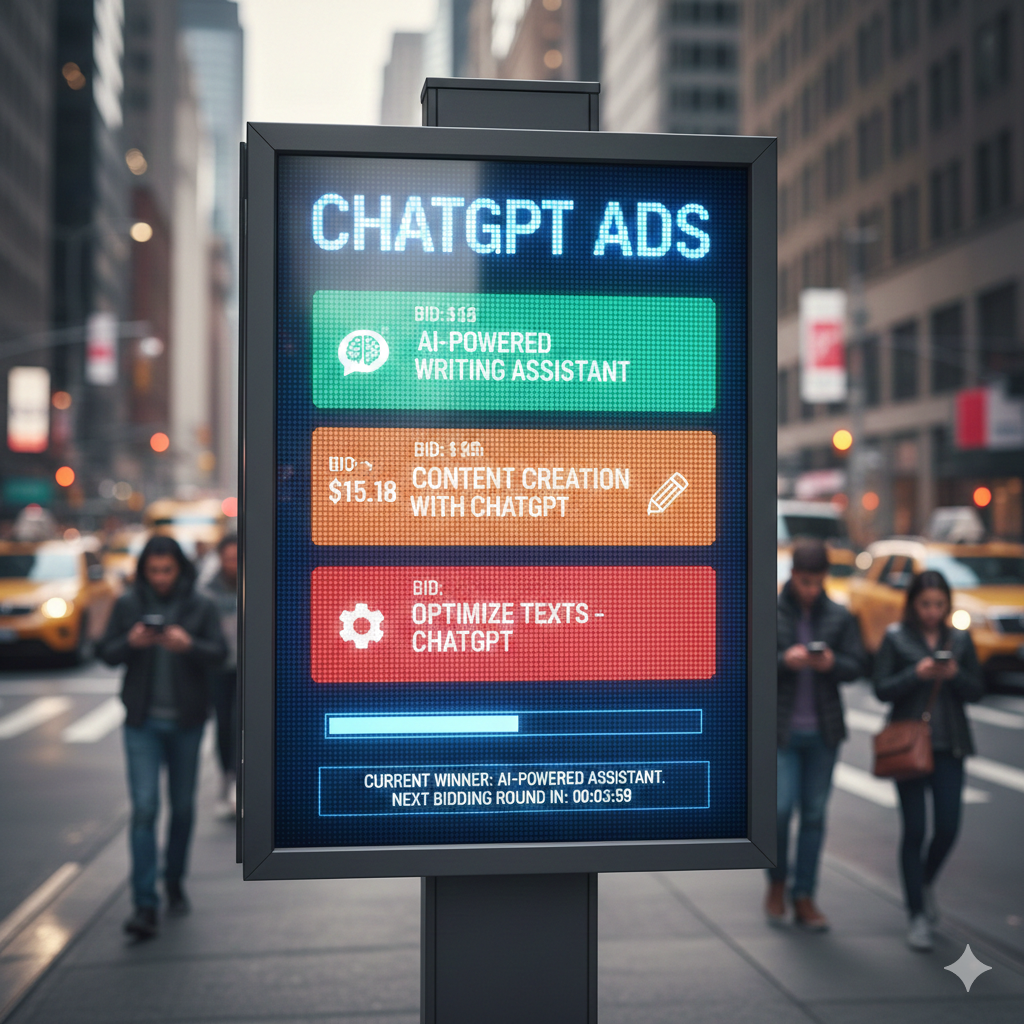
Effective measurement and analysis are crucial for continuous improvement in ChatGPT Ads bidding. Key Performance Indicators (KPIs) such as impressions, clicks, conversions, cost per click (CPC), cost per acquisition (CPA), and return on ad spend (ROAS) must be diligently tracked. Utilize the analytics tools provided by the ChatGPT Ads platform, or integrate with third-party analytics solutions, to gain comprehensive insights into your campaign performance. Interpreting this data allows for informed adjustments to your bidding strategies, ensuring ongoing optimization and improved results.
Common Challenges and Solutions in ChatGPT Ads Bidding
While powerful, ChatGPT Ads bidding can present challenges. Fluctuating costs, for instance, can be mitigated by setting realistic budget caps and closely monitoring trends. Combating ad fraud requires vigilance and leveraging the platform’s built-in fraud detection mechanisms. Adapting to algorithm changes is an ongoing process that necessitates staying informed about platform updates and continuously testing new strategies. Scaling successful campaigns involves careful expansion, ensuring that increased ad spend doesn’t dilute performance.
Future Trends in AI-Powered Advertising and Bidding
The future of AI-powered advertising, and specifically ChatGPT Ads bidding, is poised for even greater innovation. Predictive analytics will become more sophisticated, allowing advertisers to anticipate market shifts and user behavior with greater accuracy. Hyper-personalization will enable ads to be tailored to individual users at an unprecedented level, leading to even higher engagement and conversion rates. Furthermore, the seamless integration with other AI tools will create a more holistic and automated advertising ecosystem, where every aspect of a campaign is optimized by intelligent algorithms. Discover other AI tools for advertising
Frequently Asked Questions About ChatGPT Ads Bidding Strategies
Q: How do ChatGPT Ads differ from traditional Google Ads? A: ChatGPT Ads leverage advanced AI for dynamic ad generation and real-time bidding adjustments based on user intent, offering a higher degree of personalization and automation compared to the more keyword-centric and rule-based nature of traditional Google Ads.
Q: Is manual bidding still relevant with ChatGPT Ads? A: Yes, manual bidding remains relevant for specific scenarios, such as initial testing, highly niche keywords, or when advertisers require granular control over their campaigns. It can also be effectively combined with automated strategies.
Q: What are the most important metrics to track for ChatGPT Ads bidding? 61 A: Key metrics include impressions, clicks, conversions, Cost Per Click (CPC), Cost Per Acquisition (CPA), and Return On Ad Spend (ROAS). Monitoring these KPIs provides crucial insights into campaign performance.
Conclusion
Mastering ChatGPT Ads bidding strategies is essential for any advertiser looking to thrive in the evolving digital landscape. By understanding the nuances of automated and manual bidding, optimizing various campaign elements, and diligently measuring performance, businesses can unlock the full potential of AI-powered advertising. The future of advertising is intelligent, and those who embrace these advanced bidding strategies will be best positioned for sustained success.
Ready to elevate your advertising game? Discover how Single Grain can help you implement cutting-edge ChatGPT Ads bidding strategies and achieve unparalleled ROI. Contact us today for a personalized consultation!



