

CRM for Startups: Building Customer Relationships From Day One


In the fast-paced world of startups, customer relationships are the bedrock of sustainable growth. While many nascent businesses focus intensely on product development and initial market penetration, the strategic management of customer interactions often takes a backseat. This oversight can prove costly, as a robust customer relationship management (CRM) system is not merely a tool for large enterprises but a vital asset for startups aiming to scale efficiently and foster lasting customer loyalty.
This article delves into the critical role of CRM for startups, exploring why these agile businesses need CRM from their inception, the essential features to look for, and how to implement a CRM strategy that propels growth. We will cover key aspects from understanding the core functionalities of CRM to selecting the right platform and integrating it seamlessly into your operations.
TABLE OF CONTENTS:
- What is CRM and Why is it Crucial for Startups?
- Key CRM Features Startups Cannot Afford to Ignore
- Choosing the Right CRM for Your Startup
- Implementing CRM Successfully in a Startup Environment
- The Tangible Benefits of CRM for Startup Growth
- Frequently Asked Questions About CRM for Startups
- Conclusion: Empowering Your Startup with CRM
What is CRM and Why is it Crucial for Startups?
Customer Relationship Management (CRM) refers to the strategies, practices, and technologies that companies use to manage and analyze customer interactions and data throughout the customer lifecycle. The goal is to improve business relationships with customers, assist in customer retention, and drive sales growth. For startups, CRM is not just about managing contacts; it’s about building a foundation for future success.
Startups often operate with limited resources and a small team, making every customer interaction incredibly valuable. A CRM system centralizes customer data, providing a unified view of every touchpoint, from initial lead generation to post-purchase support. This holistic perspective enables startups to personalize communications, anticipate customer needs, and deliver exceptional service, all of which are crucial for differentiating themselves in competitive markets.
The Startup Challenge: Why CRM is a Necessity, Not a Luxury
Many startups face common challenges that CRM can directly address:
- Disorganized Customer Data: Without a centralized system, customer information can be scattered across spreadsheets, email inboxes, and individual notes, leading to inefficiencies and missed opportunities.
- Inconsistent Customer Experience: As a startup grows, maintaining a consistent and high-quality customer experience becomes difficult without standardized processes and accessible customer history.
- Inefficient Sales and Marketing: Manual tracking of leads and sales pipelines is time-consuming and prone to errors, hindering effective sales and marketing efforts.
- Lack of Scalability: Solutions that work for a handful of customers quickly become unsustainable as the customer base expands.
Key CRM Features Startups Cannot Afford to Ignore
When selecting a CRM, startups should prioritize features that offer immediate value and support future growth. Here are some essential functionalities:
- Contact and Lead Management: The ability to store, organize, and track all customer and prospect information, including contact details, communication history, and interaction notes. This is the core of any CRM system.
- Sales Pipeline Management: Visual tools to track leads through different stages of the sales process, from initial contact to deal closure. This helps sales teams prioritize efforts and forecast revenue more accurately.
- Marketing Automation: Features that automate repetitive marketing tasks, such as email campaigns, social media posting, and lead nurturing. This allows startups to engage with prospects efficiently without extensive manual effort.
- Customer Support and Service: Tools for managing customer inquiries, support tickets, and feedback. A robust support module ensures that customer issues are resolved promptly, enhancing satisfaction and loyalty.
- Reporting and Analytics: Customizable dashboards and reports that provide insights into sales performance, marketing effectiveness, and customer behavior. Data-driven decisions are vital for agile startups.
- Integration Capabilities: The ability to integrate with other essential business tools, such as email platforms (e.g., Gmail, Outlook), accounting software, and project management tools. Seamless integration streamlines workflows and prevents data silos.
- Mobile Accessibility: A mobile app or responsive design that allows team members to access and update CRM data on the go, crucial for sales teams and remote workers.
Choosing the Right CRM for Your Startup
Selecting a CRM is a significant decision that can impact a startup’s trajectory. Consider these factors during your evaluation:
1. Define Your Needs and Budget
Before diving into demos, clearly define your startup’s specific needs. What problems are you trying to solve? What are your key priorities (e.g., sales, marketing, customer service)? Equally important is establishing a realistic budget, considering both subscription costs and potential implementation expenses.
2. Scalability and Flexibility
Choose a CRM that can grow with your startup. Look for platforms that offer different pricing tiers, customizable features, and the ability to add users as your team expands. Flexibility in adapting to evolving business processes is also key.
3. Ease of Use and User Adoption
A CRM is only effective if your team actually uses it. Opt for a system with an intuitive interface and a short learning curve. Consider a free trial to assess user-friendliness and gather feedback from your team.
4. Vendor Reputation and Support
Research the CRM vendor’s reputation, customer reviews, and the quality of their support. Reliable customer support can be invaluable during implementation and ongoing use, especially for startups with limited IT resources.
5. Security and Data Privacy
Customer data is sensitive. Ensure the CRM provider adheres to robust security standards and data privacy regulations (e.g., GDPR, CCPA). Understanding their data handling policies is paramount.
Implementing CRM Successfully in a Startup Environment
Successful CRM implementation goes beyond merely purchasing software. It requires a strategic approach and careful execution.
1. Start Small and Iterate
Don’t try to implement every feature at once. Begin with the most critical functionalities that address your immediate pain points. As your team becomes comfortable, gradually introduce more advanced features. This iterative approach minimizes disruption and maximizes adoption.
2. Data Migration and Cleaning
Before importing existing customer data into the CRM, ensure it is clean, accurate, and de-duplicated. Poor data quality can undermine the effectiveness of your CRM and lead to frustration. Consider using data migration tools or services if you have a large volume of data.
3. Training and Onboarding
Provide comprehensive training to all team members who will be using the CRM. Explain the ‘why’ behind the implementation and demonstrate how the CRM will make their jobs easier. Ongoing support and refresher training can boost adoption rates.
4. Define Clear Processes and Workflows
Establish clear guidelines for how the CRM will be used for sales, marketing, and customer service processes. Document workflows and ensure everyone understands their roles and responsibilities within the system. This standardization is crucial for consistency.
5. Monitor, Analyze, and Optimize
Regularly review CRM reports and analytics to assess performance. Identify areas for improvement, gather user feedback, and make adjustments to your processes or CRM configuration as needed. CRM is an ongoing journey, not a one-time project.
The Tangible Benefits of CRM for Startup Growth
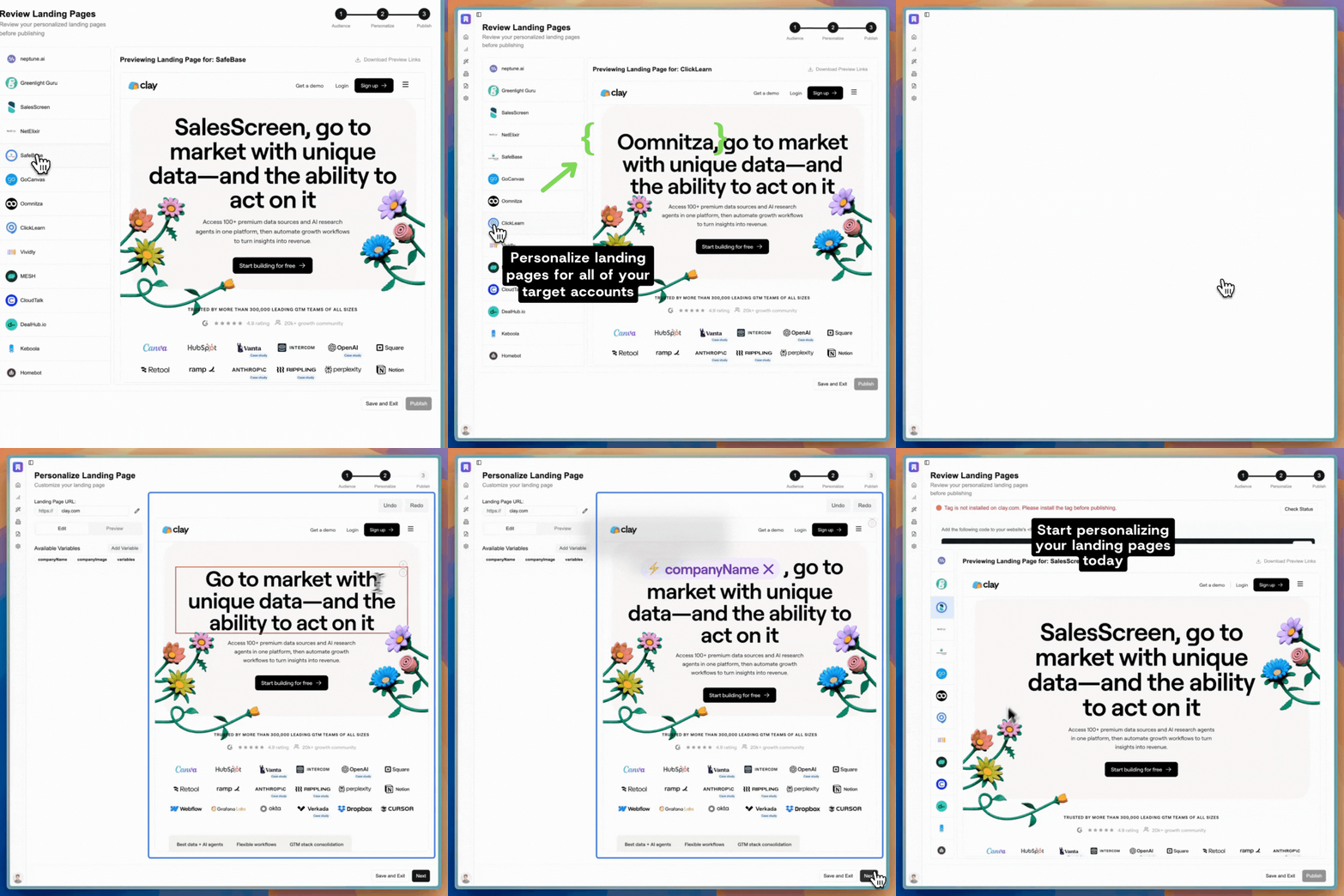
Implementing a well-chosen and properly utilized CRM system can yield significant benefits for startups:
- Improved Customer Retention: By understanding customer needs and providing personalized experiences, startups can significantly reduce churn and build a loyal customer base.
- Increased Sales Efficiency: Streamlined sales processes, better lead management, and accurate forecasting empower sales teams to close more deals faster.
- Enhanced Marketing Effectiveness: Targeted campaigns, automated nurturing, and data-driven insights lead to higher conversion rates and a better return on marketing investment.
- Better Customer Service: Centralized customer information allows support teams to resolve issues quickly and efficiently, leading to higher customer satisfaction.
- Scalability and Growth: A robust CRM provides the infrastructure needed to manage a growing customer base without compromising service quality or operational efficiency.
- Data-Driven Decision Making: Access to comprehensive customer data and analytics enables startups to make informed strategic decisions about product development, market expansion, and customer engagement.
Frequently Asked Questions About CRM for Startups
Q: Is CRM too expensive for a bootstrapped startup?
A: Not necessarily. Many CRM providers offer free tiers or affordable plans specifically designed for small businesses and startups. The key is to choose a solution that fits your current budget while offering scalability for future growth. The return on investment (ROI) from improved efficiency and customer retention often outweighs the cost.
Q: How long does it take to implement a CRM system?
A: Implementation time varies depending on the complexity of the chosen CRM, the amount of data to migrate, and the level of customization required. For startups, a phased approach focusing on core functionalities can lead to a quicker initial rollout, often within a few weeks to a couple of months. Full optimization is an ongoing process.
Q: Can a CRM help with lead generation?
A: Yes, many CRM systems include features for lead capture, tracking, and nurturing. By integrating with your website, email marketing, and social media, a CRM can help automate the process of collecting new leads and moving them through your sales funnel. Some CRMs also offer tools for lead scoring to help prioritize prospects.
Q: What’s the difference between a CRM and marketing automation software?
A: While there’s overlap, CRM primarily focuses on managing customer relationships and sales processes, providing a 360-degree view of each customer. Marketing automation software, on the other hand, specializes in automating marketing tasks like email campaigns, social media scheduling, and lead nurturing. Many modern CRMs now include integrated marketing automation features, blurring the lines between the two.
Conclusion: Empowering Your Startup with CRM
For startups, the journey from an innovative idea to a thriving business is fraught with challenges. Building strong customer relationships from the outset is not just good practice; it’s a strategic imperative. A well-implemented CRM system provides the tools and insights necessary to manage these relationships effectively, streamline operations, and accelerate growth.
By carefully selecting a CRM that aligns with your needs, focusing on user adoption, and continuously optimizing its use, your startup can transform customer interactions into a powerful engine for success. Don’t wait until customer management becomes a crisis; invest in CRM early and lay the groundwork for a customer-centric future.
Ready to supercharge your startup’s growth? A robust ABM strategy can transform your customer relationships and drive unparalleled success. Sign up for Karrot.ai today!



