Account-Based Sales Development: Aligning SDRs With ABM


In the evolving landscape of B2B sales, precision and personalization have become paramount. The traditional “spray and pray” approach to lead generation is increasingly inefficient, giving way to more targeted strategies. Account-Based Sales Development (ABSD) emerges as a powerful methodology, specifically designed to align Sales Development Representatives (SDRs) with Account-Based Marketing (ABM) efforts. This alignment ensures that sales and marketing teams work in concert, focusing their resources on high-value accounts that are most likely to convert and contribute significantly to long-term revenue. This article will delve into the intricacies of ABSD, exploring its definition, benefits, and a step-by-step guide to successful implementation, ultimately empowering SDRs to drive more meaningful engagement and achieve superior results.
TABLE OF CONTENTS:
- What is Account-Based Marketing (ABM)?
- ABM vs Traditional Marketing Approaches
- Understanding Account-Based Sales
- Step-by-Step Guide to Implementing ABM for SDR Success
- Structuring Your Sales Team for Success
- Best Tools for Account-Based Marketing Success in 2025
- Measuring the Impact of ABM on SDR Performance
- Continuous Optimization for Long-Term SDR Success
- Conclusion
- Frequently Asked Questions About Account-Based Sales Development: Aligning SDRs With ABM
What is Account-Based Marketing (ABM)?
Account-Based Marketing (ABM) is a strategic approach that treats individual high-value accounts as markets in themselves. Instead of broadly targeting a large audience with generic campaigns, ABM focuses on identifying, engaging, and nurturing specific accounts with highly personalized content and outreach. This method is particularly effective in B2B environments where sales cycles are longer, and deal sizes are substantial. ABM requires close collaboration between marketing and sales teams to create a unified strategy that resonates with the unique needs and challenges of each target account. The goal is to build deep relationships and drive engagement that leads to conversion and sustained customer loyalty.
ABM vs Traditional Marketing Approaches
The fundamental difference between ABM and traditional marketing lies in their approach to targeting and engagement. Traditional marketing often casts a wide net, aiming to generate a high volume of leads through mass campaigns. While this can be effective for some businesses, it frequently results in a significant portion of leads being unqualified or misaligned with the company’s offerings, leading to wasted resources and lower conversion rates.
In contrast, ABM adopts a highly focused, quality-over-quantity mindset. It meticulously identifies a select group of high-value accounts and then crafts bespoke marketing and sales strategies for each. This personalized approach ensures that every interaction is relevant and impactful, directly addressing the specific pain points and objectives of the target account. The result is a more efficient sales process, higher engagement rates, and ultimately, a greater return on investment.
Understanding Account-Based Sales
Definition and Benefits
Account-Based Sales (ABS) is the sales counterpart to ABM, focusing sales efforts on a predefined set of target accounts. It involves a coordinated and personalized sales approach to engage key stakeholders within these accounts, moving them through the sales funnel. The primary benefit of ABS is its ability to concentrate resources on the most promising opportunities, leading to higher win rates and larger deal sizes. By understanding the unique context of each account, sales teams can tailor their messaging, demonstrations, and proposals to directly address the specific needs and challenges of the decision-makers. This targeted strategy fosters stronger relationships and accelerates the sales cycle.
How it Differs from Traditional Sales
Traditional sales often involve a more generalized approach, where sales representatives engage with a broad spectrum of leads, often without deep prior knowledge of their specific needs or organizational structure. This can lead to generic pitches and a higher likelihood of encountering resistance or disinterest. ABS, however, is characterized by its meticulous research and preparation. Sales teams invest significant time in understanding the target account’s industry, business objectives, competitive landscape, and key decision-makers. This in-depth knowledge enables them to deliver highly relevant and compelling value propositions, significantly increasing their chances of success.
Step-by-Step Guide to Implementing ABM for SDR Success
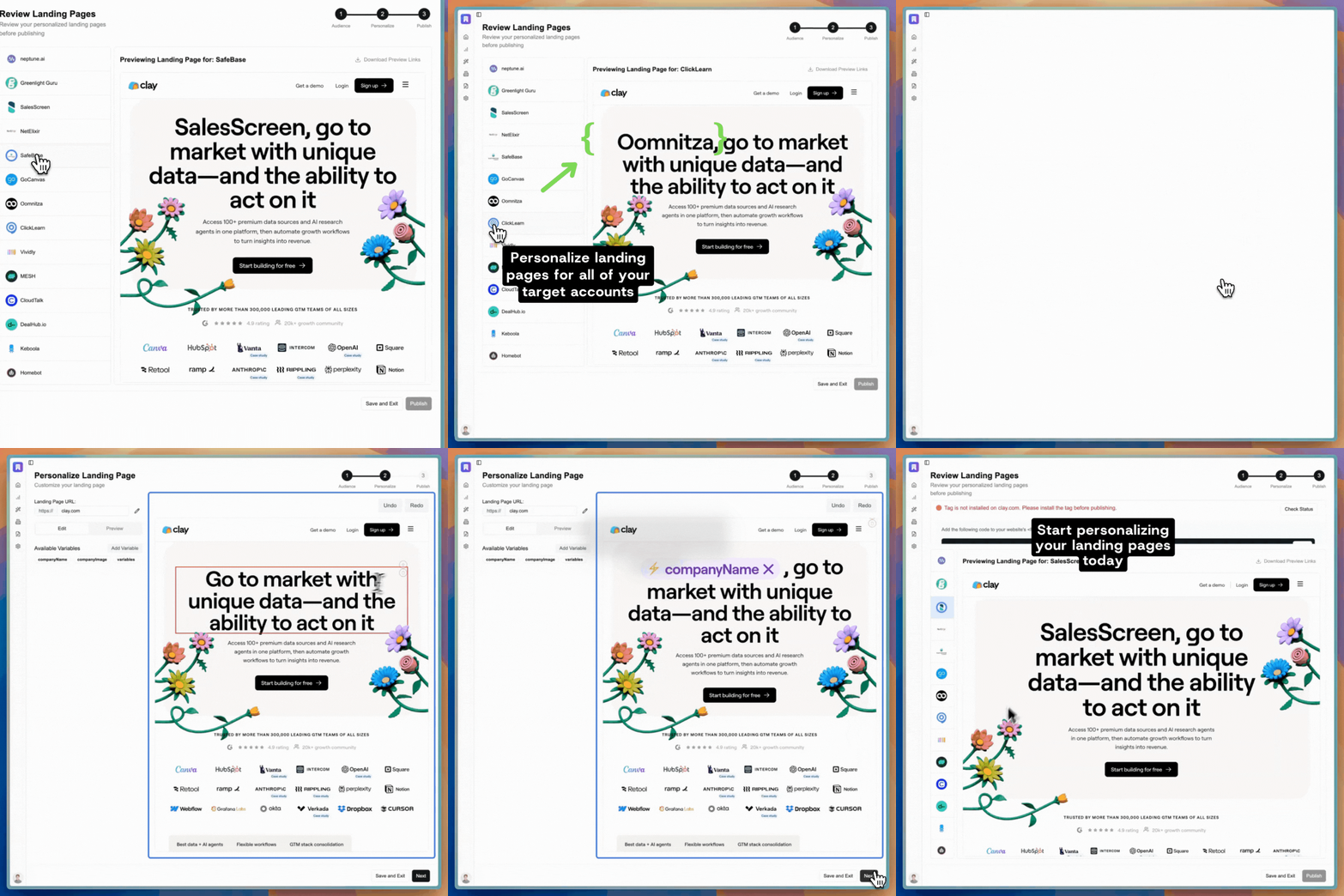
Step 1: Identify and Prioritize High-Value Accounts
The foundation of successful ABSD lies in accurately identifying and prioritizing high-value accounts. This involves more than just looking at revenue potential; it requires a deep understanding of ideal customer profiles (ICPs) and firmographic data. SDRs, in collaboration with marketing, should define criteria such as industry, company size, technological stack, and specific pain points that align with their solution. Tools like LinkedIn Sales Navigator, ZoomInfo, and Clearbit can provide invaluable insights to build a comprehensive list of target accounts. Prioritization should consider factors like intent signals, engagement history, and the likelihood of a successful partnership.
Step 2: Align SDRs and Marketing for Seamless Outreach
Effective ABSD hinges on seamless alignment between SDRs and marketing. This means breaking down silos and fostering a collaborative environment where data, insights, and strategies are shared openly. Marketing provides SDRs with rich account intelligence and personalized content, while SDRs offer real-time feedback from their interactions with target accounts. Regular joint meetings, shared KPIs, and integrated technology platforms (e.g., CRM and marketing automation systems like Salesforce and Marketo) are crucial for maintaining this alignment and ensuring consistent messaging across all touchpoints.
Step 3: Personalize Messaging for Each Account
Personalization is the cornerstone of ABM and ABSD. Generic outreach is easily ignored; highly tailored messages capture attention. SDRs must leverage the gathered account intelligence to craft messages that resonate deeply with each individual stakeholder. This involves understanding their role, their company’s challenges, and how the proposed solution can specifically address their needs. Personalized emails, LinkedIn messages, and even voicemails should demonstrate a clear understanding of the prospect’s world, offering genuine value rather than a standard sales pitch.
Step 4: Use Multi-Channel Outreach for Maximum Engagement
To maximize engagement with high-value accounts, SDRs should adopt a multi-channel outreach strategy. This involves engaging prospects across various platforms, including email, phone calls, social media (especially LinkedIn), and even personalized direct mail. The key is to create a cohesive and consistent experience across all channels, ensuring that each touchpoint builds upon the previous one. Tools like Terminus for targeted ads and LinkedIn Sales Navigator for direct engagement can significantly enhance the effectiveness of multi-channel campaigns. The goal is to surround the target account with relevant and valuable interactions.
Step 5: Measure and Optimize Account-Based Marketing Campaigns
ABSD is an iterative process that requires continuous measurement and optimization. SDRs and marketing teams must track key performance indicators (KPIs) to assess the effectiveness of their campaigns. Relevant metrics include account engagement rates, pipeline velocity, conversion rates from target accounts, and ultimately, revenue generated. Platforms like HubSpot and Salesforce offer robust analytics dashboards to monitor these KPIs. Regular analysis of these metrics allows teams to identify what’s working, what isn’t, and make data-driven adjustments to their strategies, ensuring continuous improvement and long-term success.
Structuring Your Sales Team for Success
Building a successful sales team for ABSD requires a clear organizational structure and defined roles. A cross-functional team, often including account executives, account managers, marketing specialists, and SDRs, is essential. Each member plays a vital role in the account’s journey, from initial identification to post-sale support. Clear communication channels, shared goals, and collaborative tools are critical to ensure that all team members are aligned and working towards the common objective of engaging and converting high-value accounts. This collaborative approach enhances efficiency and strengthens relationships with target clients.
Best Tools for Account-Based Marketing Success in 2025
In 2025, a robust tech stack is indispensable for effective ABSD. Key tools include:
- CRM Platforms (e.g., Salesforce, HubSpot): For managing customer relationships, tracking interactions, and providing a centralized data hub.
- Marketing Automation Platforms (e.g., Marketo Engage, HubSpot): For automating personalized campaigns, nurturing leads, and providing analytics.
- Account Intelligence Platforms (e.g., ZoomInfo, Clearbit): For gathering deep insights into target accounts, firmographics, and intent data.
- Sales Engagement Platforms (e.g., Outreach, Salesloft): For streamlining SDR outreach, sequencing emails, and tracking engagement.
- ABM Platforms (e.g., Terminus, Demandbase): For orchestrating multi-channel campaigns, targeted advertising, and account-level analytics.
These tools, when integrated effectively, empower SDRs and marketing teams to execute highly targeted and personalized strategies at scale.
Measuring the Impact of ABM on SDR Performance
Measuring the impact of ABM on SDR performance goes beyond traditional lead metrics. It focuses on account-level engagement and pipeline contribution. Key metrics include:
- Account Engagement Score: A composite score reflecting all interactions from a target account.
- Pipeline Generated from Target Accounts: The value of opportunities created from ABM-focused efforts.
- Conversion Rate of Target Accounts: The percentage of target accounts that convert into customers.
- Average Deal Size: Often higher in ABM due to focus on high-value accounts.
- Sales Cycle Length: ABM can potentially shorten sales cycles by focusing on highly qualified accounts.
Tracking these metrics provides a clear picture of ABSD’s effectiveness and informs ongoing optimization efforts.
Continuous Optimization for Long-Term SDR Success
ABSD is not a static strategy; it requires continuous optimization. Regular review of campaign performance, analysis of engagement data, and feedback loops between SDRs, sales, and marketing are essential. This iterative process allows teams to refine their ICPs, personalize messaging, and adjust outreach strategies based on real-world results. By embracing a culture of continuous learning and adaptation, SDRs can consistently improve their effectiveness, build stronger relationships with high-value accounts, and drive sustainable revenue growth.
Conclusion
Account-Based Sales Development represents a strategic imperative for modern B2B organizations. By aligning SDRs with ABM principles, companies can move beyond inefficient mass outreach to a highly targeted, personalized approach that focuses on high-value accounts. This synergy between sales and marketing, supported by robust technology and continuous optimization, empowers SDRs to engage prospects more effectively, build deeper relationships, and ultimately drive significant revenue growth. Embracing ABSD is not just about improving sales metrics; it’s about transforming the entire sales process into a more precise, productive, and profitable endeavor.
Frequently Asked Questions About Account-Based Sales Development: Aligning SDRs With ABM
Q1: What is the primary goal of Account-Based Sales Development? A1: The primary goal of ABSD is to align sales development efforts with account-based marketing strategies to focus on and engage high-value accounts, leading to increased conversion rates and larger deal sizes.
Q2: How does ABM differ from traditional marketing? A2: ABM targets specific high-value accounts with personalized campaigns, while traditional marketing casts a wide net to generate a large volume of leads, often with generic messaging.
Q3: What are some key tools for successful ABSD? A3: Essential tools include CRM platforms (e.g., Salesforce), marketing automation platforms (e.g., Marketo Engage), account intelligence platforms (e.g., ZoomInfo), sales engagement platforms, and dedicated ABM platforms (e.g., Terminus).
Q4: Why is personalization crucial in ABSD? A4: Personalization is crucial because it allows SDRs to craft messages that directly address the unique needs and challenges of individual stakeholders within target accounts, leading to higher engagement and better conversion rates.
Q5: What metrics should be tracked to measure ABSD success? A5: Key metrics include account engagement score, pipeline generated from target accounts, conversion rate of target accounts, average deal size, and sales cycle length.
Ready to transform your sales development strategy and achieve unparalleled results? Discover how our tailored solutions can help you implement Account-Based Sales Development effectively.