

How to Build an ABM Communication Cadence


Account-Based Marketing (ABM) has revolutionized how businesses approach high-value accounts, shifting from a broad, net-casting approach to a highly targeted, personalized strategy. At the heart of a successful ABM strategy lies a meticulously crafted communication cadence. This isn’t just about sending a few emails; it’s about orchestrating a multi-channel, multi-touch journey that resonates deeply with key stakeholders within target accounts. A well-designed ABM communication cadence ensures that your message cuts through the noise, builds relationships, and ultimately drives engagement and conversion. It requires a blend of strategic planning, creative content, and consistent execution to deliver the right message to the right person at the right time. This guide will walk you through the essential steps to construct an effective ABM communication cadence that delivers tangible results.
TABLE OF CONTENTS:
- 1. Define Your Target Accounts and Key Personas
- 2. Map the Buyer's Journey and Identify Touchpoints
- 3. Craft Personalized and Relevant Content
- 4. Design a Multi-Channel Orchestration Strategy
- 5. Establish Clear Cadence Triggers and Timelines
- 6. Implement Personalization at Scale with Technology
- 7. Measure, Analyze, and Optimize Continuously
- Conclusion
- Frequently Asked Questions About Building an ABM Communication Cadence
1. Define Your Target Accounts and Key Personas
Before you can communicate effectively, you must know precisely who you’re talking to. This foundational step involves identifying your ideal customer profiles (ICPs) and then selecting specific high-value accounts that fit these profiles. Within each target account, you’ll need to pinpoint the key decision-makers and influencers—your personas. Understanding their roles, responsibilities, pain points, and preferred communication channels is paramount. This deep dive into your audience will inform every subsequent step of your cadence development.
- Actionable Tip: Create detailed persona profiles for each key stakeholder, including their professional goals, challenges, and how your solution addresses them. Leverage tools like LinkedIn Sales Navigator for insights into their professional background and interests.
- Actionable Tip: Prioritize accounts based on strategic fit, revenue potential, and likelihood of success. Not all accounts are created equal, and your ABM efforts should focus on those with the highest potential ROI.
2. Map the Buyer’s Journey and Identify Touchpoints
An effective ABM communication cadence aligns with the natural progression of the buyer’s journey. From awareness to consideration to decision, each stage requires different types of information and engagement. Mapping this journey for your target accounts allows you to strategically place touchpoints where they will have the most impact. Consider all potential channels: email, social media, direct mail, personalized web experiences, virtual events, and even phone calls. The goal is to create a seamless, integrated experience, not a disjointed series of messages.
- Actionable Tip: Collaborate with your sales team to understand typical sales cycles and common objections. This insight is invaluable for designing a cadence that anticipates needs and addresses concerns proactively.
- Actionable Tip: Use a visual representation (e.g., a flowchart or spreadsheet) to map out each stage of the buyer’s journey and the corresponding communication touchpoints. This helps ensure comprehensive coverage and identifies potential gaps.
3. Craft Personalized and Relevant Content
Personalization is the cornerstone of ABM. Generic messages will fall flat. Your content must be highly relevant to the specific account and persona you are targeting. This means leveraging insights gathered in step one to create messages that speak directly to their industry, company challenges, and individual roles. Content can range from personalized emails and case studies featuring similar companies to custom landing pages and bespoke reports. The more tailored the content, the more likely it is to capture attention and drive engagement.
- Actionable Tip: Develop a content matrix that aligns specific content assets (e.g., industry reports, webinars, customer success stories) with different stages of the buyer’s journey and persona needs.
- Actionable Tip: Don’t just personalize the name; personalize the message. Reference specific company initiatives, recent news, or shared connections to demonstrate genuine understanding and interest.
4. Design a Multi-Channel Orchestration Strategy
A robust ABM communication cadence extends beyond a single channel. A multi-channel approach ensures that your message reaches stakeholders where they are most receptive. This might involve a sequence of personalized emails, followed by targeted LinkedIn messages, a direct mail piece, and then an invitation to a private webinar. The key is orchestration—ensuring that each channel complements the others, creating a cohesive and impactful narrative. Avoid overwhelming your accounts; instead, aim for strategic, value-driven touches across various platforms.
- Actionable Tip: Integrate your marketing automation platform (MAP) with your CRM to ensure seamless data flow and consistent messaging across sales and marketing touchpoints.
- Actionable Tip: Experiment with different channel combinations and timing to discover what resonates best with your target accounts. A/B test subject lines, call-to-actions, and even the type of content delivered through each channel.
5. Establish Clear Cadence Triggers and Timelines
Timing is crucial in ABM. Your communication cadence should be dynamic, responding to account activity and engagement. Establish clear triggers that initiate specific actions within your cadence. For example, a prospect downloading a whitepaper might trigger a follow-up email from a sales development representative (SDR), while visiting a specific product page could trigger a personalized ad. Define realistic timelines for each stage of the cadence, ensuring a consistent yet not overwhelming flow of communication.
- Actionable Tip: Use lead scoring and engagement metrics to identify when an account is ready for the next stage of the cadence. This ensures that your outreach is always timely and relevant.
- Actionable Tip: Document your cadence flow, including triggers, actions, and responsible parties, to maintain clarity and consistency across your team. A well-defined process is key to scalable ABM.
6. Implement Personalization at Scale with Technology
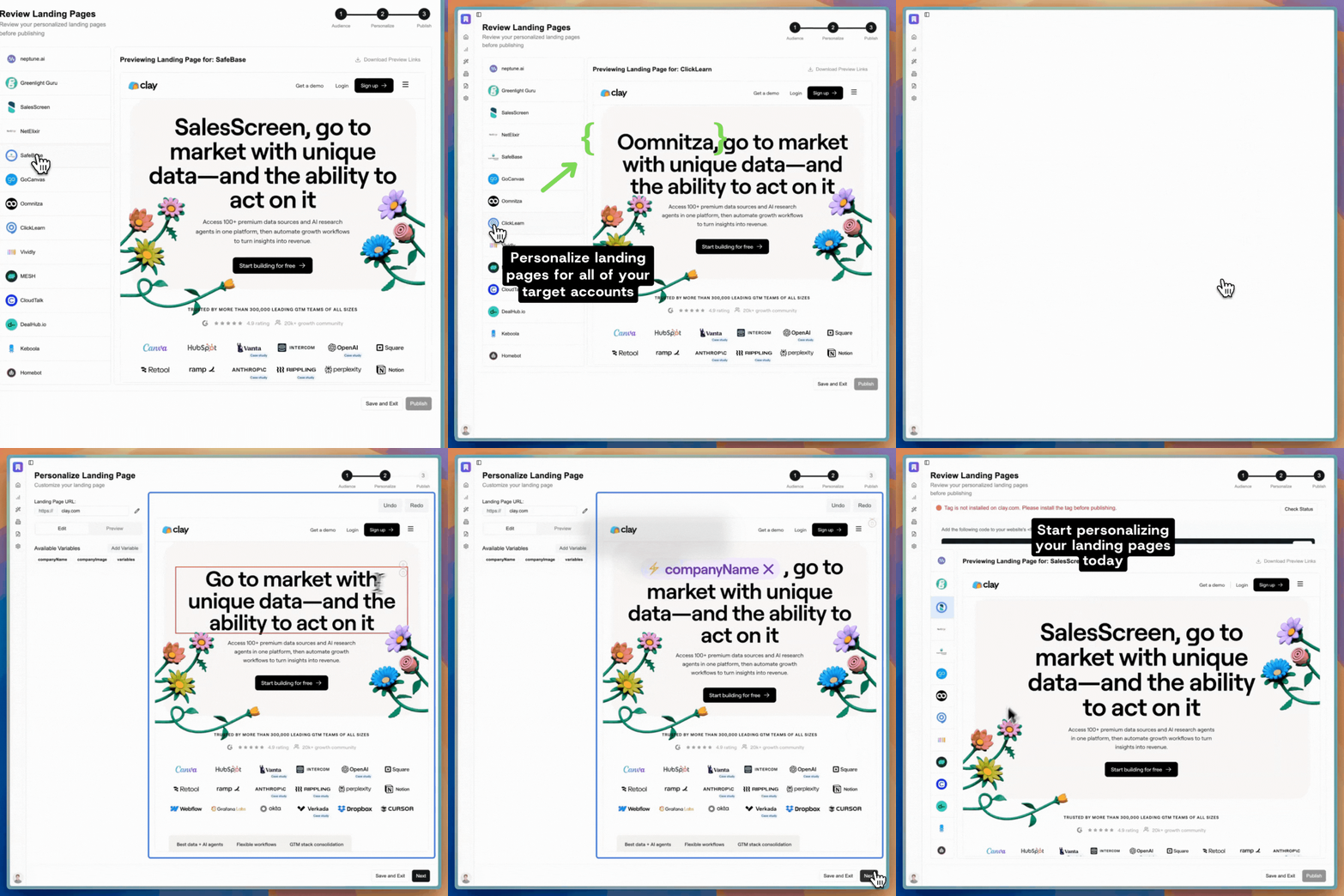
While personalization is key, manually crafting every single message for every stakeholder in every account is not scalable. This is where technology plays a vital role. ABM platforms, marketing automation tools, and CRM systems can help you automate personalized outreach, track engagement, and manage your cadence efficiently. These tools enable you to create templates that can be dynamically populated with account-specific information, ensuring relevance without sacrificing efficiency.
- Actionable Tip: Invest in an ABM platform that offers robust personalization features, multi-channel orchestration capabilities, and comprehensive analytics to track the performance of your cadence.
- Actionable Tip: Train your sales and marketing teams on how to effectively use these tools to maximize their impact and ensure consistent execution of the ABM strategy.
7. Measure, Analyze, and Optimize Continuously
Building an ABM communication cadence is not a one-time task; it’s an ongoing process of refinement. Continuously measure the performance of your cadence using key metrics such as open rates, click-through rates, engagement with personalized content, meeting booked, and ultimately, pipeline generated and revenue closed. Analyze what’s working and what’s not, and be prepared to iterate and optimize your approach. ABM is data-driven, and your cadence should evolve based on real-world results.
- Actionable Tip: Set up dashboards to monitor key ABM metrics in real-time. This allows for quick identification of trends and opportunities for optimization.
- Actionable Tip: Conduct regular reviews with your sales and marketing teams to discuss cadence performance, share insights, and collaboratively identify areas for improvement.
Conclusion
Building an effective ABM communication cadence is a strategic imperative for businesses targeting high-value accounts. It moves beyond generic outreach to deliver highly personalized, multi-channel experiences that resonate with key stakeholders. By meticulously defining your audience, mapping their journey, crafting relevant content, orchestrating across channels, establishing clear triggers, leveraging technology, and continuously optimizing, you can create a cadence that not only captures attention but also builds lasting relationships and drives significant business growth. The effort invested in a well-structured ABM cadence will undoubtedly yield substantial returns, transforming your approach to enterprise sales and marketing.
Frequently Asked Questions About Building an ABM Communication Cadence
What is an ABM communication cadence?
An ABM communication cadence is a structured, multi-channel sequence of personalized interactions designed to engage key stakeholders within a target account. It aims to deliver relevant messages at opportune moments throughout the buyer’s journey to build relationships and drive conversions.
Why is personalization important in an ABM cadence?
Personalization is crucial because ABM focuses on high-value accounts, where generic messages are ineffective. Tailoring content and outreach to specific account needs, industry challenges, and individual persona roles demonstrates understanding and relevance, significantly increasing engagement and impact.
What channels should be included in an ABM cadence?
An effective ABM cadence typically includes a mix of channels such as personalized emails, targeted social media outreach (e.g., LinkedIn), direct mail, personalized web experiences, virtual events, and strategic phone calls. The choice of channels depends on the target audience’s preferences and the stage of the buyer’s journey.
How often should I communicate within an ABM cadence?
The frequency of communication should be strategic and value-driven, avoiding both under-communication and overwhelming the account. It’s best determined by the buyer’s journey stage, account engagement, and the specific triggers you’ve established. The goal is consistent, relevant touches, not constant bombardment.
How do I measure the success of my ABM communication cadence?
Success is measured through various metrics, including email open and click-through rates, content engagement, website visits from target accounts, meetings booked, pipeline generated, and ultimately, revenue closed. Continuous analysis of these metrics allows for ongoing optimization of the cadence.
Ready to elevate your ABM strategy?
Discover how Karrot.ai can help you implement a powerful ABM communication cadence that drives results.


