

ABM for Startups: Getting Started With Limited Resources


Account-Based Marketing (ABM) is a strategic approach that aligns sales and marketing efforts to target specific high-value accounts with personalized campaigns. For startups with limited resources, ABM can be a highly effective way to maximize return on investment by focusing efforts on the accounts most likely to convert and generate significant revenue. This guide will walk you through the essential steps to implement ABM successfully, even when working with a lean budget and team.
TABLE OF CONTENTS:
- Understanding ABM for Startups
- Key Strategy 1: Define Your Ideal Customer Profile (ICP) with Precision
- Key Strategy 2: Craft Hyper-Personalized Content and Messaging
- Key Strategy 3: Orchestrate Multi-Channel Engagement
- Key Strategy 4: Align Sales and Marketing (Smarketing)
- Key Strategy 5: Leverage Technology Wisely
- Key Strategy 6: Measure and Optimize Continuously
- Key Strategy 7: Foster a Culture of Experimentation
- Measuring Success
- Common Pitfalls to Avoid
- Conclusion
- Frequently Asked Questions About ABM for Startups: Getting Started With Limited Resources
Understanding ABM for Startups
ABM flips the traditional marketing funnel, starting with identifying target accounts rather than generating a broad lead pool. For startups, this means a more focused, efficient use of resources. Instead of casting a wide net, ABM allows you to concentrate on a select group of companies that fit your ideal customer profile (ICP) and have the highest potential for growth. This precision can lead to shorter sales cycles, higher conversion rates, and stronger customer relationships.
Why ABM is Crucial for Resource-Constrained Startups
- Efficiency: Direct marketing efforts to accounts with the highest potential, reducing wasted spend.
- Personalization: Tailor messaging and content to resonate deeply with specific decision-makers.
- Alignment: Foster stronger collaboration between sales and marketing teams.
- Higher ROI: Focus on quality over quantity, leading to more significant deals and better long-term value.
Key Strategy 1: Define Your Ideal Customer Profile (ICP) with Precision
Introduction to Strategy
Before launching any ABM initiative, a startup must meticulously define its Ideal Customer Profile (ICP). This isn’t just about basic demographics; it’s about understanding the firmographic, technographic, and behavioral characteristics of companies that will derive the most value from your product or service and, in turn, provide the most value to your business. For startups, this step is paramount as it dictates where precious resources will be allocated.
Detailed Explanation
An effective ICP goes beyond industry and company size. It delves into aspects like technology stack, growth rate, budget size, specific pain points your solution addresses, and even the organizational structure that makes them receptive to your offering. For example, a SaaS startup offering a project management tool might target fast-growing tech companies with remote teams, using specific collaboration software, and experiencing bottlenecks in their current project workflows. Data sources for building your ICP can include existing customer data (if any), market research reports, LinkedIn Sales Navigator, and even publicly available company information.
Actionable Tips
- Analyze Best Customers: If you have existing customers, identify their common traits. What industries are they in? How large are they? What problems did they have that you solved?
- Create a Negative ICP: Define who is not a good fit. This helps to further refine your focus and avoid wasting time on unsuitable prospects.
- Involve Sales: Your sales team has invaluable insights into customer needs and challenges. Collaborate closely with them to build a realistic and actionable ICP.
- Iterate and Refine: Your ICP isn’t static. As your startup evolves and gathers more data, revisit and refine your ICP to ensure it remains accurate and effective.
Key Strategy 2: Craft Hyper-Personalized Content and Messaging
Introduction to Strategy
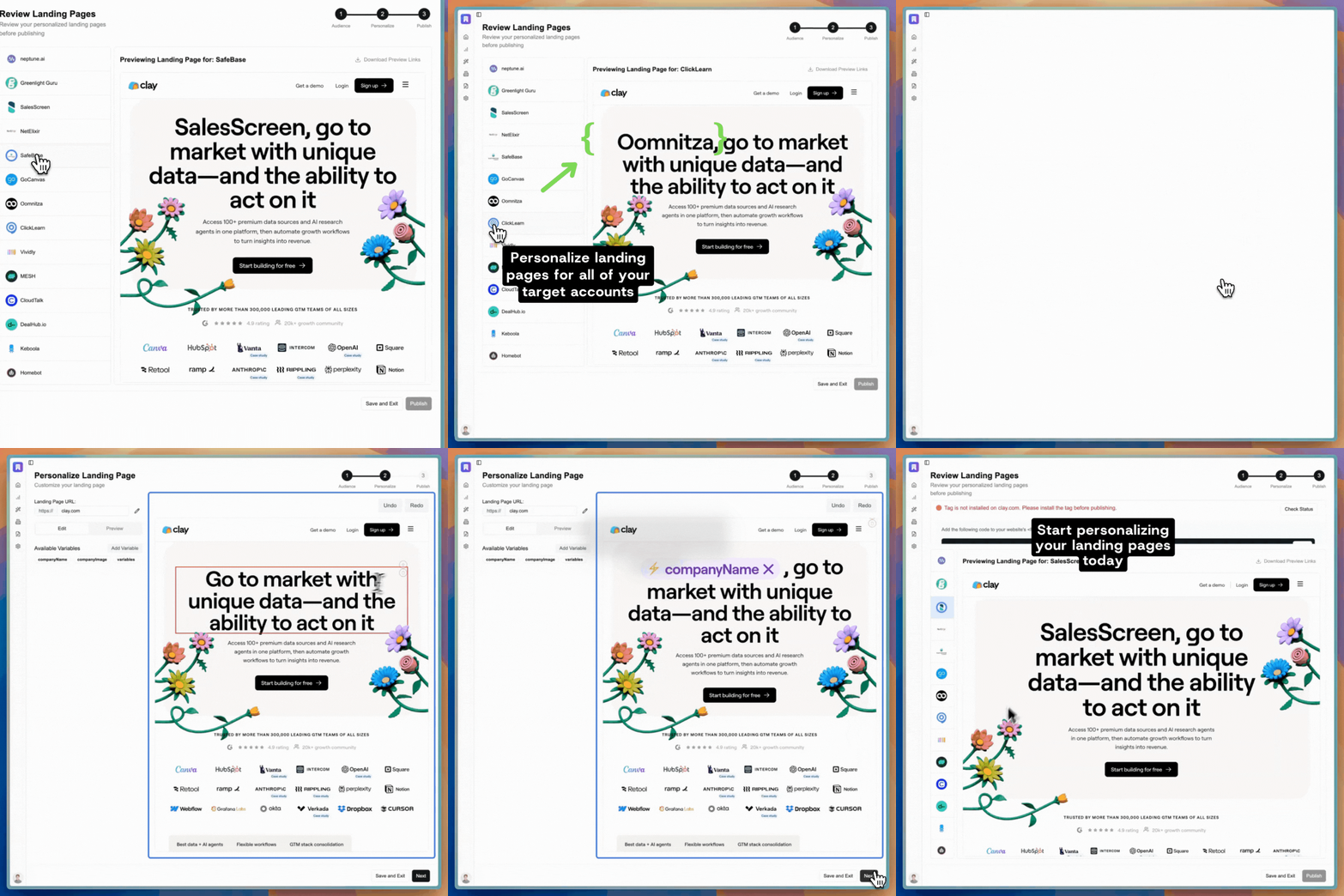
Once your ICP is defined and target accounts are identified, the next critical step for a startup is to move beyond generic marketing messages and develop hyper-personalized content. This means creating materials and communications that speak directly to the specific challenges, goals, and industry context of each target account, and even individual stakeholders within those accounts. This level of personalization is what differentiates ABM and drives engagement.
Detailed Explanation
Personalization in ABM isn’t just about inserting a company name into an email. It involves understanding the specific business objectives of the target account, the competitive landscape they operate in, and the individual roles and responsibilities of the decision-makers you’re trying to reach. For instance, if you’re targeting a healthcare startup, your content might highlight how your solution helps them navigate regulatory compliance or improve patient outcomes. Content formats can vary widely, from personalized emails and landing pages to custom case studies, webinars, or even bespoke proposals. The key is to demonstrate a deep understanding of their world and how your solution uniquely addresses their needs.
Actionable Tips
- Research Deeply: Before creating content, conduct thorough research on each target account. Understand their recent news, financial performance, strategic initiatives, and key personnel.
- Map Content to Buyer Journey: Develop content that addresses different stages of the buyer’s journey for each persona within the target account.
- Leverage Existing Assets: Repurpose and tailor existing content (blog posts, whitepapers) to fit the specific context of your target accounts. This saves time and resources.
- Personalize Channels: Deliver personalized messages through the channels most relevant to your target accounts, whether it’s email, LinkedIn, or even direct mail.
Key Strategy 3: Orchestrate Multi-Channel Engagement
Introduction to Strategy
For startups, effective ABM requires a coordinated multi-channel approach to engage target accounts. Relying on a single channel is unlikely to yield optimal results. Instead, integrate various touchpoints – digital, social, and even offline – to create a cohesive and consistent experience that resonates with decision-makers across their preferred platforms. This orchestration ensures your message is heard and reinforced.
Detailed Explanation
Multi-channel engagement means strategically deploying your personalized content across different platforms where your target accounts and their key stakeholders are active. This could include targeted LinkedIn campaigns, personalized email sequences, retargeting ads, virtual events, or even direct outreach from your sales team. The goal is to create a seamless and consistent brand experience, ensuring that each touchpoint builds upon the last. For example, an initial email might be followed by a LinkedIn message, then a retargeting ad showcasing a relevant case study, culminating in a personalized demo request. The key is not just to be everywhere, but to be everywhere strategically, with a unified message.
Actionable Tips
- Identify Key Channels: Determine which channels your target accounts are most active on. This could involve social media, industry forums, or specific online publications.
- Coordinate Sales and Marketing: Ensure sales and marketing teams are aligned on messaging, timing, and follow-up actions across all channels.
- Automate Where Possible: Utilize marketing automation tools to streamline personalized email sequences and ad campaigns, freeing up valuable time for your lean team.
- Measure and Optimize: Continuously track the performance of your multi-channel campaigns. Which channels are driving the most engagement? Which messages are resonating best? Use these insights to refine your strategy.
Key Strategy 4: Align Sales and Marketing (Smarketing)
Introduction to Strategy
For any ABM strategy to succeed, especially in a startup environment with limited resources, tight alignment between sales and marketing (often termed Smarketing) is absolutely crucial. This isn’t just about sharing leads; it’s about shared goals, shared understanding of target accounts, and a unified approach to engaging them. Without this synergy, even the most well-crafted ABM strategy will falter.
Detailed Explanation
Sales and marketing alignment in ABM means working from a single source of truth regarding target accounts, their needs, and the progress of engagement. Marketing’s role extends beyond lead generation to providing sales with personalized content, insights into account activity, and support in nurturing relationships. Sales, in turn, provides valuable feedback on what resonates with accounts, helping marketing refine its strategies and content. This collaborative approach ensures that every interaction with a target account is consistent, relevant, and moves the account closer to conversion. Regular joint meetings, shared CRM data, and clearly defined hand-off processes are essential components of effective Smarketing.
Actionable Tips
- Shared ICP and Goals: Ensure both teams agree on the ICP and have shared revenue goals tied to target accounts.
- Joint Content Creation: Involve sales in the content creation process to ensure materials are relevant and address real-world sales conversations.
- Unified Technology Stack: Implement a CRM and marketing automation platform that allows both teams to track account interactions and progress seamlessly.
- Regular Communication: Schedule frequent joint meetings to discuss account strategies, share insights, and address any challenges.
Key Strategy 5: Leverage Technology Wisely
Introduction to Strategy
For startups with limited resources, technology can be a force multiplier in ABM. However, it’s crucial to select and implement tools wisely, focusing on solutions that offer maximum impact without overwhelming your budget or team. The right technology can automate repetitive tasks, provide valuable insights, and enable personalization at scale, even for a lean operation.
Detailed Explanation
ABM technology spans various categories, including account identification and scoring, personalization platforms, multi-channel engagement tools, and analytics. For a startup, starting with essential tools that integrate well and provide core functionalities is key. This might include a robust CRM (like HubSpot or Salesforce Essentials), a marketing automation platform (like ActiveCampaign or Mailchimp for initial stages), and perhaps a LinkedIn Sales Navigator subscription for account research. The goal is to create a streamlined tech stack that supports your ABM process without introducing unnecessary complexity or cost. As your ABM efforts mature and resources grow, you can gradually expand your toolkit.
Actionable Tips
- Start Small, Scale Up: Begin with foundational tools and gradually add more specialized solutions as your needs and budget evolve.
- Prioritize Integration: Choose tools that integrate seamlessly with each other to avoid data silos and manual data transfer.
- Utilize Free Trials and Freemium Models: Take advantage of free trials and freemium versions of tools to test their suitability before committing to paid plans.
- Focus on Automation: Look for tools that automate repetitive tasks, such as email sequencing, ad targeting, and data collection, to free up your team’s time.
Key Strategy 6: Measure and Optimize Continuously
Introduction to Strategy
ABM is not a set-it-and-forget-it strategy. For startups, especially, continuous measurement and optimization are vital to ensure that limited resources are being used effectively and that the strategy is delivering tangible results. By tracking key metrics and analyzing performance, you can identify what’s working, what’s not, and make data-driven adjustments to improve your ABM ROI.
Detailed Explanation
Measuring ABM success goes beyond traditional marketing metrics like website traffic or lead count. It focuses on account-level engagement, pipeline velocity, and ultimately, revenue generated from target accounts. Key metrics to track include account engagement (e.g., website visits from target accounts, content downloads, email opens), pipeline generated from target accounts, average deal size for ABM accounts, and sales cycle length. Tools like your CRM and marketing automation platform can provide much of this data. Regular analysis of these metrics allows you to refine your ICP, optimize your content and messaging, and adjust your multi-channel engagement strategies to maximize effectiveness.
Actionable Tips
- Define Clear KPIs: Establish specific, measurable, achievable, relevant, and time-bound (SMART) Key Performance Indicators (KPIs) for your ABM program.
- Track Account Engagement: Monitor how target accounts interact with your content and campaigns across all channels.
- Analyze Pipeline and Revenue: Directly link ABM efforts to pipeline generation and closed-won revenue from target accounts.
- Conduct Regular Reviews: Hold weekly or bi-weekly meetings to review performance data, discuss insights, and plan optimizations.
Key Strategy 7: Foster a Culture of Experimentation
Introduction to Strategy
For startups navigating the dynamic landscape of ABM with limited resources, fostering a culture of experimentation is not just beneficial, it’s essential. This means embracing a mindset where testing new approaches, learning from failures, and iterating quickly are encouraged. It allows you to discover what truly resonates with your target accounts and optimize your strategy without significant upfront investment.
Detailed Explanation
Experimentation in ABM can involve testing different messaging angles, trying new content formats, experimenting with various engagement channels, or refining your ICP criteria. For example, you might run A/B tests on email subject lines for a specific account segment, or pilot a new personalized video message for a small group of high-priority accounts. The key is to approach these tests with clear hypotheses, measure the results rigorously, and apply the learnings to future campaigns. This iterative process allows startups to continuously improve their ABM effectiveness and adapt to changing market conditions or account needs.
Actionable Tips
- Start with Small Tests: Don’t commit significant resources to unproven strategies. Begin with small-scale experiments to gather data and validate hypotheses.
- Document Learnings: Keep a record of your experiments, their results, and the insights gained, whether successful or not.
- Encourage Cross-Functional Ideas: Solicit ideas for experiments from both sales and marketing teams, leveraging their diverse perspectives.
- Embrace Failure as Learning: View unsuccessful experiments not as failures, but as valuable learning opportunities that inform future strategies.
Measuring Success
Measuring the success of your ABM program is paramount for startups to ensure that limited resources are being allocated effectively and to demonstrate tangible ROI. Unlike traditional marketing, ABM success is not solely about lead volume but rather about the quality of engagement with target accounts and the revenue generated from them. A robust measurement framework will help you understand the impact of your efforts and guide future optimizations.
Key Metrics for ABM Success
- Account Engagement: This metric tracks how actively target accounts are interacting with your content and campaigns. It can include website visits from target accounts, content downloads, email open and click-through rates, social media engagement, and participation in webinars or events. High engagement indicates that your personalized messaging is resonating.
- Pipeline Velocity and Value: Monitor the speed at which target accounts move through your sales pipeline and the total value of opportunities generated from these accounts. A healthy ABM program should accelerate the sales cycle and contribute to a higher average deal size.
- Win Rates: Compare the win rates for deals originating from ABM efforts versus traditional inbound or outbound strategies. Higher win rates for ABM accounts signify more effective targeting and personalization.
- Customer Lifetime Value (CLTV): For closed-won accounts, track their long-term value. ABM aims to land larger, more strategic accounts that are likely to have a higher CLTV, contributing significantly to sustainable growth.
- Return on Investment (ROI): Ultimately, calculate the ROI of your ABM program by comparing the revenue generated from target accounts against the total cost of your ABM initiatives. This provides a clear picture of the financial effectiveness of your strategy.
Tools and Techniques for Measurement
Leverage your CRM (Customer Relationship Management) system as the central hub for tracking account interactions and pipeline progress. Marketing automation platforms can provide detailed insights into content engagement. Additionally, consider using dedicated ABM platforms that offer advanced analytics and reporting capabilities tailored to account-centric metrics. Regular reporting and dashboards should be established to provide a clear, real-time view of your ABM performance.
Common Pitfalls to Avoid
Even with a well-planned ABM strategy, startups can encounter common pitfalls that hinder success. Being aware of these challenges and proactively addressing them can save valuable time and resources.
1. Lack of Sales and Marketing Alignment
As highlighted earlier, a disconnect between sales and marketing is a primary reason for ABM failure. If both teams are not working towards shared goals with a unified strategy, efforts will be fragmented and ineffective. Ensure continuous communication, shared data, and joint accountability.
2. Insufficient Account Research
Launching into ABM without thorough research into your target accounts is a recipe for generic messaging and wasted effort. Personalization is at the heart of ABM, and it cannot be achieved without deep insights into each account’s specific needs, challenges, and stakeholders.
3. Over-Personalization or Under-Personalization
Finding the right balance in personalization is crucial. Over-personalization can be time-consuming and not scalable, especially for startups. Conversely, under-personalization will fail to capture the attention of high-value accounts. Focus on meaningful personalization that addresses their core pain points.
4. Neglecting Long-Term Nurturing
ABM is not a quick sales fix. It often involves longer sales cycles due to the strategic nature of the accounts. Neglecting to nurture relationships over the long term, even after initial engagement, can lead to lost opportunities. Consistent, valuable engagement is key.
5. Inadequate Measurement and Optimization
Failing to track the right metrics or to act on the data collected means you’re operating in the dark. Without continuous measurement and optimization, you won’t know what’s working or how to improve your strategy, leading to inefficient resource allocation.
Conclusion
Account-Based Marketing offers a powerful, resource-efficient strategy for startups looking to secure high-value clients and drive sustainable growth. By meticulously defining your ICP, crafting hyper-personalized content, orchestrating multi-channel engagement, and fostering strong sales and marketing alignment, even lean teams can achieve significant results. Remember to leverage technology wisely, continuously measure and optimize your efforts, and embrace a culture of experimentation. With a focused and agile approach, ABM can transform your startup’s go-to-market strategy, leading to stronger relationships, accelerated sales cycles, and a healthier bottom line.
Frequently Asked Questions About ABM for Startups: Getting Started With Limited Resources
Q1: What is the biggest challenge for startups implementing ABM?
A1: The biggest challenge is often resource constraints, both in terms of budget and team size. This necessitates a highly focused approach, meticulous ICP definition, and smart leveraging of technology to automate and scale efforts.
Q2: How long does it take to see results from ABM?
A2: ABM typically involves longer sales cycles than traditional marketing, so immediate results are unlikely. However, the quality of results (larger deals, higher win rates) often justifies the investment. Expect to see meaningful results within 6-12 months, with continuous improvement thereafter.
Q3: Can ABM be done without expensive software?
A3: Yes, while dedicated ABM platforms exist, startups can start with a combination of robust CRM, marketing automation tools, and manual research. The key is the strategic approach and personalization, not necessarily the most expensive tools.
Q4: What’s the role of sales in an ABM strategy?
A4: Sales plays a critical role in ABM, working hand-in-hand with marketing. They provide valuable insights for ICP definition, engage directly with target accounts, and offer feedback on content effectiveness. ABM is a truly collaborative effort between sales and marketing.
Q5: How do I choose which accounts to target?
A5: Start by developing a precise Ideal Customer Profile (ICP) based on your best existing customers and market research. Prioritize accounts that align closely with your ICP and have the highest potential for revenue and strategic fit.
Ready to Transform Your Startup’s Growth? Click Here to Learn More About Karrot.ai’s ABM Solutions!



