

LinkedIn ABM Campaign Types: Which Format Works Best?


Account-Based Marketing (ABM) has revolutionized how businesses approach their most valuable prospects. By focusing resources on a defined set of target accounts, ABM strategies enable highly personalized and relevant engagement. When it comes to B2B marketing, LinkedIn stands out as an indispensable platform for executing ABM campaigns due to its professional network and robust targeting capabilities. But with various campaign formats available, which one truly delivers the best results for your LinkedIn ABM efforts? This article will delve into the different types of LinkedIn ABM campaigns, their unique benefits, and best practices to help you choose the optimal format for your strategy. For more insights into optimizing your digital marketing efforts, explore our guide to advanced digital strategies.
TABLE OF CONTENTS:
Understanding LinkedIn ABM
LinkedIn ABM is a strategic approach that leverages LinkedIn’s advertising and engagement tools to target specific high-value accounts with tailored marketing messages. Unlike traditional lead generation, which casts a wide net, ABM on LinkedIn focuses on quality over quantity, aiming to deepen relationships with key decision-makers within target organizations. This precision-based approach often leads to higher conversion rates, shorter sales cycles, and increased return on investment (ROI). Learn more about measuring ROI in ABM campaigns.
Types of LinkedIn ABM Campaigns
Here are seven effective LinkedIn ABM campaign types, each designed to achieve specific objectives:
1. Sponsored Content Campaigns
Description: Sponsored Content campaigns involve promoting native ads (articles, videos, single image ads, carousel ads) directly in the LinkedIn feed of your target accounts. These ads blend seamlessly with organic content, making them less intrusive and more engaging.
Key Benefits: High visibility, strong engagement rates, ability to tell a compelling story through rich media, and precise targeting based on job title, industry, company size, and more.
Example/Use Case: A software company targeting C-suite executives at large enterprises could promote a thought leadership article on digital transformation, positioning their solution as a key enabler. This approach allows for soft-sell content that educates and builds trust before a direct sales pitch.
2. Sponsored Messaging (Message Ads and Conversation Ads)
Description: Sponsored Messaging allows you to send direct messages to your target audience’s LinkedIn inboxes. Message Ads deliver a single, personalized message, while Conversation Ads offer a choose-your-own-path experience with multiple calls-to-action (CTAs).
Key Benefits: Direct and personal communication, high open rates, immediate engagement opportunities, and the ability to guide prospects through a customized journey.
Example/Use Case: A consulting firm could use a Conversation Ad to invite HR directors from target companies to a webinar on talent acquisition strategies, offering different content paths based on their expressed interests. This interactive format can significantly increase lead quality. For further reading on lead generation, check out this article on effective lead generation techniques.
3. Dynamic Ads
Description: Dynamic Ads are automatically personalized for each member based on their LinkedIn profile data. This includes ads for job opportunities, company followers, and content spotlights.
Key Benefits: High relevance and personalization, increased click-through rates (CTRs), and automation that saves time in campaign setup.
Example/Use Case: A B2B service provider could use Dynamic Ads to encourage employees of target accounts to follow their company page, thereby expanding their organic reach within those key organizations. The ad would dynamically show the prospect’s profile picture and company name, making it highly engaging.
4. Text Ads
Description: Text Ads are simple, pay-per-click (PPC) ads that appear at the top and right-hand side of the LinkedIn desktop feed. They consist of a headline, a short description, and a small image.
Key Benefits: Cost-effective, good for driving website traffic, and ideal for generating brand awareness among a targeted audience.
Example/Use Case: A cybersecurity company could use Text Ads to promote a free security audit whitepaper to IT managers in target companies. While less visually engaging than Sponsored Content, Text Ads can be highly effective for specific, direct-response offers.
5. Lead Gen Forms
Description: Lead Gen Forms are integrated into LinkedIn ad campaigns (Sponsored Content and Sponsored Messaging) and allow prospects to submit their information with a single click, as their LinkedIn profile data pre-fills the form fields.
Key Benefits: Reduced friction in the lead capture process, higher conversion rates, and accurate data collection directly from LinkedIn profiles.
Example/Use Case: A marketing automation platform running a Sponsored Content campaign promoting an e-book could attach a Lead Gen Form to capture contact details from marketing directors in target accounts, streamlining the lead generation process.
6. Matched Audiences (Account Targeting)
Description: Matched Audiences allows you to upload a list of target accounts (company names or website domains) to LinkedIn, enabling you to target employees of those specific companies with your ad campaigns. This is the cornerstone of effective LinkedIn ABM. Discover more about LinkedIn’s Matched Audiences feature.
Key Benefits: Hyper-targeted advertising, increased relevance for key accounts, and the ability to reach decision-makers within your most valuable prospects.
Example/Use Case: A sales enablement tool provider could upload a list of their top 100 target accounts and then run various ad campaigns (Sponsored Content, Sponsored Messaging) specifically to employees within those companies, ensuring their message reaches the right people.
7. Lookalike Audiences
Description: While not strictly an ABM campaign type, Lookalike Audiences can be used to expand your reach to new accounts that share similar characteristics with your existing high-value customers or target accounts. This helps in discovering new potential ABM targets.
Key Benefits: Scalability, efficient discovery of new prospects, and leveraging insights from your best customers to find similar opportunities.
Example/Use Case: After successfully engaging with a set of target accounts using Matched Audiences, a SaaS company could create a Lookalike Audience based on those engaged accounts to identify new companies with similar profiles that might also benefit from their solution.
Best Practices for LinkedIn ABM
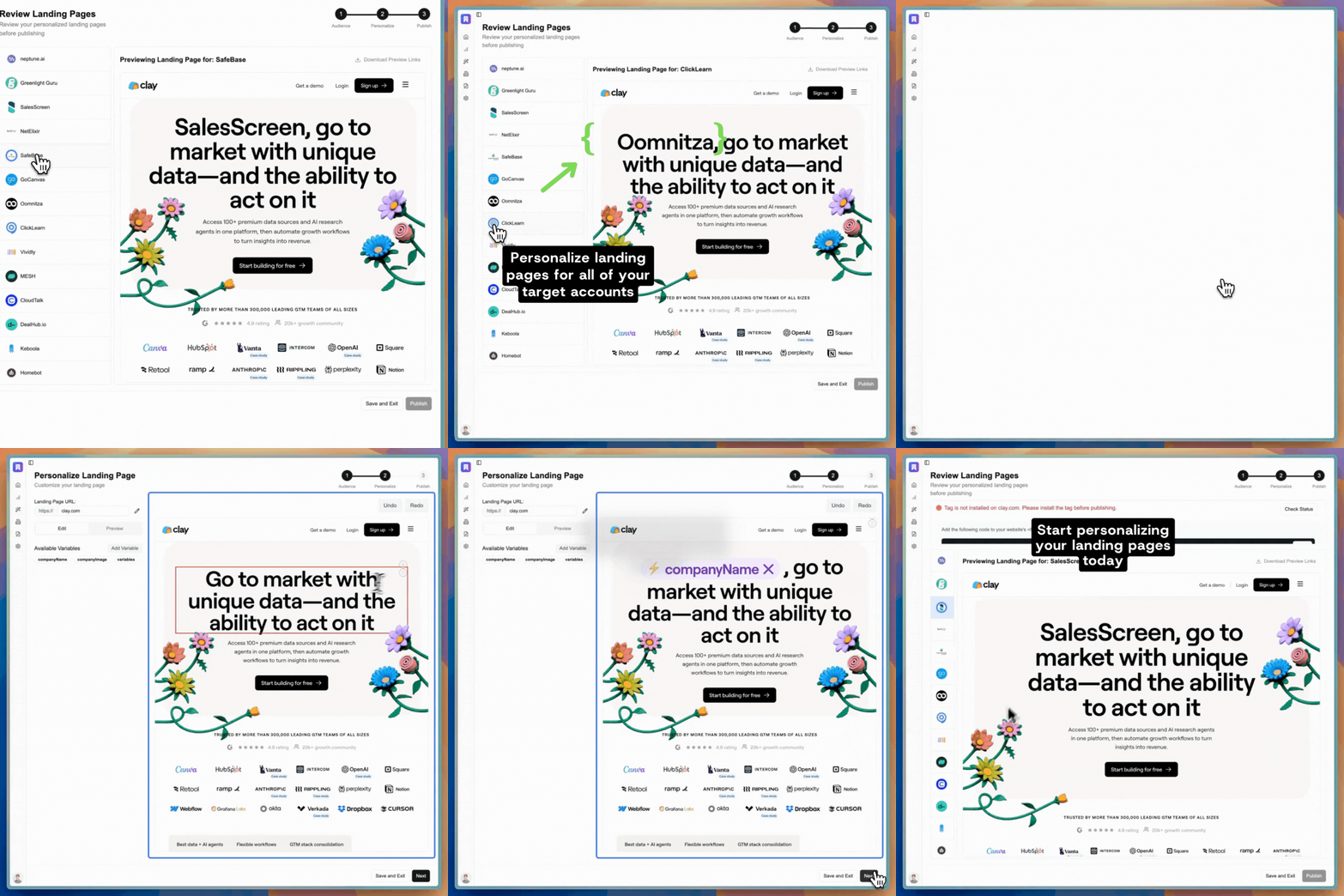
To maximize the effectiveness of your LinkedIn ABM campaigns, consider these best practices:
- Hyper-Personalization: Tailor your content and messaging to the specific needs and pain points of each target account. Generic content will not resonate.
- Multi-threaded Approach: Engage multiple stakeholders within a target account, not just one decision-maker. ABM is a team sport.
- Content Alignment: Ensure your content addresses the different stages of the buyer’s journey for your target accounts. Provide valuable resources at every touchpoint.
- Sales and Marketing Alignment: Foster close collaboration between your sales and marketing teams to ensure a unified approach and seamless handoffs.
- Continuous Optimization: Regularly monitor campaign performance, analyze data, and make adjustments to improve targeting, messaging, and creative elements.
Measuring Success
Measuring the success of your LinkedIn ABM campaigns goes beyond traditional metrics. Focus on:
- Account Engagement: Track interactions from target accounts with your content and ads.
- Pipeline Velocity: Monitor how quickly target accounts move through your sales pipeline.
- Win Rates: Analyze the percentage of target accounts that convert into customers.
- Account Value: Assess the revenue generated and lifetime value of customers acquired through ABM.
- ROI: Calculate the return on investment for your ABM efforts.
Conclusion
Choosing the best LinkedIn ABM campaign format depends on your specific objectives, target audience, and available resources. By understanding the nuances of Sponsored Content, Sponsored Messaging, Dynamic Ads, Text Ads, and leveraging powerful targeting options like Matched Audiences, businesses can craft highly effective strategies. Remember, the key to successful ABM on LinkedIn lies in personalization, strategic content, and continuous optimization. By implementing these insights, you can significantly enhance your ABM efforts and drive meaningful business growth. For additional resources on B2B marketing, visit B2B Marketing Insights.
Frequently Asked Questions About LinkedIn ABM Campaign Types: Which Format Works Best?
Q: What is the primary difference between traditional marketing and ABM on LinkedIn? A: Traditional marketing often focuses on generating a large volume of leads, while ABM on LinkedIn targets a specific set of high-value accounts with personalized content and messaging to build deeper relationships and drive conversions.
Q: How important is content personalization in LinkedIn ABM? A: Content personalization is crucial. Tailoring your message to the specific needs, challenges, and industry of your target accounts significantly increases engagement and the likelihood of conversion.
Q: Can I use LinkedIn ABM for small businesses? A: Yes, ABM can be effective for businesses of all sizes. For small businesses, it’s even more critical to focus resources on high-potential accounts to maximize impact and ROI.
Q: What are Matched Audiences on LinkedIn? A: Matched Audiences allow you to upload a list of target accounts (company names or website domains) to LinkedIn, enabling you to target employees of those specific companies with your ad campaigns. This is fundamental for ABM.
Q: How do I measure the ROI of my LinkedIn ABM campaigns? A: Measuring ROI involves tracking metrics like account engagement, pipeline velocity, win rates, and the overall value of accounts acquired through your ABM efforts. It’s about demonstrating the direct impact on revenue.
Discover how Karrot.ai can supercharge your LinkedIn ABM campaigns!