
How to Write ChatGPT Ad Copy That Converts


ChatGPT ads copywriting can transform underperforming campaigns into systematic revenue drivers when you treat the model as a performance partner instead of a shortcut. Used well, it gives you endless angles, fast iteration, and data-backed messaging tailored to every channel and funnel stage.
This guide walks through a complete, practical workflow for using AI to write ad copy that actually converts: from setting up inputs and prompts, to generating high-converting variations, to testing and refining based on real performance data. You will get channel-specific examples, ready-to-use prompt templates, and safeguards to keep your ads on-brand, compliant, and focused on ROI.
TABLE OF CONTENTS:
- Defining High-Converting ChatGPT Ad Copy
- ChatGPT Ads Copywriting Fundamentals for Performance Marketers
- End-to-End Workflow: From Brief to Live Ads With ChatGPT
- Funnel-Specific ChatGPT Ads Copywriting Prompts (With Examples)
- Using Data and Testing to Improve AI-Written Ads
- Staying On-Brand, Compliant, and Realistic With ChatGPT Ads
- Quick-Start Templates for ChatGPT Ad Copy That Converts
- Turning ChatGPT Ads Copywriting Into a Conversion Engine
Defining High-Converting ChatGPT Ad Copy
Before you start generating copy, you need a concrete definition of “good.” For performance marketers, high-converting ad copy is not just clever wording; it is messaging that measurably improves metrics such as click-through rate (CTR), conversion rate (CVR), and return on ad spend (ROAS) relative to your current benchmarks.
Those benchmarks will vary by industry and channel, so focus on relative improvement. If your current Google Ads campaign gets a 2% CTR and 5% CVR, your goal is to write copy that consistently beats those numbers. This mindset lets you use ChatGPT as a testing engine rather than chasing unrealistic targets.
Performance Signals to Aim For
At a practical level, ChatGPT-written ads should help you:
- Increase CTR by creating hooks that better match search intent or feed behavior.
- Lift CVR by highlighting the right benefits, social proof, and risk-reversal elements for your audience.
- Improve ROAS by pairing better ad relevance with more qualified clicks and stronger alignment to the landing page.
83% of ad executives say their companies already deploy AI in the creative process, showing that AI-assisted creative is now the norm, not an experiment. Your competitive edge comes from how rigorously you structure, test, and refine that AI output.
ChatGPT Ads Copywriting Fundamentals for Performance Marketers
Powerful chatgpt ads copywriting starts with strong inputs. The model is a pattern machine: it recombines what you feed it and what it has learned, so vague prompts lead to vague ads. Clear constraints, audience detail, and performance goals lead to precise, testable copy.
The key is to combine human strategy (positioning, offer, customer insight) with AI execution (speed, volume, variation). You own the “what” and “why”; ChatGPT accelerates the “how” and “how many.”
Essential Inputs Before You Prompt
Before you open a chat window, assemble a one-page mini-brief with:
- Offer clarity: What exactly are you selling, at what price, with what core promise?
- Audience definition: Role, industry, pain points, awareness level (problem-aware vs solution-aware vs product-aware).
- Proof points: Testimonials, case results, key features, reviews, or awards you can reference.
- Brand voice notes: A few sample headlines or messaging lines that feel “on brand,” plus words or tones to avoid.
- Objective and metric: For example, “lead generation, optimize for CTR on Meta” or “trials, optimize for CVR on Google Search.”
You can paste this mini-brief into ChatGPT at the start of each project and refer back to it when generating variants for different channels and funnel stages.
Copy Frameworks to Teach ChatGPT
Frameworks give structure to otherwise generic copy. Instead of asking, “Write a Facebook ad for my SaaS,” instruct ChatGPT to use a specific structure, such as:
- PAS (Problem–Agitate–Solution): Great for cold audiences and pain-focused hooks.
- AIDA (Attention–Interest–Desire–Action): Ideal for feed ads that need a narrative arc.
- FAB (Features–Advantages–Benefits): Helpful for B2B or technical products.
- Social proof-driven: Starts with a quote, metric, or mini case study.
- Risk-reversal: Emphasizes guarantees, trials, or “cancel anytime” to reduce friction.
When prompting, explicitly name the framework: “Use PAS to write three Google Ads headlines about…” This both upgrades the quality of first drafts and makes it easier to compare variants in testing, because each variation is structurally distinct.
End-to-End Workflow: From Brief to Live Ads With ChatGPT
To move from idea to live campaigns without chaos, treat ChatGPT as one step in a repeatable workflow. This keeps your AI usage consistent across channels, teams, and markets while giving you a clear audit trail for compliance and learning.
Step-by-Step ChatGPT Ad Workflow
- Build a structured brief.
Paste your mini-brief (offer, audience, proof, voice, objective) into a new ChatGPT thread. Tell the model, “Acknowledge and remember this as the campaign brief for all future messages in this chat.”
- Define channel and format.
Specify where the ad will run and what formats you need: “Write 5 Google Search headlines (max 30 characters) and 4 descriptions (max 90 characters)” or “Create 3 Meta primary texts, 3 headlines, 3 link descriptions.”
- Choose a framework.
Ask for multiple frameworks to widen your angle set: “Generate 2 PAS-style versions, 2 AIDA-style versions, and 2 social-proof-led versions.” This creates a ready-made testing slate.
- Refine for specificity.
If the copy feels generic, push ChatGPT: “Make the pain points more specific to B2B SaaS marketing managers; reference time savings and reporting headaches; avoid buzzwords like ‘cutting-edge’ and ‘revolutionary.”
- Prepare test-ready variants.
Once you have promising ideas, instruct: “Condense these into ad-platform-ready assets in a table: column for platform, objective, primary text, headline, description, and angle (e.g., pain-focused, proof-focused).”
- Human review and compliance pass.
Review every line for factual accuracy, claims, and policy alignment before uploading. Never skip this step, especially in regulated verticals like finance, health, or housing.
AI-generated ads achieved a 0.76% CTR compared with 0.65% for human-made ads across 500 million impressions, reinforcing that well-structured AI workflows can outperform traditional creative approaches when rigorously tested.
Scaling This Workflow With Expert Support
If you want help turning this workflow into a repeatable system across Google, Meta, and emerging channels, a performance-focused agency like Single Grain can integrate AI-driven creative with paid media strategy and conversion rate optimization. Done well, this turns ChatGPT from an isolated tool into a core part of your growth stack.
Funnel-Specific ChatGPT Ads Copywriting Prompts (With Examples)
Different funnel stages demand different messages, even for the same offer. Top-of-funnel creative should hook into problems or desires; middle-of-funnel creative should build trust and differentiate; bottom-of-funnel creative should remove risk and trigger action.
Instead of using a single generic prompt everywhere, tailor your ChatGPT ad copywriting prompts to each stage so the AI generates copy that matches the audience’s awareness and intent.
ChatGPT Ads Copywriting Prompts by Funnel Stage
Use the following prompt patterns as a starting point. Replace the bracketed text with your details and paste your mini-brief first.
| Funnel Stage | Primary Objective | Messaging Focus | Sample Prompt |
|---|---|---|---|
| TOFU (Awareness) | Drive qualified clicks/views | Problem, curiosity, big-picture benefit | “Using the campaign brief above, write 5 TikTok hook lines and 3 short primary texts for people who don’t know our brand. Use the PAS framework, focus on [key pain], avoid jargon, and keep each hook under 10 words.” |
| MOFU (Consideration) | Educate and differentiate | Specific outcomes, proof, comparisons | “Write 4 LinkedIn Sponsored Content ad variations targeting [role]. Use AIDA, reference [2 proof points], and contrast us against ‘do nothing’ and [main alternative]. Include one line that addresses a common objection about [objection].” |
| BOFU (Conversion) | Generate leads/sales | Offer, urgency, risk reversal | “Create 5 Google Search headlines and 4 descriptions for people searching for [high-intent keyword]. Emphasize our [offer], [guarantee/trial], and a clear deadline of [date/timeframe]. Maximize clarity over cleverness.” |
| Retargeting | Recover warm prospects | Reminder, social proof, objection handling | “Write 3 Meta retargeting ads for users who visited our pricing page but didn’t convert. Each should use a different angle: (1) testimonial, (2) FAQ/objection handling, (3) urgency/limited spots. Keep primary text under 3 short sentences.” |
You can adapt these same prompts for YouTube pre-roll by adding length and script format requirements, or for native ads by requesting more story-based openings. The key is to always anchor the prompt by funnel stage, awareness level, and one primary objective.

Channel-Specific ChatGPT Prompts (Google, Meta, LinkedIn)
To get more platform-native copy, add constraints that mirror each ad platform:
- Google Search: “Generate 10 keyword-aligned headlines under 30 characters that include variations of [core keyword] and 4 descriptions under 90 characters, focused on [benefit]. Avoid exclamation points.”
- Meta (Facebook/Instagram): “Write 5 scroll-stopping primary texts under 3 sentences each, plus 5 punchy headlines under 40 characters, optimized for mobile feeds. Make the first line feel like a friend’s post, not an ad.”
- LinkedIn: “Create 4 Sponsored Content ad texts (max 150 characters) for [role/industry]. Lead with a specific outcome (numbers or time saved), use professional tone, and avoid hypey adjectives.”
These prompts ensure ChatGPT respects each platform’s character limits and content norms, so you spend less time manually trimming and rephrasing copy before launch.
Using Data and Testing to Improve AI-Written Ads
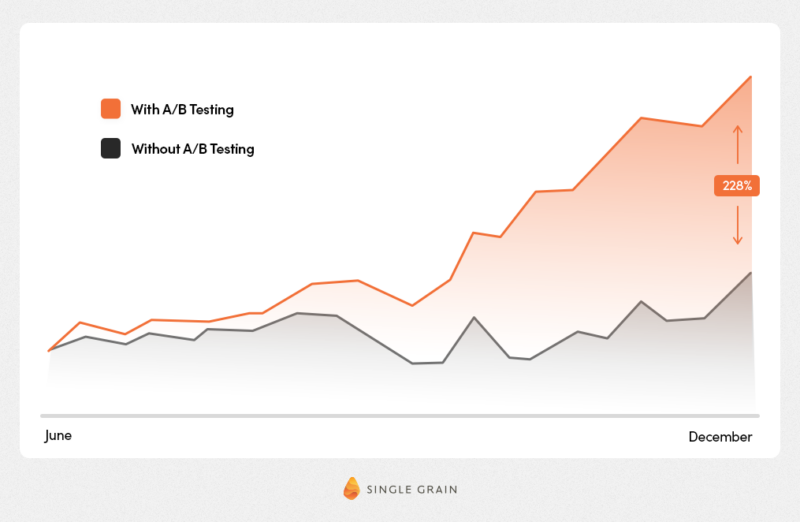
The biggest advantage of AI-generated ad copy is not just speed, but volume: you can test more hypotheses faster. However, without a data-driven loop, you will simply rotate through clever ideas rather than compound small performance wins.
Your goal is to connect ChatGPT directly with your performance data (while protecting sensitive information) so the model can help you diagnose issues and propose targeted new variations.
Feeding Performance Data Into ChatGPT
Export recent campaign data from Google Ads, Meta Ads Manager, or your preferred platform, then sanitize it by removing user-level information. Include columns like campaign, ad group/ad set, ad name, CTR, CVR, CPA, ROAS, and primary angle (if labeled).
Paste a small slice (for example, the last 50–100 ads) into ChatGPT and ask:
- “Identify patterns in the best-performing ads vs the worst (hooks, benefits, offers, formats).”
- “Suggest 10 new headline angles that build on the high performers while addressing gaps in our current messaging.”
- “Rewrite these 5 underperforming ads using the patterns you found in the winners.”
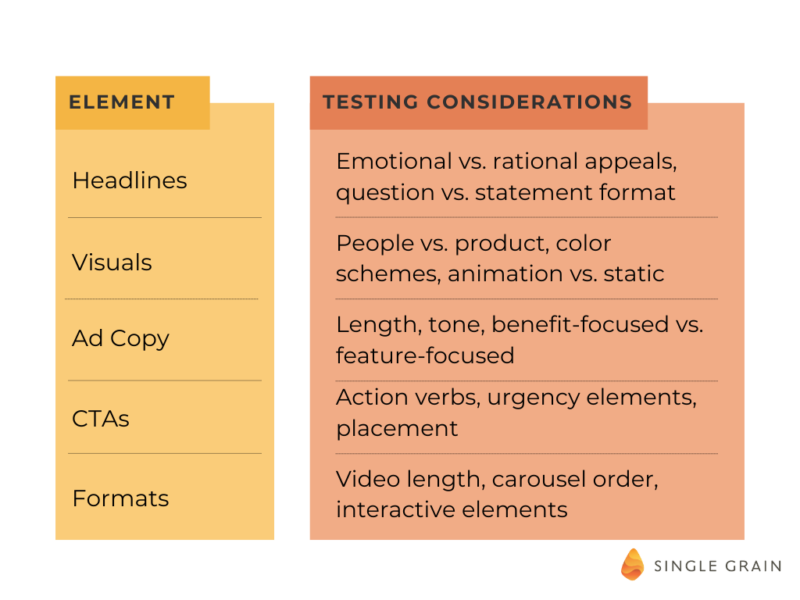
Using ChatGPT to Generate Systematic A/B Tests
Instead of random variations, use ChatGPT to generate controlled tests focused on one element at a time. For example:
- Hook tests: “Take this winning Meta ad and generate 10 new primary texts that keep the same offer and proof but change only the first line hook.”
- Emotion tests: “Rewrite this Google Ads description 5 times: (1) urgency-driven, (2) curiosity-driven, (3) authority-driven, (4) fear-of-missing-out, (5) social-proof-led.”
- Objection tests: “Create 6 headlines that each tackle a different objection: price, time, complexity, trust, integration, and results.”
Label each variant clearly in your ad platform (e.g., “Hook–Curiosity,” “Emotion–Authority”) so you can feed the results back into ChatGPT later and ask it to refine your messaging strategy based on what actually moved the metrics.
If you want support building this performance loop end to end, from analytics setup to AI-driven creative iteration, Single Grain’s growth-focused team can help connect your ad data, testing frameworks, and ChatGPT workflows into a single optimization engine.
Staying On-Brand, Compliant, and Realistic With ChatGPT Ads
While ChatGPT is powerful, it also has clear limitations: it can sound generic, over-promise results, or unknowingly suggest messaging that conflicts with ad policies. You need guardrails to keep your campaigns safe and authentic.
Think of these guardrails as a “safety wrapper” you apply to every new campaign and prompt before anything goes live.
Setting Brand and Compliance Guardrails
Start each new campaign thread with a setup message like:
“You are helping write ad copy for a [industry] company. Our brand voice is [3 adjectives]. Avoid [banned phrases]. Never promise specific numerical results. Our audience is [description]. Ad copy must comply with [platform] policies and avoid restricted claims in [regulation/sector]. Confirm you understand and summarize these rules before writing any copy.”
This forces ChatGPT to restate your guardrails, making it easier to spot misunderstandings early. For regulated industries, keep a short internal checklist of non-compliant phrases and paste it into the thread for extra reinforcement.
Fixing Common ChatGPT Copy Issues
When the output misses the mark, use targeted follow-ups instead of starting from scratch. For example:
- Too generic: “These sound generic. Rewrite with more specifics about [niche], [use case], and [unique mechanism]. Remove any clichés or buzzwords.”
- Too hypey: “Tone this down to sound like a senior consultant, not an infomercial. Remove exaggerated claims and focus on realistic, evidence-based language.”
- Off-brand voice: “Rewrite using shorter sentences, simpler vocabulary, and a more conversational tone that sounds like our website copy above.”
- Policy concerns: “Rewrite this copy to comply with Meta’s advertising policies for [category]. Eliminate health, financial, or personal attribute claims that might cause rejection.”
Over time, save your best “fixing” prompts into a shared library so your entire team can quickly course-correct ChatGPT output before ads are uploaded.
Quick-Start Templates for ChatGPT Ad Copy That Converts
To put all of this into action quickly, here are plug-and-play prompts you can paste into ChatGPT today. Remember to include your mini-brief and guardrails first so the outputs are relevant and safe.
Ready-to-Use ChatGPT Prompts (Copy-Paste)
1. Google Search – High-Intent Keywords
“Using the campaign brief above, generate 12 Google Search ad assets for the keyword [insert keyword]. Provide 8 headlines (max 30 characters) and 4 descriptions (max 90 characters). Use a mix of PAS and FAB frameworks. Prioritize clarity, keyword relevance, and a strong but realistic CTA. Output in a table with columns: Headline, Description, Framework, Primary Benefit.”
2. Meta – Feed Ads for Cold Traffic
“Based on the campaign brief, write 6 Facebook/Instagram feed ad variations for cold audiences who feel [main pain]. Each should have: (1) a scroll-stopping first line under 12 words, (2) max 2 additional short sentences, (3) one short headline under 35 characters. Use 2 pain-focused, 2 proof-focused, and 2 curiosity-focused angles. Label each angle clearly.”
3. LinkedIn – B2B Lead Gen
“Create 5 LinkedIn Sponsored Content ads targeting [role] at [company type]. Lead with a quantified outcome (time saved, cost reduced, results increased) that we can legitimately claim from the brief. Keep the ad text under 150 characters, professional in tone, and avoid hype. Suggest one matching headline per ad under 70 characters.”
4. Retargeting – Cart or Form Abandoners
“Write 4 retargeting ad variations for people who began but did not complete our [checkout/form]. Each variation should focus on a different angle: (1) reminder + convenience, (2) social proof, (3) objection handling, (4) scarcity/urgency. Keep the primary text under 3 sentences and include a clear, low-friction CTA.”
5. UGC Script – TikTok/Shorts
“Using the brief, write a 20–30 second first-person UGC script for TikTok that feels like a real customer story. Structure: (1) fast hook in the first 3 seconds, (2) short problem story, (3) ‘I tried X’ moment, (4) specific result or outcome we can support with proof, (5) soft CTA. Avoid sounding like an ad or reading bullet points.”
If you are building a larger library, consider organizing your prompts by funnel stage and channel in a shared document so media buyers and creatives can quickly grab the right pattern for each campaign.
Turning ChatGPT Ads Copywriting Into a Conversion Engine
When you approach ChatGPT ads copywriting as a structured system (clear briefs, smart frameworks, funnel-specific prompts, and data-driven testing), it stops being a novelty and becomes a reliable driver of CTR, CVR, and ROAS across channels. AI does the heavy lifting on volume and variation; your team provides the strategy, guardrails, and judgment.
If you are ready to plug this system into a broader growth engine that spans SEO, paid media, CRO, and analytics, Single Grain can help design and manage a performance program that pairs AI-powered creative with rigorous experimentation. Get a FREE consultation to see how a human-strategy-plus-AI-execution approach can level up your ad performance and turn every campaign into a learning loop that compounds over time.
Frequently Asked Questions
-
How can I protect customer data when using ChatGPT to write ads?
Never paste raw customer PII (names, emails, phone numbers, exact addresses) or account IDs into ChatGPT. Instead, anonymize data, summarize patterns at an aggregate level, and describe segments in plain language (e.g., “mid-market marketing leaders”) so you can still get targeted copy without exposing sensitive information.
-
What’s the best way to align ChatGPT ad copy with my visual creatives?
Share your visual concept with ChatGPT in words (describe the imagery, mood, and main focal point), then ask for copy that complements, not competes with, that visual. You can also paste several existing winning image/video descriptions and have ChatGPT suggest matching headlines, hooks, and CTAs for each style.
-
How often should I refresh ChatGPT-written ads in active campaigns?
Use performance thresholds as your trigger: when frequency climbs, and CTR or conversion rate begins to decline, treat that as a signal to refresh. Many performance teams find that a 4–8 week rotation works well, with incremental updates to hooks and angles rather than starting over from scratch each time.
-
Can I use ChatGPT to adapt my ads for different countries and languages?
Yes. Start by providing ChatGPT with cultural context, regional nuances, and any localization rules (e.g., formal vs. informal tone, banned phrases). Have a native speaker review the first few batches to catch idioms, regulatory nuances, or cultural references that AI may miss, then feed that feedback back into future prompts.
-
How do I keep human creativity strong when relying heavily on ChatGPT for ads?
Use ChatGPT as a brainstorming amplifier, not a replacement. Have your team write a few ‘anchor’ concepts first, then ask the model to generate variations and alternative angles. Run periodic ‘human-only’ creative sprints and compare results against AI-assisted concepts to keep instincts sharp and avoid template fatigue.
-
What budget considerations should I keep in mind when testing ChatGPT ad variations?
Plan a dedicated testing budget that’s separate from your proven ‘evergreen’ ads so experiments don’t starve or cannibalize winners. Ensure each variant receives enough spend and impressions to reach statistical significance; fewer, well-funded tests reveal more reliable insights than many underfunded experiments.
-
How can I use ChatGPT to speed up cross-team collaboration on ad campaigns?
Ask ChatGPT to turn a campaign brief into tailored summaries for different stakeholders: short executive overviews, creative checklists, and media-buying specs. This creates shared documentation that copywriters, designers, and media buyers can all reference, reducing back-and-forth and misalignment before launch.