

How to Create an ABM Enablement Program


Account-Based Marketing (ABM) has revolutionized how businesses approach their most valuable accounts. However, simply adopting an ABM strategy isn’t enough; successful implementation hinges on a robust ABM enablement program. This program equips your sales and marketing teams with the knowledge, tools, and processes necessary to execute ABM effectively, ensuring alignment and driving measurable results.
In this comprehensive guide, we’ll explore the essential steps to building a high-quality ABM enablement program, covering everything from foundational elements to advanced strategies for optimization. Whether you’re just starting your ABM journey or looking to refine an existing program, these insights will help you empower your teams and unlock the full potential of your account-based initiatives.
TABLE OF CONTENTS:
- 1. Define Your ABM Strategy and Goals
- 2. Develop Comprehensive Training Modules
- 3. Provide the Right Tools and Technology
- 4. Foster Sales and Marketing Alignment
- 5. Create a Centralized Content Repository
- 6. Implement Ongoing Coaching and Feedback
- 7. Measure, Analyze, and Optimize
- Conclusion
- Frequently Asked Questions About How to Create an ABM Enablement Program
1. Define Your ABM Strategy and Goals
Before you can enable your teams, you must have a clear understanding of what your ABM strategy entails. This includes identifying your target accounts, defining your ideal customer profile (ICP), and outlining the specific objectives you aim to achieve with ABM. Are you focused on expanding existing accounts, acquiring new logos, or a combination of both? Your goals will dictate the type of enablement required.
Actionable Tip: Conduct workshops with key stakeholders from sales, marketing, and leadership to collaboratively define your ABM strategy. Document these decisions thoroughly, including success metrics and KPIs, to ensure everyone is aligned from the outset. This foundational step is crucial for creating a cohesive program.
2. Develop Comprehensive Training Modules
Effective enablement requires structured learning. Create training modules that cover all aspects of your ABM strategy, from the theoretical underpinnings to practical execution. These modules should address different roles within your sales and marketing teams, tailoring content to their specific responsibilities. Topics might include ABM principles, account research techniques, personalized content creation, multi-channel engagement strategies, and CRM/ABM platform utilization.
Actionable Tip: Utilize a blended learning approach, combining self-paced online modules with interactive workshops and role-playing exercises. Incorporate real-world examples and case studies relevant to your industry to make the training more engaging and applicable. Consider certifying participants upon completion to ensure a baseline level of competency.
3. Provide the Right Tools and Technology
ABM success is heavily reliant on the right technology stack. Your enablement program must ensure that teams are not only aware of the tools available but also proficient in using them. This includes your CRM, marketing automation platform, ABM-specific platforms (e.g., intent data providers, personalization tools), and sales engagement platforms. Training should go beyond basic functionality, focusing on how these tools integrate and support your ABM workflows.
Actionable Tip: Create detailed user guides and quick reference sheets for each tool. Offer regular “office hours” or dedicated support channels where team members can ask questions and get assistance. Continuously evaluate your tech stack to ensure it meets the evolving needs of your ABM program and provide training on new features or integrations.
4. Foster Sales and Marketing Alignment
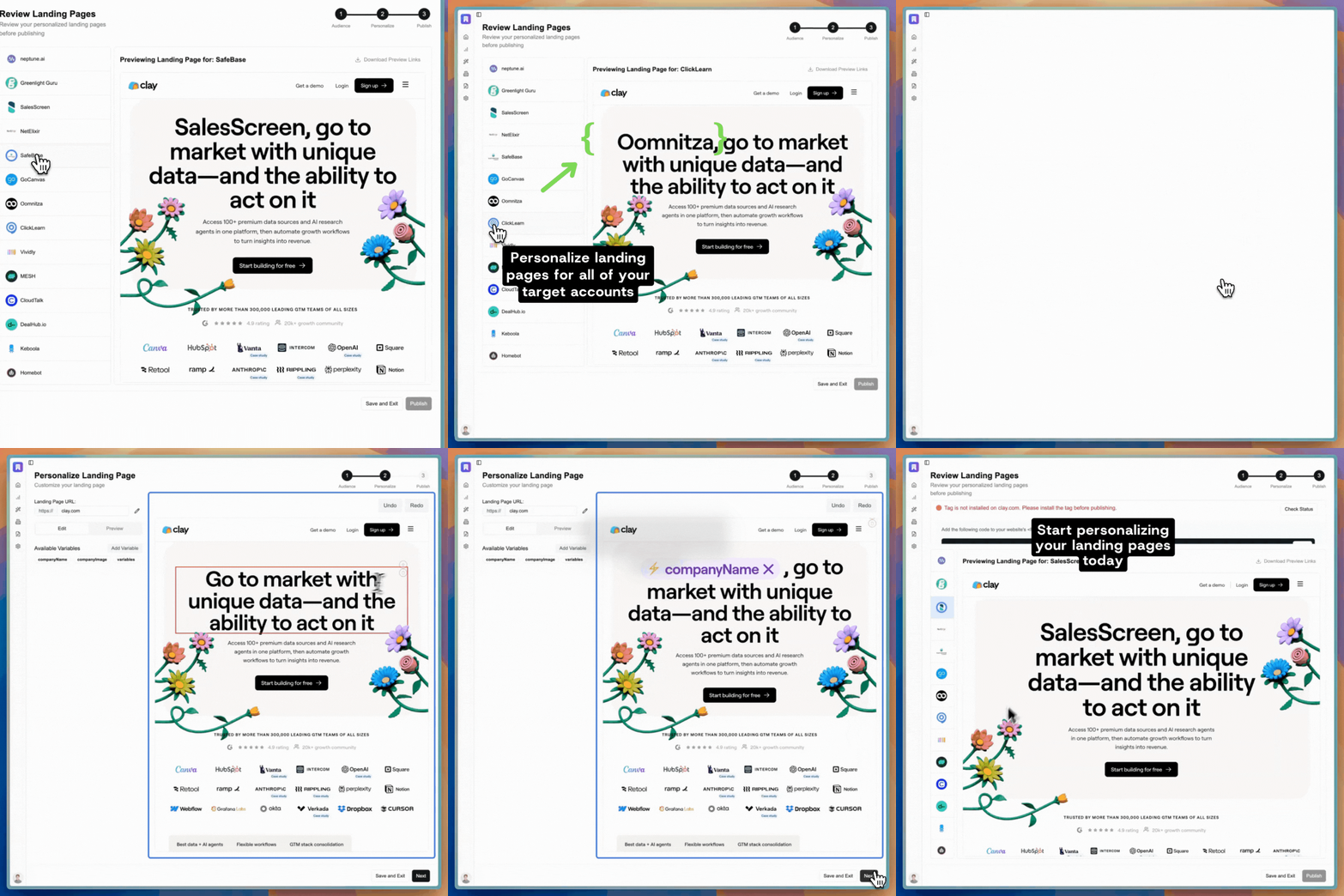
One of the hallmarks of successful ABM is tight alignment between sales and marketing. Your enablement program should actively break down silos and encourage collaboration. This involves establishing shared goals, defining clear roles and responsibilities, and creating joint processes for account planning, content development, and campaign execution. Regular communication and feedback loops are vital.
Actionable Tip: Implement joint training sessions where sales and marketing teams learn together. Establish a shared ABM playbook that outlines agreed-upon workflows, communication protocols, and escalation paths. Encourage cross-functional shadowing opportunities to build empathy and understanding between teams.
5. Create a Centralized Content Repository
Personalized and relevant content is at the heart of ABM. An enablement program must provide easy access to a wealth of content assets, including messaging frameworks, buyer personas, industry insights, case studies, and customizable templates. This centralized repository ensures consistency, reduces duplication of effort, and empowers teams to quickly find and adapt content for specific accounts.
Actionable Tip: Organize your content repository intuitively, using clear tagging and search functionalities. Provide guidelines on when and how to use different content types, along with examples of effective personalization. Regularly audit and update your content to ensure it remains fresh, relevant, and aligned with your ABM strategy.
6. Implement Ongoing Coaching and Feedback
Enablement is not a one-time event; it’s an ongoing process. Establish a coaching framework where managers and senior team members provide regular feedback and guidance. This could involve reviewing account plans, analyzing campaign performance, and offering constructive criticism on engagement tactics. Continuous learning and improvement are essential for long-term ABM success.
Actionable Tip: Develop a peer-to-peer learning program where experienced ABM practitioners mentor newer team members. Utilize performance data to identify areas for improvement and tailor coaching efforts accordingly. Celebrate successes and share best practices across the organization to foster a culture of continuous learning.
7. Measure, Analyze, and Optimize
To ensure your ABM enablement program is effective, you must continuously measure its impact. Track key metrics related to training completion, tool adoption, sales and marketing alignment, and ultimately, ABM program performance (e.g., account engagement, pipeline generation, revenue). Use this data to identify strengths, weaknesses, and areas for optimization.
Actionable Tip: Establish a clear reporting framework for your enablement program. Conduct regular surveys and feedback sessions with participants to gather qualitative insights. Be prepared to iterate and adjust your training content, tools, and processes based on the data and feedback you collect. This iterative approach ensures your program remains relevant and impactful.
Conclusion
Building a successful ABM enablement program is a strategic imperative for any organization committed to account-based growth. By systematically defining your strategy, providing comprehensive training, equipping teams with the right tools, fostering alignment, and committing to continuous improvement, you can empower your sales and marketing teams to execute ABM with precision and drive significant business outcomes. An enabled team is an unstoppable team, ready to conquer your most valuable accounts.
Frequently Asked Questions About How to Create an ABM Enablement Program
Q: What is the primary goal of an ABM enablement program? A: The primary goal is to equip sales and marketing teams with the necessary knowledge, skills, tools, and processes to effectively execute an Account-Based Marketing (ABM) strategy, ensuring alignment and driving measurable results.
Q: How often should ABM enablement training be updated? A: ABM enablement training should be updated regularly to reflect changes in your ABM strategy, new technologies, evolving market conditions, and feedback from your teams. A continuous learning approach is recommended, with periodic reviews and updates.
Q: What are some key metrics to track for an ABM enablement program? A: Key metrics include training completion rates, tool adoption rates, sales and marketing alignment scores, and direct impacts on ABM program performance such as account engagement levels, pipeline generated, and revenue influenced.
Q: Why is sales and marketing alignment so crucial for ABM enablement? A: Sales and marketing alignment is crucial because ABM requires a highly coordinated effort between these two functions. Enablement programs foster this alignment by establishing shared goals, processes, and communication channels, ensuring a unified approach to target accounts.
Q: Can an ABM enablement program benefit small businesses? A: Yes, an ABM enablement program can significantly benefit small businesses. While the scale might differ, the principles of defining strategy, training teams, providing tools, and fostering alignment are universally applicable and can help small businesses maximize their limited resources on high-value accounts.
Ready to supercharge your ABM efforts?
Sign up for Karrot.ai to build and optimize your ABM enablement program for unparalleled success.