ABM for Retail and Consumer Goods: B2B Strategies


Account-Based Marketing (ABM) has emerged as a powerful strategy for B2B companies, and its application within the retail and consumer goods sectors is proving to be particularly transformative. In an industry characterized by complex supply chains, evolving consumer demands, and intense competition, ABM offers a targeted, personalized approach to engaging high-value accounts. This strategy moves beyond traditional lead generation to focus on specific companies or individuals who are most likely to become valuable customers, fostering deeper relationships and driving significant revenue growth. This article will explore the nuances of implementing ABM in retail and consumer goods, highlighting its benefits, strategic approaches, and future trends.
TABLE OF CONTENTS:
- Introduction to ABM in Retail and Consumer Goods
- Key Benefits of ABM for B2B in Retail
- Strategies for Implementing ABM in Retail and Consumer Goods
- Future Trends in ABM for Retail and Consumer Goods
- Conclusion
- Frequently Asked Questions About ABM for Retail and Consumer Goods: B2B Strategies
- What is Account-Based Marketing (ABM) in the context of retail and consumer goods B2B?
- How does ABM differ from traditional marketing for B2B in retail?
- What are the main benefits of implementing ABM in the retail sector?
- What are some essential strategies for successful ABM implementation?
- How is ABM success measured in the retail and consumer goods B2B market?
- What future trends are expected in ABM for retail and consumer goods?
- Ready to Transform Your B2B Retail Strategy?
Introduction to ABM in Retail and Consumer Goods
Account-Based Marketing is a strategic approach that aligns sales and marketing efforts to target specific high-value accounts with personalized campaigns. In the context of retail and consumer goods, this means identifying key distributors, large retail chains, e-commerce platforms, or specific departments within these organizations that represent significant opportunities. The B2B landscape within these sectors often involves long sales cycles, multiple stakeholders, and substantial contract values, making a tailored approach like ABM highly effective. For instance, a consumer goods manufacturer might use ABM to target a major grocery retailer by developing a bespoke marketing and sales strategy that addresses the retailer’s specific challenges and objectives. This strategic focus ensures marketing efforts are efficient, relevant, and resonate deeply with the target account’s unique needs.
Key Benefits of ABM for B2B in Retail
Implementing an ABM strategy in the retail and consumer goods B2B landscape offers a multitude of advantages that directly impact revenue, efficiency, and long-term relationships.
1. Enhanced Return on Investment (ROI)
ABM delivers a significantly higher ROI by focusing resources on accounts with the highest potential value. This precision ensures marketing and sales efforts are not wasted on unsuitable prospects. A study by the ABM Leadership Alliance found that 87% of marketers agree that ABM delivers a higher ROI than other marketing initiatives. This is due to personalized campaigns that resonate more deeply with decision-makers, leading to faster sales cycles and higher conversion rates. For example, a food and beverage supplier targeting a national supermarket chain would craft a tailored proposal highlighting product alignment with the supermarket’s sustainability goals, increasing the likelihood of a positive outcome.
2. Improved Sales and Marketing Alignment
ABM fosters stronger collaboration between sales and marketing teams, breaking down traditional silos. It necessitates a tightly integrated strategy where both teams work together to identify target accounts, develop personalized messaging, and coordinate outreach. This alignment ensures every interaction is consistent, relevant, and moves the relationship forward, leading to a more cohesive and effective go-to-market strategy. A packaging solutions provider targeting a large consumer electronics company, for instance, would have its marketing team develop content specifically for that account, which the sales team then uses in direct outreach, ensuring a seamless customer journey.
3. Deeper Customer Relationships
By focusing on individual accounts and their unique needs, ABM facilitates stronger, more enduring customer relationships. This personalized approach involves understanding the intricacies of each target account’s business, challenges, and objectives, allowing companies to position themselves as strategic partners. Consistently delivering relevant value builds trust and loyalty, leading to increased customer lifetime value, upsell opportunities, and valuable referrals. A logistics firm using ABM for an apparel retailer would not only offer shipping solutions but also provide insights into optimizing inventory and reducing lead times, solidifying its position as an indispensable partner.
Strategies for Implementing ABM in Retail and Consumer Goods
Successful ABM implementation requires a structured approach, combining strategic planning with meticulous execution.
4. Account Identification and Segmentation
The foundational step is precise identification and segmentation of target accounts. This involves analyzing factors like industry vertical, company size, growth potential, and strategic initiatives. For retail, this might mean identifying retailers expanding into new geographies or investing in e-commerce. Accounts are segmented based on potential value, guiding resource allocation and customized engagement plans. Data analytics and predictive modeling are crucial here. A software provider for grocery stores, for example, would use firmographic data and news to identify chains with expansion plans or stockout issues, then segment them into tiers for targeted efforts.
5. Personalized Content and Messaging
Developing highly personalized content and messaging that resonates with specific pain points and industry context is critical. Generic messages are ineffective in B2B retail. ABM demands hyper-personalization, where every communication is tailored to the individual account, requiring a deep understanding of their business model and challenges. Content should offer solutions and demonstrate tangible value, such as industry-specific case studies or customized ROI calculators. A marketing agency targeting a luxury fashion brand would create a bespoke digital marketing strategy proposal, analyzing the brand’s online presence and suggesting tailored campaigns, showcasing expertise and commitment.
6. Multi-Channel Engagement
Effective ABM campaigns leverage a coordinated multi-channel approach across various touchpoints. This involves orchestrating interactions via digital channels (e.g., personalized emails, targeted social media ads, custom landing pages), direct outreach (e.g., calls, direct mail), and events. Consistent messaging across all channels reinforces the value proposition and guides the account through the buyer’s journey. Integrated technology platforms are essential for managing these complex campaigns. A supply chain technology company targeting a beverage conglomerate might initiate contact with a personalized LinkedIn campaign, followed by an email sequence and a sales call inviting stakeholders to a tailored webinar, building familiarity and trust.
7. Measuring ABM Success in the Retail Sector
Measuring ABM success is crucial for demonstrating ROI and optimizing strategies. ABM metrics focus on account-level engagement and revenue generation, extending beyond typical marketing KPIs. Important metrics include Account Engagement (website visits, content downloads, meeting attendance), Pipeline Velocity and Value (speed through sales funnel, average contract value), Customer Lifetime Value (CLTV), and Win Rates for target accounts. Tracking Sales and Marketing Alignment Metrics is also vital. CRM, marketing automation, and business intelligence tools are essential for collecting and analyzing this data, allowing for continuous refinement of ABM strategies. A B2B service provider for fashion retailers might track executive meetings, share of wallet increase, and revenue growth attributed to ABM, using data to refine content creation and maximize impact.
Future Trends in ABM for Retail and Consumer Goods
The landscape of ABM in retail and consumer goods B2B is continuously evolving, driven by technological advancements and shifting market dynamics.
Hyper-Personalization through AI and Machine Learning
AI and ML will drive even greater hyper-personalization in ABM. These technologies analyze data to uncover deeper insights into account behavior and intent signals, predicting conversions and personalizing messaging at scale. This allows for customization beyond traditional segmentation, delivering truly one-to-one experiences. For instance, AI could identify a retail chain’s sustainability initiatives and tailor content highlighting eco-friendly products.
Integration of Sales and Marketing Technologies
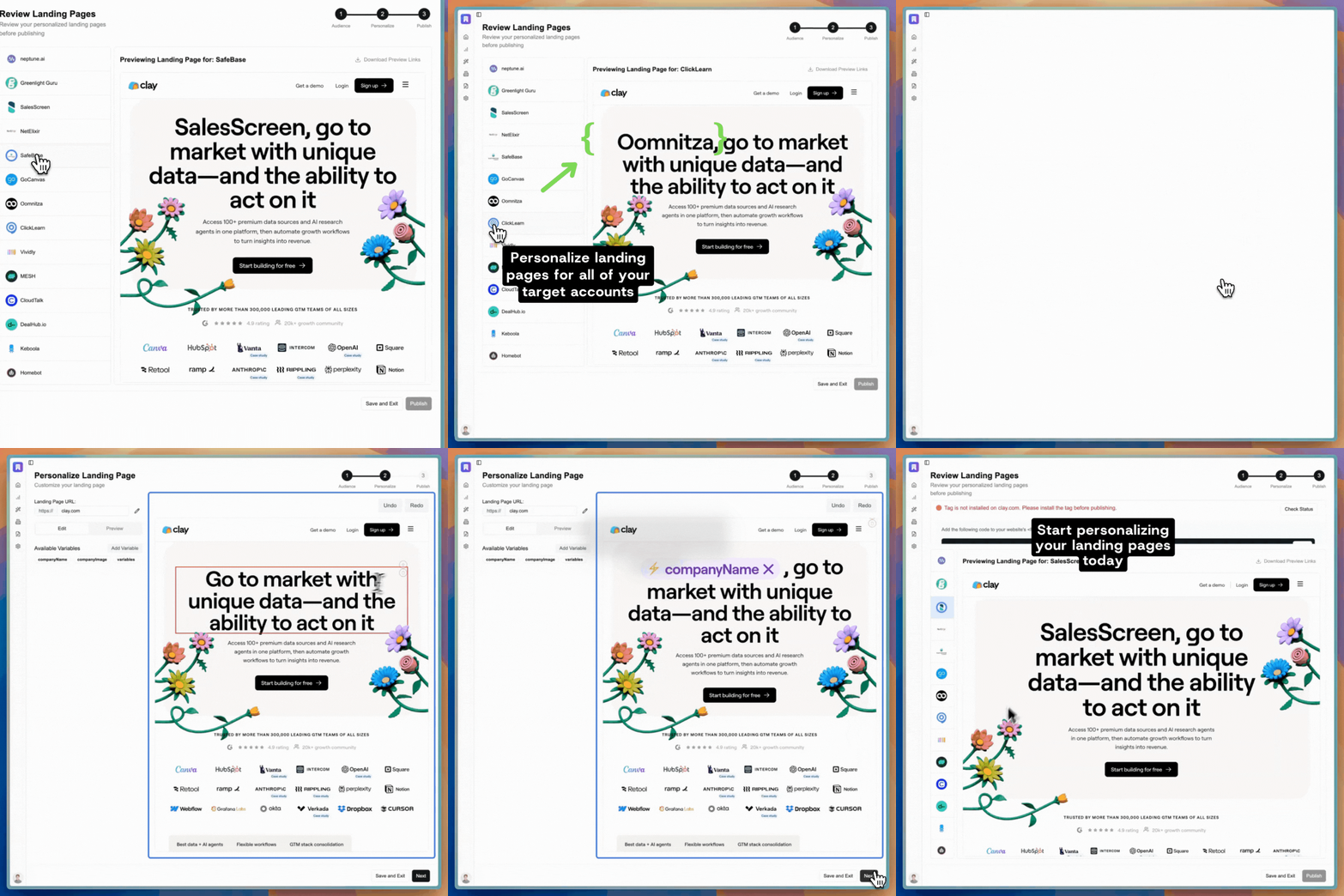
The convergence of sales and marketing technology stacks will become more seamless. Integrated platforms combining CRM, marketing automation, sales engagement, and ABM tools will provide a unified view of the customer journey, facilitating real-time data sharing and workflow automation. This ensures consistent efforts and a frictionless experience for both internal teams and target accounts.
Emphasis on Customer Experience (CX)
As B2B relationships become more complex, the focus on delivering exceptional CX will intensify. ABM will ensure every interaction, from outreach to support, is personalized, relevant, and value-driven. Companies will leverage ABM to proactively address needs and provide tailored solutions, enhancing satisfaction and loyalty. This customer-centric approach is key to fostering long-term partnerships and driving recurring revenue.
Predictive Analytics for Account Prioritization
Predictive analytics will become more sophisticated in identifying and prioritizing high-value accounts. Beyond firmographic data, these tools will analyze behavioral patterns and market trends to pinpoint accounts with the highest propensity to buy. This allows ABM teams to strategically allocate resources for maximum impact, optimizing ABM strategies.
Rise of ABM in Mid-Market and SMBs
ABM’s benefits are increasingly recognized by mid-market and SMBs in retail and consumer goods. As ABM platforms become more accessible, more companies will leverage these targeted strategies to compete effectively. The focus will be on lean, efficient ABM programs that deliver significant ROI without extensive resources, democratizing ABM across the B2B landscape.
Conclusion
Account-Based Marketing offers a strategic imperative for B2B companies operating within the dynamic retail and consumer goods sectors. By shifting to a highly focused, account-centric methodology, businesses can cultivate deeper relationships, optimize resource allocation, and drive significant revenue growth. The personalized engagement, enhanced sales and marketing alignment, and measurable ROI inherent in ABM make it an indispensable strategy. As technology advances, ABM will become even more sophisticated and impactful, empowering businesses to forge stronger partnerships, unlock new opportunities, and achieve sustainable success.
Frequently Asked Questions About ABM for Retail and Consumer Goods: B2B Strategies
What is Account-Based Marketing (ABM) in the context of retail and consumer goods B2B?
ABM is a strategic approach where B2B companies in the retail and consumer goods sectors focus their marketing and sales efforts on a predefined set of high-value target accounts. It aims to create personalized campaigns and build deep relationships with specific organizations like major retailers, distributors, or e-commerce platforms.
How does ABM differ from traditional marketing for B2B in retail?
Traditional marketing uses broad campaigns to attract many leads. ABM identifies specific high-value accounts first, then tailors all marketing and sales activities to those accounts, leading to more efficient resource allocation, higher conversion rates, and stronger relationships.
What are the main benefits of implementing ABM in the retail sector?
Key benefits include enhanced Return on Investment (ROI), improved alignment between sales and marketing teams, deeper customer relationships, and the ability to secure larger, more strategic deals.
What are some essential strategies for successful ABM implementation?
Successful ABM relies on precise account identification and segmentation, highly personalized content and messaging, and a coordinated multi-channel engagement strategy. Data analytics and technology platforms are crucial for optimization.
How is ABM success measured in the retail and consumer goods B2B market?
ABM success is measured by account-centric KPIs such as account engagement levels, pipeline velocity and value, customer lifetime value (CLTV), and win rates for target accounts. These metrics provide a comprehensive view of the strategy’s effectiveness.
What future trends are expected in ABM for retail and consumer goods?
Future trends include hyper-personalization driven by AI and machine learning, seamless integration of sales and marketing technologies, a stronger emphasis on customer experience (CX), advanced predictive analytics for account prioritization, and the increasing adoption of ABM by mid-market and SMBs.
Ready to Transform Your B2B Retail Strategy?
Unlock the full potential of Account-Based Marketing for your retail and consumer goods business. Sign up for Karrot.ai to develop and execute a tailored ABM strategy that drives engagement, builds lasting relationships, and accelerates your revenue growth.