

ABM Account Handoff: Seamless Marketing-to-Sales Transitions


In the world of account-based marketing (ABM), the seamless transition of accounts from marketing to sales is not just a goal; it’s a critical component of a successful strategy. A fumbled handoff can lead to lost opportunities, wasted resources, and a disjointed customer experience. This article explores the nuances of the ABM account handoff, providing a comprehensive guide to ensuring a smooth and effective transition that drives revenue and strengthens customer relationships.
TABLE OF CONTENTS:
- Understanding ABM Account Handoff
- Key Challenges in ABM Handoff
- 7 Best Practices for a Seamless Transition
- 1. Establish a Service Level Agreement (SLA)
- 2. Develop a Unified Account Scoring System
- 3. Ensure Comprehensive Data and Insights Transfer
- 4. Implement a Clear and Automated Handoff Process
- 5. Foster Open and Continuous Communication
- 6. Provide Sales with ABM-Specific Enablement
- 7. Measure, Analyze, and Optimize
- Tools and Technologies for Effective Handoff
- Measuring Success and Continuous Improvement
- Conclusion
- Frequently Asked Questions About ABM Account Handoff: Seamless Marketing-to-Sales Transitions
- See How Karrot.ai Can Help You
Understanding ABM Account Handoff
The ABM account handoff is the process through which a target account, having been nurtured by the marketing team, is passed to the sales team for direct engagement and conversion. Unlike traditional lead handoffs, which often focus on individual leads, the ABM approach is centered on the entire account. This distinction is crucial, as it requires a more holistic and collaborative effort between marketing and sales. A successful handoff is characterized by clear communication, shared goals, and a deep understanding of the account’s needs and journey.
Key Challenges in ABM Handoff
Despite its importance, the ABM account handoff is fraught with challenges. Misalignment between marketing and sales teams is a primary obstacle, often stemming from differing metrics, goals, and definitions of a “sales-ready” account. A lack of a clearly defined handoff process can also lead to confusion and dropped balls. Furthermore, incomplete or inaccurate data can cripple the sales team’s ability to engage effectively with the account. Overcoming these challenges requires a strategic and well-documented approach to the handoff process.
7 Best Practices for a Seamless Transition
To navigate the complexities of the ABM account handoff, here are seven best practices that can help ensure a seamless and successful transition:
1. Establish a Service Level Agreement (SLA)
A Service Level Agreement (SLA) is a formal document that outlines the responsibilities of both the marketing and sales teams in the handoff process. It should clearly define what constitutes a marketing-qualified account (MQA) and when it should be handed over to sales. The SLA should also specify the timeframe within which the sales team must follow up on the account. This agreement ensures that both teams are on the same page and accountable for their respective roles. For example, an SLA might state that an account is considered an MQA once it has reached a certain engagement score, and that the sales team must make initial contact within 24 hours of the handoff.
2. Develop a Unified Account Scoring System
A unified account scoring system is essential for an effective ABM handoff. This system should be developed collaboratively by both marketing and sales and should take into account both demographic and behavioral data. By assigning scores to various actions and attributes, you can create a clear and objective measure of an account’s readiness for sales engagement. This data-driven approach removes subjectivity from the handoff process and ensures that sales is focusing its efforts on the most promising accounts. For instance, a high score might be given to an account that has visited the pricing page and downloaded a case study.
3. Ensure Comprehensive Data and Insights Transfer
When an account is handed off, it’s not just about passing over a name and contact information. The sales team needs a complete picture of the account’s journey, including all interactions with the marketing team, content consumed, and key stakeholders identified. This information should be readily accessible in a centralized location, such as a CRM system. Providing this level of detail empowers the sales team to have more relevant and personalized conversations with the account, significantly increasing the chances of a successful conversion. A great example of this is providing the sales team with a summary of the account’s pain points, as identified through their content engagement.
4. Implement a Clear and Automated Handoff Process
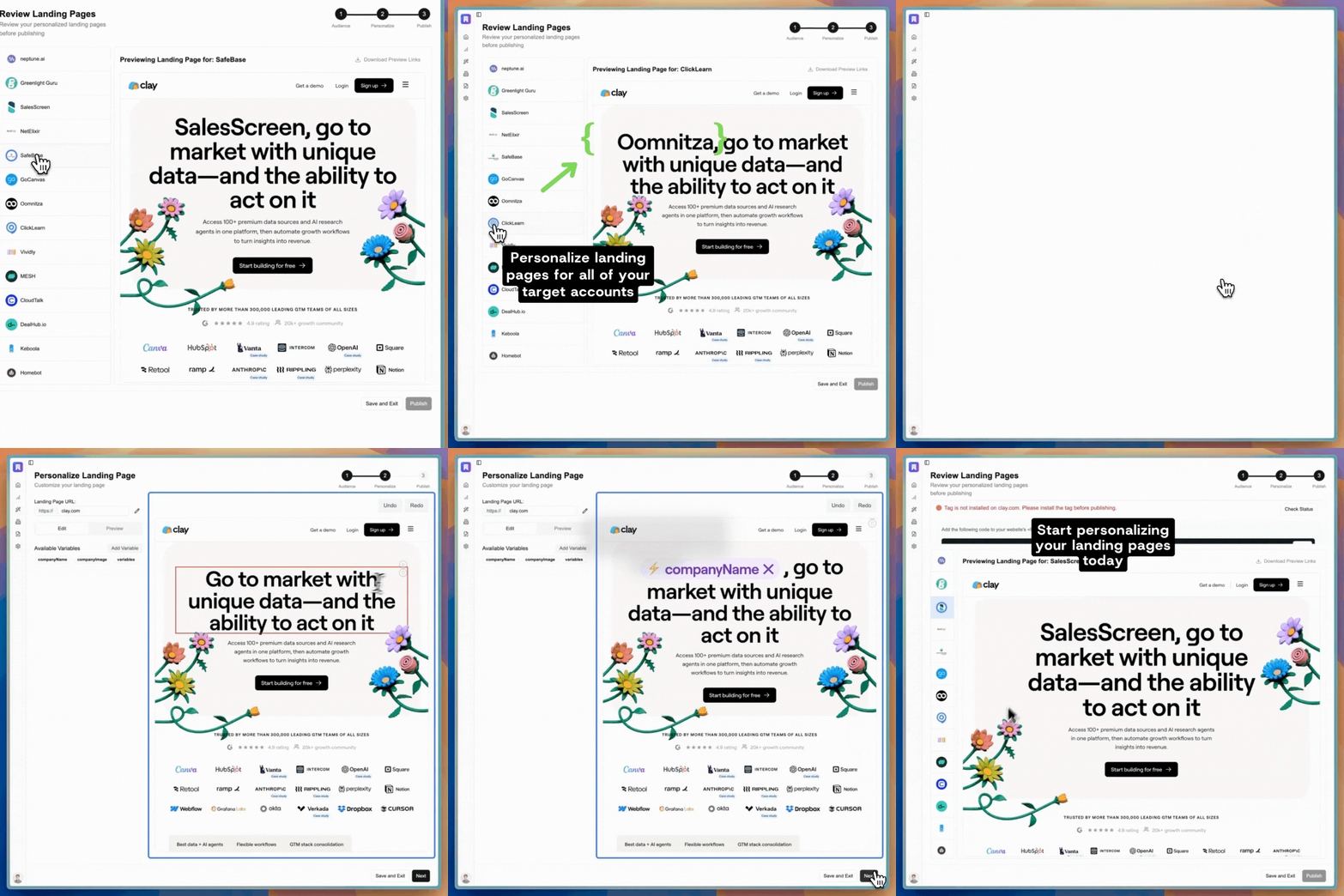
Manual handoff processes are prone to errors and delays. To ensure a smooth and efficient transition, it’s crucial to implement a clear and automated handoff process. This can be achieved through the use of marketing automation and CRM platforms. When an account meets the predefined criteria for a handoff, the system should automatically trigger a notification to the designated sales representative and transfer all relevant data. This automation eliminates the risk of human error and ensures that no account falls through the cracks.
5. Foster Open and Continuous Communication
While technology and processes are important, they are no substitute for human interaction. Regular meetings between the marketing and sales teams are essential for a successful ABM strategy. These meetings provide an opportunity to review the handoff process, discuss the quality of the accounts being passed over, and address any challenges or concerns. This open and continuous communication fosters a culture of collaboration and ensures that both teams are working together towards the same goals.
6. Provide Sales with ABM-Specific Enablement
Sales teams need to be equipped with the right tools and training to effectively engage with ABM accounts. This includes providing them with ABM-specific content, such as personalized presentations and case studies, as well as training on how to use this content to have more meaningful conversations. By investing in sales enablement, you can empower your sales team to make the most of every ABM opportunity.
7. Measure, Analyze, and Optimize
The ABM account handoff is not a one-and-done process. It’s important to continuously measure, analyze, and optimize the process to ensure its effectiveness. Key metrics to track include the MQA-to-opportunity conversion rate, the sales cycle length, and the average deal size. By regularly reviewing these metrics, you can identify areas for improvement and make data-driven decisions to optimize the handoff process over time.
Tools and Technologies for Effective Handoff
A variety of tools and technologies can help facilitate a seamless ABM account handoff. CRM platforms like Salesforce and HubSpot are essential for managing account data and tracking interactions. Marketing automation platforms such as Marketo and Pardot can be used to automate the handoff process and score accounts. Additionally, ABM-specific platforms like Demandbase and 6sense can provide deep insights into target accounts and help orchestrate the entire ABM process.
Measuring Success and Continuous Improvement
Measuring the success of your ABM account handoff process is crucial for continuous improvement. Key performance indicators (KPIs) to monitor include the velocity of the sales pipeline, the win rate of ABM accounts, and the overall return on investment (ROI) of your ABM program. By tracking these metrics, you can demonstrate the value of your ABM efforts and identify opportunities to further enhance the handoff process.
Conclusion
The ABM account handoff is a critical juncture in the customer journey. By implementing the best practices outlined in this article, you can create a seamless and effective transition that aligns your marketing and sales teams, maximizes the value of your ABM efforts, and ultimately drives revenue growth. Remember that a successful handoff is not just about process and technology; it’s about fostering a culture of collaboration and a shared commitment to delivering an exceptional customer experience.
Frequently Asked Questions About ABM Account Handoff: Seamless Marketing-to-Sales Transitions
What is the difference between a lead handoff and an account handoff?
A lead handoff focuses on an individual, while an account handoff focuses on the entire company or account. In ABM, the focus is on engaging with multiple stakeholders within a target account, making the account handoff a more complex and strategic process.
What are the most important metrics to track for an ABM handoff?
Key metrics include the MQA-to-opportunity conversion rate, the sales cycle length, the average deal size, and the win rate of ABM accounts. These metrics can help you measure the effectiveness of your handoff process and identify areas for improvement.
How can I improve alignment between my marketing and sales teams?
Establishing a Service Level Agreement (SLA), developing a unified account scoring system, and fostering open and continuous communication are all key to improving alignment between marketing and sales. Regular meetings and a shared understanding of goals are also crucial.
See How Karrot.ai Can Help You
Ready to take your ABM to the next level? See how Karrot.ai can help you.