

Account-Based Experience (ABX): Beyond Traditional ABM


Account-Based Marketing (ABM) revolutionized how B2B companies approach their most valuable accounts, shifting from a broad, lead-centric strategy to a highly targeted, account-focused one. However, in today’s hyper-competitive landscape, simply marketing to accounts is no longer enough. The modern buyer demands a seamless, personalized journey across all touchpoints, leading to the emergence of Account-Based Experience (ABX). ABX takes the principles of ABM a step further, integrating sales, marketing, and customer success efforts to deliver a cohesive and exceptional experience throughout the entire customer lifecycle. This evolution is not just about better marketing; it’s about fostering deeper relationships, driving greater customer loyalty, and ultimately, accelerating revenue growth. This article explores the core tenets of ABX and how it transcends traditional ABM to create lasting value for both businesses and their clients.
TABLE OF CONTENTS:
- 1. Understanding the Shift: From Campaigns to Journeys
- 2. Unifying Teams: The Power of Alignment
- 3. Data-Driven Personalization at Scale
- 4. Measuring What Matters: Beyond MQLs to Account Health
- 5. Technology as an Enabler: The ABX Stack
- 6. Proactive Engagement: Anticipating Customer Needs
- 7. The Long Game: Building Lasting Relationships
- Conclusion: Embracing the Future of B2B Engagement
- Frequently Asked Questions About Account-Based Experience (ABX): Beyond Traditional ABM
1. Understanding the Shift: From Campaigns to Journeys
Traditional ABM often focuses on orchestrating targeted campaigns to specific accounts. While effective, this approach can sometimes feel disjointed from the customer’s perspective. ABX, on the other hand, emphasizes understanding and optimizing the entire customer journey. It’s about mapping out every interaction, from initial awareness to post-purchase support, and ensuring each touchpoint is personalized, relevant, and adds value. This holistic view allows companies to anticipate needs, address pain points proactively, and create a consistently positive experience that resonates with the account’s unique challenges and goals.
2. Unifying Teams: The Power of Alignment
One of the most significant differentiators of ABX is its inherent requirement for complete organizational alignment. Where ABM primarily aligns sales and marketing, ABX extends this collaboration to include customer success, product development, and even executive leadership. This unified front ensures that every department is working towards a common goal: delivering an exceptional account experience. Regular communication, shared metrics, and integrated technology platforms become crucial for breaking down silos and fostering a truly collaborative environment. This alignment not only improves efficiency but also presents a consistent and trustworthy brand image to the customer.
3. Data-Driven Personalization at Scale
At the heart of ABX lies sophisticated data utilization. Beyond basic firmographics and technographics, ABX leverages behavioral data, intent signals, and engagement metrics to gain a deep understanding of each account. This rich data tapestry enables hyper-personalization, allowing companies to tailor content, messaging, and interactions to the specific needs and preferences of individual stakeholders within an account. The goal is not just to personalize at a superficial level but to deliver insights and solutions that are genuinely relevant and timely, making the customer feel truly understood and valued. This level of personalization, when executed at scale, transforms the customer experience from generic to genuinely bespoke.
4. Measuring What Matters: Beyond MQLs to Account Health
In traditional ABM, success is often measured by metrics like Marketing Qualified Leads (MQLs) or Sales Qualified Leads (SQLs). While these are important, ABX shifts the focus to broader indicators of account health and long-term value. Key performance indicators (KPIs) in an ABX framework include customer lifetime value (CLTV), net revenue retention (NRR), customer satisfaction (CSAT), and product adoption rates. By focusing on these comprehensive metrics, businesses can gain a more accurate picture of their relationships with key accounts and identify areas for improvement, ensuring sustained growth and profitability. This strategic shift in measurement reinforces the long-term, relationship-centric nature of ABX.
5. Technology as an Enabler: The ABX Stack
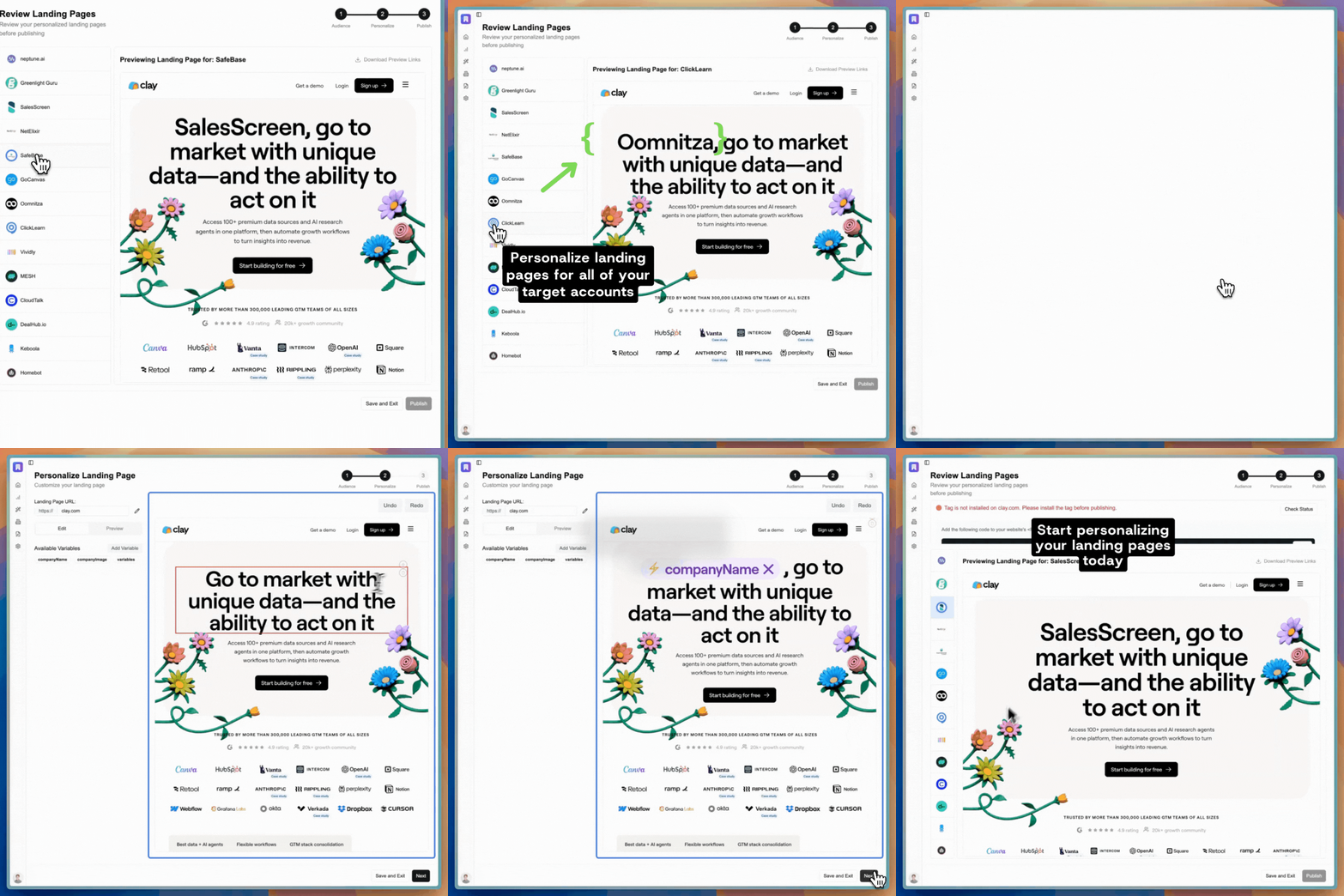
The successful implementation of ABX relies heavily on a robust technology stack that integrates various tools and platforms. This typically includes CRM systems, marketing automation platforms, sales engagement tools, customer success platforms, and advanced analytics solutions. The key is not just having these tools, but ensuring they are seamlessly integrated to provide a unified view of the customer and facilitate smooth data flow across departments. An effective ABX stack empowers teams with the insights and capabilities needed to deliver personalized experiences at every stage of the customer journey, automating routine tasks and freeing up human resources for strategic interactions.
6. Proactive Engagement: Anticipating Customer Needs
ABX moves beyond reactive problem-solving to proactive engagement. By continuously monitoring account activity, industry trends, and customer feedback, companies can anticipate potential challenges or opportunities. This allows them to reach out with relevant solutions, educational content, or strategic advice before the customer even realizes they need it. Proactive engagement builds trust, demonstrates a deep understanding of the customer’s business, and positions the company as a valuable partner rather than just a vendor. This foresight is a cornerstone of delivering an exceptional account experience.
7. The Long Game: Building Lasting Relationships
Ultimately, ABX is about playing the long game. It’s not about quick wins or transactional sales; it’s about cultivating deep, enduring relationships with high-value accounts. By consistently delivering personalized, valuable experiences, businesses can transform customers into advocates and partners. This focus on long-term relationship building leads to higher retention rates, increased expansion opportunities, and a stronger, more resilient customer base. ABX recognizes that the true value of an account extends far beyond the initial sale, encompassing every interaction and every stage of their journey with your brand.
Conclusion: Embracing the Future of B2B Engagement
The shift from ABM to ABX represents a fundamental evolution in B2B strategy. It’s a recognition that in today’s customer-centric world, the experience you provide is as crucial as the product or service you offer. By unifying teams, leveraging data for hyper-personalization, focusing on account health, and enabling proactive engagement through technology, businesses can move beyond traditional marketing and sales tactics to build truly lasting and profitable relationships. Embracing ABX is not just an option; it’s a necessity for any organization looking to thrive in the modern B2B landscape and deliver unparalleled value to their most important accounts.
Frequently Asked Questions About Account-Based Experience (ABX): Beyond Traditional ABM
Q: What is the primary difference between ABM and ABX? A: While ABM focuses on marketing to specific accounts, ABX expands this by integrating sales, marketing, and customer success to deliver a holistic, personalized experience throughout the entire customer lifecycle, focusing on relationship building and long-term value.
Q: Why is organizational alignment crucial for ABX? A: Organizational alignment is vital because ABX requires all customer-facing teams (sales, marketing, customer success) to work together seamlessly to provide a consistent and exceptional experience. This breaks down silos and ensures a unified approach to account engagement.
Q: What kind of metrics are important in an ABX strategy? A: ABX metrics go beyond traditional MQLs/SQLs to include customer lifetime value (CLTV), net revenue retention (NRR), customer satisfaction (CSAT), and product adoption rates, all of which reflect the overall health and long-term value of an account.
Q: How does technology support ABX? A: Technology forms the backbone of ABX, integrating CRM, marketing automation, sales engagement, and customer success platforms. This integrated stack provides a unified customer view, enables data-driven personalization, and automates processes to enhance the customer experience.
Q: What is the ultimate goal of implementing ABX? A: The ultimate goal of ABX is to build deep, lasting relationships with high-value accounts by consistently delivering personalized and valuable experiences. This leads to higher retention, increased expansion opportunities, and sustained revenue growth.