

ABM for Professional Services: Best Practices


Account-Based Marketing (ABM) has emerged as a powerful strategy for professional services firms seeking to attract and retain high-value clients. Unlike traditional marketing, which casts a wide net, ABM focuses on identifying and engaging specific target accounts with personalized campaigns. This approach is particularly effective in professional services, where client relationships are paramount and the sales cycle can be lengthy and complex. By aligning sales and marketing efforts, ABM helps firms to penetrate key accounts, build stronger relationships, and ultimately drive significant revenue growth. This listicle will explore the best practices for implementing a successful ABM strategy in the professional services sector.
TABLE OF CONTENTS:
- 1. Identify and Prioritize Target Accounts
- 2. Develop Personalized Content and Messaging
- 3. Orchestrate Multi-Channel Engagement
- 4. Align Sales and Marketing Teams
- 5. Measure and Analyze ABM Performance
- 6. Foster Long-Term Client Relationships
- 7. Embrace Technology and Automation
- Conclusion
- Frequently Asked Questions About ABM for Professional Services: Best Practices
- What is Account-Based Marketing (ABM)?
- Why is ABM particularly effective for professional services firms?
- How do I identify the right target accounts for my firm?
- What kind of content works best for ABM in professional services?
- How can sales and marketing teams align for ABM success?
- What are the key metrics to track for ABM performance?
- What role does technology play in ABM for professional services?
- Ready to Transform Your Client Acquisition Strategy?
1. Identify and Prioritize Target Accounts
Strategic Selection for Maximum Impact
The foundation of any successful ABM strategy lies in the meticulous identification and prioritization of target accounts. For professional services firms, this means moving beyond broad industry classifications to pinpoint specific organizations that align with your firm’s expertise, values, and growth objectives. This process involves a deep dive into various data points, including industry sector, company size, revenue, growth potential, existing technology stack, and specific pain points that your services can address. 1
Actionable Tips:
- Develop an Ideal Customer Profile (ICP): Create a detailed profile of your ideal client, encompassing demographic, firmographic, and behavioral characteristics. This serves as a blueprint for identifying accounts that are most likely to benefit from your services and yield high lifetime value.
- Leverage Data Analytics: Utilize CRM data, market intelligence platforms, and third-party data providers to gather comprehensive insights into potential accounts. Look for signals such as recent funding rounds, leadership changes, or strategic initiatives that indicate a need for your services.
- Collaborate with Sales: Foster close collaboration between marketing and sales teams to ensure alignment on target account selection. Sales professionals often possess invaluable insights into client needs and relationship dynamics that can inform prioritization.
2. Develop Personalized Content and Messaging
Tailoring Your Message to Resonate
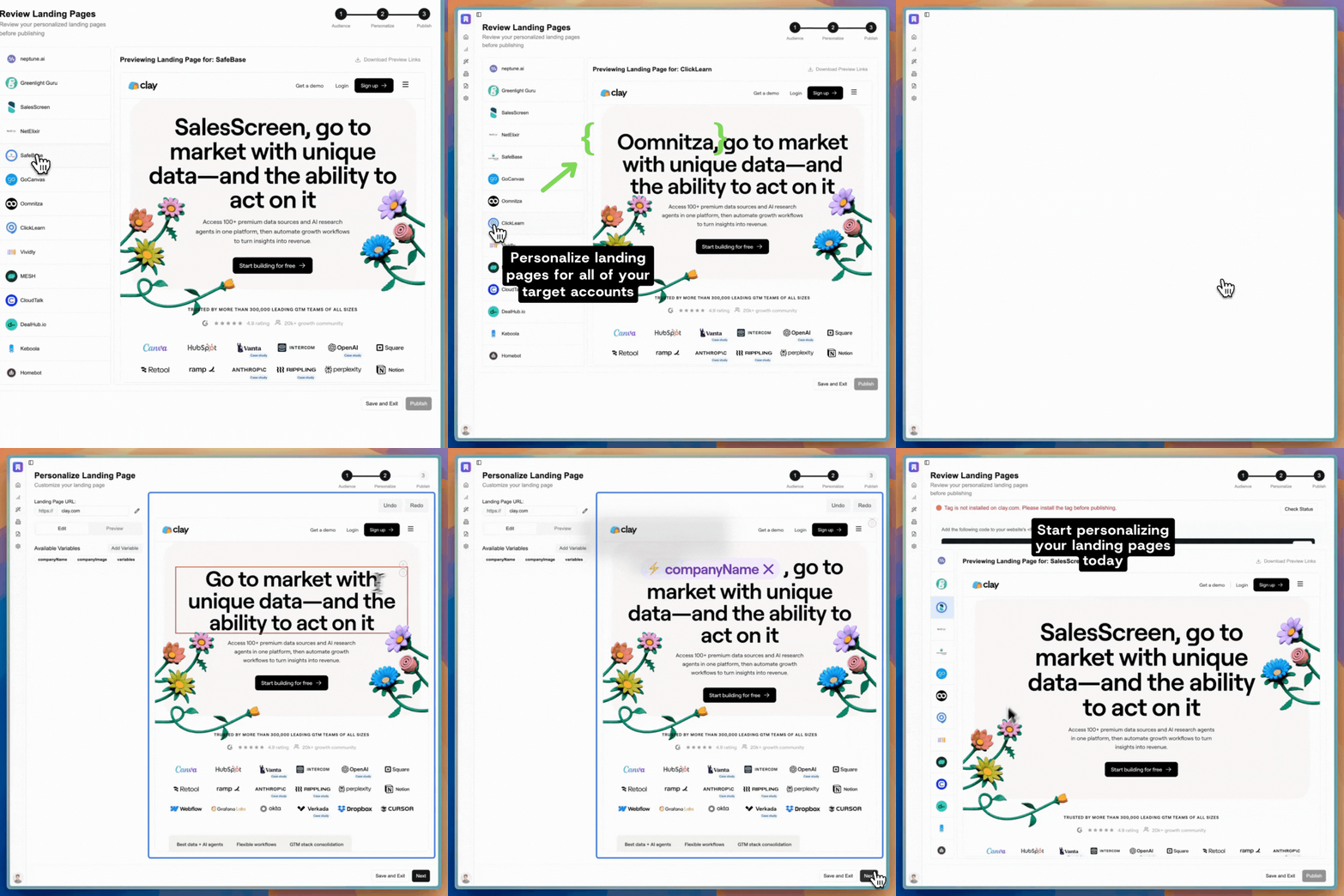
Once target accounts are identified, the next critical step is to develop highly personalized content and messaging that speaks directly to their unique challenges and aspirations. Generic marketing collateral will fall flat in an ABM context. Instead, professional services firms must invest in creating bespoke content that demonstrates a deep understanding of the target account’s business, industry, and specific stakeholders. This personalization extends beyond simply inserting a company name; it involves crafting narratives that address their specific pain points, showcase relevant case studies, and highlight how your firm’s solutions can deliver tangible value. 2
Actionable Tips:
- Conduct Account-Specific Research: Before crafting any content, thoroughly research each target account. Understand their business model, competitive landscape, recent news, and the individual roles and responsibilities of key decision-makers.
- Map Content to the Buyer Journey: Develop a content strategy that aligns with the different stages of the buyer journey. This might include thought leadership articles for early-stage awareness, detailed whitepapers or webinars for consideration, and tailored proposals or demonstrations for the decision stage.
- Utilize Diverse Content Formats: Go beyond traditional whitepapers and e-books. Consider personalized video messages, custom infographics, interactive tools, or even private webinars tailored to the specific needs of a target account.
3. Orchestrate Multi-Channel Engagement
Seamless Interaction Across Platforms
Effective ABM for professional services requires a coordinated, multi-channel approach to engage target accounts. It’s not enough to send a single email or make a solitary phone call. Instead, firms must orchestrate a series of touchpoints across various channels, ensuring a consistent and cohesive brand experience. This integrated approach maximizes visibility, reinforces messaging, and builds momentum throughout the sales cycle. The goal is to surround the target account with relevant and valuable interactions, making your firm a trusted advisor. 3
Actionable Tips:
- Integrate Digital and Offline Channels: Combine digital tactics like personalized email campaigns, targeted social media advertising, and retargeting with offline efforts such as direct mail, executive events, or personalized outreach from sales.
- Leverage Sales Enablement Tools: Equip your sales team with the necessary tools and resources to deliver personalized messages and content effectively. This includes CRM systems, sales engagement platforms, and access to relevant marketing collateral.
- Measure and Optimize Engagement: Continuously monitor engagement metrics across all channels. Analyze which touchpoints are most effective and adjust your strategy accordingly to optimize reach and impact.
4. Align Sales and Marketing Teams
A Unified Front for Client Acquisition
One of the most critical success factors for ABM in professional services is the deep alignment between sales and marketing teams. Historically, these departments have often operated in silos, leading to inefficiencies and missed opportunities. ABM necessitates a paradigm shift, fostering a collaborative environment where sales and marketing work hand-in-hand towards shared goals. This alignment ensures that marketing efforts are directly supporting sales objectives and that sales teams are equipped with the insights and tools needed to convert leads into clients. 4
Actionable Tips:
- Establish Shared Goals and KPIs: Define common objectives and key performance indicators (KPIs) that both sales and marketing can rally around. This could include account penetration rates, pipeline velocity, or revenue generated from target accounts.
- Regular Communication and Feedback Loops: Implement regular meetings and communication channels to facilitate ongoing dialogue between sales and marketing. Marketing should provide sales with insights into account engagement, while sales should offer feedback on the quality of leads and content effectiveness.
- Joint Account Planning: Encourage sales and marketing to collaborate on account-specific strategies, including identifying key stakeholders, understanding their needs, and developing tailored engagement plans.
5. Measure and Analyze ABM Performance
Demonstrating ROI and Continuous Improvement
Measuring the performance of your ABM initiatives is crucial for demonstrating return on investment (ROI) and identifying areas for continuous improvement. For professional services firms, this goes beyond traditional marketing metrics like lead volume. Instead, the focus shifts to account-centric metrics that reflect the impact on target accounts and ultimately, revenue. By rigorously tracking and analyzing these metrics, firms can refine their strategies, optimize resource allocation, and prove the value of ABM to stakeholders. 5
Actionable Tips:
- Track Account-Level Metrics: Focus on metrics suchs as account engagement rates, pipeline contribution from target accounts, average deal size, sales cycle length, and ultimately, revenue generated from ABM efforts.
- Utilize ABM Platforms: Invest in ABM platforms that provide comprehensive analytics and reporting capabilities. These platforms can help track account interactions across multiple channels and provide a holistic view of performance.
- Conduct Regular Performance Reviews: Schedule regular reviews of ABM performance with both sales and marketing teams. Use these sessions to analyze data, discuss successes and challenges, and make data-driven adjustments to your strategy.
6. Foster Long-Term Client Relationships
Beyond Acquisition: Nurturing Lasting Partnerships
While ABM is highly effective for acquiring new high-value clients, its true power in professional services lies in its ability to foster and nurture long-term client relationships. The personalized, account-centric approach of ABM naturally extends beyond the initial sale, enabling firms to deepen their understanding of client needs, anticipate future challenges, and proactively offer additional value. This focus on ongoing engagement transforms clients into loyal advocates and opens doors for cross-selling and upselling opportunities. 6
Actionable Tips:
- Continue Personalized Engagement Post-Sale: Don’t stop the personalized communication once a deal is closed. Continue to provide valuable insights, thought leadership, and proactive support to your clients.
- Identify Expansion Opportunities: Regularly assess existing client accounts for opportunities to expand your services. This could involve identifying new departments, projects, or challenges where your firm can provide additional value.
- Solicit Client Feedback: Actively seek feedback from your clients to understand their evolving needs and ensure their continued satisfaction. Use this feedback to refine your service offerings and strengthen relationships.
7. Embrace Technology and Automation
Scaling ABM with Smart Tools
Implementing a robust ABM strategy, especially for a growing professional services firm, can be resource-intensive without the right technological infrastructure. Embracing ABM platforms and automation tools is essential for scaling efforts, streamlining workflows, and ensuring consistency in personalized outreach. These technologies can automate repetitive tasks, provide valuable insights into account behavior, and facilitate seamless collaboration between sales and marketing teams, allowing human talent to focus on strategic initiatives and high-value interactions. 7
Actionable Tips:
- Invest in an ABM Platform: Select an ABM platform that integrates with your existing CRM and marketing automation systems. Look for features such as account identification, personalized content delivery, multi-channel orchestration, and robust analytics.
- Automate Repetitive Tasks: Utilize automation for tasks like email sequencing, social media scheduling, and data aggregation. This frees up your team to focus on more strategic and creative aspects of ABM.
- Leverage AI for Insights: Explore AI-powered tools that can provide deeper insights into account intent, predict future needs, and recommend personalized content or engagement strategies.
Conclusion
Account-Based Marketing offers a transformative approach for professional services firms aiming to secure and cultivate high-value client relationships. By meticulously identifying target accounts, crafting personalized messages, orchestrating multi-channel engagement, and fostering deep alignment between sales and marketing, firms can achieve remarkable results. The continuous measurement of performance, coupled with a commitment to long-term client nurturing and the strategic adoption of technology, will ensure that ABM becomes a sustainable engine for growth and a cornerstone of your firm’s success in a competitive landscape.
Frequently Asked Questions About ABM for Professional Services: Best Practices
What is Account-Based Marketing (ABM)?
ABM is a strategic approach where marketing and sales teams work together to target specific high-value accounts with personalized campaigns, rather than focusing on broad lead generation.
Why is ABM particularly effective for professional services firms?
ABM is effective for professional services because it aligns with the high-touch, relationship-driven nature of the industry, focusing on quality over quantity in client acquisition and retention.
How do I identify the right target accounts for my firm?
Identifying target accounts involves developing an Ideal Customer Profile (ICP), leveraging data analytics to find companies matching that profile, and collaborating closely with your sales team for their insights.
What kind of content works best for ABM in professional services?
Highly personalized content that addresses the specific pain points and business objectives of each target account is most effective. This can include case studies, whitepapers, webinars, and tailored proposals.
How can sales and marketing teams align for ABM success?
Alignment is achieved through shared goals and KPIs, regular communication, joint account planning, and a commitment to working together throughout the entire client lifecycle.
What are the key metrics to track for ABM performance?
Key metrics include account engagement rates, pipeline contribution from target accounts, average deal size, sales cycle length, and overall revenue generated from ABM efforts.
What role does technology play in ABM for professional services?
Technology, such as ABM platforms and automation tools, is crucial for scaling ABM efforts, personalizing outreach, streamlining workflows, and providing valuable insights into account behavior.
Ready to Transform Your Client Acquisition Strategy?
Discover how Karrot.ai can help your professional services firm attract and retain high-value clients.



