

Multi-Threading in ABM: How to Engage Multiple Stakeholders


Account-Based Marketing (ABM) has revolutionized how businesses approach their most valuable accounts, shifting focus from broad campaigns to highly personalized engagement. Within this sophisticated strategy, multi-threading emerges as a critical component. Multi-threading in ABM involves engaging multiple contacts across various departments and levels within a target account. This approach acknowledges that purchasing decisions in complex B2B environments are rarely made by a single individual; instead, they are the result of consensus among a diverse group of stakeholders, each with unique priorities and concerns.
Effective multi-threading goes beyond merely adding more names to a contact list. It requires a strategic understanding of the account’s organizational structure, identifying key influencers, decision-makers, and end-users, and then crafting tailored messages that resonate with each individual’s role and challenges. By building relationships with a broader spectrum of stakeholders, businesses can de-risk their sales cycles, gain deeper insights into account needs, and ultimately drive more successful and sustainable partnerships. This listicle will explore the nuances of multi-threading in ABM, offering actionable strategies to engage multiple stakeholders effectively and drive superior results.
TABLE OF CONTENTS:
- Understanding Multi-Threading in ABM
- Key Stakeholders in ABM
- Strategies for Engaging Multiple Stakeholders
- Overcoming Challenges in Multi-Stakeholder ABM
- Measuring Success in Multi-Threaded ABM
- Future Trends in ABM Engagement
- Conclusion
- Frequently Asked Questions About Multi-Threading in ABM: How to Engage Multiple Stakeholders
- Ready to elevate your ABM strategy?
Understanding Multi-Threading in ABM
Multi-threading is the practice of establishing multiple, simultaneous connections with various individuals within a target account. This contrasts with single-threaded approaches where engagement is limited to one or two contacts. The goal is to create a web of influence and understanding, ensuring that your message permeates different parts of the organization and addresses the diverse needs of the buying committee.
- Why Multi-Threading is Essential for ABM Success In today’s B2B landscape, buying committees are larger and more complex than ever before. A typical B2B purchase involves an average of 6 to 10 decision-makers. Relying on a single point of contact can leave your ABM efforts vulnerable to changes in personnel, shifting priorities, or a limited view of the account’s overall needs. Multi-threading mitigates these risks by diversifying your engagement points, ensuring continuity and a more holistic understanding of the account.
- The Evolution from Single-Threaded to Multi-Threaded Engagement Historically, sales and marketing often focused on a primary contact, hoping they would champion the solution internally. While this can still be effective for simpler sales, it falls short in complex enterprise deals. Multi-threading recognizes that different stakeholders—from IT to finance, operations to legal—have distinct perspectives and criteria for evaluating a solution. Engaging each of these individuals with relevant content and conversations builds a stronger, more resilient foundation for a successful partnership.
Key Stakeholders in ABM
Identifying and understanding the roles of various stakeholders is paramount to successful multi-threading. Each individual brings a unique perspective and set of concerns to the buying process.
- Decision-Makers and Influencers Decision-makers hold the ultimate authority to approve a purchase, while influencers, though not holding direct approval power, can significantly sway the decision through their expertise or position. Identifying these individuals requires thorough account research and often involves mapping the organizational structure. Engaging decision-makers with high-level strategic value propositions and influencers with insights relevant to their domain is crucial.
- Technical Buyers and End-Users Technical buyers are concerned with the practical implementation and technical specifications of a solution. End-users, who will directly interact with the product or service, focus on usability, efficiency, and how it will impact their daily tasks. Providing detailed technical documentation, product demonstrations, and testimonials from similar users can effectively engage these stakeholders.
- Financial and Legal Stakeholders Financial stakeholders evaluate the return on investment (ROI), cost-effectiveness, and budget implications of a purchase. Legal teams ensure compliance and review contractual terms. Engaging these groups requires clear articulation of financial benefits, risk mitigation strategies, and transparent contractual discussions. A well-prepared business case demonstrating tangible ROI is often key for financial stakeholders.
Strategies for Engaging Multiple Stakeholders
Effective multi-threading requires a coordinated approach that leverages personalized communication and relevant content.
- Account Mapping and Persona Development Before engaging, create a detailed account map that identifies key individuals, their roles, reporting structures, and potential influence. Develop comprehensive personas for each stakeholder type, outlining their pain points, goals, preferred communication channels, and key performance indicators (KPIs). This foundational work ensures that every interaction is targeted and relevant.
- Personalized Content and Messaging Generic messaging will not suffice for multi-threaded ABM. Tailor your content—whether it’s emails, case studies, webinars, or whitepapers—to address the specific concerns and interests of each stakeholder. For example, a CFO might receive content focused on ROI and cost savings, while an IT manager receives technical specifications and integration guides. This personalization demonstrates a deep understanding of their role and value.
- Coordinated Outreach Across Channels Multi-threading is not just about who you contact, but also how. Coordinate outreach across various channels, including email, LinkedIn, phone calls, and even direct mail. Ensure that your sales and marketing teams are aligned on messaging and timing to create a cohesive and consistent experience for the account. Leveraging a CRM or ABM platform can help manage these complex interactions effectively.
- Leveraging Internal Champions Identify and nurture internal champions within the target account. These individuals can advocate for your solution, provide valuable insights into internal dynamics, and help navigate organizational complexities. Empowering champions with relevant information and support can significantly accelerate the sales process.
Overcoming Challenges in Multi-Stakeholder ABM
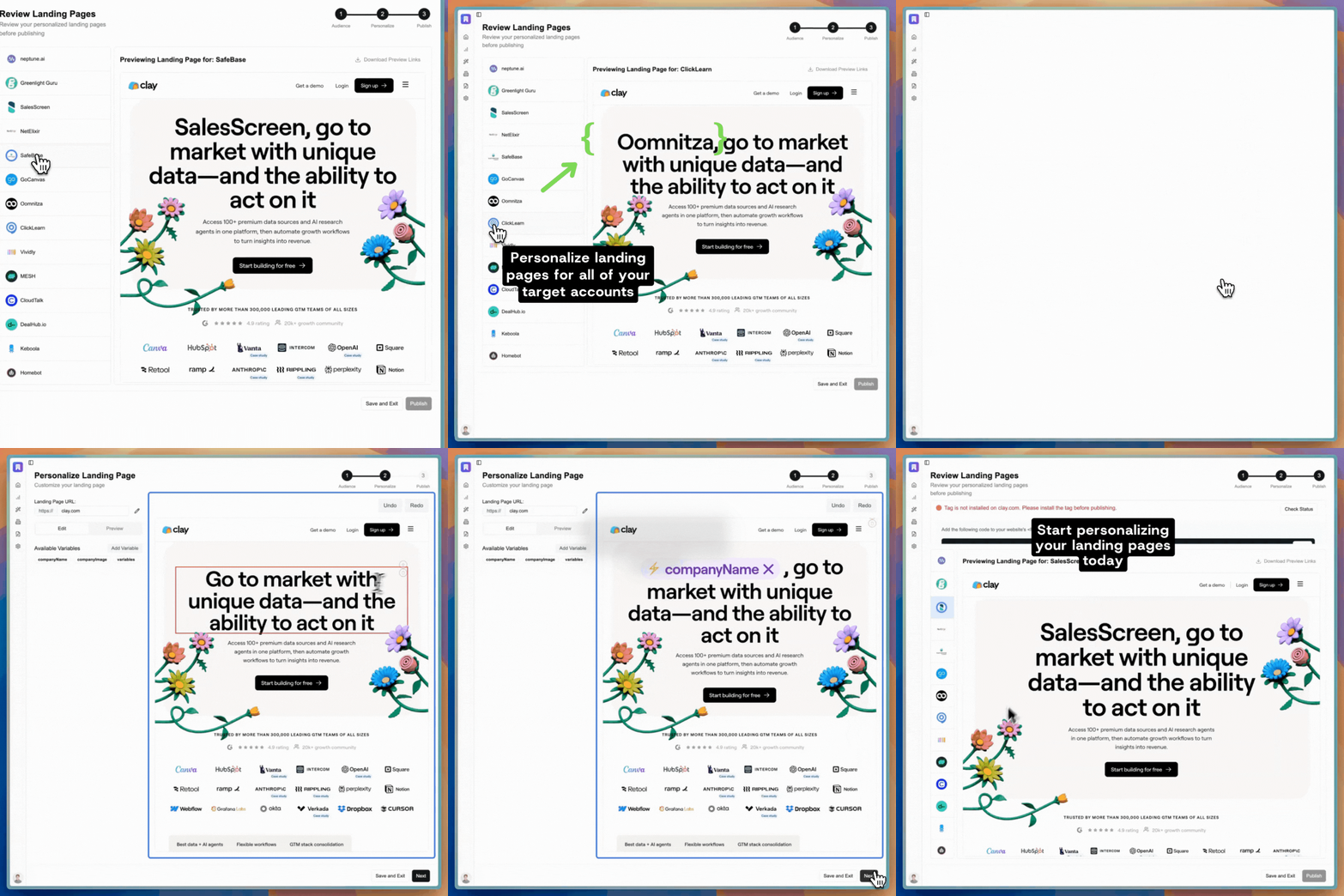
Engaging multiple stakeholders can present unique challenges, but with strategic planning, these can be effectively overcome.
- Information Overload and Communication Fatigue One common pitfall is overwhelming stakeholders with too much information or repetitive messaging. To avoid this, ensure that each piece of communication adds unique value and is relevant to the recipient’s role. Coordinate internal teams to prevent duplicate outreach and maintain a clear, concise communication strategy. A shared communication plan can be a valuable internal tool.
- Aligning Internal Sales and Marketing Teams Successful multi-threading demands seamless collaboration between sales and marketing. Both teams must share a common understanding of account goals, stakeholder personas, and messaging strategies. Regular sync-ups, shared dashboards, and integrated technology platforms can foster this alignment and ensure a unified approach to account engagement.
- Navigating Conflicting Priorities Different stakeholders often have conflicting priorities. For instance, an operations manager might prioritize efficiency, while a finance manager focuses on cost reduction. Your role is to understand these divergent needs and articulate how your solution can address each, or how it offers a balanced approach that satisfies multiple objectives. Highlighting the overall strategic benefits can help bridge these gaps.
Measuring Success in Multi-Threaded ABM
Measuring the effectiveness of your multi-threading efforts is crucial for continuous improvement.
- Key Metrics for Multi-Threaded Engagement Track metrics such as the number of engaged contacts per account, the depth of engagement (e.g., number of interactions, content consumed), and the diversity of roles engaged. Beyond traditional sales metrics, consider indicators like account sentiment, stakeholder influence scores, and the speed of progression through the sales cycle. This comprehensive view provides a clearer picture of your ABM effectiveness
- Attribution and ROI in Multi-Threaded Campaigns Attributing success in multi-threaded campaigns can be complex due to the numerous touchpoints. Utilize advanced attribution models that consider all interactions across the buying committee. Focus on demonstrating the overall ROI of your ABM efforts by linking engagement activities to pipeline acceleration, increased deal size, and higher win rates. Understanding the impact of each stakeholder interaction is key to optimizing future campaigns.
Future Trends in ABM Engagement
As ABM continues to evolve, so too will the strategies for engaging multiple stakeholders.
- AI and Automation in Stakeholder Engagement Artificial intelligence (AI) and automation will play an increasingly significant role in multi-threaded ABM. AI can help identify key stakeholders, personalize content at scale, and predict which messages will resonate most effectively with different personas. Automation can streamline outreach, nurture relationships, and ensure timely follow-ups, freeing up sales and marketing teams to focus on high-value strategic interactions.
- Hyper-Personalization and Dynamic Content The future of multi-threading will lean towards even greater hyper-personalization and dynamic content delivery. This involves creating content that adapts in real-time based on stakeholder interactions, preferences, and current business challenges. Imagine a landing page that dynamically adjusts its messaging and case studies based on the visitor’s role within the target account. This level of personalization will drive deeper engagement and more meaningful conversations.
Conclusion
Multi-threading is no longer an optional add-on but a fundamental pillar of successful ABM. By strategically engaging multiple stakeholders within target accounts, businesses can build stronger relationships, gain invaluable insights, and navigate complex buying processes with greater confidence. The key lies in thorough research, personalized communication, coordinated outreach, and continuous measurement. As the B2B landscape continues to evolve, mastering multi-threading will be essential for driving sustainable growth and achieving long-term success in your most valuable accounts.
Frequently Asked Questions About Multi-Threading in ABM: How to Engage Multiple Stakeholders
Q: What is the primary benefit of multi-threading in ABM?
A: The primary benefit is de-risking the sales cycle and gaining a more comprehensive understanding of the account’s needs by engaging multiple decision-makers and influencers, leading to more robust and sustainable partnerships.
Q: How many stakeholders should I aim to engage in an ABM account?
A: There’s no fixed number, but the goal is to engage a diverse set of individuals across different departments and levels who are involved in the buying decision. This typically means more than just one or two contacts.
Q: What kind of content works best for different stakeholders?
A: Content should be highly personalized. For example, financial stakeholders respond well to ROI analyses, technical buyers to specifications, and end-users to usability demonstrations. Tailoring content to their specific pain points and goals is crucial.
Q: How can I ensure my sales and marketing teams are aligned for multi-threading?
A: Foster alignment through shared account goals, consistent stakeholder personas, integrated technology platforms, and regular communication. Both teams need to work in concert to deliver a cohesive experience.
Q: What are some common challenges in multi-threading and how can they be overcome?
A: Challenges include information overload, internal team misalignment, and conflicting stakeholder priorities. These can be overcome through strategic communication planning, strong internal collaboration, and articulating how your solution addresses diverse needs.
Ready to elevate your ABM strategy?
Discover how Karrot.ai can help you implement advanced multi-threading techniques and drive unparalleled success in your key accounts.