

ChatGPT PPC: Everything You Need to Know


In the rapidly evolving landscape of digital marketing, the integration of artificial intelligence (AI) has become not just a trend, but a transformative force. Among the most impactful AI innovations, ChatGPT stands out, offering unprecedented capabilities for content generation and analysis. When combined with the strategic demands of Pay-Per-Click (PPC) advertising, ChatGPT presents a powerful new frontier for marketers seeking to optimize their campaigns and achieve superior results. This article delves into the intricacies of ChatGPT PPC, exploring its benefits, challenges, best practices, and the future it heralds for the advertising industry. For a broader understanding of AI’s impact on marketing, you can explore AI in Marketing Statistics.
TABLE OF CONTENTS:
What is ChatGPT PPC?
PPC advertising is a model of internet marketing in which advertisers pay a fee each time one of their ads is clicked. Essentially, it’s a way of buying visits to your site, rather than attempting to “earn” those visits organically. Search engine advertising is one of the most popular forms of PPC, allowing advertisers to bid for ad placement in a search engine’s sponsored links when someone searches on a keyword related to their business offering. To learn more about general PPC strategies, refer to The Ultimate Guide to PPC Marketing.
ChatGPT, developed by OpenAI, is a large language model (LLM) based on the GPT (Generative Pre-trained Transformer) architecture. It is designed to understand and generate human-like text, capable of performing a wide range of natural language processing tasks, from answering questions and writing essays to summarizing complex information and generating creative content. The intersection of ChatGPT and PPC involves leveraging the AI’s linguistic prowess to enhance various aspects of PPC campaign management, from initial strategy to ongoing optimization.
Benefits of Using ChatGPT for PPC Campaigns
The application of ChatGPT in PPC campaigns offers a multitude of advantages that can significantly boost efficiency and effectiveness.
Keyword Research & Generation
One of the foundational elements of any successful PPC campaign is thorough keyword research. ChatGPT can assist in identifying high-performing keywords, discovering long-tail variations, and even generating negative keyword lists. By analyzing vast amounts of data and understanding search intent, the AI can suggest keywords that human researchers might overlook, leading to more comprehensive and targeted campaigns. For instance, inputting a broad topic can yield a diverse set of related keywords, complete with potential search volume and competition insights, accelerating the initial setup phase.
Ad Copy Creation & Optimization
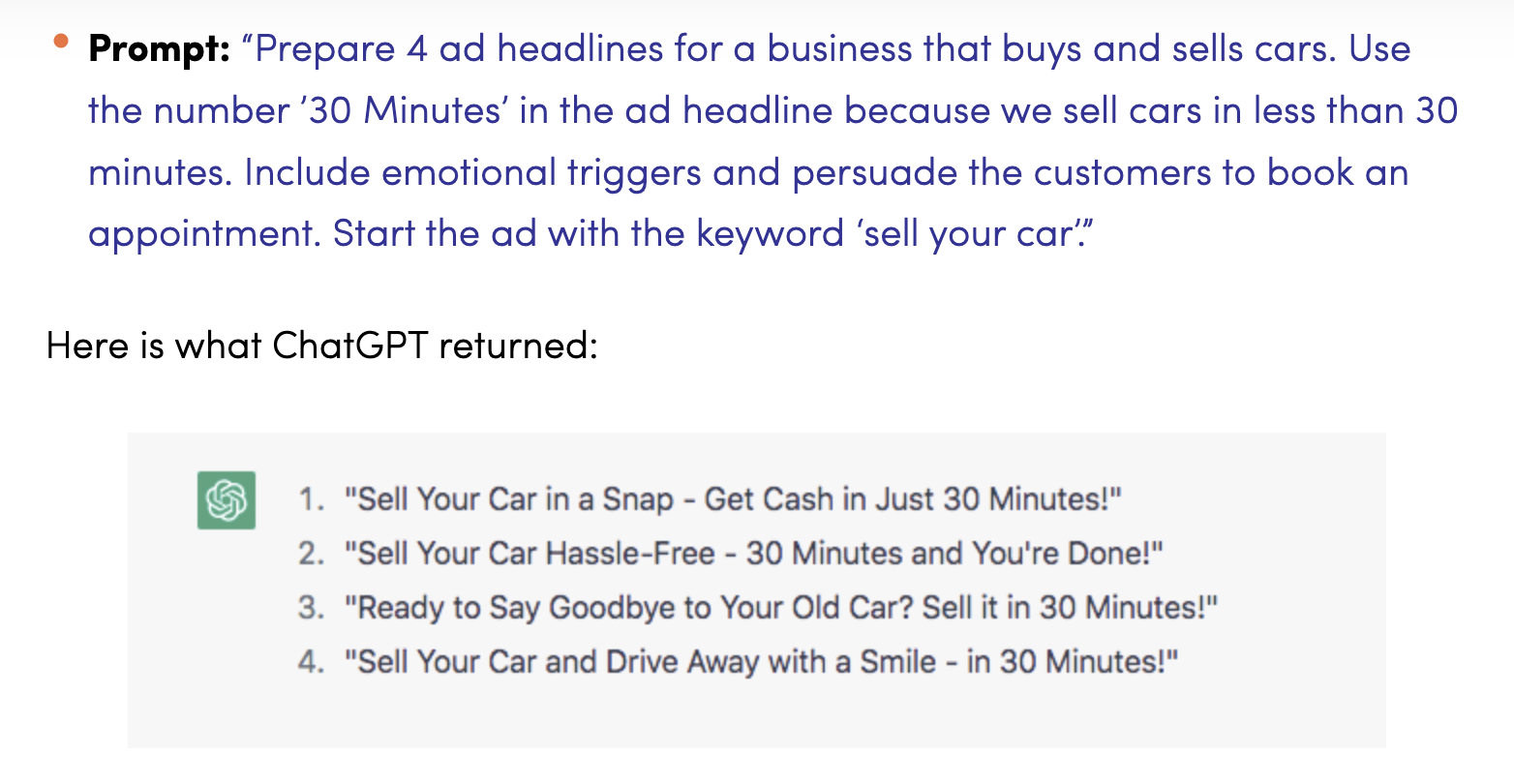
Crafting compelling ad copy that resonates with target audiences and adheres to strict character limits is a constant challenge for PPC specialists. ChatGPT excels at generating multiple ad copy variations quickly, allowing marketers to test different headlines, descriptions, and calls to action. For more insights on ad copy optimization, see our guide on effective ad copywriting. The AI can be prompted to write copy that aligns with specific brand voices, highlights unique selling propositions, and incorporates emotional triggers, all while optimizing for conversion. This iterative process of generation and refinement can lead to significantly improved click-through rates (CTRs) and conversion rates.
Landing Page Content Generation
Beyond ad copy, the effectiveness of a PPC campaign heavily relies on the quality and relevance of its landing pages. ChatGPT can assist in generating engaging and persuasive landing page content that is consistent with the ad copy and guides visitors towards conversion. Discover more about PPC landing page optimization best practices. From compelling headlines and benefit-driven body text to clear calls to action, the AI can help create a seamless user journey from ad click to conversion. This ensures that the message remains consistent and persuasive throughout the user’s interaction with the brand.
Audience Targeting Insights
Understanding the target audience is paramount for effective advertising. ChatGPT can process and synthesize demographic, psychographic, and behavioral data to provide deeper insights into audience segments. This can inform more precise targeting strategies, helping advertisers reach the right people with the right message at the right time. By analyzing customer reviews, social media discussions, and market research, ChatGPT can help build detailed buyer personas and identify key pain points and motivations.
Performance Analysis & Reporting
Analyzing campaign performance data and generating insightful reports can be time-consuming. ChatGPT can help automate the interpretation of complex data sets, identifying trends, anomalies, and areas for improvement. It can summarize key performance indicators (KPIs), explain the reasons behind certain outcomes, and even suggest actionable recommendations for optimization. This frees up marketers to focus on strategic decision-making rather than manual data crunching. For further reading on data analysis in marketing, check out our article on leveraging marketing analytics.
Challenges and Considerations
While the benefits are substantial, integrating ChatGPT into PPC workflows also comes with its own set of challenges and considerations that marketers must address.
Accuracy and Hallucinations
One of the primary concerns with large language models is the potential for “hallucinations,” where the AI generates plausible-sounding but incorrect or nonsensical information. In PPC, this could lead to misleading ad copy, inaccurate keyword suggestions, or flawed performance analyses. Marketers must implement robust review processes to fact-check all AI-generated content and ensure its accuracy and relevance. Relying solely on AI without human oversight can lead to costly mistakes.
Data Privacy and Security
Feeding sensitive campaign data, customer information, or proprietary business strategies into an AI model raises significant data privacy and security concerns. Advertisers must ensure that they are using AI tools that comply with relevant data protection regulations (e.g., GDPR, CCPA) and that their data is handled securely. Understanding how the AI model uses and stores input data is crucial to prevent breaches and maintain trust.
Over-reliance and Human Oversight
The efficiency offered by ChatGPT can sometimes lead to an over-reliance on the technology, potentially diminishing the critical thinking and strategic input of human marketers. While AI can automate many tasks, human expertise remains indispensable for strategic planning, creative direction, ethical considerations, and adapting to unforeseen market changes. A balanced approach, where AI augments human capabilities rather than replaces them, is essential for long-term success.
Integration with Existing Tools
Integrating ChatGPT into existing PPC platforms and marketing technology stacks can be complex. Compatibility issues, API limitations, and the need for custom development can pose significant hurdles. Marketers need to assess the technical feasibility and resource requirements for seamless integration to ensure that the AI tool enhances rather than disrupts their current workflows.
Best Practices for Implementing ChatGPT in PPC
To harness the full potential of ChatGPT in PPC while mitigating its risks, marketers should adhere to several best practices.
Start Small and Test
Begin by implementing ChatGPT for specific, smaller tasks within your PPC campaigns, such as generating a few ad copy variations or brainstorming keyword ideas. This allows you to understand its capabilities and limitations in a controlled environment before scaling up. A/B testing AI-generated content against human-created content is crucial to validate its effectiveness.
Define Clear Objectives
Before using ChatGPT, clearly define what you aim to achieve. Whether it’s improving CTR, reducing cost-per-click (CPC), or increasing conversion rates, having specific objectives will help you measure the AI’s impact and refine your prompts for better results. Vague objectives will lead to vague and unhelpful outputs.
Human Review and Editing
Always subject AI-generated content to thorough human review and editing. This is critical for ensuring accuracy, maintaining brand voice, and adding the nuanced human touch that AI models currently lack. Human oversight helps catch errors, refine messaging, and ensure compliance with advertising guidelines.
Continuous Monitoring and Optimization
AI-powered PPC campaigns are not a “set it and forget it” solution. Continuously monitor campaign performance, analyze the impact of AI-generated elements, and be prepared to make adjustments. The insights gained from ongoing monitoring can be fed back into the AI, improving its future outputs and overall campaign effectiveness.
Ethical Considerations
Be mindful of the ethical implications of using AI in advertising. This includes avoiding biased language, ensuring transparency with consumers where appropriate, and upholding responsible data practices. Ethical AI use builds trust and protects brand reputation.
The Future of AI in PPC
The trajectory of AI in PPC points towards increasingly sophisticated automation and personalization. We can anticipate AI models becoming even more adept at predicting market trends, optimizing bids in real-time, and creating hyper-personalized ad experiences at scale. The role of the human marketer will likely shift from manual execution to strategic oversight, data interpretation, and creative direction, working in synergy with advanced AI tools. Explore more about the future of AI in marketing. This evolution promises a future where PPC campaigns are not only more efficient but also more impactful and precisely targeted.
Frequently Asked Questions About ChatGPT PPC
What is ChatGPT PPC?
ChatGPT PPC refers to the application of OpenAI’s ChatGPT, a large language model, to various aspects of Pay-Per-Click advertising campaigns. This includes tasks such as keyword research, ad copy generation, landing page content creation, audience analysis, and performance reporting.
How can ChatGPT improve my PPC campaigns?
ChatGPT can improve PPC campaigns by automating and enhancing several key areas. It can generate more comprehensive keyword lists, create diverse and optimized ad copy variations, assist in writing persuasive landing page content, provide deeper audience insights, and help analyze campaign performance data more efficiently. This leads to increased efficiency, better targeting, and potentially higher ROI.
Are there any risks to using ChatGPT for PPC?
Yes, there are risks. These include the potential for the AI to generate inaccurate or “hallucinated” information, concerns regarding data privacy and security when inputting sensitive campaign data, the risk of over-reliance on AI diminishing human strategic input, and challenges in integrating ChatGPT with existing marketing tools. Human oversight and careful implementation are crucial to mitigate these risks.
How do I ensure the accuracy of AI-generated content for PPC?
To ensure accuracy, always implement a thorough human review and editing process for all AI-generated content. Fact-check information, verify keyword relevance, and ensure ad copy aligns with brand guidelines and legal requirements. Start with small-scale testing and A/B test AI-generated content against human-created content to validate its effectiveness before full deployment.
Will AI replace human PPC specialists?
It is more likely that AI, including ChatGPT, will augment the capabilities of human PPC specialists rather than replace them entirely. AI can automate repetitive and data-intensive tasks, freeing up marketers to focus on higher-level strategic planning, creative development, ethical considerations, and adapting to complex market dynamics. The future of PPC will likely involve a collaborative approach between human expertise and AI efficiency.
Conclusion
The advent of ChatGPT in the realm of PPC advertising marks a significant leap forward, offering unprecedented opportunities for optimization, efficiency, and innovation. From streamlining keyword research and crafting compelling ad copy to generating insightful performance reports, the potential applications are vast. However, realizing these benefits requires a thoughtful approach, acknowledging and addressing the inherent challenges related to accuracy, data privacy, and the need for continuous human oversight. By embracing best practices and fostering a collaborative environment between human strategists and AI tools, marketers can unlock the full power of ChatGPT PPC, paving the way for more effective, targeted, and successful advertising campaigns in the digital age.
Ready to elevate your PPC campaigns with cutting-edge AI? Contact us today to learn how Single Grain can help you integrate ChatGPT into your strategy for unparalleled results!