

Beginner’s Guide to Business Blogging in 2025


I know what you’re thinking: What business owner has the time to build a blog from scratch? It doesn’t matter if you’re a one-person-band or the CEO of an international company, the thought of creating a business blog is a daunting prospect.
Sure, the world tells you that there is lots to be gained, like increased online exposure, better search results, and even a boost to your bottom line. However, it takes a LOT to get there.
And with online competition more intense than ever before – in virtually every niche – you have to wonder: Is business blogging still worth it?
The answer is yes. Absolutely.
Read on to find out how to do business blogging the right way so that you can reap the rewards in 2025 and beyond.

TABLE OF CONTENTS:
3 Benefits of Business Blogging
Before we dive into ‘the how’, let’s first consider why you should start a business blog. Here are three advantages of business blogging:
1) It Attracts New Leads
Business blogging can help you form relationships with new website visitors. Instead of being greeted by a static, billboard-like page, new readers can connect with the casual tone of your blog posts. This personable, relatable approach helps forge connections that can result in increased revenue – without the need for a hard sell.
Dive Deeper: How to Write Lead Nurturing Content: 7 Proven Tactics
2) It Builds Trust with Customers
Businesses who blog help deepen the relationships they have with their current customers. When you post good content regularly, these visitors will come back again and again because they see you as an expert in your industry or on particular topics, and this can lead to recurring sales without a ton of extra effort on your part.
Dive Deeper: How to Create Quality Blog Posts that Convert Customers
3) It Improves Your Brand Reputation
Brands who blog get new people to their website by improving their rankings in the natural search results. SEO places a premium on high-quality content that’s updated regularly. Therefore, running a business blog is an effective way of winning with the search engines’ indexing programs and your regular readers.
But don’t just take our word. Here are some facts ‘n’ stats on the benefits of business blogging:
- 36% of Fortune 500 companies are using their blogs for thought leadership, product promotion and engagement.
- Companies that blog receive 55% more traffic than companies that don’t and they have 434% more indexed pages compared to those that don’t.
- Active company blogs have 97% more inbound links than websites without blogs.
- Active company blogs generate 67% more leads than websites without blogs.
- 81% of US online consumers say that blogs are trusted sources of information and advice.
- 61% of US online consumers have made a purchase based on recommendations from a blog.
- 68.52% of respondents say that a blog adds credibility to a website.
Dive Deeper:
- Should a Blog Post Focus on One Keyword or Multiple Keywords for SEO?
- 7 Creative Ways to Make Your Blog Posts Stand Out
- 30 Ways to Come Up with Great Ideas for Your Blog Posts
Additional Insights on the Value of Blogging
Especially these days when so much media is video-centric and publishers are seeing tons of engagement on YouTube, Instagram and Snapchat?
I think so. You know why?
Because blogging is one of the best ways to get free visitors to your website. Even without ads, you can get a ton of organic traffic. Think about Wikipedia. Wikipedia has articles on everything under the moon, and because of that they rank for a ton of long-tail keywords. The same could happen with your business.
What Is Good Business Blogging?
When you take a look at all the many great benefits that business blogging offers, it’s easy to get excited. More traffic, better brand awareness and increased revenue? Sign me up, right?
Although business blogging is a powerful strategy for growing your business website, it’s undeniable that it requires serious time and commitment – just like any other marketing technique.
The reality is that there’s a massive difference between good business blogging and bad business blogging. Let’s take a look at how the two differ:
- Betty, the bad business blogger, knows how vital her blog is, but can never seem to find the time in her day to commit to it. She drops in once a month and writes a quick update that she publishes right away. Because she releases so few posts, she makes them as sales-oriented as possible as she believes this will help her business squeeze as much revenue as possible out of the few people who visit their site. Once this is done, Betty abandons the site until the next month – never responding to post comments or promoting the content on social sites.
- Gary, the good business blogger, takes a different approach. He knows that consistency is critical when it comes to business blogging, so he’s created a publishing calendar that involves releasing two 1,800+ word posts each week that touch on a variety of fun and engaging topics. He’s active in his business community, getting into great discussions with the readers who comment on his posts and carrying the conversations over to his company’s social profiles whenever possible.
Whether the goal is to attract new customers, bond further with past buyers or improve search engine rankings, Greg’s company is going to get better results than Betty’s.
Dive Deeper:
- What’s the Ideal Number of Blog Posts to Write Each Week?
- 7 Steps to Stardom: How to Direct Web Traffic to Your New Blog
What Should You Write About in a Business Blog?
To improve the results you’re able to achieve through business blogging, one of the most important things you can do is to set – and stick with – a publishing calendar. At the very least, you should be posting to your website once or twice a week.
According to research from Marketing Insider Group:

Ultimately, it’s more important to publish high-quality content, rather than burning out the company’s resources with high-quantity nonsense that nobody wants to read.
So what should you be writing about in your posts?

First of all, keep in mind that the cornerstone of any excellent business blog is “evergreen” content – the kind of information that provides informative, expert insight into topics that will always be relevant to your audience. You don’t want to spend hours writing and publishing an article that is old news within 12 months.
Here’s a list of blogging ideas to help you get started:
- “Linkbait” posts – These posts are designed to gather page views or backlinks (or both). Typical linkbait post structures include list posts (e.g. “17 Ways to Save Big on Bike Parts”) or articles that take a controversial viewpoint (e.g., “Why You Shouldn’t Buy XX Brand Bikes”). Remember that the attention-grabbing headline is not enough; you must deliver within the body of the article, too.
- Commentary on industry news – Offering your own two cents’ worth on issues that are affecting your industry helps to build your perceived authority among your readers. Furthermore, it can also play a vital role in helping your blog appeal to the search engines. Regarding evergreen material – you can always update current industry news articles a year or so down the line by adding info on what’s new or what’s changed, or go into more detail about the core topic (rather than the issue surrounding it).
- Inside look at office life – Website visitors love getting peeks into what’s going on behind the curtains of your company – putting human faces and personalities to the brand. Fun posts that showcase your company’s office culture in words, pictures or videos can help to differentiate your brand from others.
- FAQs as individual posts – These are easy to write because you already have the “outline” on your Frequently Asked Questions page. Take one FAQ, or a series that naturally go together, and flesh it out. Use the question as your title and related questions for your headers and subheads.
- Link roundups – Compile interesting and relevant blog posts into a weekly roundup to provide value to your readers (and make gathering news items easy for them!):
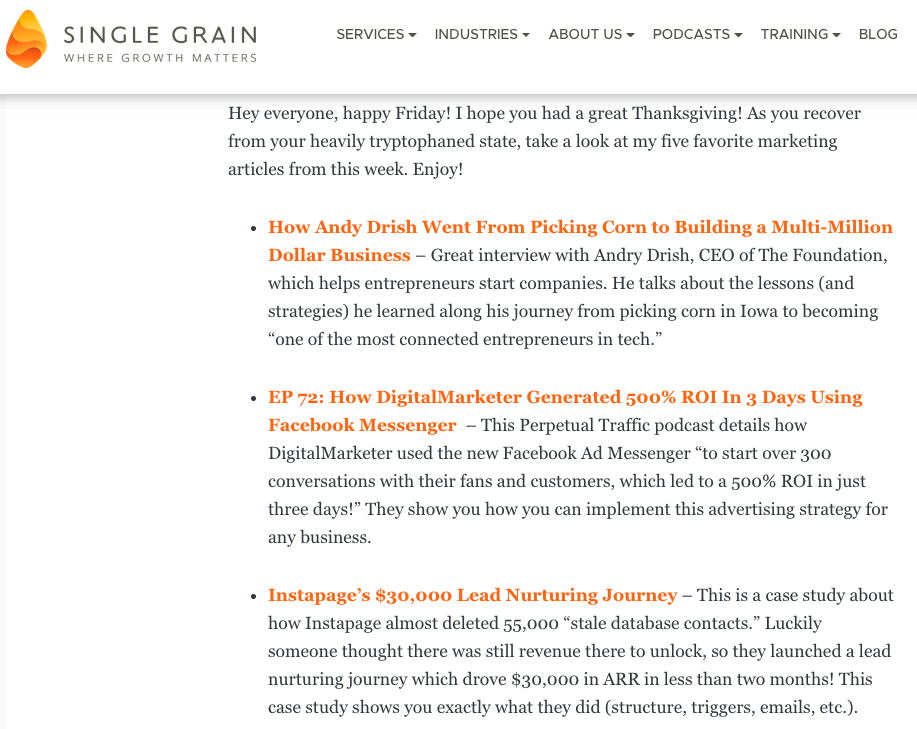
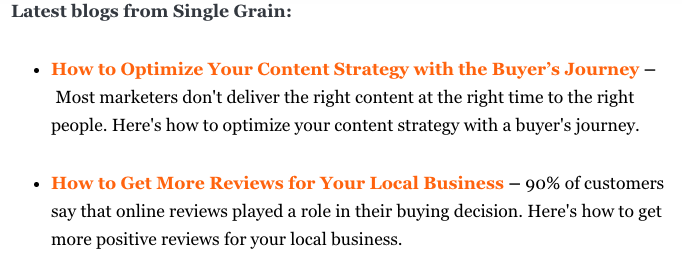
The five or so links should not be your own, but do add a section at the bottom called “Our latest blogs” or something like that:
- Video posts – Write a short 1-2 paragraph intro and then embed a video. It can be a sneak peek at a new product, a product demo or explainer video. It could also be a topic that could use some screenshots or animated graphics to help explain your point, like The Top 5 SEO Tools To Skyrocket Your Organic Traffic.
- Infographic posts – If your business deals with a lot of numbers or stats or research, creating an infographic is a great way to present all that data in a visual – i.e. easily consumed – format.
- Promotional content – While sales posts shouldn’t represent the bulk of your blog, tossing in a promotional piece now and again helps readers find out more about your products.
Keep in mind that whatever type of blog post you write, visual content like videos, infographics and written posts with plenty of relevant images and graphs tend to get much more engagement:

Dive Deeper:
- Never Run Out of Ideas: 7 Content Creation Strategies for Your Blog
- 10 Ways to Generate Topics and Write High-Ranking Blog Posts
- 9 Tips to Take Your Blog Content from Average to Awesome
- 7 Tips to Creating Killer Blog Posts that No One Else Is Writing
Setting SMART Goals Is Crucial for a Winning Business Blogging Strategy
So, how do you make sure that your business blog moves the needle and attracts viewers who could go on to become customers?
As with any other marketing campaign, your blog needs to have defined goals. These targets will differ depending on the type of business, but the SMART strategy outlined below is a reliable format for any company to use.
For each of your goals, check that they are:
Specific
What exactly are you trying to achieve? In blogging, you may want more site traffic, more leads for your new product, to build brand awareness or to establish your business as an educator or thought leader.
Measurable
It’s vital to track your progress so you can determine when you have achieved your goals. Metrics like daily website traffic, social shares and email subscribers are excellent barometers to gauge audience engagement with your content.
Attainable
While it’s tempting to shoot for the stars, you should temper expectations by using data analytics to guide your goals. Don’t get too deflated by setting low targets. Remember that 100 genuine brand advocates are worth a lot more than 10,000 one-time visitors.
Relevant
Your blog goals should be intrinsically linked to your overarching business objectives. For example, increasing your email subscribers by 10% in the next quarter will likely result in some new leads for your product or service which, in turn, presents new opportunities for sales.
Time-based
Every goal needs a deadline. By setting a schedule to chart your progress, it lights a fire under your team to ensure that they push forward in order to hit targets on time.
Know Your Audience
When you’re starting a business blog, it’s not easy to stand out from the pack, especially if your competitors have been doing this a lot longer and/or you’re churning out the same rehashed fluff that everyone else is doing.
People want actionable, relevant content. That means that you should only be creating valuable articles loaded with current information on topics that your readers and customers care about, and every single blog post must give your readers straight answers to their burning questions.
So if you’re writing a blog that doesn’t offer a solution to their pain points, then your company blog is not going to do well.
Which begs the question: What do people want to know?
To learn more about the burning questions and most shared topics in your target market, scour online groups, forums and platforms like the following:
- Quora
- Answer The Public
- Think with Google (marketing research and insights)
- BuzzSumo (find the content that is performing best)
Knowing your audience is vital in content marketing. After you set your goals, you should do this groundwork to find out more about your audience’s pain points. What questions are they asking? What topics interest them? What is your competition not giving them?
When you take the time to gather this information, you can create detailed audience personas that will guide your content creation efforts. This is an essential aspect of blogging today, and rather than simply create one kind of blog post for everyone, individual and detailed buyer personas will help you create more targeted content that gets results.
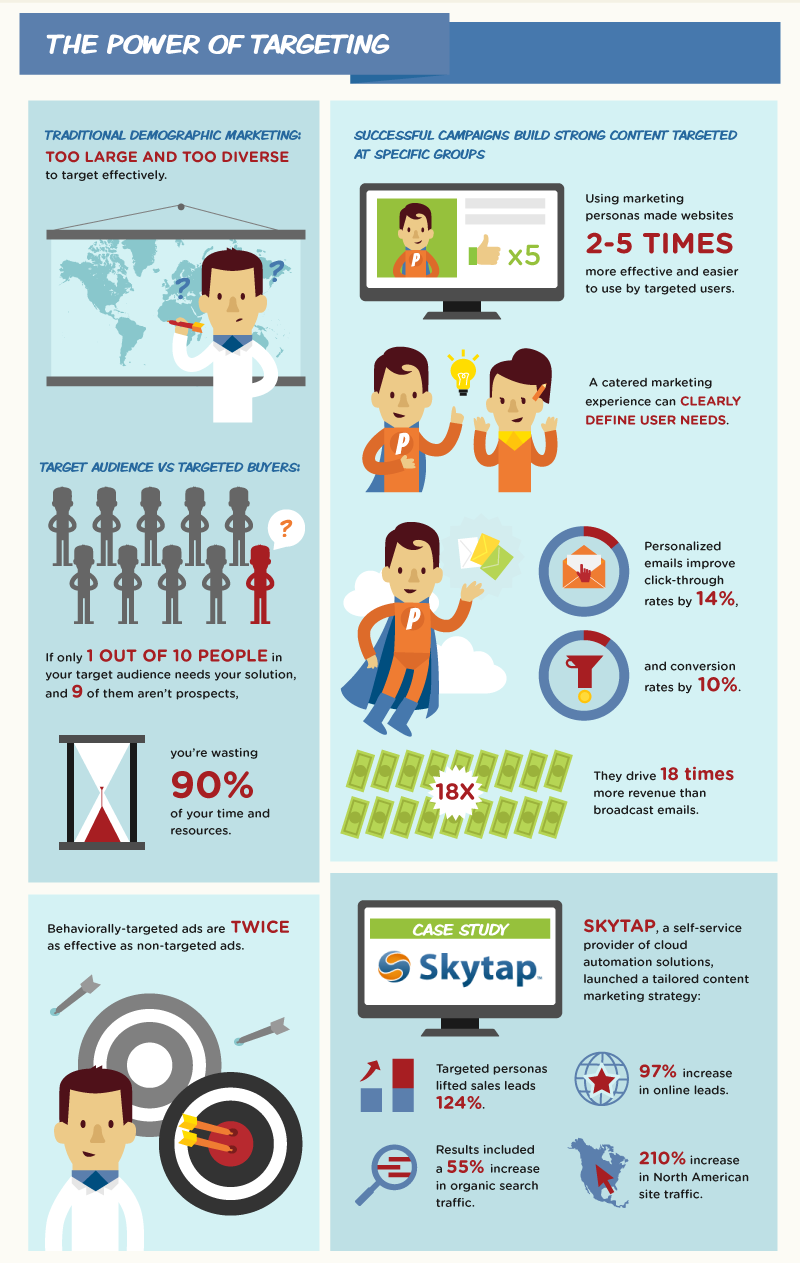
A simple buyer persona looks something like this:
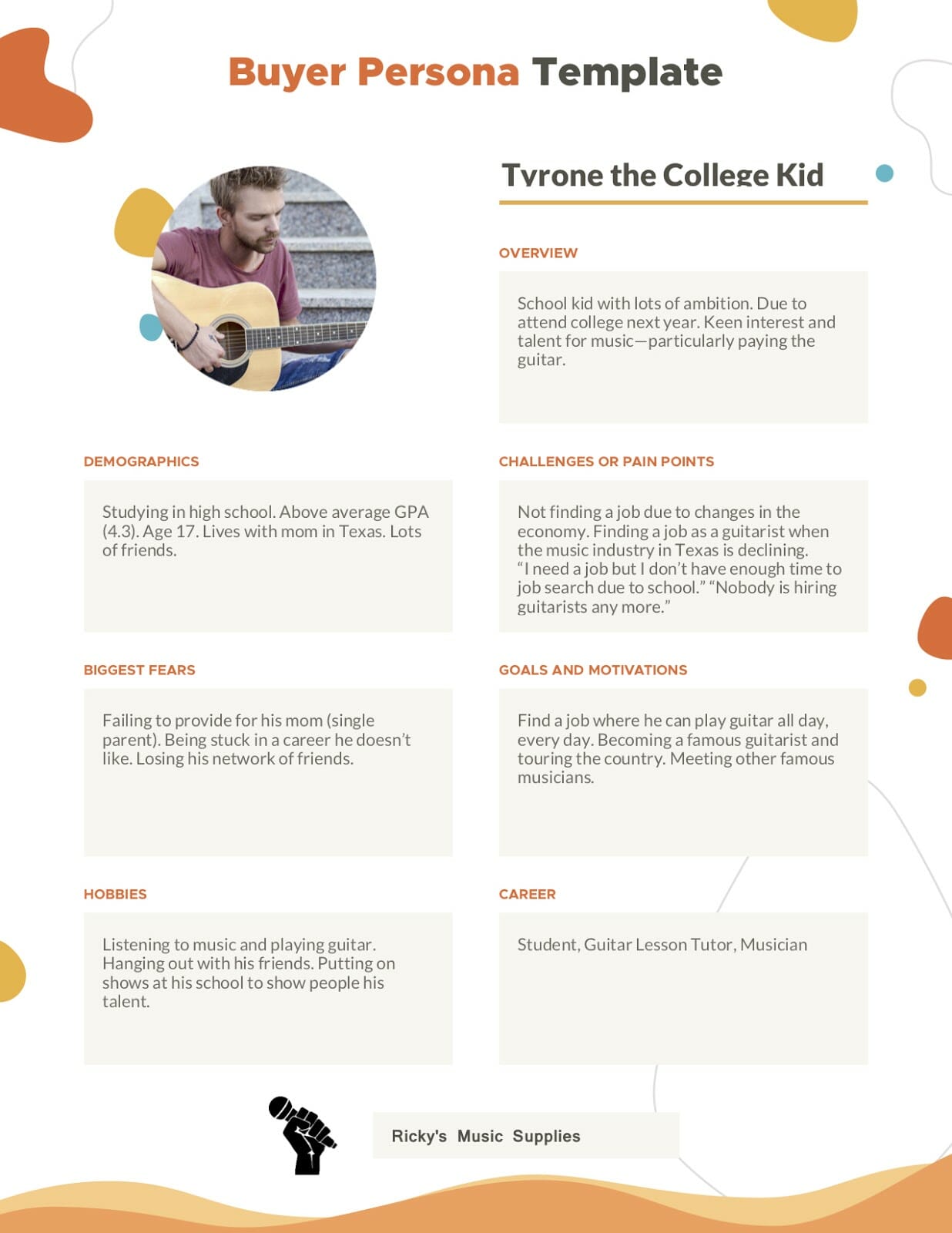
Dive Deeper: The Ultimate Guide to Developing Buyer Personas (with Templates!)
Marketing Is Most of the Work
With business blogging, creating content is only part of the job. The real work begins after you press publish.
Nowadays, content marketing is just 20% creation and 80% promotion. Once your blog is ready to be shared with the world, you should immediately promote the new content on all your social channels.
If you recall, we mentioned above that Gary, the good business blogger, didn’t just publish posts – he also actively engaged with his community.
Realistically, your blog should be the starting point in the conversations you’re able to have with your readers. After that, you need to work hard on promotion to ensure that your brand message connects with more people. If you’re worried about the financial burden of all this content promotion, check out How to Promote Your Blog Post on a Tight Budget:

Here are some popular promotional avenues to consider:
Influencer Marketing
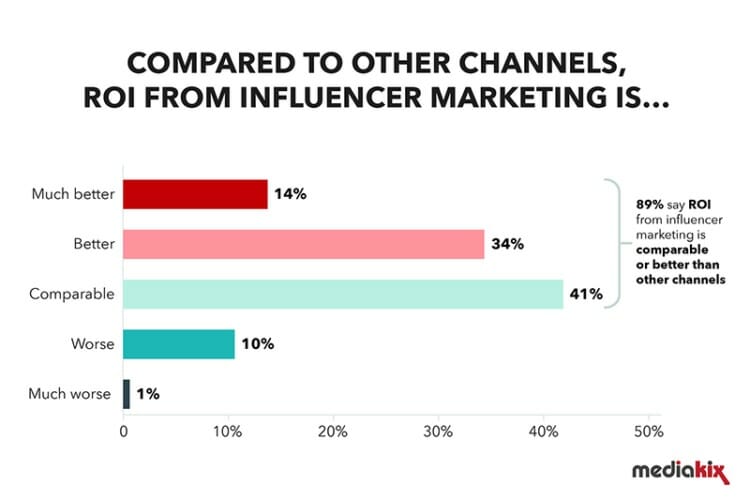
Influencer marketing is a significant force today, with 17% of companies claiming that they spend over half their marketing budget on influencers. By partnering with key influencers in your space, you can leverage their reputation and large audience to promote your blog content. This is an excellent way of building brand awareness to groups of people you might not have had access to.
And when it comes to the effectiveness of influencer marketing, the ROI is as good or better than other marketing channels:
Dive Deeper:
- How to Choose an Influencer to Boost Your Marketing Campaign
- 84 Influencer Marketing Statistics [Infographic]
- 5 Hacks to Start a Conversation with an Influencer
- All You Need to Know About the ROI of Influencer Marketing [infographic]
How to Get Started With Influencer Marketing:

Social Media
You must find your audience where they are most active, and then take regular action to engage them in conversation. If your demographic is Millennials, it’s a waste of time to focus your efforts on LinkedIn. On the other hand, if your customer base is B2B clientele, then LinkedIn is exactly where you should focus.
Join in with provoking questions, answering other commenters’ questions and offering credible, practical insights about topics of interest. By building a presence on one or two channels at first, you can establish your brand voice and authority. After that, you can promote your blog content to people who already know and trust you.
The platform you choose also depends on what kind of content you are sharing. As a basic rule, the following platforms are best used for:
- Facebook: Photos, videos, live events, text posts
- Instagram: Photos, videos, in-photo texts
- LinkedIn: Job postings, professional updates, corporate press releases
- Pinterest: Infographics, instructions, photos
- Twitter: Short texts, links to blogs, polls
Dive Deeper:
- The Beginner’s Guide to Crafting a Highly Effective Social Media Strategy
- 7 Dead Simple Social Media Marketing Tactics That Still Work Today
- How to Boost Your Social Media Marketing Efforts with Content Marketing Tools
- How to Increase Website Traffic through Social Media
Email Marketing
Email may not be as new and shiny as some of the other marketing techniques around today, but it is still incredibly powerful: Email marketing ROI is $44 for each dollar spent. The key is personalization. Nobody wants to receive a mass email about waterproof baby booties if they don’t have children (or even if they do, but their kids are in high school).

Use email sign-up forms on your site to build a list of followers, which gives you a direct line to their inbox. From there, you can nurture stronger one-to-one relationships with people, encouraging them to amplify your brand message.
Dive Deeper:
- How to Use Personalization to Increase the Impact of Email Marketing
- Beyond the Newsletter: You’ve Got Their Email, Now What?
- How to Get More Responses From Your Cold Emails
- 10 Best Cold Emailing Tools to Help You Quickly Close Sales Deals
Conclusion
A business blog is a platform that allows you to express your brand’s viewpoints, but it is by no means a one-way street. Done right, you can use a business blog to increase brand awareness, educate your readers and become a go-to expert, and connect with more people.
As you engage with your site visitors, you can nurture stronger relationships and eventually encourage them to subscribe. Of course, this doesn’t happen overnight, but the long-term strategy of business blogging is a worthwhile endeavor.
Remember: businesses that blog receive 55% more traffic, 434% more indexed pages, 97% more inbound links and 67% more leads than companies that don’t.
By investing the time and effort, you can use a blog to elevate your brand to new heights and establish your business as a thought leader in the market. Soon enough, you’ll be able to turn readers into loyal customers.