How Much to Charge for Brand Sponsorships: CPM Pricing, Flat Fees, Add-Ons, & More!


Most creators work out how much to charge for sponsorship while a brand’s email sits open in another tab. In my opinion, this is the worst moment to do pricing math. The offer looks exciting, the deadline feels close, and the number you send back gets shaped by nerves. One rushed yes can lock in that price for the next year.
My team fixed this by taking the live decision away from people. An AI bot answers every sponsor inquiry against a minimum price we locked in advance. Nobody haggles on the fly anymore, and the floor stays put even after a slow month.
You might be asking yourself what should my minimum actually be? Below, I’ll show you how to set a sponsorship floor, how to price the deals above it, and how to let a bot hold the line for you.
TL;DR
- Set a floor before any brand asks. Pick the lowest price you’ll accept for each format, then write it down where nobody can bend it mid-thread.
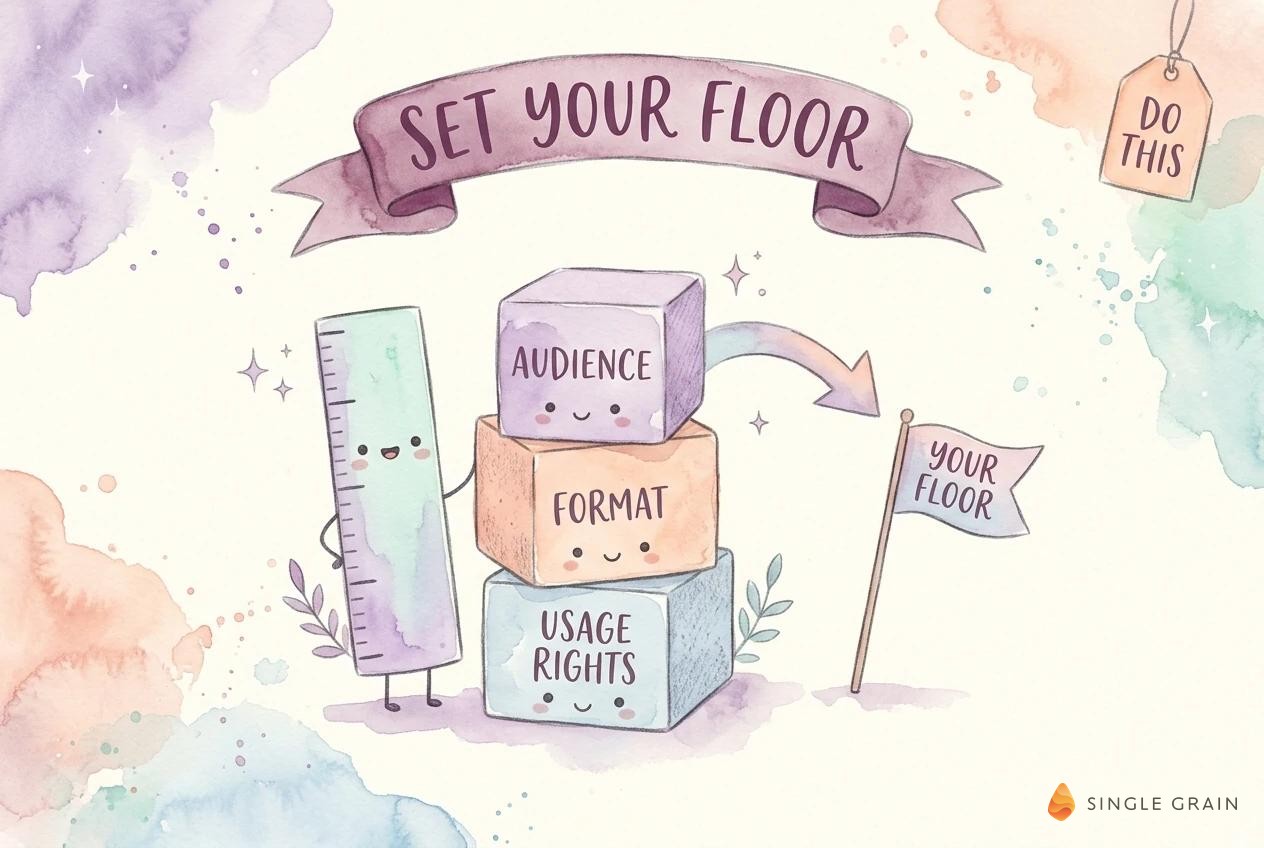
- Price from audience, format, and rights. Start with reach, adjust for the format, then add fees for usage rights and exclusivity.
- Let a bot answer the first reply. A sponsor bot can check each request against your floor and send a rate card or a polite no in minutes.
- Keep people on the final call. Humans still approve custom packages, long contracts, and any brand outside your comfort zone.
What Is a Sponsorship Floor Price?
A sponsorship floor price is the lowest amount you’ll accept for a single placement. It sits under your published rates as a hard line. Offers above it get a reply with your rate card, and offers below it get a friendly decline.
Most creators and publishers skip this step. They quote a fresh number for every inquiry, so their real price drifts with their mood, their cash flow, and how famous the brand sounds. A floor turns pricing into a rule your whole team can follow, including any bot you put on the inbox.
Floor Price vs. Rate Card
Both numbers do different jobs, so keep them separate:
- Floor price. Your private minimum per format, used to decide whether a conversation is worth having at all.
- Rate card. Your public asking prices, packages, and add-ons, usually set well above the floor to leave room for negotiation.
Once you know the floor, every other pricing decision gets easier. The next step is the formula behind both numbers.
How Much to Charge for Sponsorship Using a Simple Formula
Every brand sponsorship price comes back to three inputs. You need the size of the audience a brand will reach, the format of the placement, and the rights the brand wants to keep afterward. Get those right and you can price almost any request in a few minutes.
1. CPM Pricing for Podcasts and Video
For audio and video, most deals start from cost per thousand impressions (CPM). Multiply your expected downloads or views per episode, divided by one thousand, by your chosen CPM. If an episode reliably gets ten thousand downloads and you pick a $30 CPM, your base rate is $300 per placement. These are example numbers for the math only, so plug in your own audience data and a CPM you can defend.
Use reliable averages here. A thirty-day average per episode protects you from pricing off one viral spike.
2. Flat Fees for Newsletters and Social Posts
Newsletters and social posts often sell as flat fees. Base the fee on active subscribers or typical reach per post, then adjust for open rates, click rates, and how closely your audience fits the sponsor. A smaller, highly engaged list can earn more per reader than a large, passive one.
3. Add-Ons for Usage Rights and Exclusivity
Brands often want more than the placement itself. They might ask to run your clip as a paid ad, keep the content live forever, or block you from working with competitors. Each of those asks carries a cost, so price each one as its own line item.
| Pro-Tip |
|---|
| Write your add-on fees as percentages of the base rate, such as 25% for ninety days of paid usage. Percentages scale with your audience, so you never have to rebuild the rate card from scratch. |
With the formula in place, you can turn it into a floor your team never has to debate again.
Set Your Minimum Before the First Inquiry
A floor only works when it exists before the email arrives. Pick the lowest price per format you’d still be glad to deliver, given the time each placement takes. For many creators, this sits somewhere between their base rate and half of it, though the right figure depends on your margin.
Store the floor in one place your team and tools can read. A shared pricing doc works fine, and so does a short config file for a bot. The key is one source of truth everybody follows.
Rules Worth Locking in Writing
Lock these rules before you hand the inbox to anyone:
- A minimum per format. Separate floors for a podcast read, a newsletter slot, a dedicated video, and a social post.
- A list of off-limits categories. Products you won’t promote at any price, so the bot can decline them right away.
- A cap on free extras. A clear limit on bonus posts or extended usage you’ll include without charging.
Rules like these are the same kind of hard rule I give my agents, which is why AI agent memory works better with fixed instructions than with loose preferences. Once the rules are written, a bot can enforce them for you.
How My Sponsor Bot Holds the Floor
This setup is my favorite part. My team runs one bot answering sponsor inquiries against our locked minimum pricing. A second bot sends candidates our prequalifying questions before anyone gets shortlisted.
Both bots follow the same idea. They handle the repeatable first reply with rules we set, and people step in only when a judgment call appears. My team AI agent setup runs this way across the business.
What the Bot Reads in Each Inquiry
Each sponsor email gets parsed for a few details. The bot pulls out the brand, the format requested, the budget if one is named, the timeline, and any usage or exclusivity ask. It then compares the offer with the floor for that format.
A good triage flow looks a lot like an inbox triage agent for marketing ops. It labels the request, routes it, and escalates anything outside the rules.
Replies for Offers Above and Below the Line
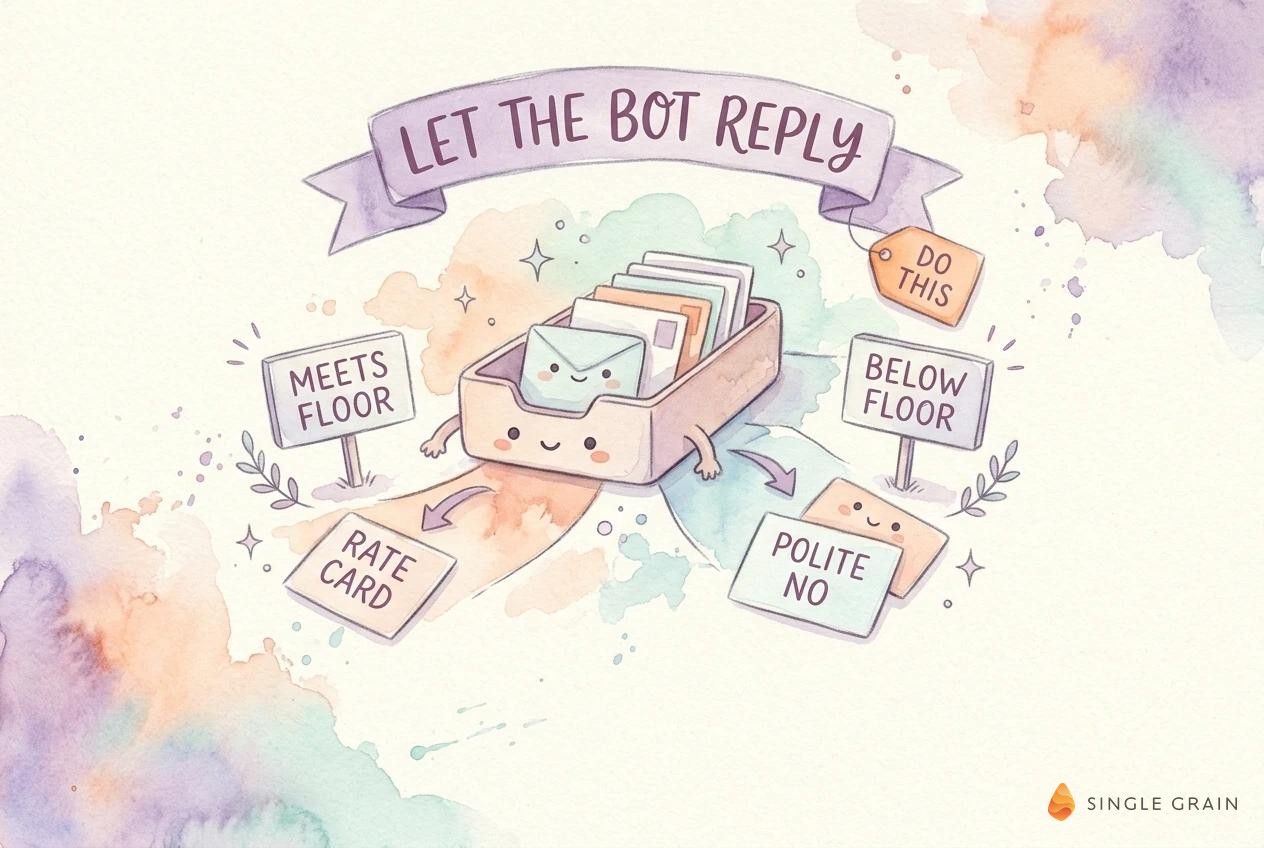
When an offer meets the floor, the bot sends the rate card and a booking link. When it falls short, the bot sends a short, polite note with the minimum and an invite to come back with a bigger budget. Brands get an answer fast either way, and nobody on my side spends an afternoon drafting the same reply.
Speed helps close deals. A sponsor who hears back in minutes is more likely to keep talking than one who waits a week for a custom quote.
Human Review Triggers
The bot never signs contracts. It flags custom packages, multi-month deals, unusual usage rights, and any brand outside our usual categories for a person to review. Which bots can read, draft, or send is its own design job, and my AI agent guardrails post walks through how I split those permissions.
| Pay Attention |
|---|
| Let the bot quote and decline, but keep final approval with a person. A wrong yes on a long contract costs far more than a slow reply. |
Once the bot handles first replies, your rate card becomes the main sales tool in every thread.
Sponsorship Rate Card Basics
A sponsorship rate card is the document the bot sends when an offer clears the floor. Keep it to one page so a brand manager can forward it to a boss without editing. Clear packages beat a long menu of options.
What a Strong Rate Card Includes
Cover these sections and you’ll answer most follow-up questions before they’re asked:
- Audience snapshot. Size, growth, and who your listeners or readers are, in plain language.
- Formats and prices. Each placement type with its price, so the brand can pick fast.
- Add-ons. Usage rights, exclusivity, and bundle discounts, priced as clear line items.
- Payment and booking terms. Lead time, payment terms, and how many revisions are included.
Sponsored content also needs clear disclosure. Follow the Federal Trade Commission (FTC) disclosure guidance for influencers, and on video, use YouTube’s paid promotion setting so viewers know when a segment is paid.
If you repurpose episodes, turning podcasts into AI-discoverable assets can also grow the audience numbers on your card.
A clean rate card makes the negotiation shorter, which is where most creators lose money.
Negotiate Brand Deals Without Dropping Your Price
Most negotiations start with a brand asking for a discount. Your floor gives you an easy answer. You can trade scope for price, but the price per placement never drops below the line.
Trade Scope for Budget
When a brand’s budget comes in low, offer a smaller package. Drop the dedicated video and offer a mid-roll read, or swap a four-week run for two weeks. The brand gets a deal that fits its budget, and your rate per placement stays intact.
You can also add value without adding cost. A bonus mention in your newsletter or a recap post costs you little and makes the package feel bigger.
Prices for Repeat Sponsors
Long-term sponsors deserve a better rate, as long as the deal clears the floor. A modest discount for a three-month commitment rewards loyalty and gives you predictable revenue. Write the discount into the rate card so the bot can quote it without asking.
Brands are also starting to use agents of their own. To get ready for marketing to AI agents, make your prices and terms easy for a buyer’s bot to read. A clear floor and a clear rate card do exactly this.
Put Your Sponsorship Floor on Autopilot
Your answer to how much to charge for sponsorship starts with one decision made in advance. Set a floor per format, build a simple rate card, and let a bot answer the first reply against both. You’ll stop underpricing in a rush, and brands will get faster answers than they expect.
If you want help building agent workflows or monetizing an audience through sponsorships and podcast ads, the Single Grain team can help through our marketing consulting services and podcast ads services.
Frequently Asked Questions About How Much to Charge for Sponsorship
-
How much should I charge for a sponsorship?
Start from your audience size, the format, and the rights the brand wants. For podcasts and video, multiply expected downloads or views per thousand by a cost per thousand impressions (CPM) you can defend. For newsletters and posts, use a flat fee based on active readers. Then add fees for usage rights and exclusivity, and never quote below your floor.
-
What is a sponsorship floor price?
A floor price is the lowest amount you’ll accept for one placement. It stays private, sits below your rate card, and decides whether an inquiry gets your rates or a polite decline.
-
Should I share my rates on the first reply?
Yes, when the offer clears your floor. Sending a one-page rate card right away saves days of back and forth and lets the brand pick a package fast. Keep custom bundles for a follow-up call.
-
Can an AI bot answer sponsor inquiries for me?
Yes. A sponsor bot can read each request, compare it with your floor, and send either your rate card or a decline. Keep contracts, custom packages, and unusual usage rights with a person. See AI agent guardrails for how to split those permissions.
-
How do I negotiate brand deals without lowering my price?
Trade scope for budget. Offer a smaller package, a shorter run, or a different format, and keep the price per placement at or above your floor. Repeat sponsors can earn a modest multi-month discount written into your rate card.