

7 Dead Simple Social Media Marketing Tactics That Still Work Today


The marketing industry has always suffered from “Shiny Object Syndrome.” There’s always a new channel or strategy for growth, and marketers want to be the first to test and successfully use the “Next Big Thing.”
And I’m guilty of this, too.
There’s nothing wrong with trying out new tactics for social media (or any other channel) marketing. You should try them! But you have to make sure it isn’t at the expense of the tried-and-true ones, the ones that aren’t sexy or exciting, but that get the job done.
These social media marketing tactics may not be fresh, but they are effective. Consider this your reminder that going back to basics is easy, cheap and will get you results.
TABLE OF CONTENTS:
- Tactic #1: Post Your Content Repeatedly on Social Media
- Tactic #2: Push Content to Your Email List
- Tactic #3: Post a Portion of Your Content on LinkedIn
- Tactic #4: Repurpose Your Content
- Tactic #5: Post the Entirety of Your Content One Week After Publication
- Tactic #6: Use Analytics to Find Your Most Successful Topics
- Tactic #7: Keep Your Paragraphs Short
- Keep Your Social Media Simple
Tactic #1: Post Your Content Repeatedly on Social Media
The first 24 hours after you publish a piece of content are the most crucial for bringing in traffic. When a piece of content is fresh and people are seeing in for the first time, that’s when you’re going to get the most clicks. Promoting that content on social media more than once in that timeframe can easily help you double your traffic.
Right after you hit publish, promote your content immediately on all of your social networks, and then do it two more times in the first 24 hours. To avoid being seen as spammy, change up your messaging. For example, try one that’s a summary, one that’s a question, and one that’s a quote to mix it up.
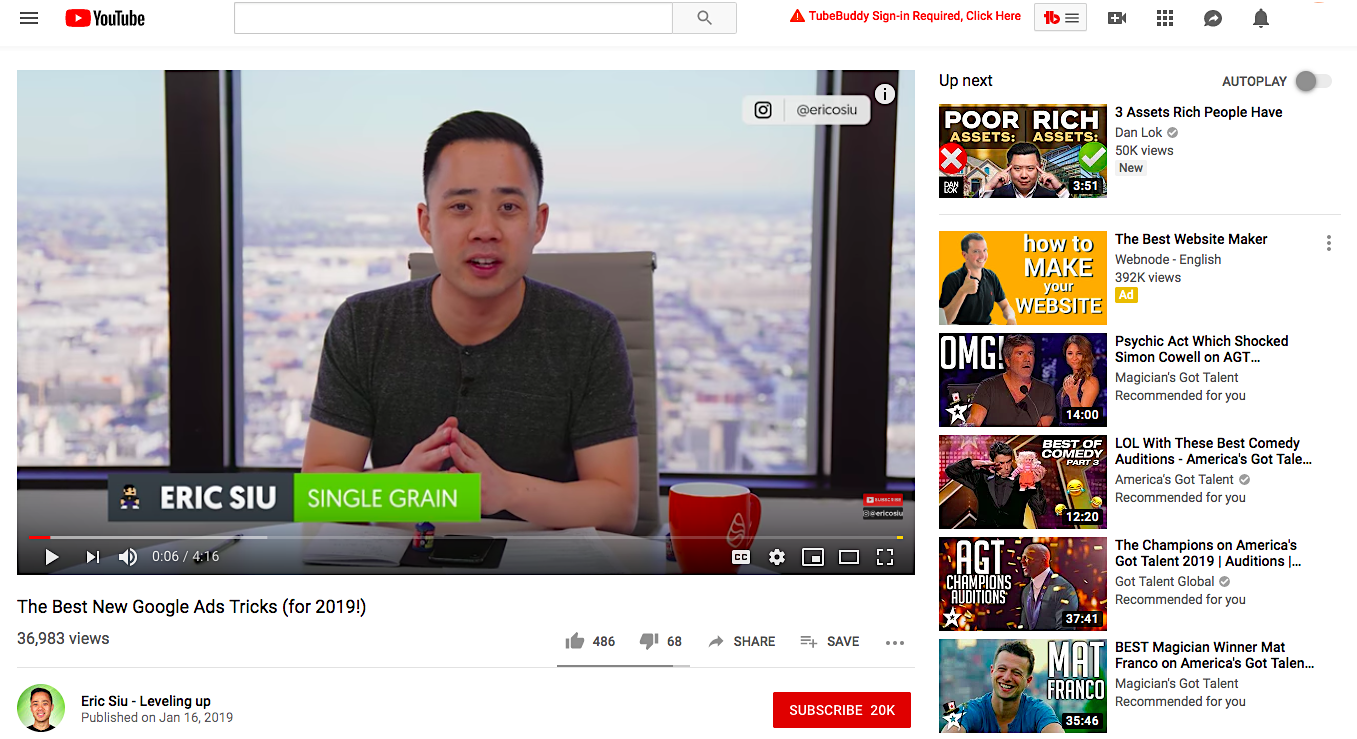
If you’ve gotten someone else to share your link, coordinate your publishing and promotion schedules if possible so all of the posts happen in the first 24 hours. This timeframe is especially important when it comes to YouTube videos – ranking is largely determined by how many views and engagements a video receives on the first day after it’s uploaded.
Some people use Instagram engagement pods – where users form groups to like and comment on each other’s posts as soon as they go up – to boost traffic and engagement, but I don’t recommend it. For one thing, Instagram has been cracking down on the practice. Plus, it’s just a shady thing to do and, in my opinion, not worth the risk.
Dive Deeper: How to Boost Your Social Media Marketing Efforts with Content Marketing Tools
Tactic #2: Push Content to Your Email List
Another way to boost your engagement in the first 24 – or even 48 – hours after you publish something is to send it out to your email subscribers. After all, your email list is comprised of your most loyal followers and they’re the ones who are most likely to like and share your content.
For maximum reach, coordinate your email blast with your social media posts and any outside promotion you’ve lined up. Basically, make all your marketing channels work for you simultaneously to get your new content in front of as many eyeballs as you can, as quickly as you can.
And don’t just promote your text-based content in your emails. Incorporating video into newsletters (and making sure the subject line includes the word “video”) can increase your open rate by 6%.
Content doesn’t have to be brand new for you to use these first two strategies, either. A popular evergreen post will benefit from the same cross-channel strategy as a fresh one, especially if it’s been recently updated. Just make sure you don’t keep older content in constant rotation in your emails; if users see the same piece over and over, they’re likely to unsubscribe.
Dive Deeper: How to Use Personalization to Increase the Impact of Email Marketing
Tactic #3: Post a Portion of Your Content on LinkedIn
If you have an article or a blog post you want to promote, put the first few paragraphs on LinkedIn, along with a “click to continue” link that brings users back to your website to finish reading it. You’ll get 3-4X more traffic than you would if you just posted a link to your content.
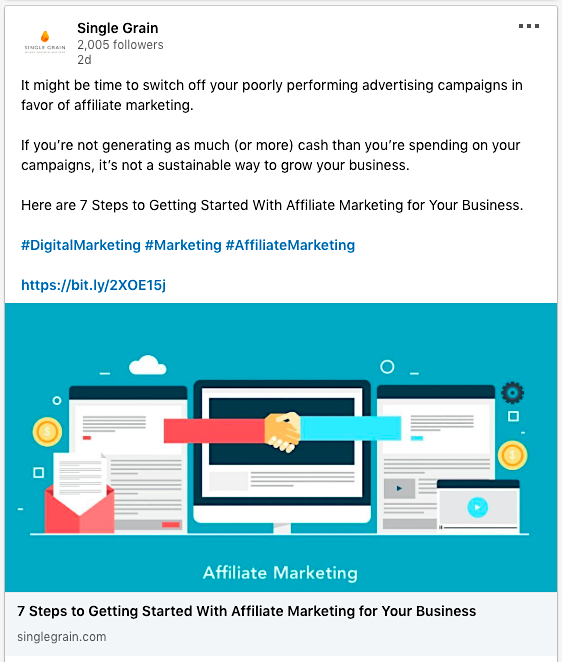
You can do this on Facebook too, but be sure to include an image or video. LinkedIn users don’t mind reading text, but on Facebook, visuals matter. The more eye-catching and engaging, the better.
Dive Deeper: How to Target Effectively on LinkedIn
Tactic #4: Repurpose Your Content
If you take each piece of content and reformat it for other channels, it can take on a life long after a video is uploaded to YouTube or a blog post is published.
One advantage to repurposing content is that it saves you time. The content is already there – you just have to tweak it so it works in different formats.
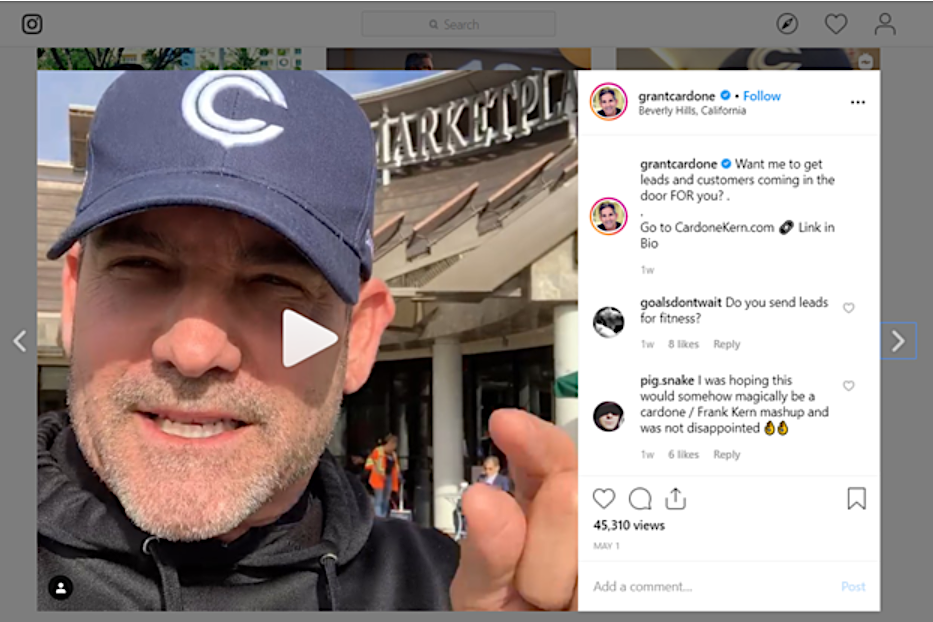
Gary Vaynerchuk and Grant Cardone are two people who do this very well. They are prolific with their content and are experts at repurposing it for different platforms. For example, Grant Cardone will often do a live video and then chop it up into 60-second Instagram videos or turn it into a text-based format.
We have been very successful with our Content Sprout Method. After we create a piece of content, we rework it into several different formats. For example, we might start by going live on YouTube. Then we’ll:
- Turn it into a Growth Everywhere podcast
- Create a 30-second video teaser for Instagram
- Get a transcript through Rev and turn that transcript into a blog post
When repurposing content, it’s important to format it natively for the platform you’re posting it on. You can turn your content into video, images, text, infographics – whatever works best for each channel and each piece of content. Don’t try to make something work if it doesn’t feel organic; it’s better to do something right than to do something just to do it.
Once you’ve turned one piece of content into several different pieces, you can go back to the first two tactics – promoting it across social networks and via email – and voila! you’ve tripled the number of people who see that content. Remember the rule of seven: a consumer needs to see your marketing messages a total of seven times before they take action. The more touchpoints, the faster you’ll get to seven.
Before you start putting a lot of time and resources into repurposing content, however, make sure that you’re focusing on your best content. You don’t want to create 12 versions of everything you publish on your blog or upload to YouTube. Wait and see which topics and content types perform well, and then make those your focus.
Dive Deeper: 9 Ways to Repurpose Your Old Blog Content
Tactic #5: Post the Entirety of Your Content One Week After Publication
The first 24 hours after publication are important, but so is getting the most out of a piece of content. With text-based content like blog posts and articles, you can post them in their entirety on Facebook or LinkedIn. Not a lot of people do this, but they should.
The average organic reach of a brand’s post on Facebook is only 6.4% of the page’s total likes:
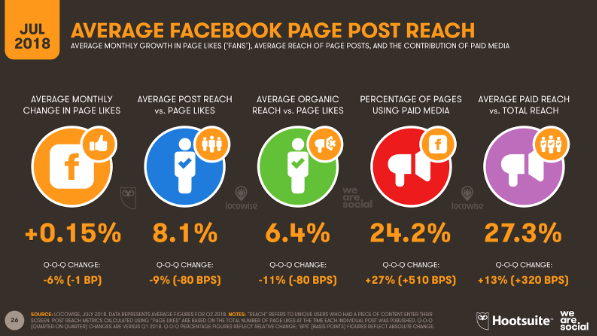
That’s pretty dismal, and it’s why you need to focus on engagement. The more engagement that your posts receive, the broader your reach.
Long posts also work really well on LinkedIn. A recent analysis of more than 3,000 LinkedIn posts showed that posts between 1,900-2,000 words receive the greatest number of post views, likes, comments and shares:
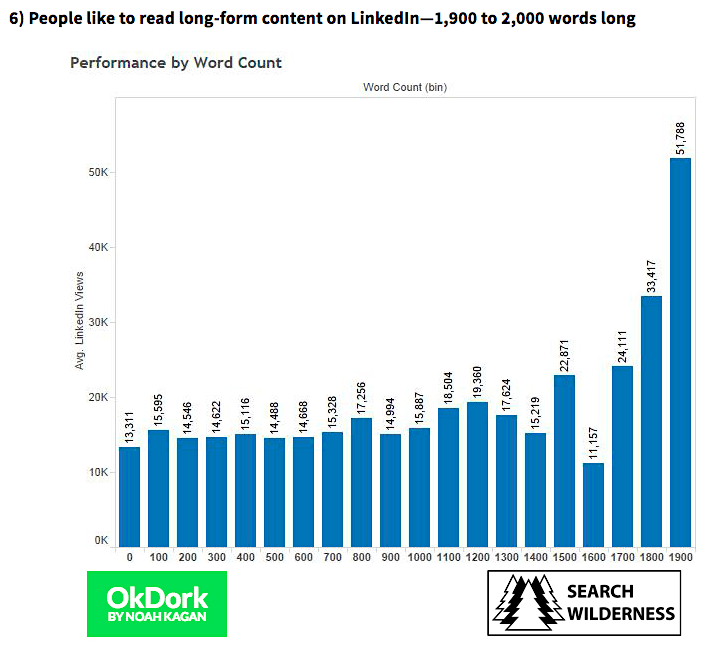
That’s about the same length as most of the first-page results on Google search. So when you’re creating your long-form content (and you should definitely be creating long-form content), don’t forget this LinkedIn step.
What you’ll find when you employ this strategy is that you end up with a ton of engagement. Social media sites want to keep people on the platform, not send them to another destination, so they reward you for posting meaty content that doesn’t link out. Then later, when you do post links to your own website, you’ll get more views and clicks.
Dive Deeper: Do You Really Need to Write 1,890-Word Blog Posts to Rank on Page 1?
Tactic #6: Use Analytics to Find Your Most Successful Topics
If you already have a decent amount of published content, use analytics to figure out what your most successful topics are and then create more content around those topics.
There are several tools you can use to identify your winning subject matter. We use a lot of tools to track this, but three that I think are worth mentioning are:
- Libsyn for our podcasts
- Social Blade for social media
- TubeBuddy to analyze our rankings for topics on our YouTube videos
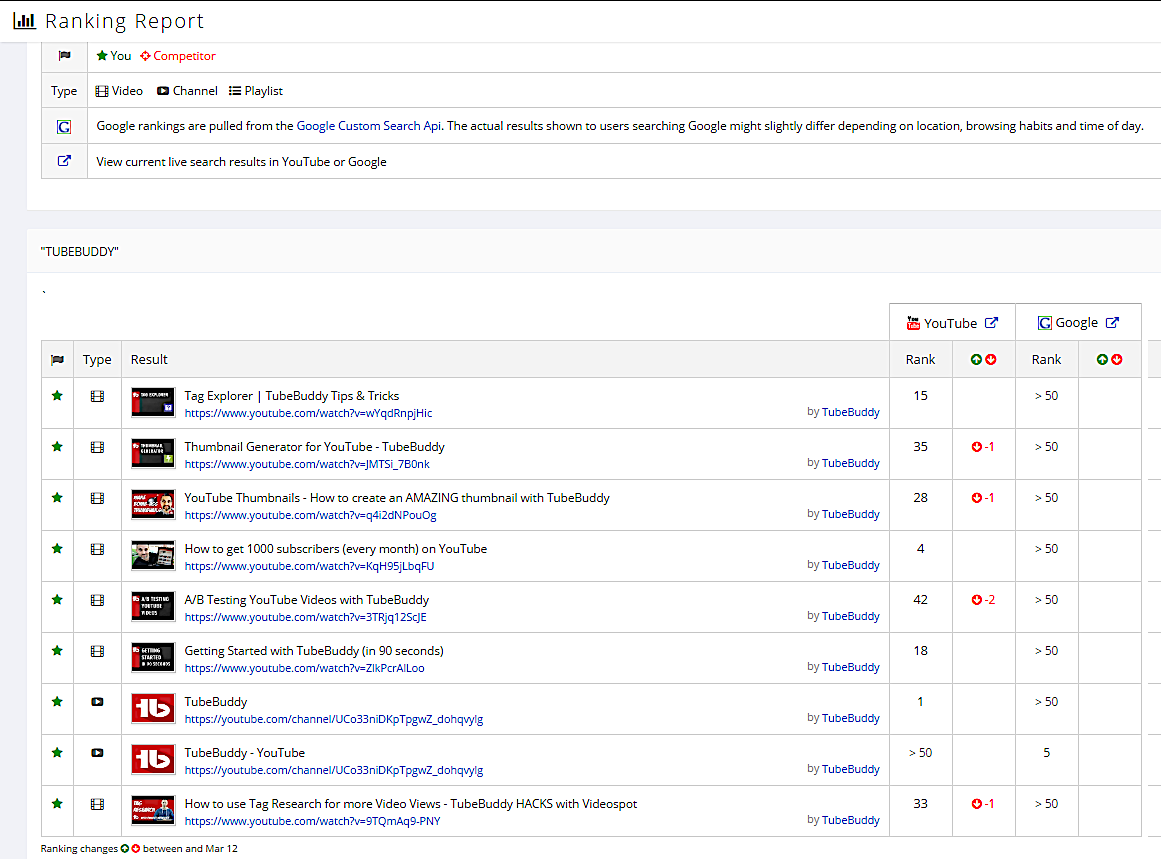
For example, Neil and I recently used Libsyn to see which topics were doing well on our Marketing School podcast. We discovered that our top-performing episodes were all related to SEO. So now we’re putting more of a focus on SEO because that’s what resonates most with our audience.
That’s not to say that we won’t do other topics. We will. But we want to make sure that we’re giving our audience what they really want on a regular basis. It helps our audience by giving them the information they’re seeking, and it helps us by giving us listeners. It’s a win-win.
Using analytics as your guiding star means you’re no longer operating based on your gut. You’re operating based on data. And that data will help you execute on the right topics and types of content to increase your traffic and engagement rate.
Dive Deeper:
- YouTube Analytics: How to Understand & Measure Your Progress
- How To Measure Your Content Marketing ROI With Google Analytics
- Creating Google Analytics Funnels and Goals: A Step-by-Step Guide
Tactic #7: Keep Your Paragraphs Short
Finally, when it comes to text-based content, the shorter the sentences, the longer the reach. This goes for articles and blog posts, obviously, but it also goes for social media posts and YouTube descriptions.
Take it from SmartBlogger contributor Mike Blankenship, who writes:
“We have adapted to expect and prefer paragraphs that are short because they look and feel easier to read. Short paragraphs are easier to scan, and they allow readers to consume the article in bite-sized chunks, which helps maintain their focus — and this is critical in this age of distraction.”
But beyond the benefits that come with being able to scan text quickly, there’s another advantage to shorter paragraphs. Think about what happens to a long social media post – the content gets cut off and you have to click to read the rest of it. As a result, the shorter your sentences are, the more ideas you can get in before the prompt.
Take a look at the example below. Because I’ve used short paragraphs, you can see that there are three distinct ideas:
- That being a “nobody” is an opportunity
- That every interaction represents a potential sale
- That I have a resource that’ll help you do that
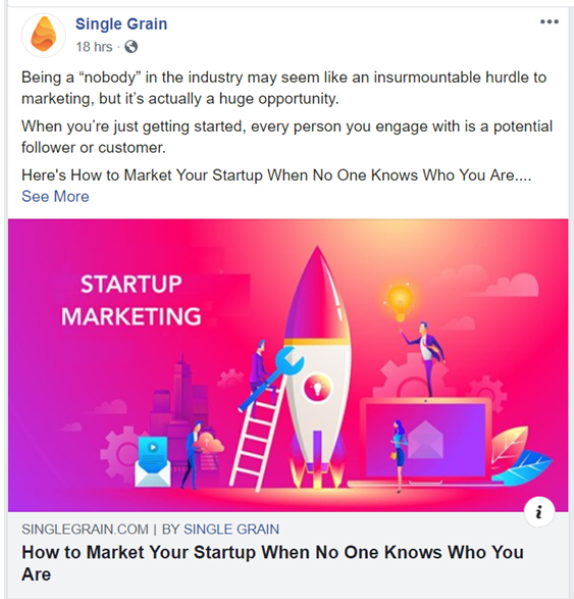
If I’d compressed everything into one paragraph, I’d still be sharing the same information, but because of how quickly we scan text, there’s a good chance that readers would have missed at least one key point.
Bottom line: If people see shorter sentences before they’re prompted to read more, they’ll be much more likely to absorb all the information you’re giving them. That makes them much more likely to click that link, which further boosts your engagement and increases your chances of going viral.
Dive Deeper: The Impact of Social Media on Business in 2023
Keep Your Social Media Simple
The key takeaway here – and for social media success in general – is that you should create informative, easily digestible content and use as many channels as you can for getting it out there. It’s not hard to do, but it does take time and resources. The ROI on it makes it worth it, though.
While it’s always a good idea to explore new avenues for social media engagement and growth, always remember to keep these old-school strategies in the marketing mix. Don’t get so bogged down in testing fresh tactics that you forget to invest in the ones that already work!



